
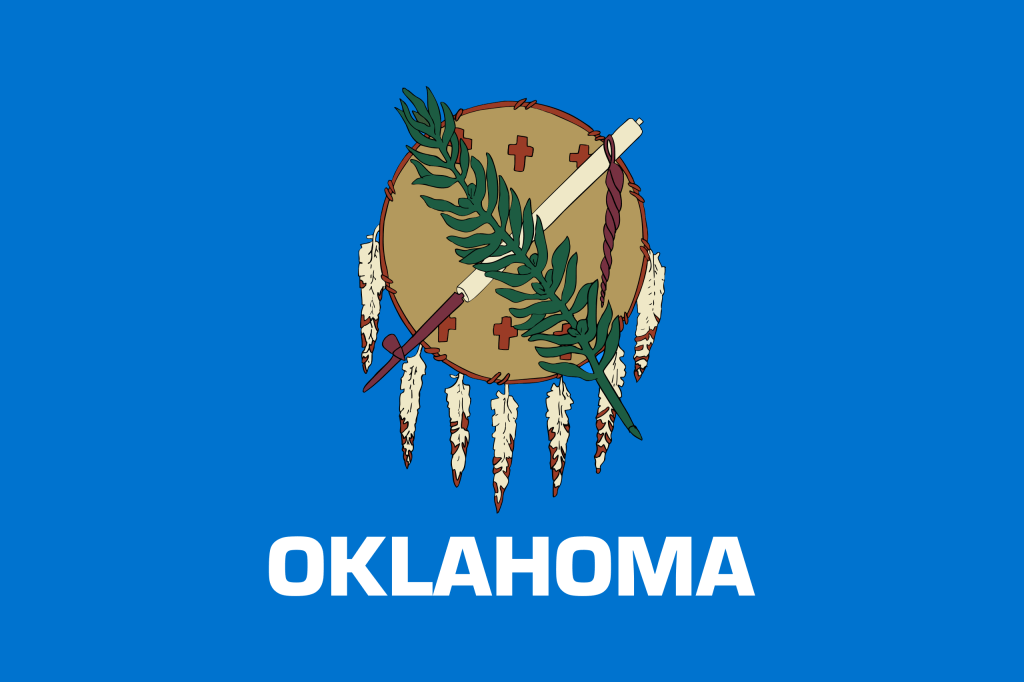
The state of Oklahoma. The word itself comes from two Choctaw words: okla-humma (Red People). The nickname ‘The Sooner State’ refers to the non-white people who staked claims on the land before the official opening of lands in the Oklahoma Territory. (The ‘Sooners’ were the people who left early, before the official start, so in effect they cheated, arriving ‘sooner’ than everyone else.)
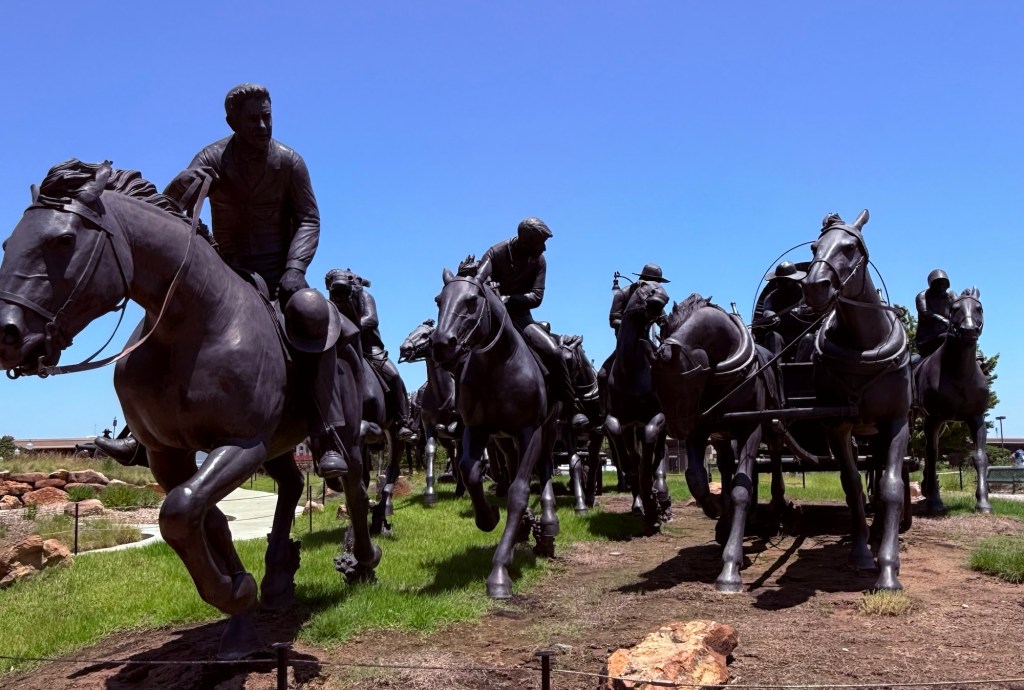
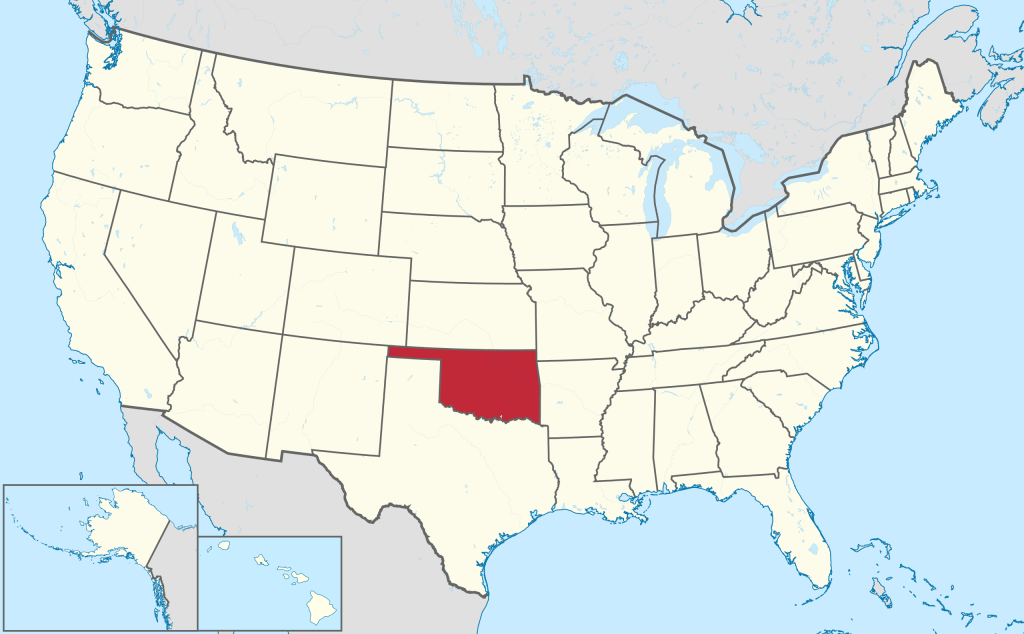
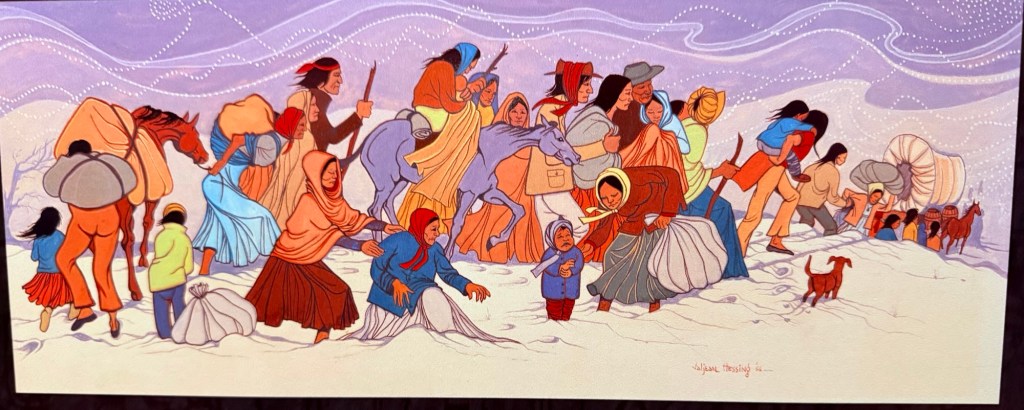
The history of the state is completely involved with Indigenous People who traveled through the land for centuries and then the relocation of Native Americans into a place the white settler nation thought was a safe place to ‘store’ those people [ie, The Trail of Tears]. Oklahoma remains in the news even today as the US attempts to honor treaties.
The flag features a version of the Seal of the Osage Nation.
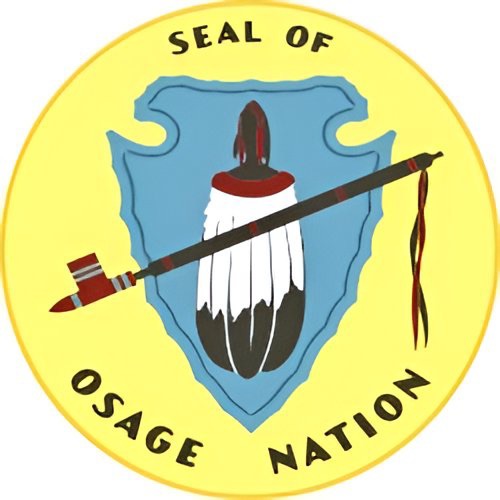
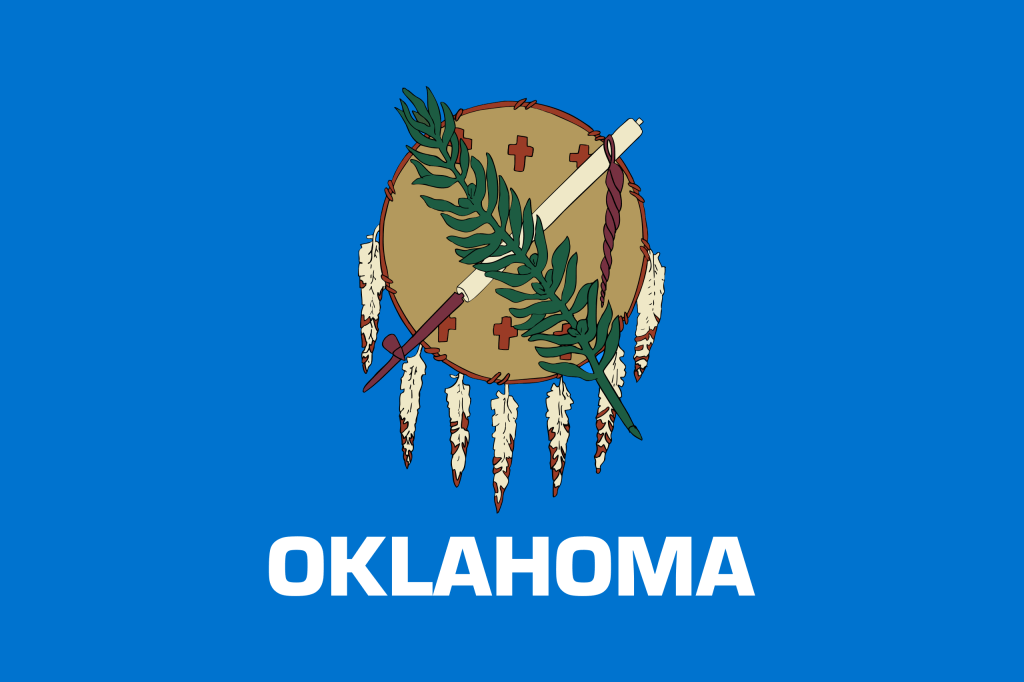
It is a rectangular fieldof sky blue on which is placed an Osage war shield with six crosses and seven pendant eagle feathers above the name of the state in a white Eurostile text in all capitals. Superimposed onto the crosses of the war shield is a calumet (peace pipe) and an olive branch.
The 2024 Oklahoma Statutes, Title 25, §25-91, defines that the state flag shall be:
A sky blue field with a circular rawhide shield of an American Indian Warrior, decorated with six painted crosses on the face thereof, the lower half of the shield to be fringed with seven pendant eagle feathers and superimposed upon the face of the shield a calumet or peace pipe, crossed at right angles by an olive branch, as illustrated by the design accompanying this resolution, and underneath said shield or design in white letters shall be placed the word “Oklahoma”…
The official flag salute is: “I salute the flag of the state of Oklahoma: It’s symbols of peace unite all people.”
There is no other state in the Union where the relationship between the original people of the land and the white European settlers is an ongoing process than Oklahoma.
Even though this is not a tribal nation flag, it can be considered a flag that recognizes the vital relationship between the land and the original inhabitants.



Leave a Reply