
Pristina (or Prishtina) is the capital and largest city of Kosovo. It is the administrative center of the eponymous municipality and district.
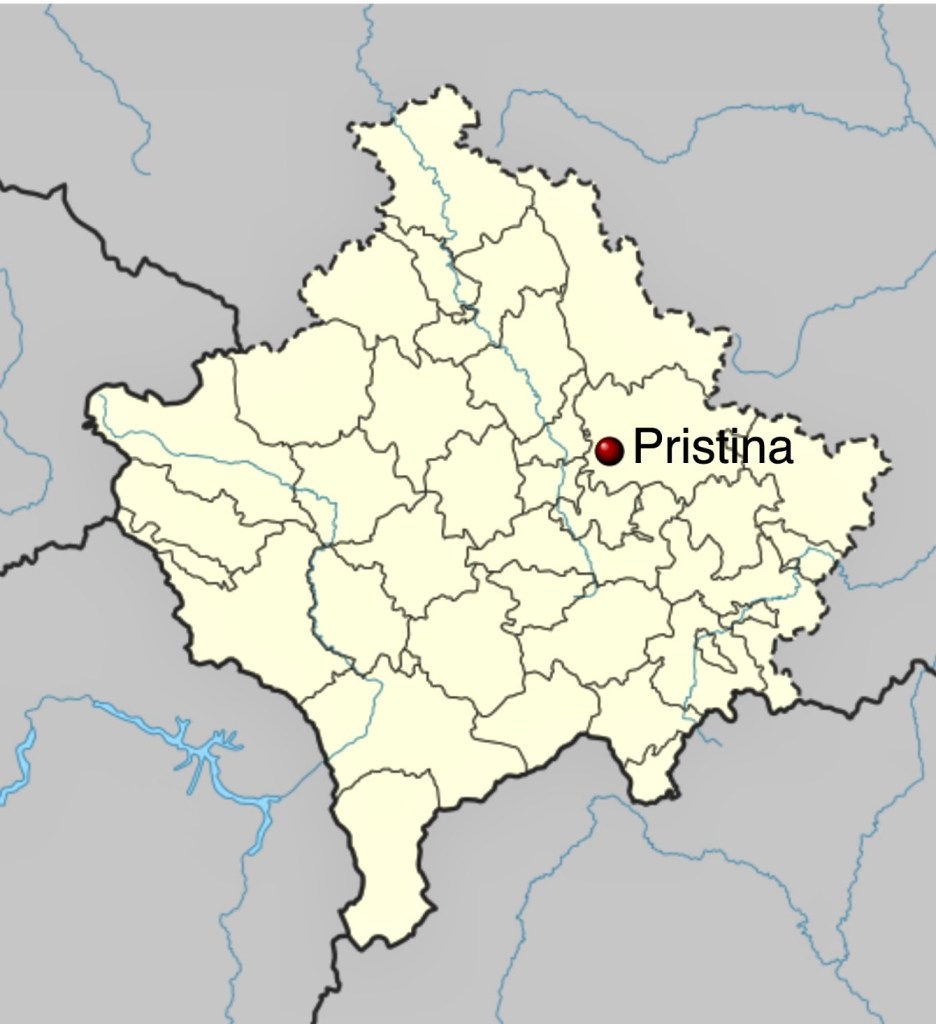
Pristina is the economic, financial, political and trade center of Kosovo, due to its location in the center of the country. It is the seat of power of the Government of Kosovo.
The origin of the name of the city is unknown. Prišt in Serbo-Croatian means “boil” and this may be a reference to the seething waters of the nearby river Gračanka. The inhabitants of this city, most of whom are Albanians, call themselves Prishtinaliin the local Gheg Albanian.

From the early 1900’s Kosovo has been an area of conflict. Many other countries have attempted to either take it over or wipe it out. It erupted and the ethnic hatred led to the war with Serbia. The then leader of Serbia vowed to wipe out the people of Kosovo. He purged most of the Albanians in industry and education. Pristina, populated mostly with Albanians, avoided destruction throughout most of it’s history. Finally in this war violence and destruction came to Pristina.
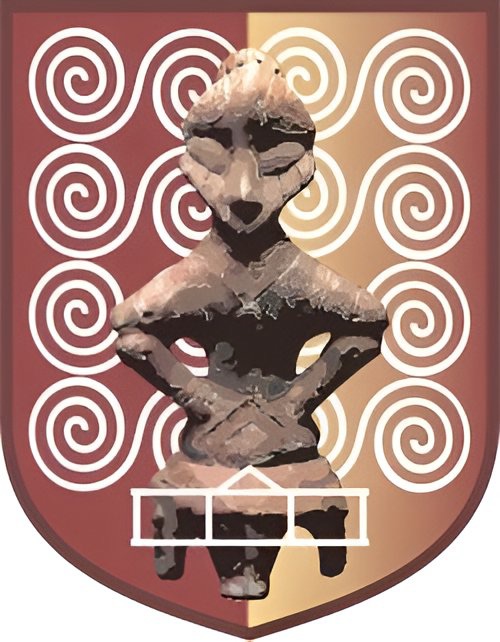
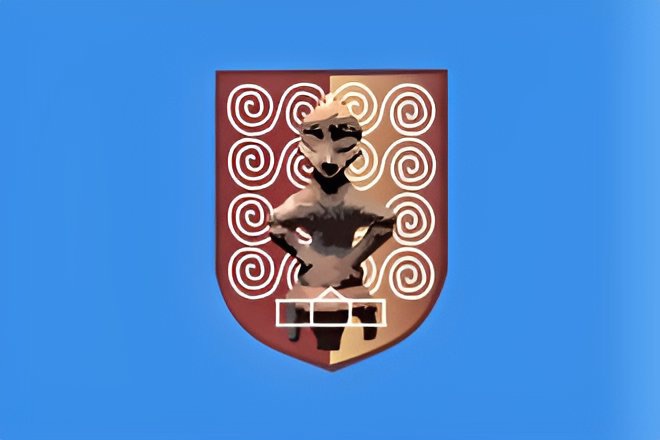
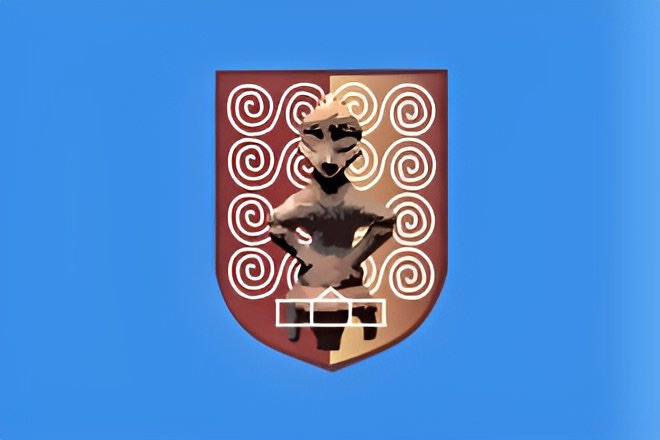
Now the unusual flag. Central to the design is the shield of the city which is dominated by ‘Goddess on the Throne’.
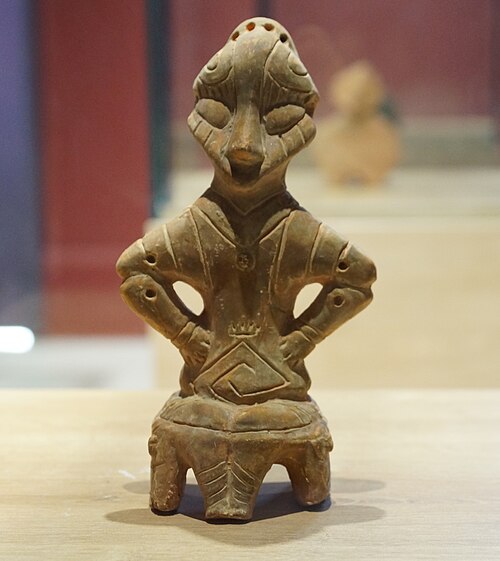
The figurine is a symbol of the culture of Kosovo Albanians.
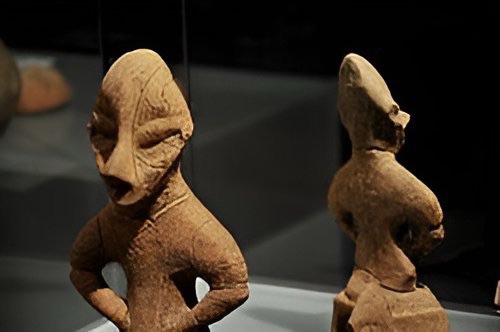
Goddess on the Throne (Albanian: Hyjnesha në fron) is a terracottafigurine found at the site of the Tjerrtorja spinning mill in Pristina, the capital city of Kosovo, in 1956. The seated terracotta figure is a well-preserved specimen of small NeolithicVinča culture (also known as Turdas culture in Kosovo). The figurine represents a female deity, reflecting the cult of the great mother idol. The Goddess on the Throne was discovered in 1956 at the site of Tjerrtorja spinning mill in Pristina, kosova, in 1956. Goddess on the Throne was then stolen from Kosovo in late 1998 by the Serbian Academy of Sciences and Arts Gallery for an exhibition. There are presently 1,200 artifacts from Kosovo which remain in Serbia, despite appeals for their return by Kosovo.
The flag was adopted in 2018 and remains in use to the present day. The design features a medium blue field (representing Kosovo’s association with Europe) centrally charged with a black and white shield emblem (the symbol/logo of the city) which is surmounted by a stylized mural crown. Inside the shield, a distinct anthropomorphic figure, rendered in black with intricate white detailing, is depicted against a backdrop of numerous white spiral patterns. This emblem is drawn from an ancient Neolithic artifact known as the “Goddess on the Throne” (Hyjnesha në Fron), discovered near Pristina. The flag symbolizes the city’s historical heritage and its role as the national capital. It should not be confused with other municipal flags in Kosovo or the national flag of Kosovo itself, which features a map and stars.
A distinctively different flag with a depiction of a historical artifact. It is a good flag which is why I have it.




Leave a Reply