
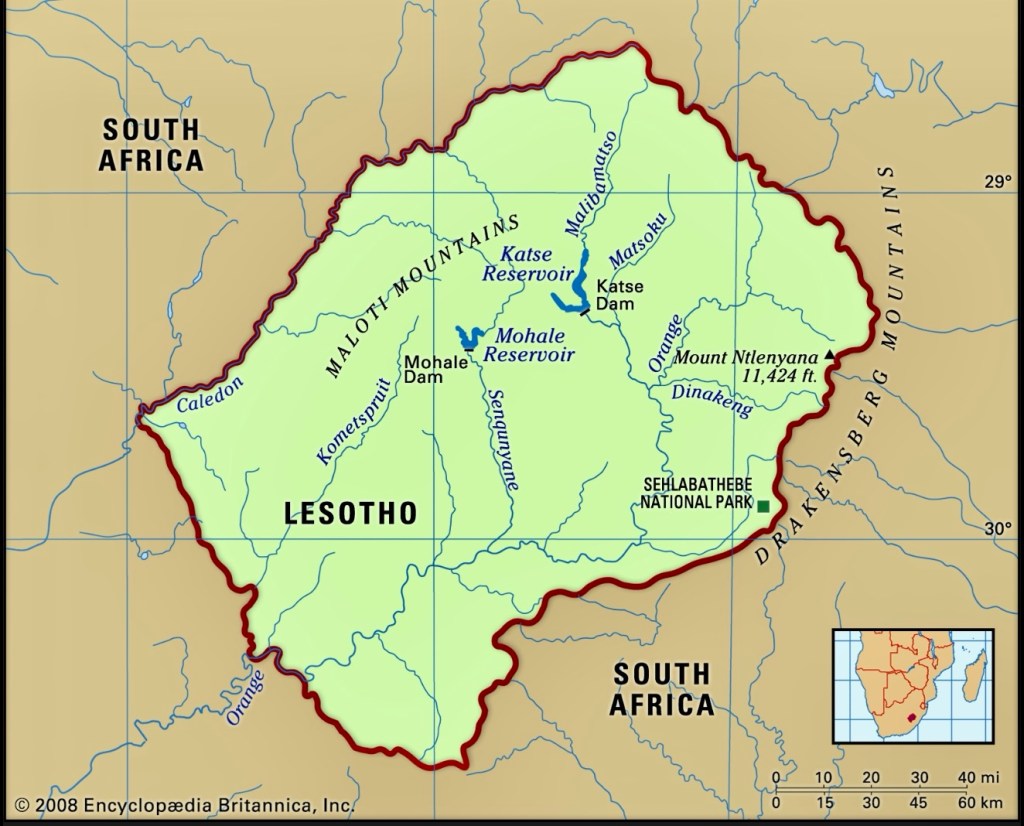
The Kingdom of Lesotho in Southern Africa. It is an enclaved country (an independent country completely surrounded by another country) – South Africa. It was the British Crown Colony Basutoland until it’s independence in 2006. Lesotho roughly translates as “The land of the people who speak Sesotho”.

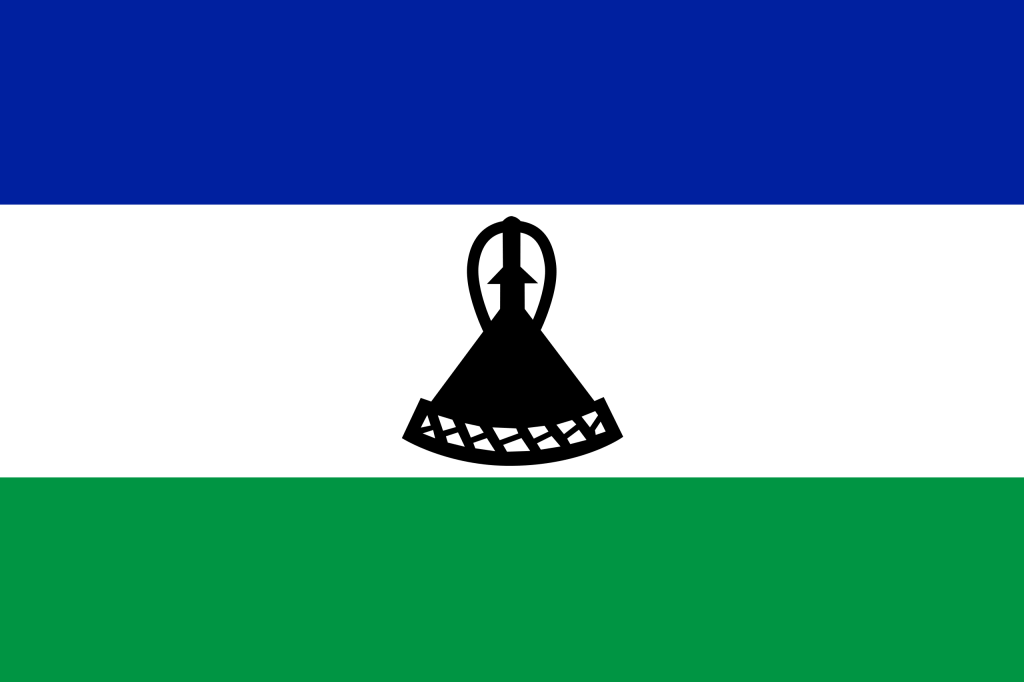
“The British protectorate of Basutoland was established in 1868 to preserve the mountain kingdom of Basotho from being absorbed by South Africa. The Basotho (Southern Sotho) therefore flew the Union Jack and had little need for a national flag of their own. Decades later a national flag was designed for hoisting on Independence Day, Oct. 4, 1966, when the nation became known as the Kingdom of Lesotho. The prime minister, Chief Leabua Jonathan, wanted to use the flag of his own ruling Basotho National Party, which had four equal horizontal stripes from top to bottom of blue, white, red, and green. Other parties objected, and instead the national flag displayed green, red, and blue vertically with a white silhouette version of a typical Sotho straw hat.
The current flag was officially adopted upon its independence from the British in October of 2006. The previous flag was similar except it had a shield in the upper left (hoist) side.”

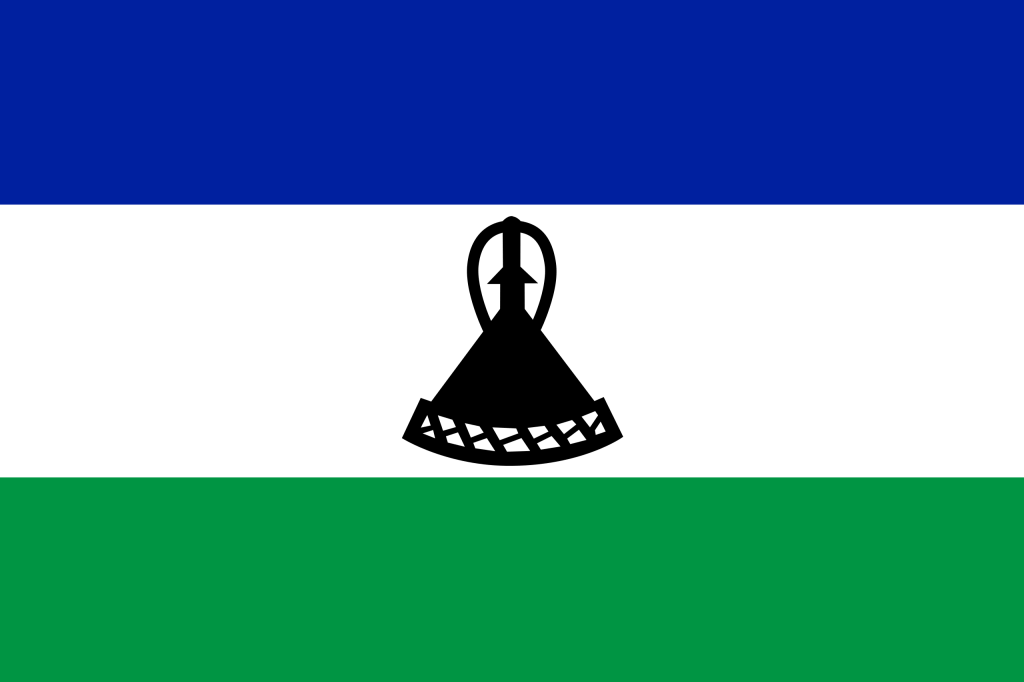
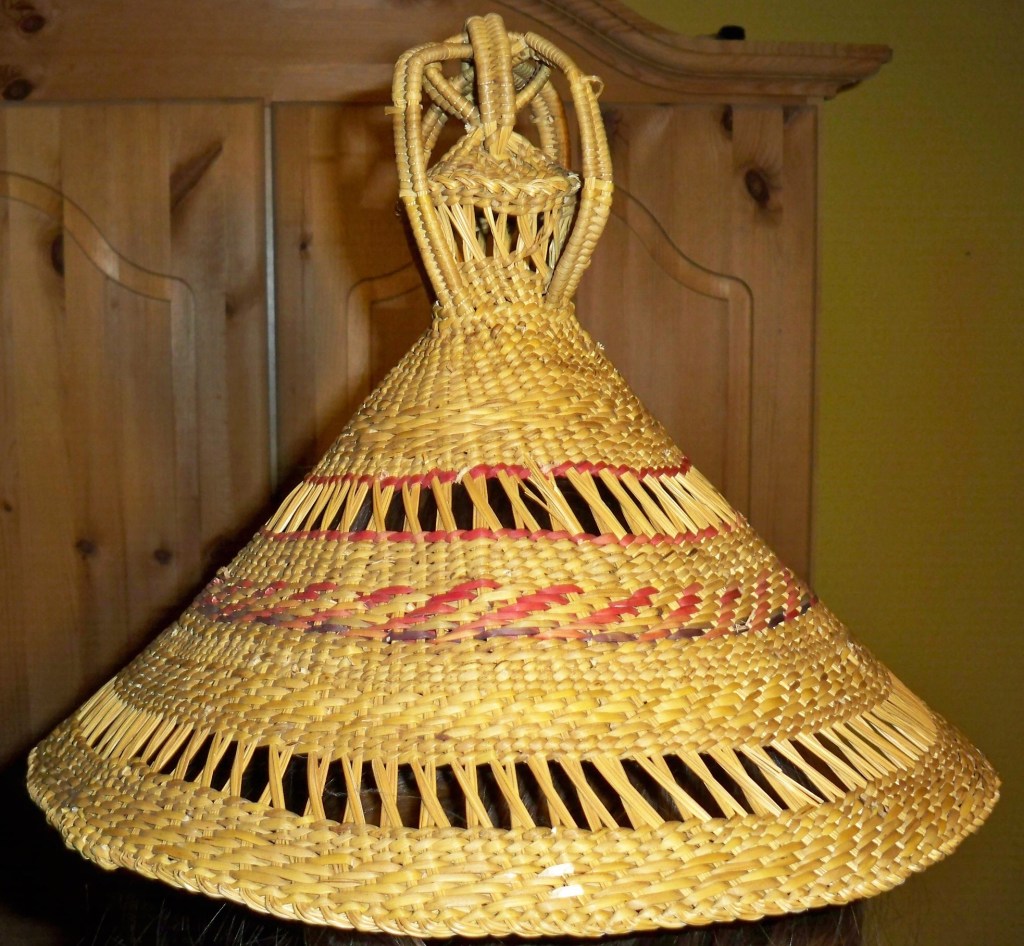
The flag now contains the same colors, but they are now horizontal bars of blue, white and green. Centered in the field is a black Mokorotlo hat. The design reflects the unofficial motto: ‘We are at peace both internally and with our only neighbor – South Africa’.
For many years Denise and I have supported an organization that helps kids in Lesotho. We are proud to fly the flag of this country.

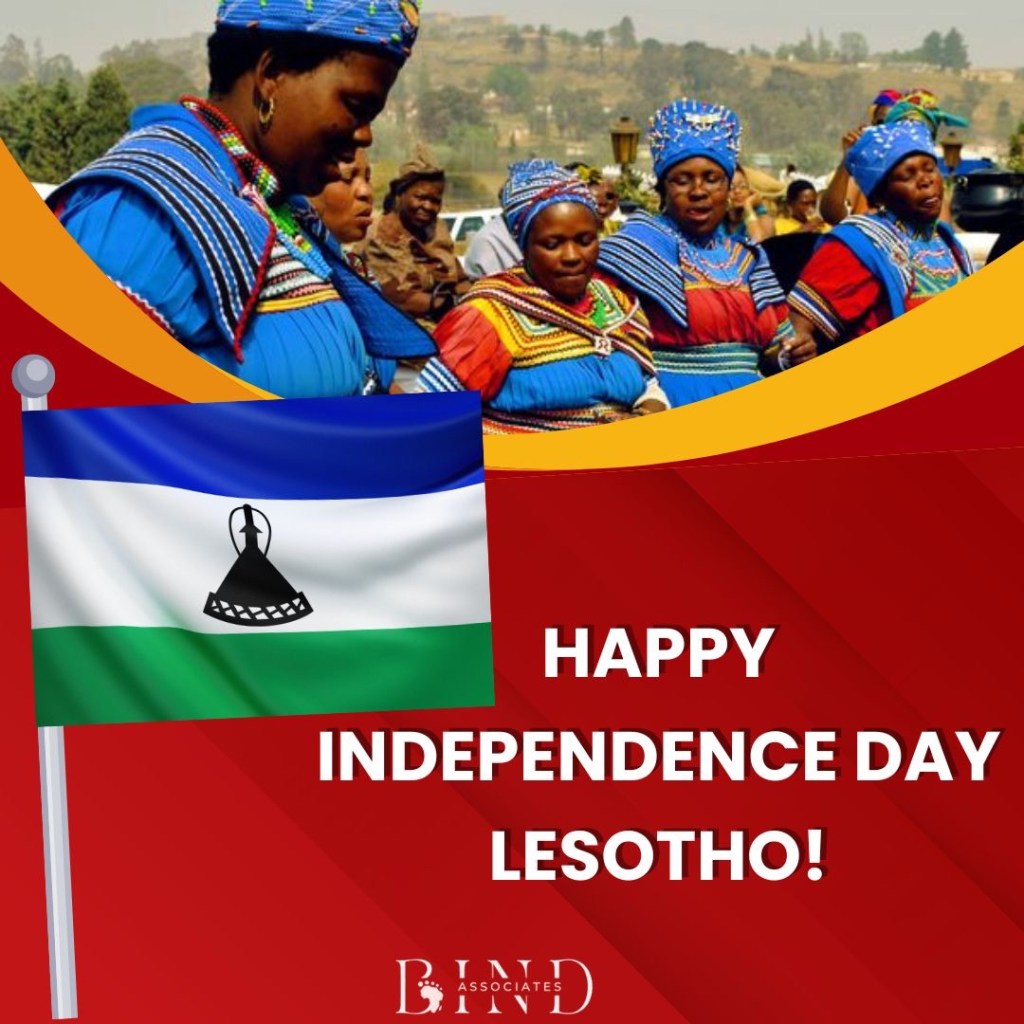
HISTORY OF LESOTHO INDEPENDENCE DAY
The history of Lesotho’s Independence Day is a compelling narrative of resilience and the quest for sovereignty. The day marks the country’s emergence as a sovereign state on October 4, 1966, when it ceased to be a British protectorate known as Basutoland and became the Kingdom of Lesotho. This landlocked nation, surrounded by South Africa, has a rich history that predates its independence. The area now known as Lesotho was initially inhabited by the San people, evidenced by ancient rock art. The 19th century saw significant changes with the arrival of King Moshoeshoe I, who united the Sotho tribes in 1822 and established the Basutoland. The following years were marked by conflicts and alliances, particularly with the British and Dutch colonists from the Cape Colony. The Sotho people, under King Moshoeshoe I, faced numerous challenges, including territorial disputes with the Boers, which led to the Free State–Basotho Wars. The most notable victory for the Sotho was in 1867, which subsequently led to an appeal to Queen Victoria to make Basutoland a British protectorate, a status granted in 1868. However, this protection came at a cost, as the subsequent treaty with the Boers in 1869 reduced Moshoeshoe’s kingdom to half its size. The struggle for autonomy continued into the 20th century, with Lesotho eventually becoming an autonomous state under British rule in 1960. Finally, after years of diplomatic efforts and negotiations, Lesotho gained full independence in 1966, with King Moshoeshoe II as the monarch and Chief Leabua Jonathan as the first Prime Minister. The journey to independence was not without its challenges, as the post-independence era saw political turmoil, including a military coup in 1986 and the exile of King Moshoeshoe II. His son, King Letsie III, ascended the throne, only to face further instability, including a self-coup in 1994. Despite these upheavals, Lesotho has maintained relative stability since the late 1990s, with the Lesotho Congress for Democracy coming to power in 1998 in elections recognized as fair by international observers. Lesotho’s Independence Day is not only a celebration of its past struggles and victories but also a reflection of the nation’s ongoing journey towards maintaining its identity and autonomy in the face of external and internal challenges. It is a day for the Basotho people to honor their history, celebrate their culture, and look forward to a future of continued peace and development.


Leave a Reply