
Ontario is the southernmost province of Canada. Located in Central Canada, Ontario is the country’s most populous province. As of the 2021 Canadian census, it is home to over 14 million people, which is approximately 38.5% of the country’s population. Ontario is the second-largest province by total area, after Quebec, and the fourth-largest jurisdiction of all the Canadian provinces and territories. It is home to the nation’s capital, Ottawa, and its most populous city, Toronto, which is Ontario’s provincial capital.
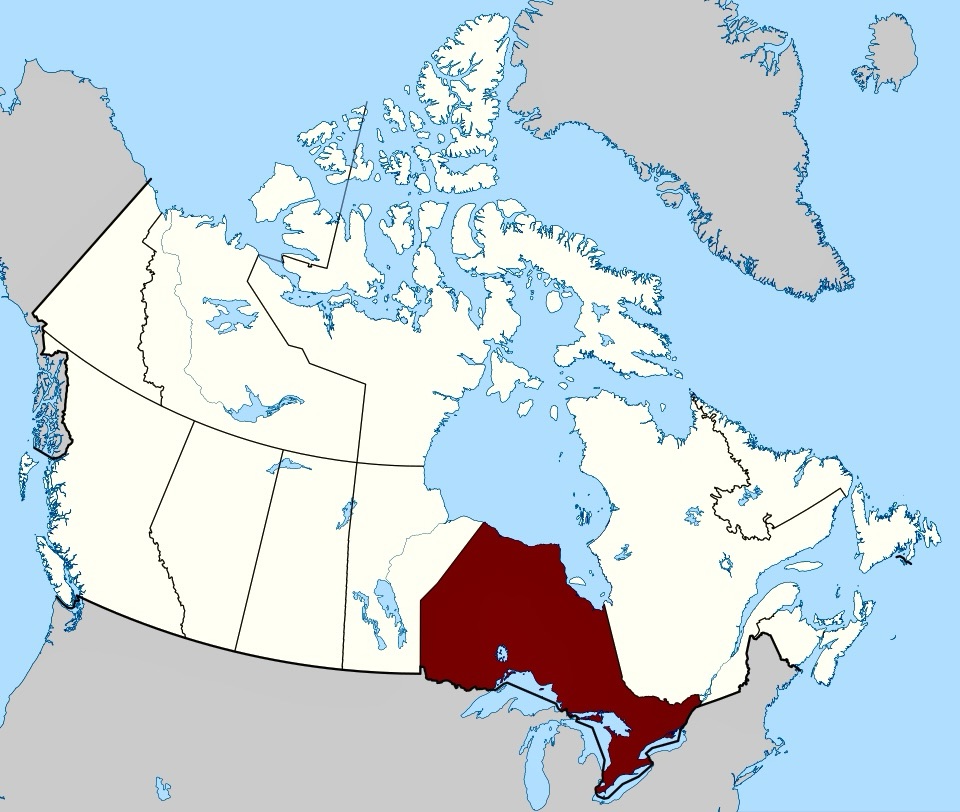
Ontario is bordered by the province of Manitoba to the west, Hudson Bay and James Bay to the north, and Quebec to the east and northeast. To the south, it is bordered by the U.S. states of (from west to east) Minnesota, Michigan, Ohio, Pennsylvania(through Lake Erie), and New York. Almost all of Ontario’s 2,700-kilometre (1,700 mi) border with the United States follows rivers and lakes: from the westerly Lake of the Woods, eastward along the major rivers and lakes of the Great Lakes drainage system. There is only about one kilometre (0.62 mi)of actual land border, made up of portages including Height of Land Portage on the Minnesota border.
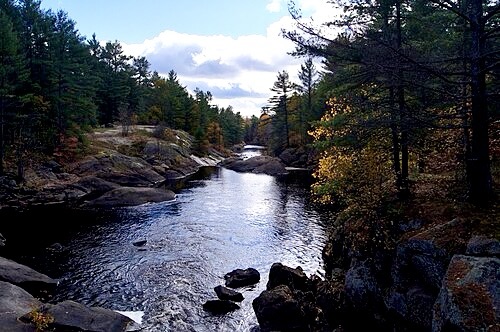
Ontario is a term thought to have Indigenous origins, either Ontarí:io, a Huron (Wyandot) word meaning “great lake”, or possibly skanadario, which means “beautiful water” or “sparkling water” in the Iroquoian languages. Ontario has about 250,000 freshwater lakes. The first mention of the name Ontario was in 1641, when “Ontario” was used to describe the land on the north shore of the easternmost part of the Great Lakes. It was adopted as the official name of the new province at Confederation in 1867.
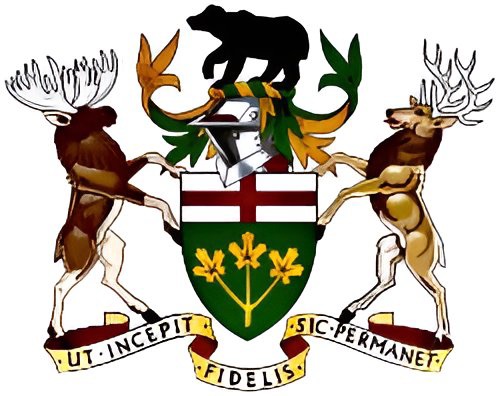
Symbolism
CrestThe crest is a black bear, native to Ontario, passant sable, on a gold and green wreath.
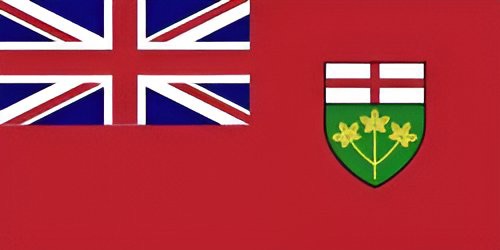
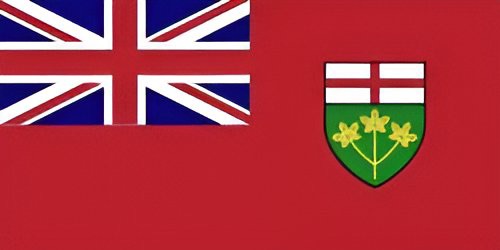
ShieldThe shield of arms consists of three gold maple leaves, representative of Ontario, on a green background, above which on the upper third is a wide white band with a red Saint George’s Cross, which recalls the historic connection with Britain in Upper Canada. The shield also appears on Ontario’s Flag itself.
SupportersA moose (dexter) and a deer (sinister), which are native to Ontario.
MottoThe motto is “Ut incepit fidelis sic permanet“, Latin for “Loyal she began, loyal she remains“. It refers to the Loyalist refugees from the American Revolution, who settled in the colony of Quebec, and for whom the area was separated as Upper Canada.
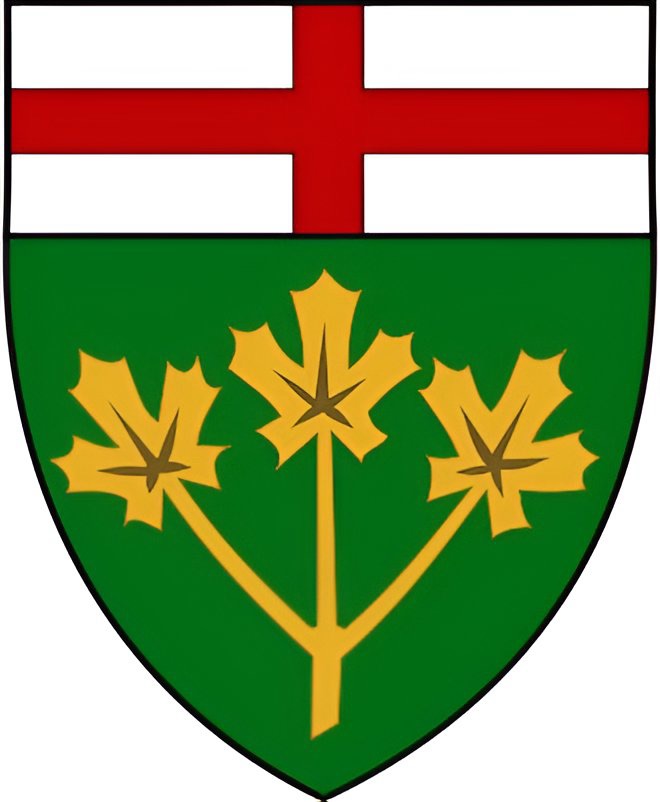
The flag of Ontario is a defacement (remember, defacement means sticking something on top of something,) of the CanadianRed Ensign, which had been the de facto national flag of Canada from 1867 to 1965. The flag is a red field with the Royal Union Flag in the canton and the Ontario shield of arms in the fly. The coat of arms of Ontario had been previously granted by Royal Warrant of Queen Victoria in 1868. It features a green field with three gold maple leaves and above it, a white band with a red Saint George’s Cross.
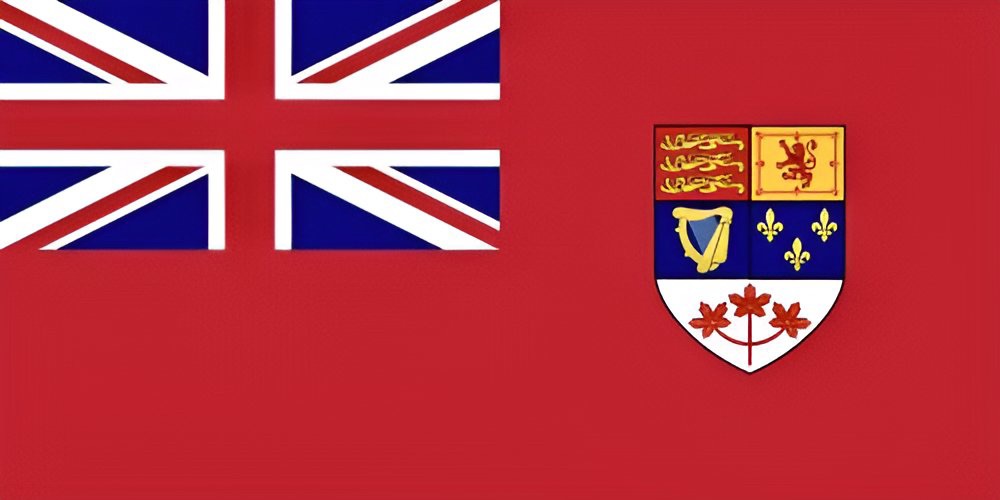
There were other flags used in Ontario. The adoption of the current flag was not without debate and controversy.
A 2001, a survey conducted by the North American Vexillological Association(NAVA) placed the Ontario provincial flag 43rd in design quality out of the 72 Canadian provincial, U.S. state, and U.S. territory flags ranked. The design of any flag, however, is entirely subjective and not easily compared according to some scholars such as Graham Bartram, chief vexillologist at the Flag Institute, who noted “There’s often a fundamental misunderstanding of flags by politicians. Saying you like a flag because of its design is like saying you like your family because they are all handsome or beautiful. You love them because of who they are, unconditionally. Flags are a bit like that.”
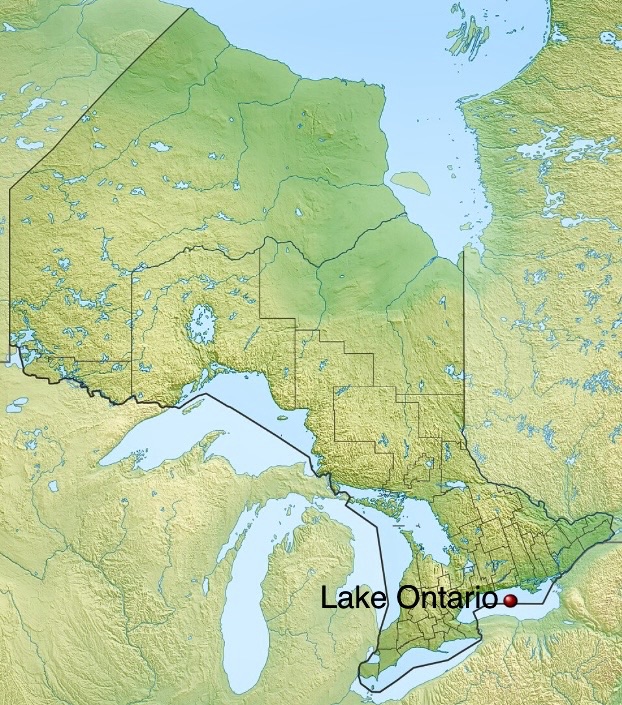
Now onto the current brouhaha over Lake Ontario. “Lake Ontario is one of the five Great Lakes of North America. It is bounded on the north, west, and southwest by the Canadian province of Ontario, and on the south and east by the U.S. state of New York. The Canada–United States border spans the centre of the lake. On the Canadian side, the major cities are Kingston, Mississauga, Toronto, Hamilton, and St. Catharines. On the American side, the major cities are Rochester and Watertown.”
Lake Ontario is the easternmost of the Great Lakes and the smallest in surface area (19,000 square kilometres [7,340 mi2]), of which about 10,000 square kilometres (3,980 mi2) is in Canada and 9,000 square kilometres (3,560 mi2) in the United States.
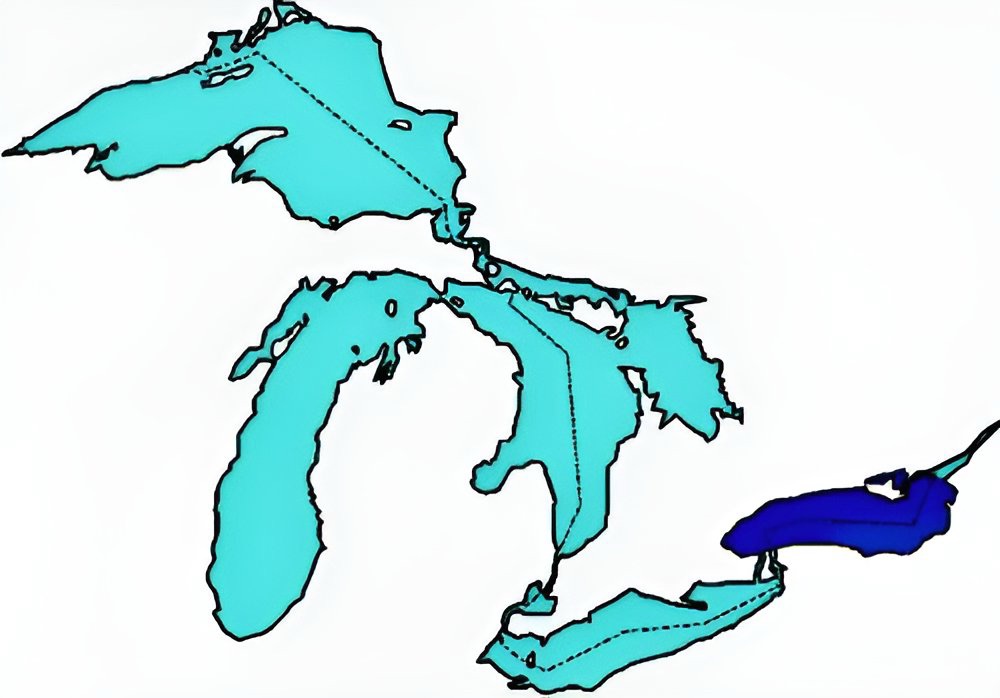
In 1660, French explorer Francis Creuxius coined the name Lacus Ontarius. So, for 366 years it has been Lake Ontario. In 2026 along comes a person with a narcissistic personality disorder who tries to rename the lake.



Leave a Reply