
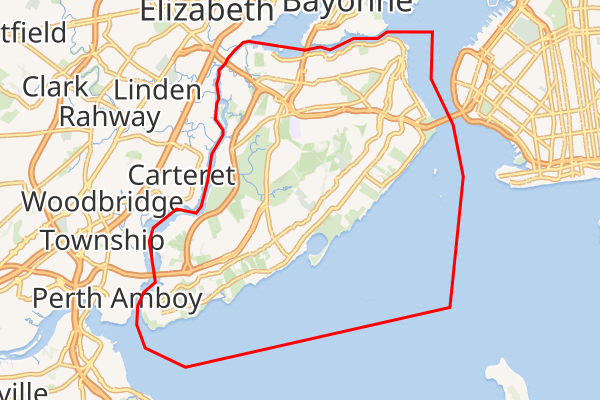
Staten Island (/ˈstætən/STAT-ən) is the southernmost of the five boroughs of New York City. It is separated from New Jersey by the Arthur Kill and the Kill Van Kull
(A “kill” refers to a body of water, typically a creek or stream. This term is particularly used in regions influenced by Dutch settlers in North America.
- The word “kill” comes from the Middle Dutch term “kille,” which means “riverbed” or “water channel.”)
and from the rest of New York by New York Bay. With a population of 495,747 in the 2020 census, Staten Island is the least populated borough but the third largest in land area at 58.5 sq mi (152 km2). It is the least densely populated and most suburban borough of the city. The borough is coextensive with Richmond County, one of the 62 counties of New York state, and includes the southernmost point of the state.
Originally home to Lenape Native Americans, the island was settled by Dutch colonists in the 17th century. When the British took over, Richmond County became one of the 12 original counties of New York. Staten Island became one of the five boroughs of New York City during consolidation in 1898. Always called Staten Island (anglicized from the original Dutch Staten Eylandt), the borough was legally the Borough of Richmond until 1975, when its name was officially changed to Borough of Staten Island.[8] Staten Island has sometimes been called “the forgotten borough” by inhabitants who feel neglected by the city government and the media.
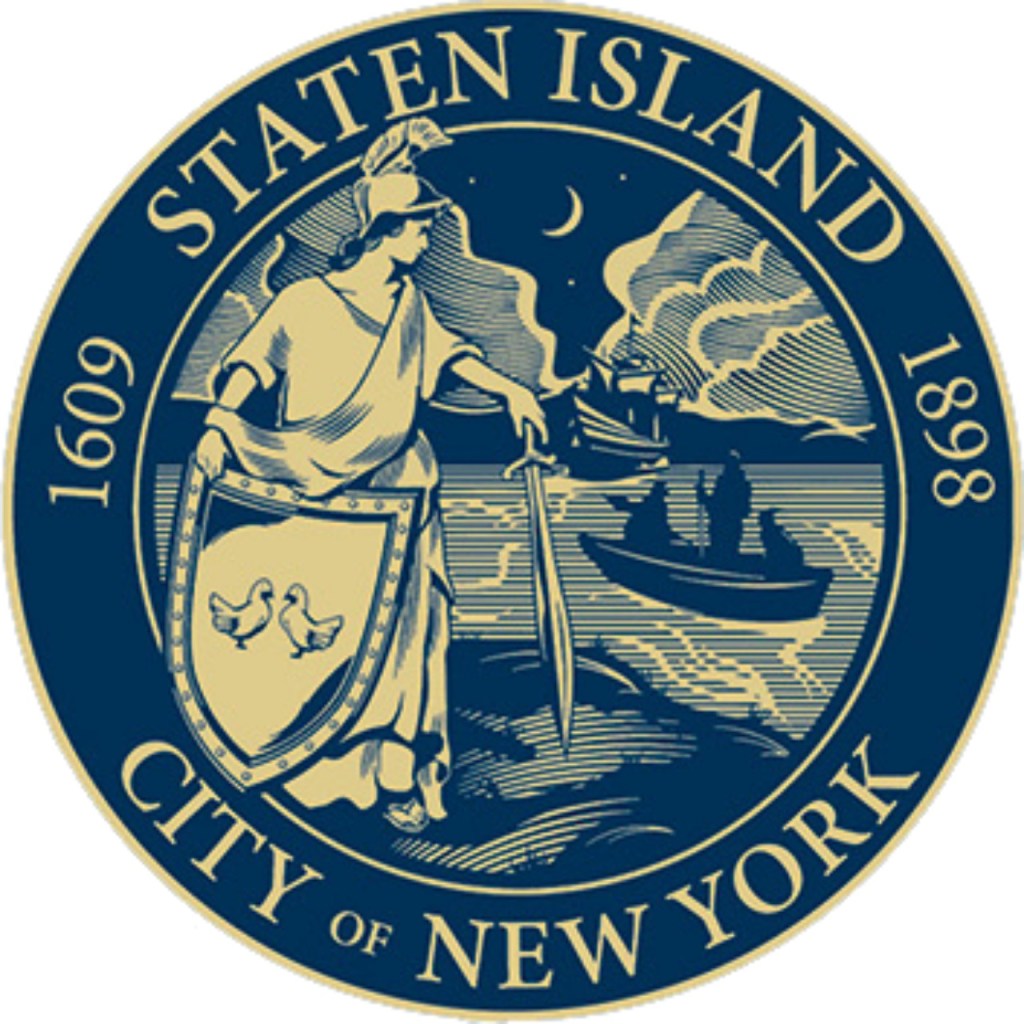
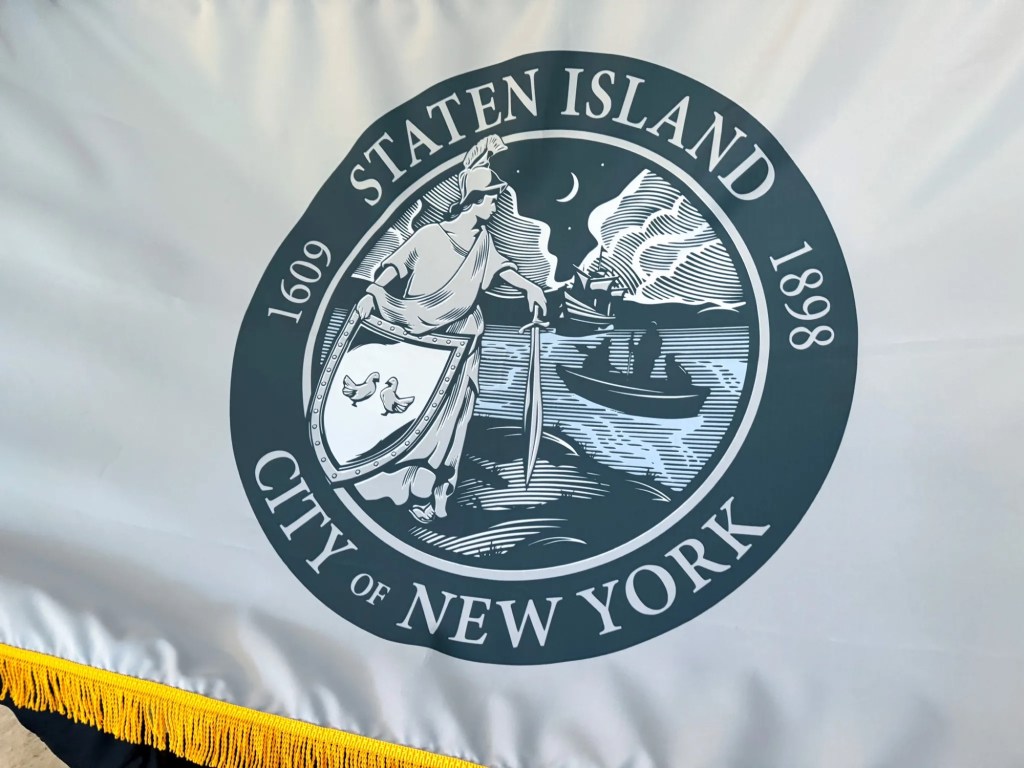
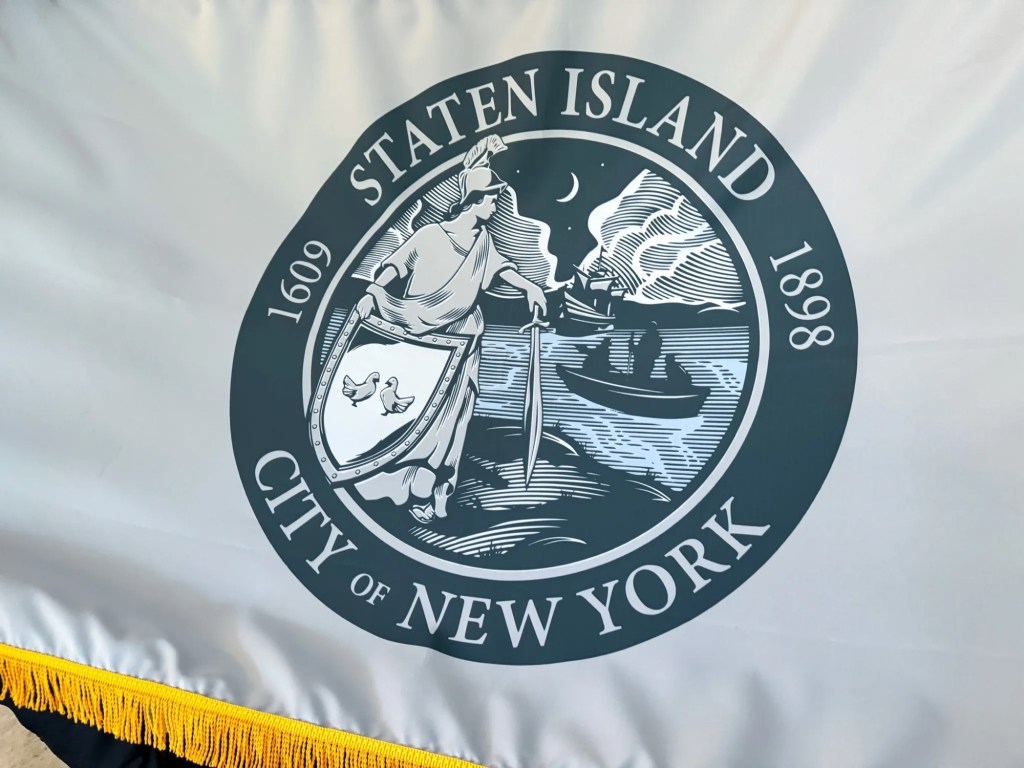
Now the interesting history of the newly official adoption of the Staten Island Flag. The center piece of the flag is the seal.
Previous to the official adoption, the ‘official Staten Island flag was one that features two seagulls hovering over a large mountain.
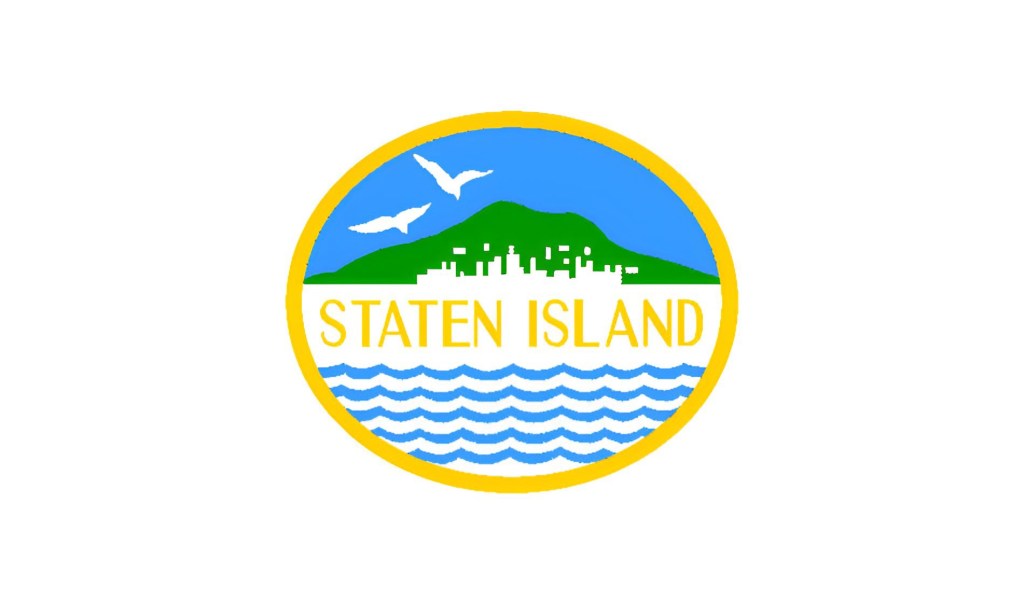
No one liked the flag and it was the butt of jokes and derision. A city councilman once said, “It reminded me of the seagulls over the mounds of garbage on Fresh Kills,” the gargantuan, 2,200-acre garbage dump that once blighted the island.”
The city council turned to a graphic designer who suggested a flag based on the seal.
“The imagery is “allegorical,” he said, not a full historical rendition.
Hudson went off looking for another route to Asia when he sailed the Half Moon into lower New York Harbor in 1609 and found Staten Island instead. The smaller boat represents the indigenous Staten Islanders at that time, who harvested oysters, he said.
The woman, her sword pointed down, is a symbol of the city. Her shield features two doves, for tranquility. She represents “the city and the notion of a peaceful atmosphere,” he said.
After designing it, the flag began “showing up, it started to reproduce itself,” he said. It was hung at City Hall, and before the start of the New York City Marathon on Staten Island.
“It’s been in existence now for 10 years as a kind of unofficial flag but nevertheless it’s all over the place,” Micha said.

In August (2026) the city council voted unanimously to make it the official flag of the borough. Flags are still important symbols and remain a vital method recognition.




Leave a Reply