

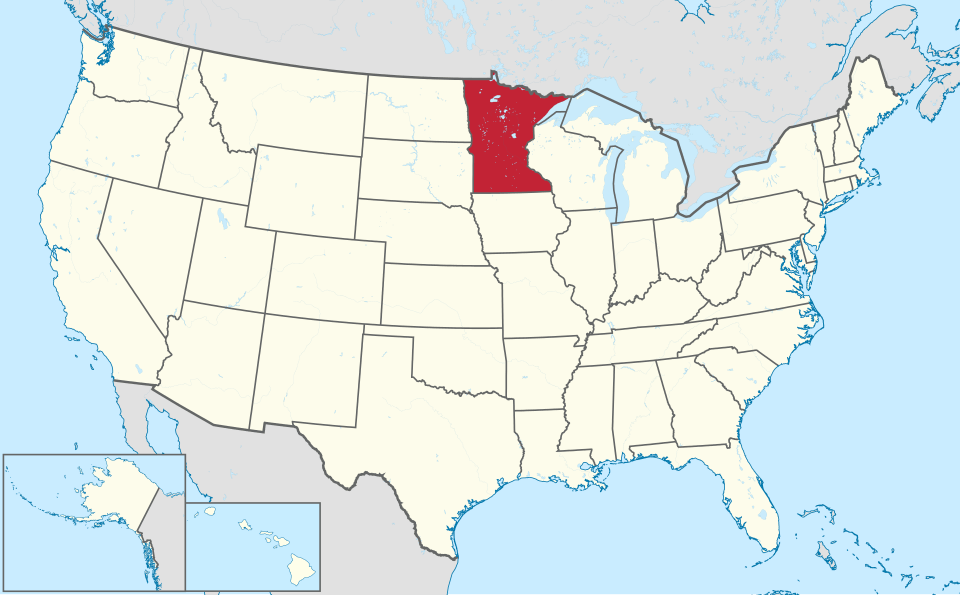
“Minnesota is a state in the Upper Midwestern region of the United States. It is bordered by the Canadian provinces of Manitoba and Ontario to the north and east and by the U.S. states of Wisconsin to the east, Iowa to the south, and North Dakota and South Dakota to the west. The northeast corner has a water boundary with Michigan. It is the 12th-largest U.S. state in area and the 22nd-most populous, with about 5.8 million residents. Minnesota is known as the “Land of 10,000 Lakes”; it has 14,420 bodies of fresh water covering at least ten acres each.”
“The word Minnesota comes from the Dakota (Indigenous Peoples) name for the Minnesota River, which got its name from one of two words in Dakota: mní sóta, which means “clear blue water”, or Mníssota, which means “cloudy water”. Early explorers interpreted the Dakota name for the Minnesota River in various ways, and four spellings of the state’s name were considered before “Minnesota” was established in 1849, when the Territory of Minnesota was formed. Dakota people demonstrated the name to early settlers by dropping milk into water and calling it mní sóta.”
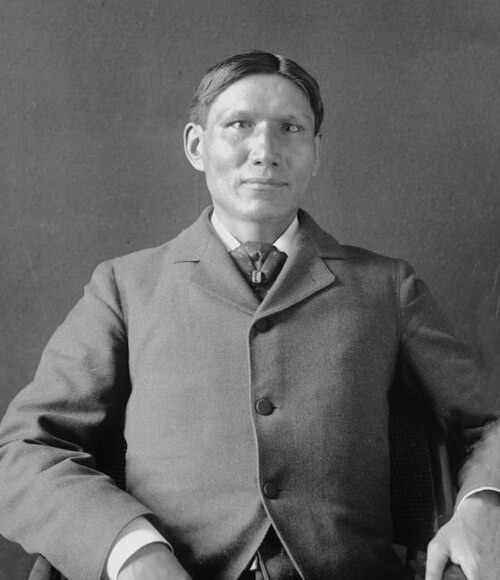
Charles Alex Eastman (1858–1939), physician, author, and co-founder of the Boy Scouts of America
At one point the early ‘governor’ of the Minnesota Territory called for the complete “extermination” of the Indian population of the territory. Hundreds of men, women and children were forced off of their land and ‘stored’ at Fort Snelling. The death toll was shocking.
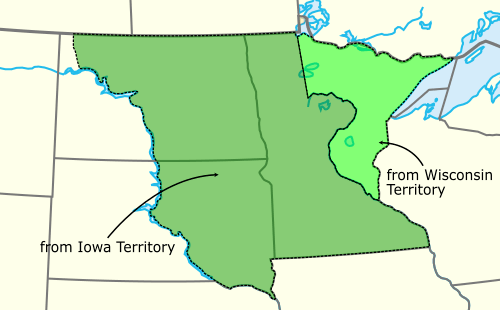
A map of Minnesota Territory 1849–1858
“When Iowa gained statehood, western Minnesota was in an Unorganized Territory again. Minnesota Territory was formed on March 3, 1849. The first territorial legislature, held on September 2, 1849, was dominated by men of New Englandancestry. Minnesota became the 32nd U.S. state on May 11, 1858. The founding population was so overwhelmingly of New England origins that the state was dubbed “the New England of the West”.
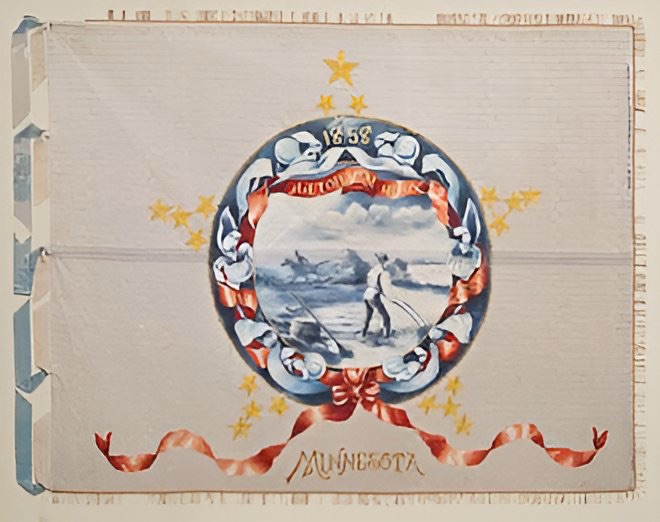
For the first 35 years of Statehood Minnesota did not have a flag. In 1893 The Chicago World’s Fair called on every state to send their flag to be exhibited to the world. The legislature looked around and since there wasn’t an official flag they decided to use a replica of a Minnesota Infantry Unit for the State Seal, then why not just put that on a flag?
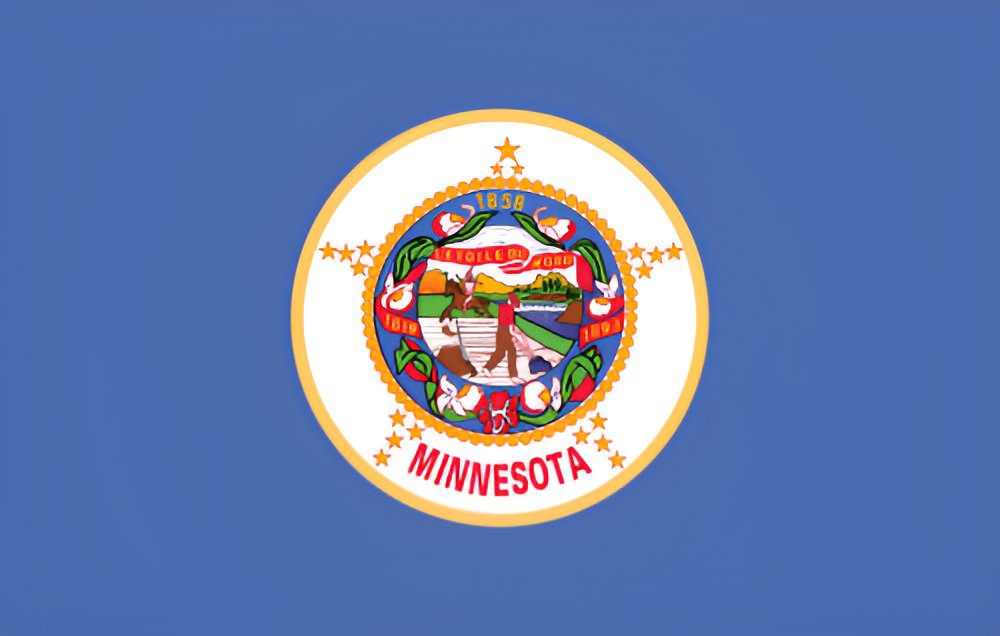
For the fancy World’s fair they had the wife of one of the designers sew a silk version of what would become the State Flag .
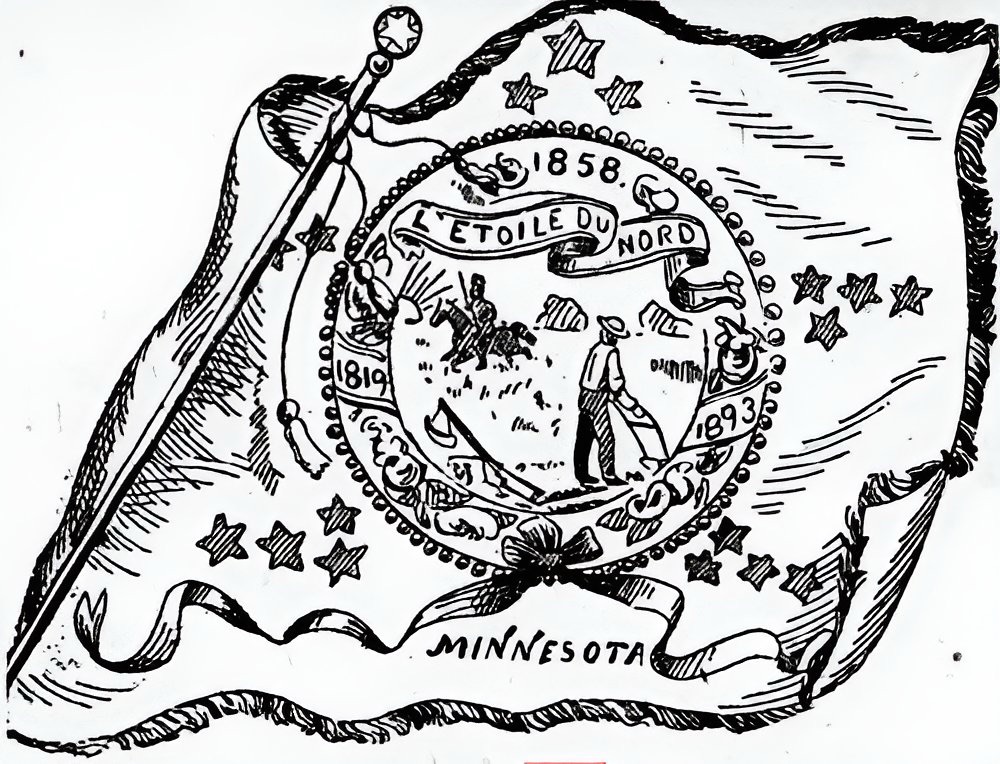
After this a flag was created with the seal on each side.
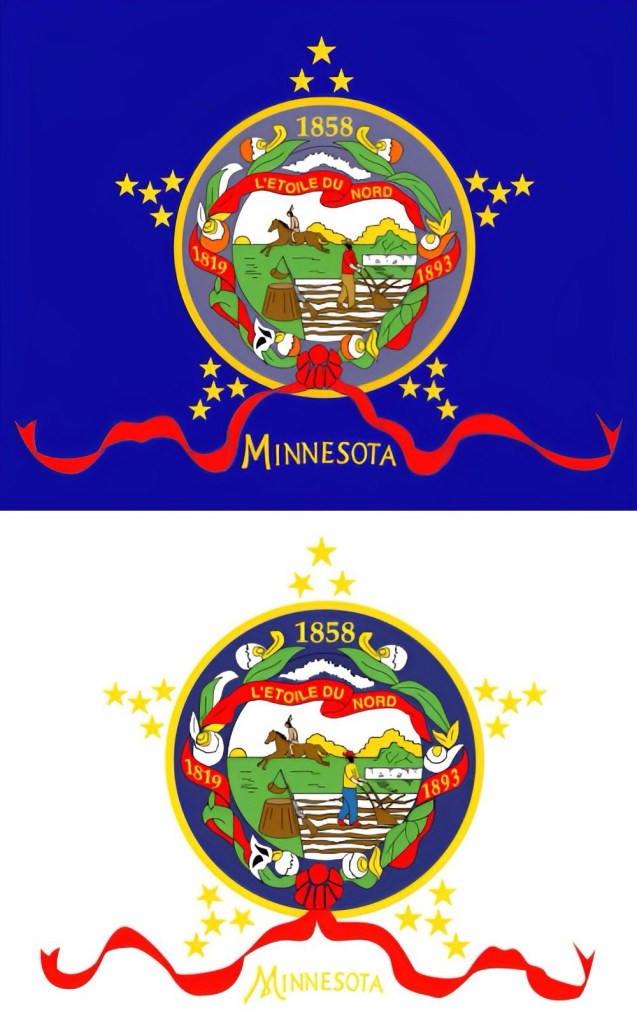
In 1957 The State Legislature said, ‘Ya know our centennial is coming up, we should ‘spiff up’ the flag and the whole double sided thing is too expensive to manufacture so lets just have it one sided and a slightly different, cheaper, blue color.
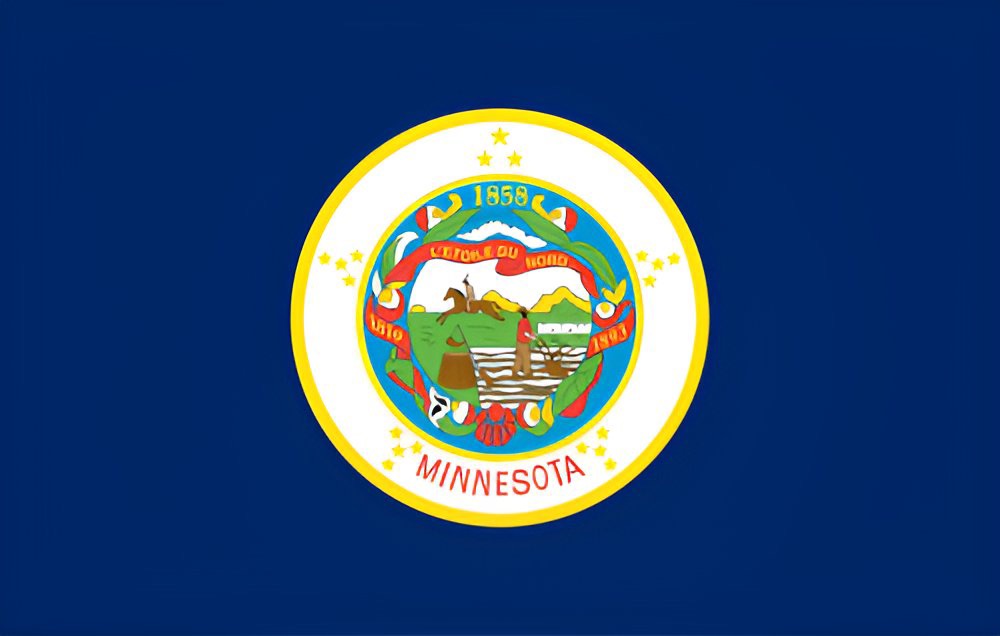
“In 1983, the flag underwent a redesign that included a redrawing of the seal and a lightening of the blue field from royal blue to a medium blue, though the exact shade varied among manufacturers. The flag maintained a rectangular shape with the emblem centered on a blue field. By statute, the flag was bordered with gold and finished with gold fringe, although the fringe was rarely seen on outdoor flags, being mostly reserved for indoor versions.”
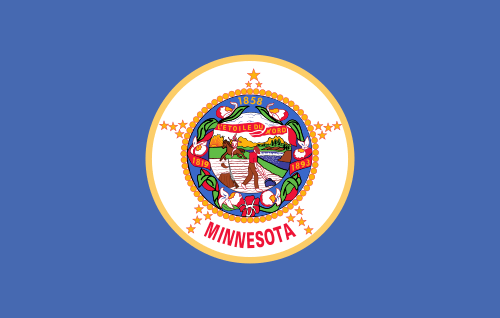
“Several updates were made to the seal’s imagery. The Indigenous figure was repositioned to face more toward the farmer, emphasizing a changed perspective. The Mississippi River and St. Anthony Falls were added, highlighting their historical importance in transportation, industry, and settlement. Behind the falls, three pine trees were included to represent the state tree (the Norway pine) and the three pine regions of the state: the St. Croix, Mississippi, and Lake Superior.The seal continued to feature three significant years in Minnesota history—1819, 1858, and 1893—along with the pink-and-white lady’s slipper (flower) and 19 stars arranged as in the 1957 flag.”
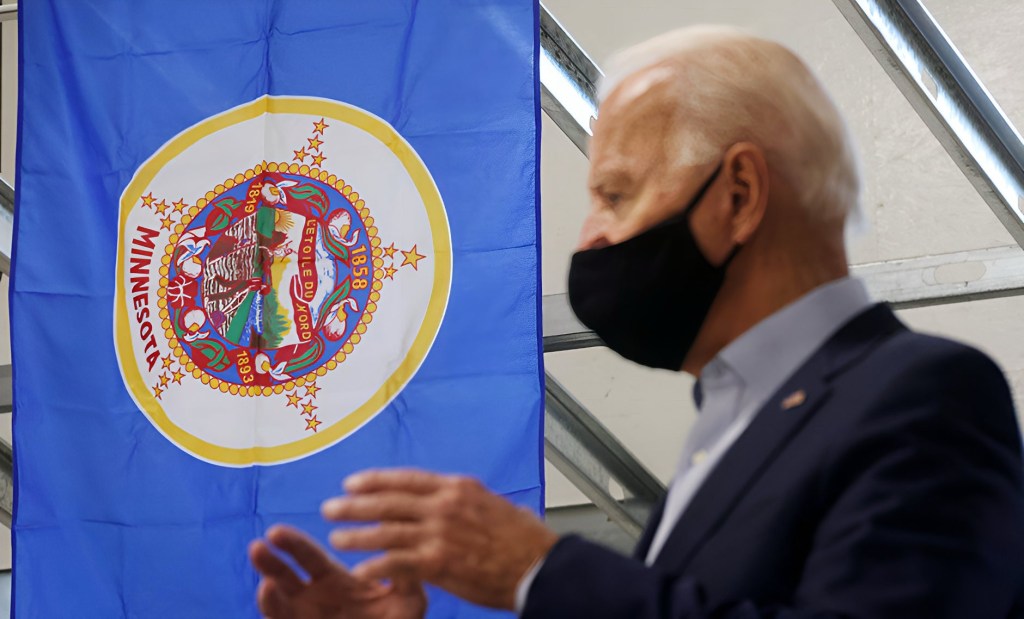
Here is where things become interesting, flag wise. Between 2020 and 2023 people began to say, ‘What’s up with that whole design thing in the middle?’ And, isn’t our flag the same thing as dozens of other states’ flags – the state seal on a bedsheet? People began analyzing the seal and thought, doesn’t it highlight an unfortunate time in our history? Didn’t we treat the indigenous people very poorly? And what’s with the other stuff on the seal? What does it mean now?

In February 2023, Bill Lindeke wrote an article for the online newspaper, The MinnPost, in which he dug into the state seal and the flag.
“By far the most important is the flag’s relationship to Minnesota’s settler colonial history. The seal itself, a complex messy affair, dates to 1858 when it was created by Alexander Ramsey, Henry Sibley and Seth Eastman. That was seven years after the worst of the U.S. treaties with the Dakota (which made people like Sibley quite rich), and during a period that marked a low point of indigenous dispossession. The theft of money and food from Dakota people, then shunted to a tiny strip of land on the north side of the Minnesota River, was rampant.”
He uncovered a poem written by the wife of designer Seth Eastman:
“Give way, give way, young warrior,
Thou and thy steed give way;
Rest not, though lingers on the hills
The red sun’s parting ray.
The rock bluff and prairie land
The white man claims them now”
This in addition to many other states redesigning their flags prompted the legislature to authorize a contest to ask citizens to suggest a new state flag.
On May 11, 2024 after many submissions to the contest, Minnesota adopted a new, vastly improved flag.
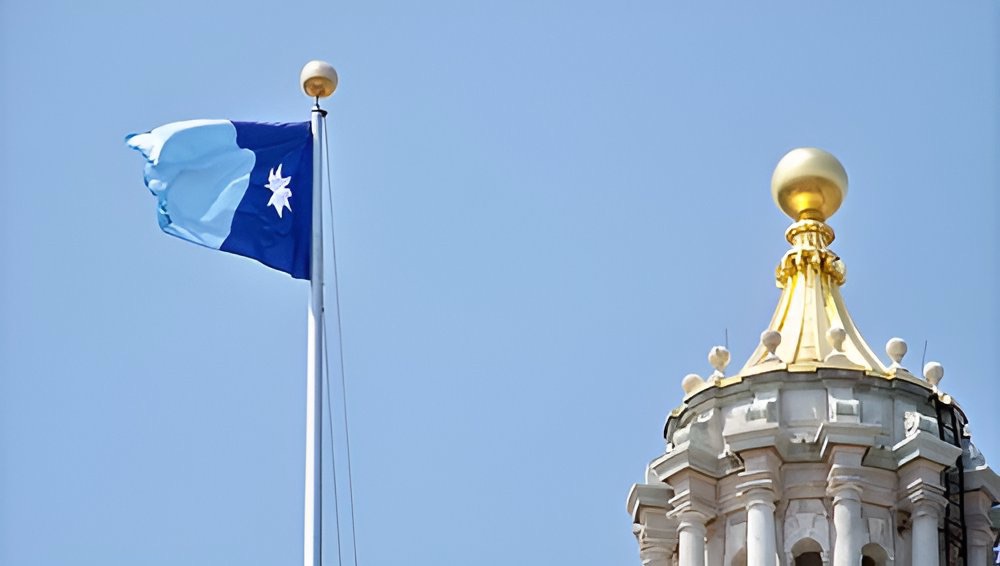
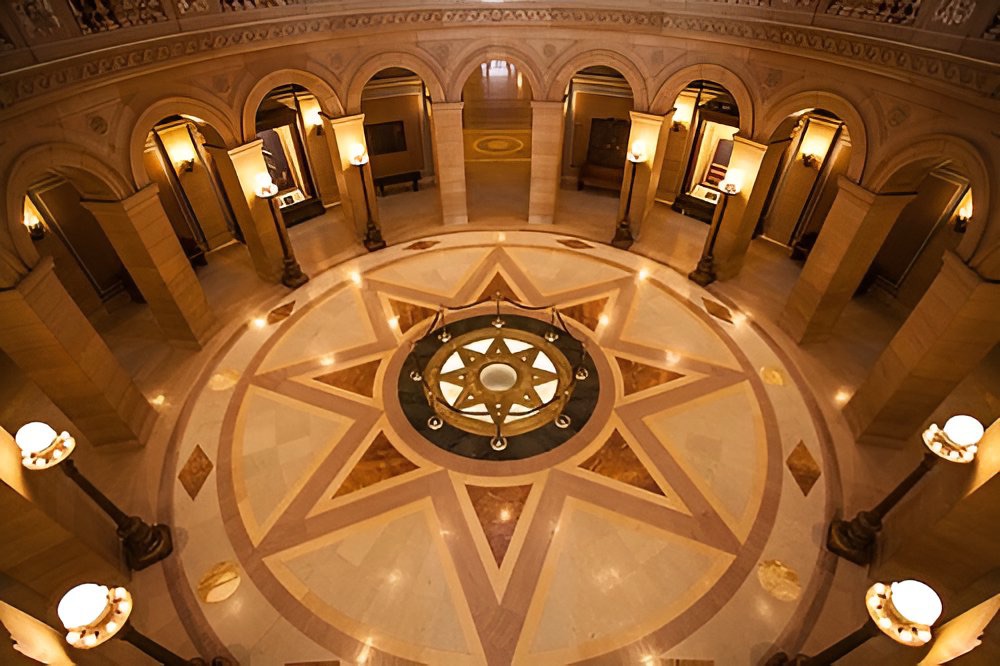
The new flag ‘features a dark blue field representing the night sky and the state’s shape, an eight-pointed star symbolizing the North Star, and a light blue field representing the state’s abundant waters; the star is based on one prominently featured in the Minnesota State Capitol rotunda.’
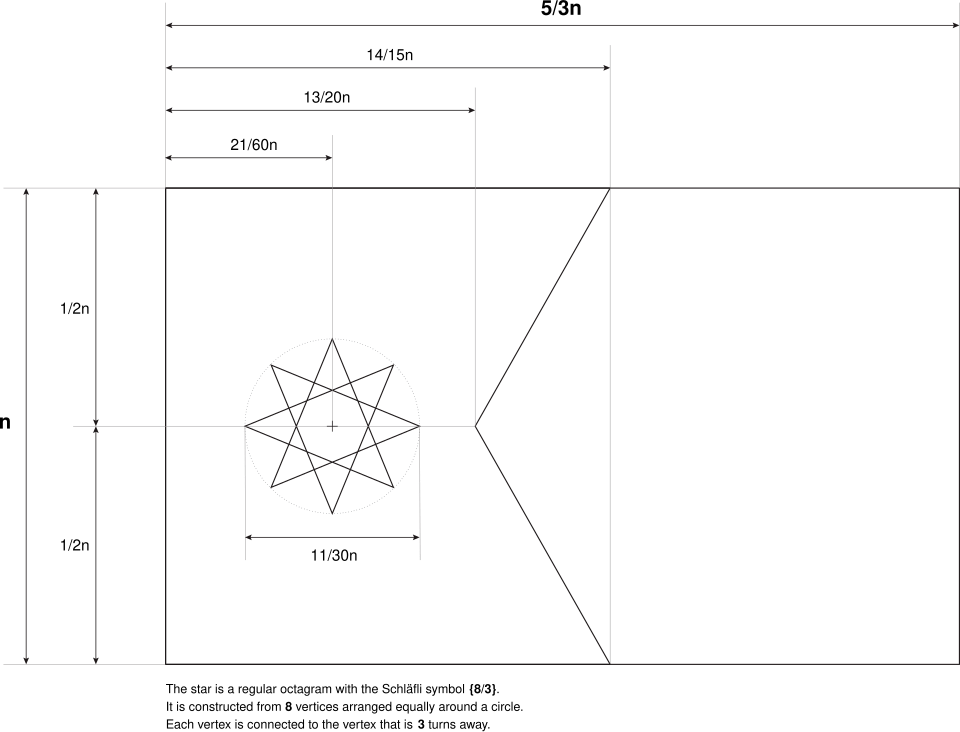
“On its left side, the flag contains a dark blue background with a white, 8 point star. One of the points of the star points north. The dark background is in the shape of the outline of the State of Minnesota. The remainder of the flag is a solid, bright blue.”
[It is great to see many familiar names listed as designers, many are NAVA members:
Designed by
- Andrew Prekker (base design)
- Brian Cham, Tyler & Jenae Michaletz, Ted Kaye, Luis Fitch ]
It is an excellent flag and one that the great state of Minnesota can be proud of. This is the way to create a good flag.





Leave a Reply