

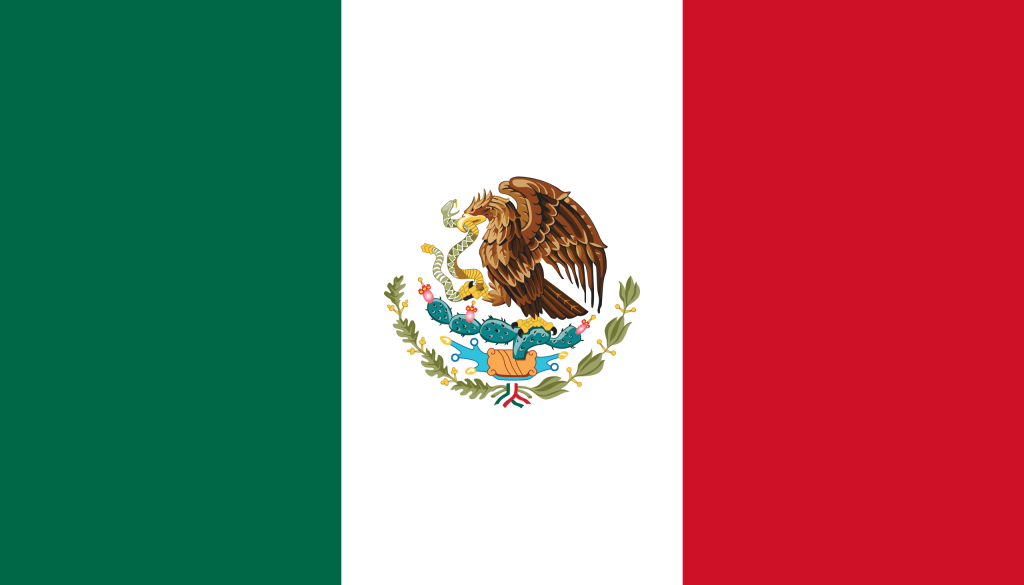
Bandera de Me’xico. The flag of Mexico. It is vertical tricolor of green; white and red. Charged in the middle white section is the national coat of arms. The overall design has been consistent since 1821.
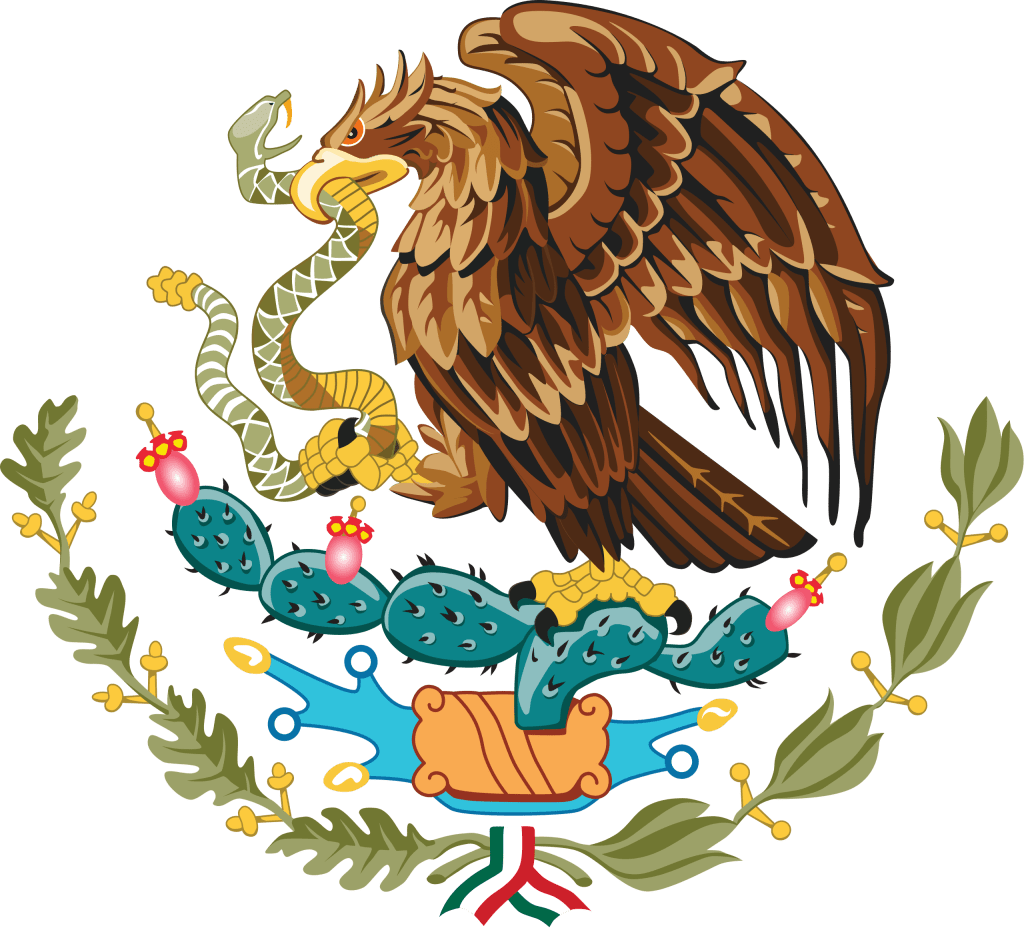
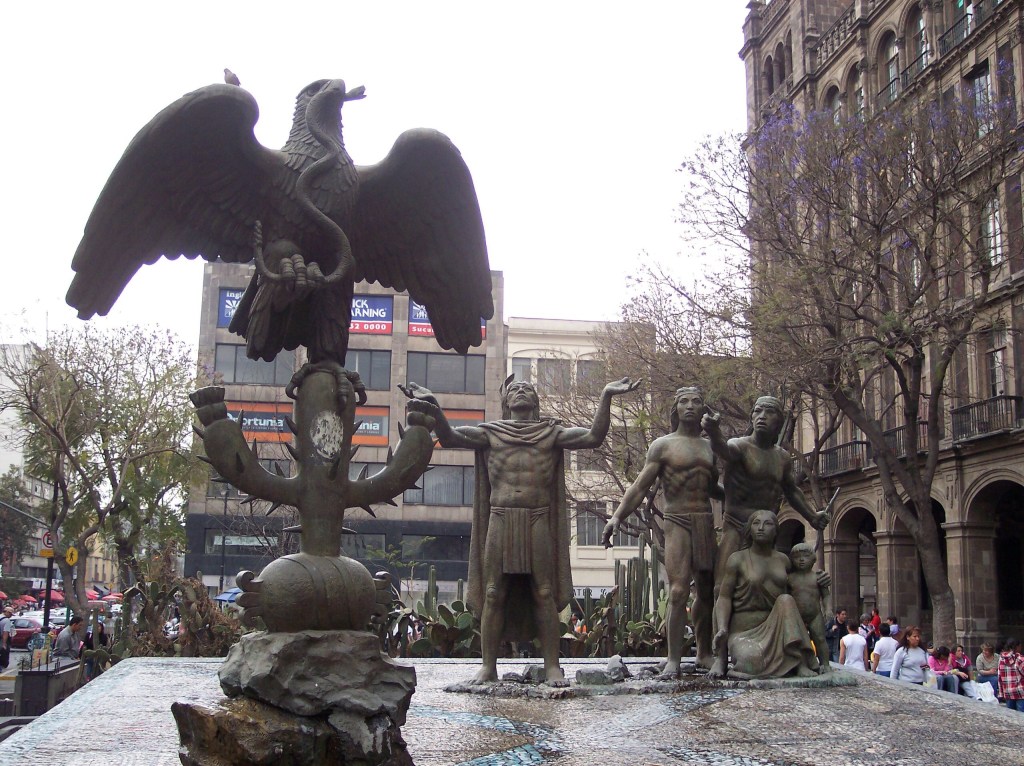
The coat of arms is based on the Aztec symbol for Tenochtitlan [Mexico City]. The story is that the gods told the Aztecs to build a city where they find an eagle gripping a snake in it’s talon while sitting on a prickly pear cactus on a rock.
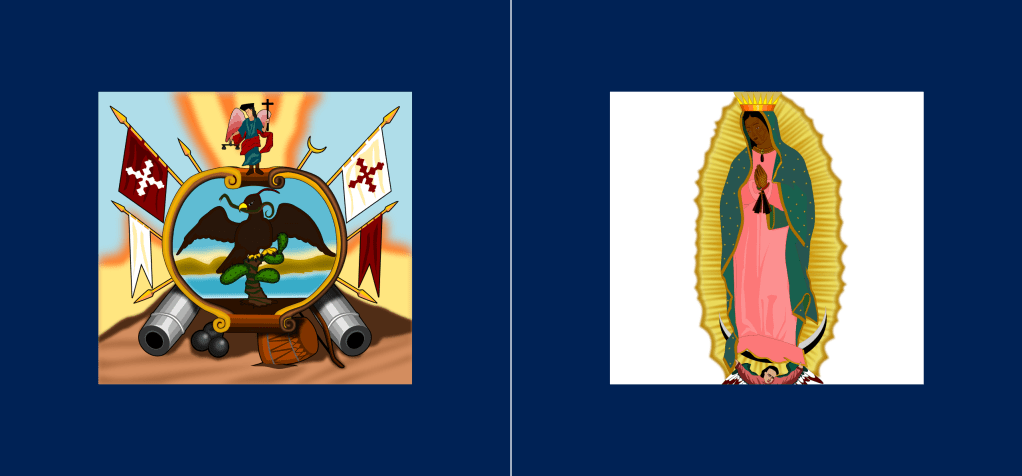
There have been earlier flags used for the nation. Prior to the war of independence against Spain, 1810, for a short time there was a hastily designed flag to unify the people. The Banderas gemelas de Allende (The Twin Flags from Allendas) featuring the Virgin of Guadalupe.
People fly the Mexican Flag on the Fifth of May, but without a clear understanding of what Cinco de Mayo actually is. It is not Mexican Independence Day. It is not widely celebrated in Mexico.
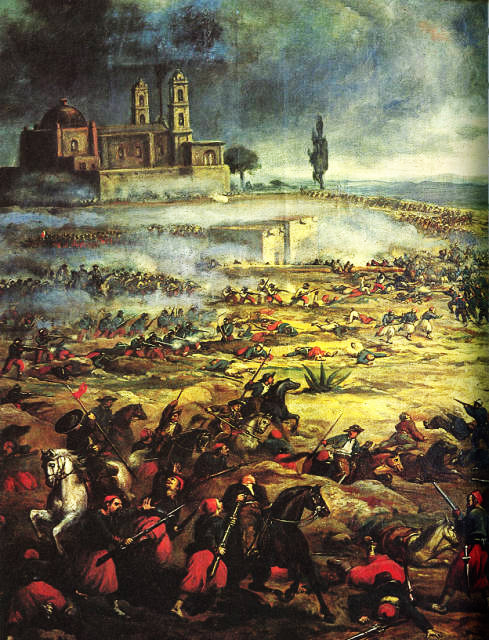
Cinco de Mayo is the commemoration of the Battle of Puebla where the ill equipped Mexican Army defeated the French Army. Napoleon III sent his army to Mexico to collect a debt owed the French Government. Mexico could not make the loan payment so a battle ensued. Napoleon also wanted to establish a base to help the Confederacy in the American Civil War. But outnumbered 2 to 1, the Mexican Army defeated the French forces.
Cinco de Mayo has been celebrated in California since 1863, but didn’t really ‘catch on’ until the 1980s when American Beer companies used it to promote their products.
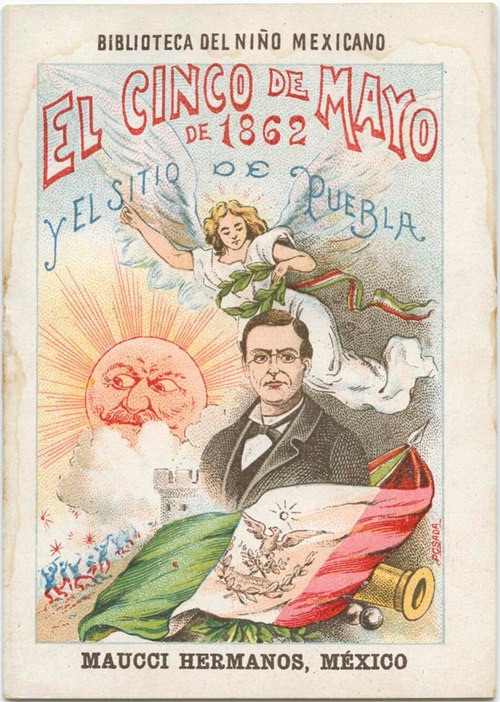
“The Mexican victory on May 5th however, was short-lived. A year later, with 30,000 troops, the French were able to defeat the Mexican army, capture Mexico City, and install Emperor Maximilian I as ruler of Mexico. The French victory was itself short-lived, lasting only three years, from 1864 to 1867. By 1865, “with the American Civil War now over, the U.S. began to provide more political and military assistance to Mexico to expel the French.” Upon the conclusion of the American Civil War, Napoleon III, facing a persistent Mexican guerilla resistance, the threat of war with Prussia, and “the prospect of a serious scrap with the United States”, retreated from Mexico starting in 1866. The Mexicans recaptured Mexico City, and Maximilian I was apprehended and executed, along with his Mexican generals Miguel Miramón and Tomás Mejía Camacho in Cerro de las Campanas, Querétaro. On June 5, 1867, Benito Juárez entered Mexico City where he installed a new government organizing his administration.”




Leave a Reply