
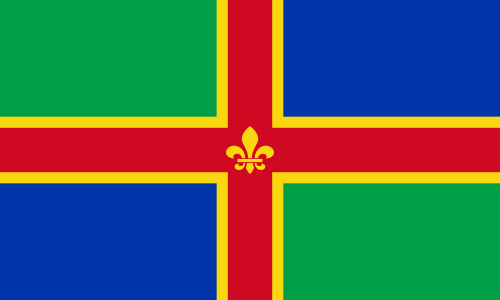
Lincolnshire, abbreviated Lincs, is a ceremonial county in the East Midlands and Yorkshire and the Humber regions of England. It is bordered by the East Riding of Yorkshire across the Humber estuary to the north, the North Sea to the east, Norfolk, Cambridgeshire, Northamptonshireand Rutland to the south,and Leicestershire, Nottinghamshire and South Yorkshire to the west.
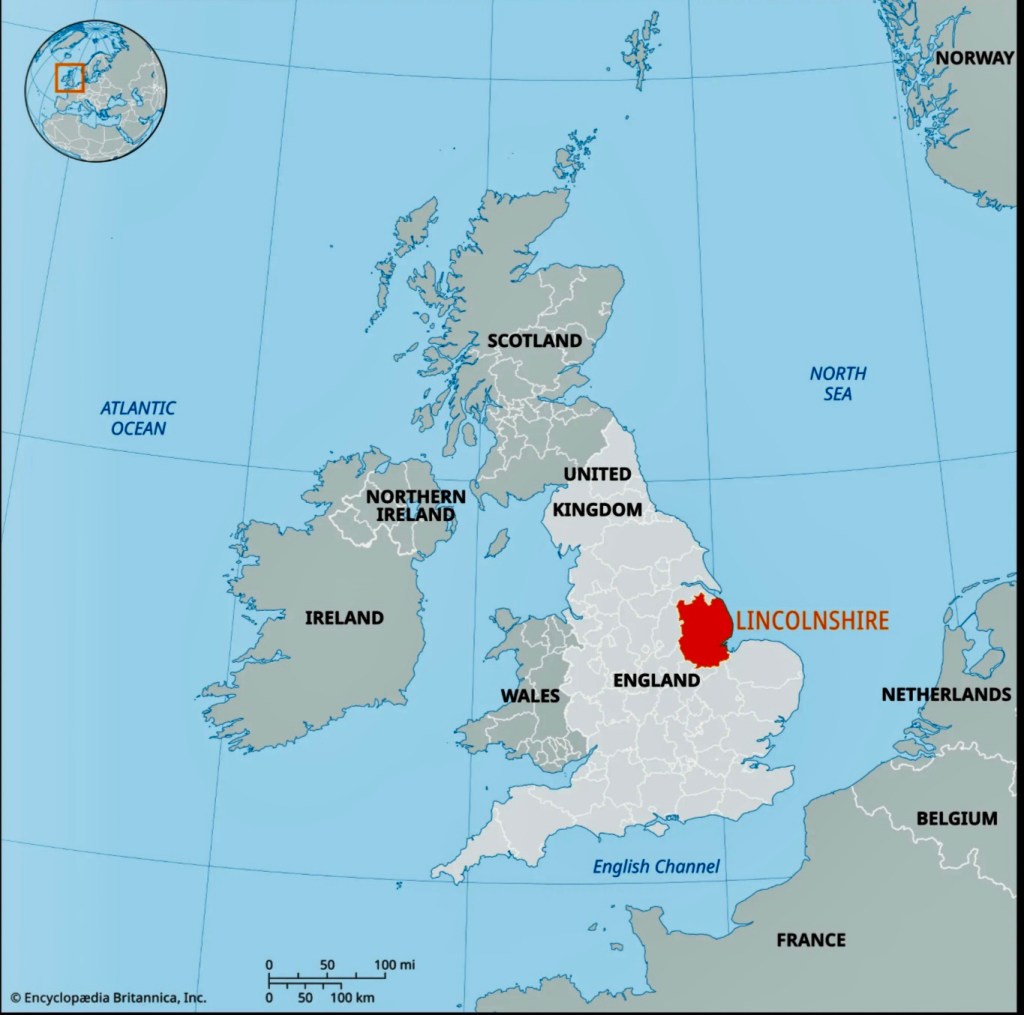
The county is predominantly rural, with an area of 6,959 km2(2,687 sq mi) and a population of 1,095,010. The county is the second largest in England and has a varied geography. The south-east contains part of the Fens, a naturally marshy region which has been drained for agriculture, and the south-west is an upland region.

Lincolnshire is the home of The Lincoln Imp. The Lincoln Imp is a grotesque, [In architecture, a grotesque is a fantastic or mythical figure carved from stone and fixed to the walls or roof of a building,] on a wall inside Lincoln Cathedral, England, and it has become the symbol of the city of Lincoln. The carving is situated high on the north side of the Angel Choir and is not conspicuous. The Angel Choir was built between 1250 and 1280, so the carving must date from then. It became well known in the late nineteenth century, and its associated folk tales are an elaboration of earlier traditions involving the devil hiding from wind inside the cathedral, the devil looking at Lincoln with malicious envy, and stone sculptures (at Lincoln Cathedral or Lincoln College, Oxford) said to represent either theme.
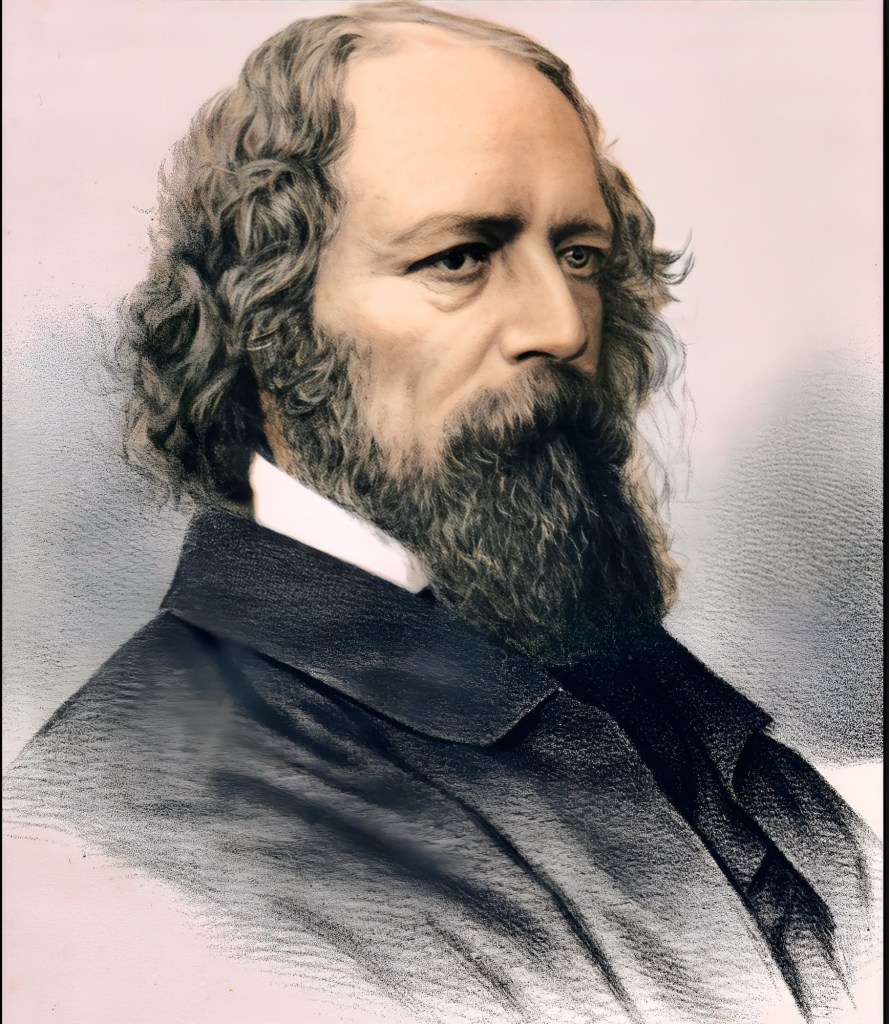
Lincolnshire is the birthplace of England’s most famous poet, Alfred Lord Tennyson.
“Alfred, Lord Tennyson, born in Lincolnshire, England (1809). Tennyson gave us some of the most familiar lines in English poetry, including “‘Tis better to have loved and lost than never to have loved at all” and “Theirs not to reason why, theirs but to do and die.”
His famous lyric poems include “Tears, idle tears” and “Crossing the Bar,” but many consider Tennyson’s masterpiece to be “In Memoriam A.H.H.” He started writing the elegy in 1833 after his close friend Arthur Hallam had a cerebral hemorrhage and died suddenly. The poem was controversial because it questioned the tenets of Christian faith. Tennyson wrote: “Who trusted God was love indeed / And love Creation’s final law — / Tho’ Nature, red in tooth and claw / With ravine, shriek’d against his creed.” It wasn’t until 1850 that he published the poem, 17 years after Hallam’s death. That same year, he was appointed poet laureate of England, succeeding William Wordsworth. Tennyson would keep the position for 42 years, until his death in 1892, the longest that anyone ever held the post. After the death of her husband, Albert, Queen Victoria was said to have kept a copy of Tennyson’s elegy always within reach.” (Garrison Keillor ‘The Writers Almanac’)
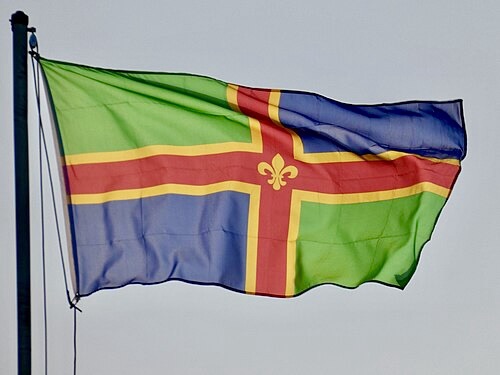
The flag features a red cross, edged in yellow and bearing a yellow fleur-de-lys, on a background of green and blue quarters. The red cross is the Saint George’s Cross representing England. Yellow represents the crops grown in the county, as well as the nickname “Yellowbellies” given to people born and bred in Lincolnshire. Blue represents both the sea of the East coast and the wide skies of Lincolnshire, and green symbolises the rich lushness of fenland fields. The fleur de lys is a recognised symbol of the City of Lincoln.


Leave a Reply