
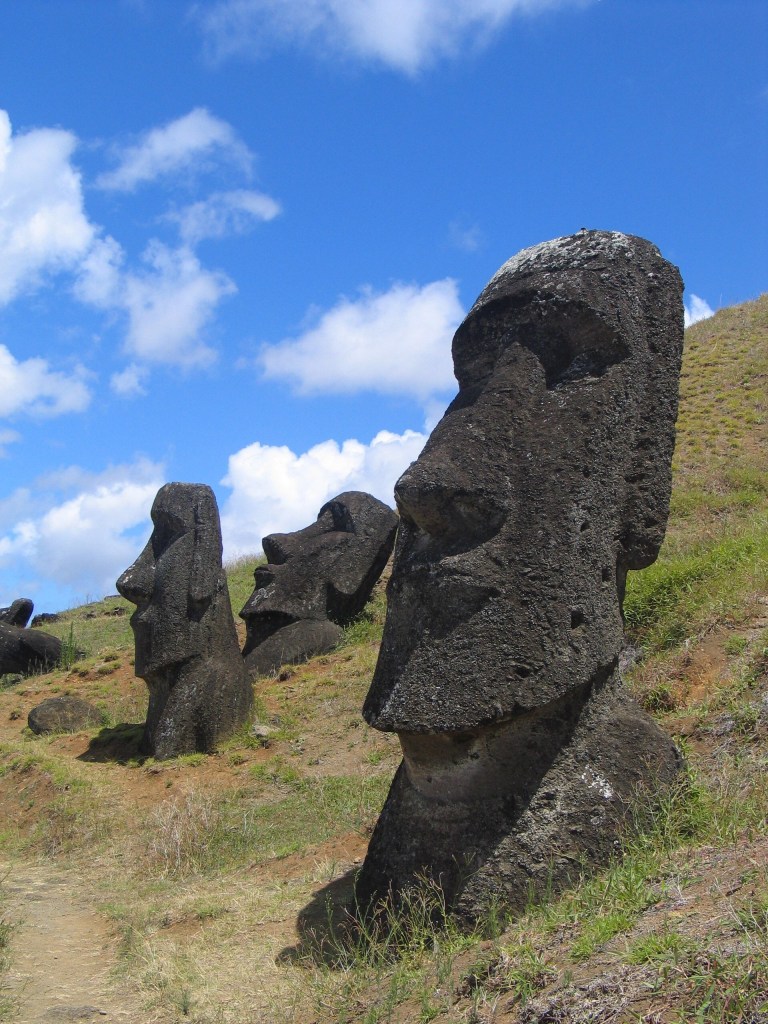
Easter Island. It is an island and special territory of Chile in the southeastern Pacific Ocean, at the southeasternmost point of the Polynesian Triangle in Oceania. The island is most famous for its nearly 1,000 extant monumental statues, called moai, which were created by the early Rapa Nui people. In 1995, UNESCO named Easter Island a World Heritage Site, with much of the island protected within Rapa Nui National Park.
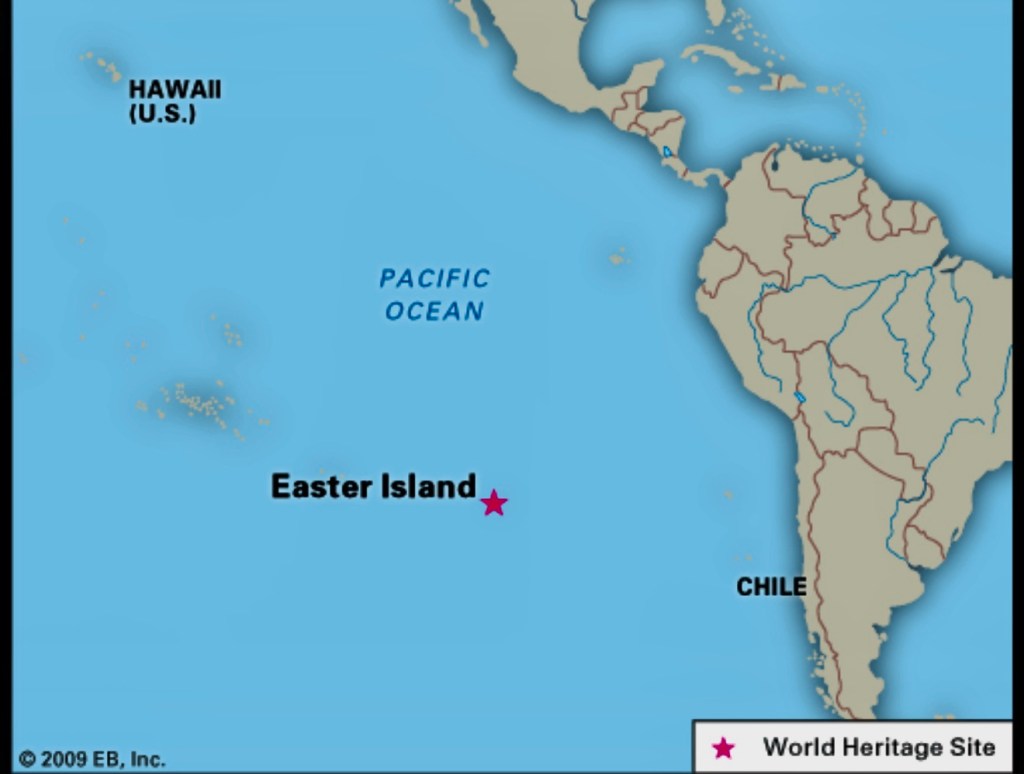
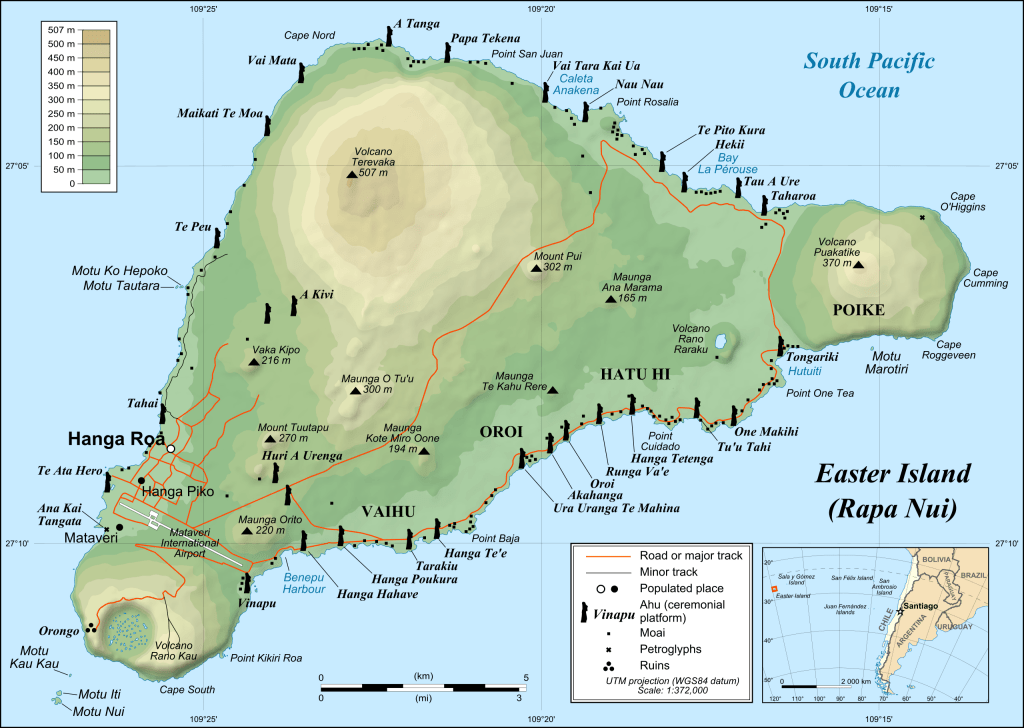
“To its original inhabitants the island is known as Rapa Nui (“Great Rapa”) or Te Pito te Henua (“Navel of the World”). The first European visitors, the Dutch, named it Paaseiland (“Easter Island”) in memory of their own day of arrival. Its mixed population is predominantly of Polynesian descent; almost all live in the village of Hanga Roa on the sheltered west coast. Pop. (2002) 3,304; (2017) 7,750.”
“The island’s population represents the easternmost settlement of a basically Polynesian subgroup that probably derived from the Marquesas group. The original Rapa Nui vocabulary has been lost except for some mixed Polynesian and non-Polynesian words recorded before the Tahitian dialect was introduced to the decimated population by missionaries in 1864. Today Spanish is generally spoken. In their traditions, the islanders consistently divide themselves into descendants of two distinct ethnic groups, the “Long-Ears” and the “Short-Ears” Intermarriage is common, and an influx of foreign blood has become increasingly dominant in recent years.”
The island has had human activity since 1200. There was a thriving, industrious culture with thousands of citizens. Once land began to be cleared for cultivation and then the introduction of the Polynesian rat brought about deforestation. The Europeans arrived in 1722. (A Dutch ‘explorer’ ‘found’ the island on Ester Sunday and called it such.). Peru practiced slave raiding and by 1877 the population was estimated to be 111. It is the most remote inhabited island in the world.
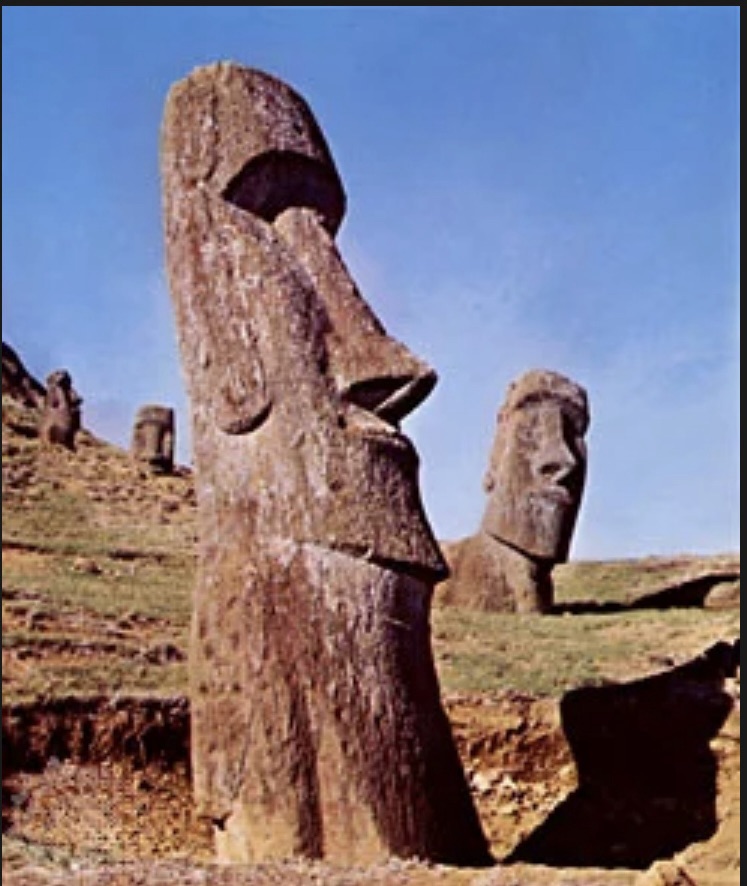
“The island is famous for its gigantic stone statues, of which there are more than 600, and for the ruins of giant stone platforms (ahus) with open courtyards on their landward sides, some of which show masterly construction. Archaeological surveys were carried out in 1886, 1914, and 1934; archaeological excavations were initiated in 1955. The excavations revealed that three distinct cultural periods are identifiable on the island.
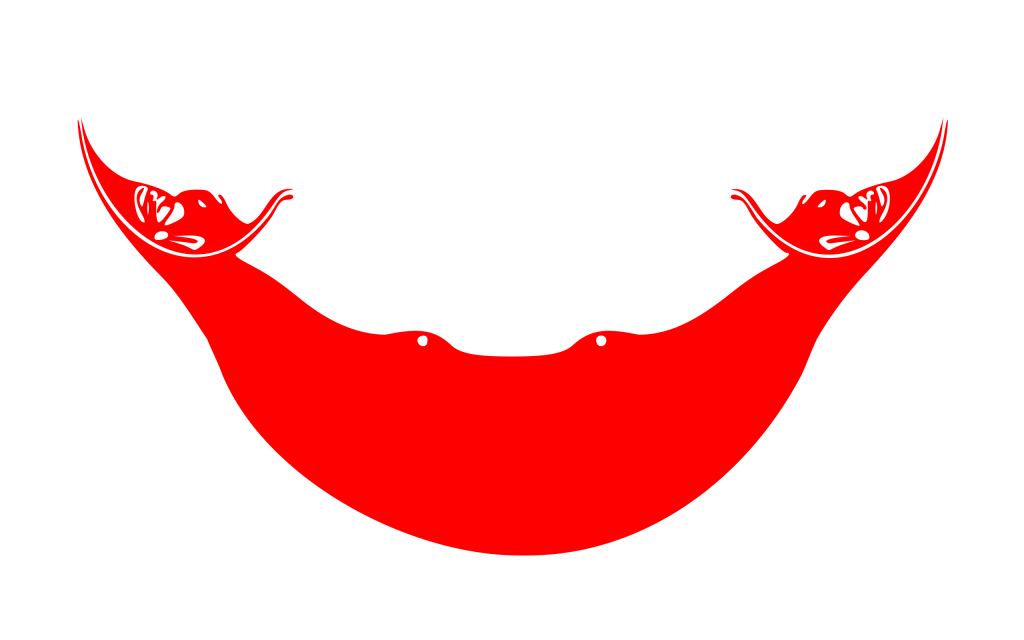
The flag is a white field with a red (for power) reimiro in the center. The reimiro is a pectoral ornament worn by the people of the island. On each edge of the reimiro is an anthropomorphic symbol of the chiefs or nobels from their ancestors.”
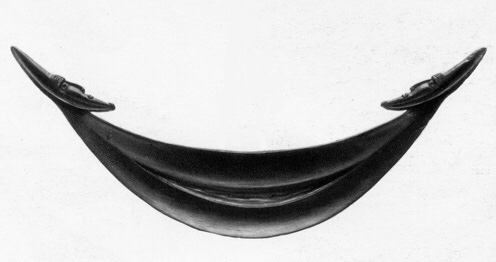
“The flag is a white flag featuring in center a reimiro (a wooden pectoral ornament once worn by the people of Rapa Nui) painted in red (mana), a symbol of power, with two anthropomorphic figures at its edges, representing the ariki(chiefs, nobles).”
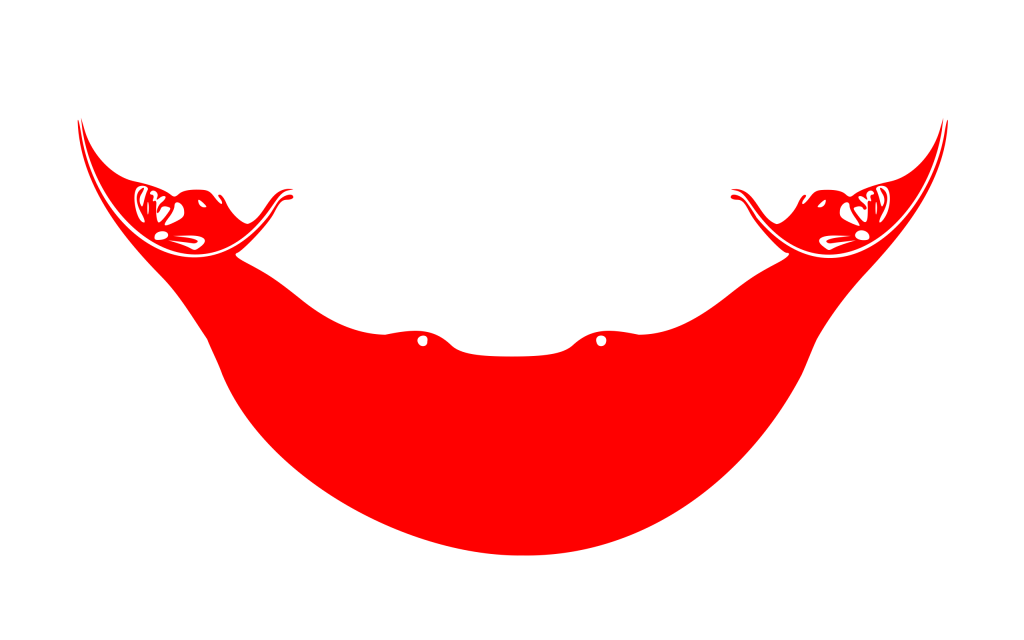
“The flag was created by the local population in 1880 for the island to adopt the apparatus of a modern state and hold a state-to-state dialogue with Chile, which eventually annexed the island in 1888.
For many years, the flag was unofficially used by the island’s Polynesian population to represent their island, however the official flag was the white and gold flag of the Municipality of Easter Island. In 2006, it was upgraded to a Special Territory and optional use of the Rapa Nui name was allowed in government documents for the first time, with the reimiro flag adopted as the entity’s flag.”


Leave a Reply