
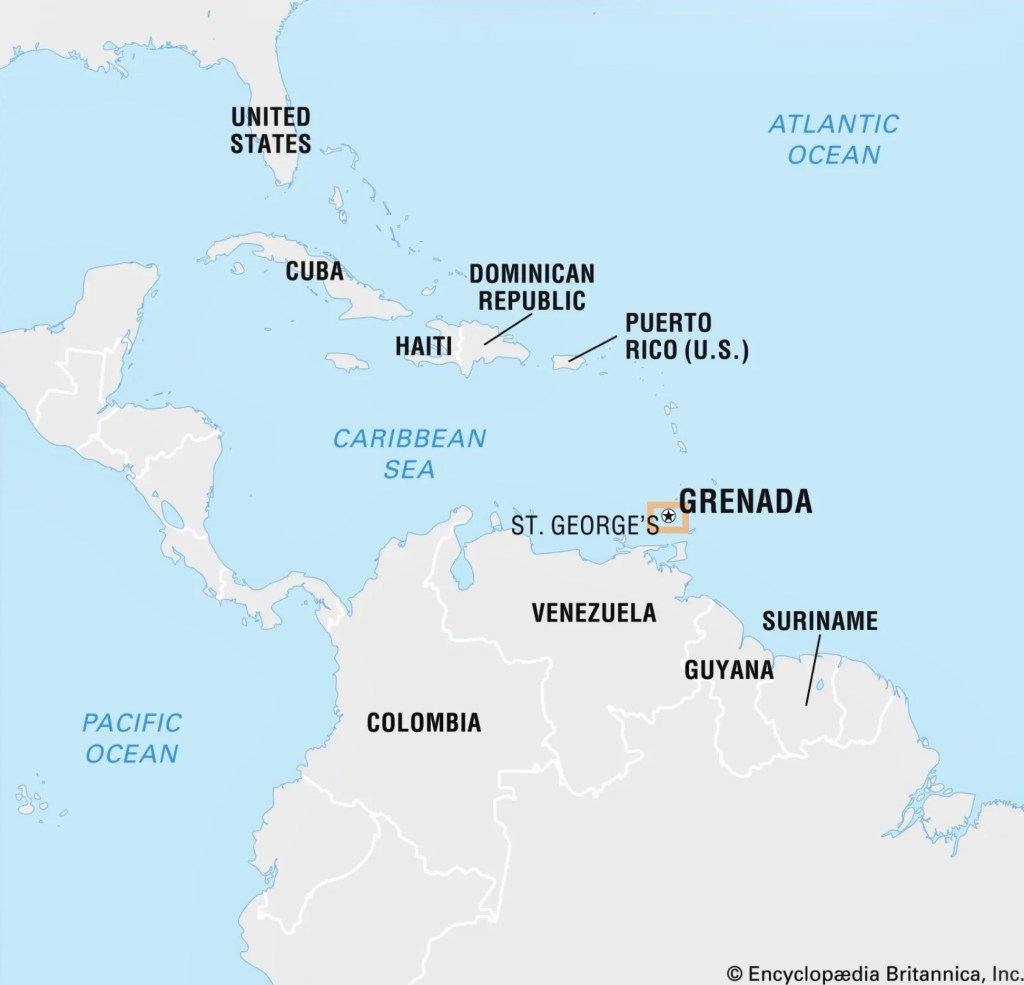
Grenada is an island country of the West Indies in the eastern Caribbean Sea. The southernmost of the Windward Islands, Grenada is directly south of Saint Vincent and the Grenadines and about 100 miles (160 km) north of Trinidad and the South American mainland.
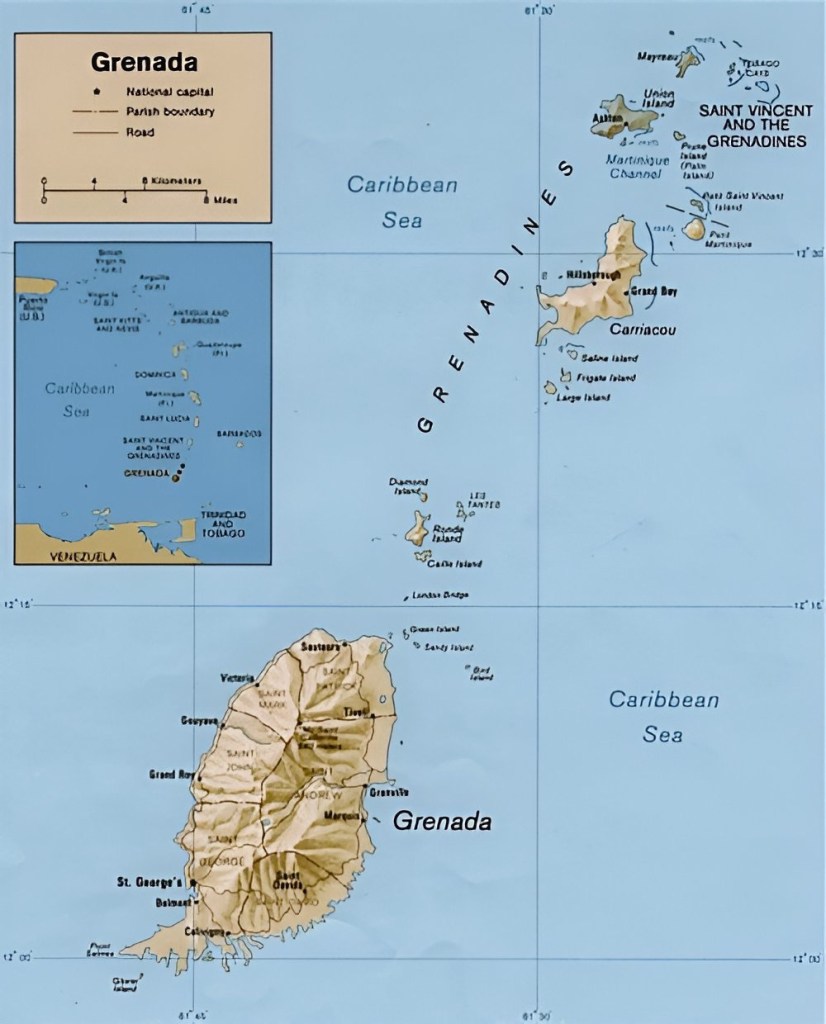
Grenada consists of the island of Grenada itself, two smaller islands, Carriacou and Petite Martinique, and several small islands that lie to the north of the main island and are a part of the Grenadines. Its size is 344 square kilometres (133 sq mi), with an estimated population of 114,621 in 2024. Its capital is St. George’s. Grenada is also known as the “Island of Spice” due to its production of nutmeg and
mace crops.
Most of the population is of African descent being brought to the islands by the French as slave labor for the spice crops. After decades of back and forth colonization it ended up in the hands of the British. For a shot time it was part of the ‘Federation of West Indies’ a group of Island Nations under the British Empire. In 1974 England granted Grenada its independence. It became a part of the Commonwealth of Nations under British control.

In 1979 the Prime Minister of Grenada was overthrown in a bloodless coup. The leader of the new government, Maurice Bishop, he was arrested and executed by another revolutionary army who had direct ties to the USA. Since this time Grenada returned to a parliamentary democracy that has joined the British Commonwealth of Nations.
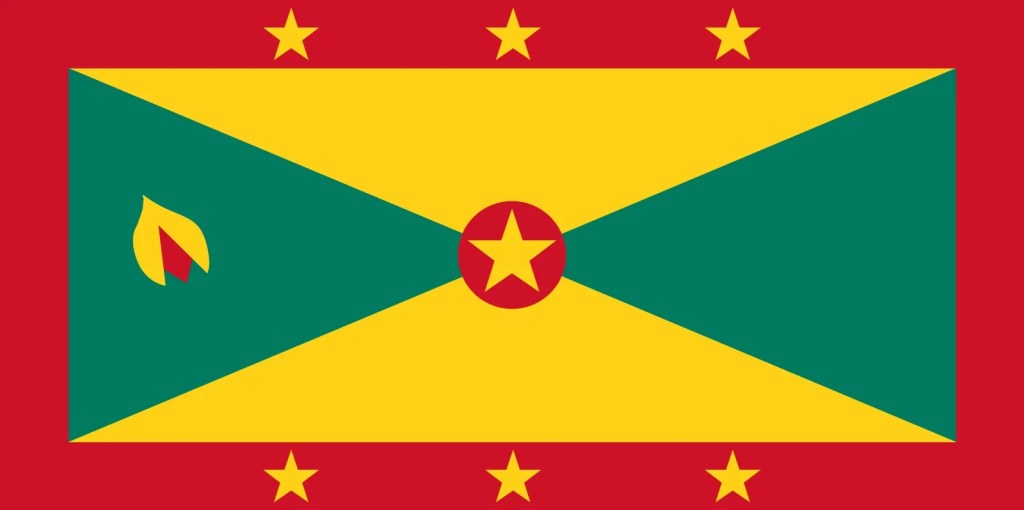
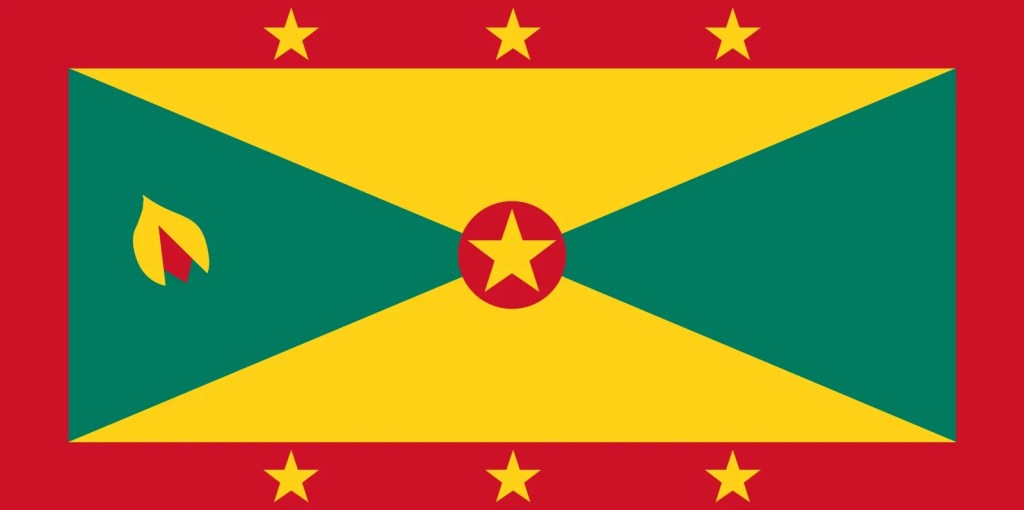
The flag of Grenada consists of two yellow triangles at the top and bottom and two green triangles at the hoist and fly. These are surrounded by a red border charged with six five-pointed yellow stars – three at the top centre and three at the bottom centre – along with an additional star on a red disc at the centre and a nutmeg at the hoist triangle. Adopted in 1974 to replace the temporary design used since the islands became an Associated State of the United Kingdom, it has been the flag of Grenada since the country gained independence that year. The representation of a nutmeg is symbolic of the islands’ primary export, and was the one feature from the previous flag that was preserved.

The colours and symbols of the flag carry cultural, political, and regional meanings. The green epitomises the islands’ vegetation and agriculture, while the yellow evokes the sun, as well as the warmth and wisdom of Grenadians. The red represents harmony, unity, courage, and vitality. The yellow stars on the red border symbolise the country’s parishes, while the yellow star on the red disc at the centre signifies its two sister islands, Carriacou and Petite Martinique which are counted as the country’s seventh parish. The symbol of a nutmeg at the hoist alludes to one of the primary agricultural exports of the islands. The country is the second-largest producer of nutmeg in the world, trailing only Indonesia. Consequently, Grenada has acquired the nicknames of “Isle of Spice” and “Spice Island”.
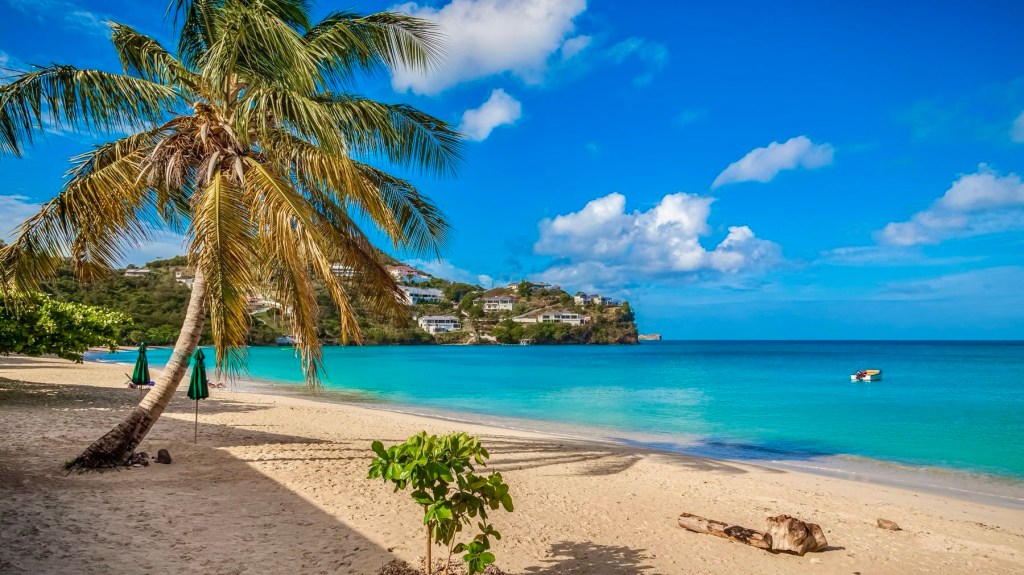
And, Grenada falls into the category of places we have been to. In an early adventure we were on a working sailboat and our trip ended in Grenada.

 deliriouslove1970. The life & times of Gary and Denise Flanders. (Free and worth every penny. If you would like to compliment the editor, send to garytheflan@deliriouslove1970.com. If you would like to complain, call your mother.)
Leave a comment