
County Durham, or Durham, is a ceremonial county in North East England. The county borders Northumberland and Tyne and Wear to the north, the North Sea to the east, North Yorkshire to the south, and Cumbria to the west. The largest settlement is Darlington.
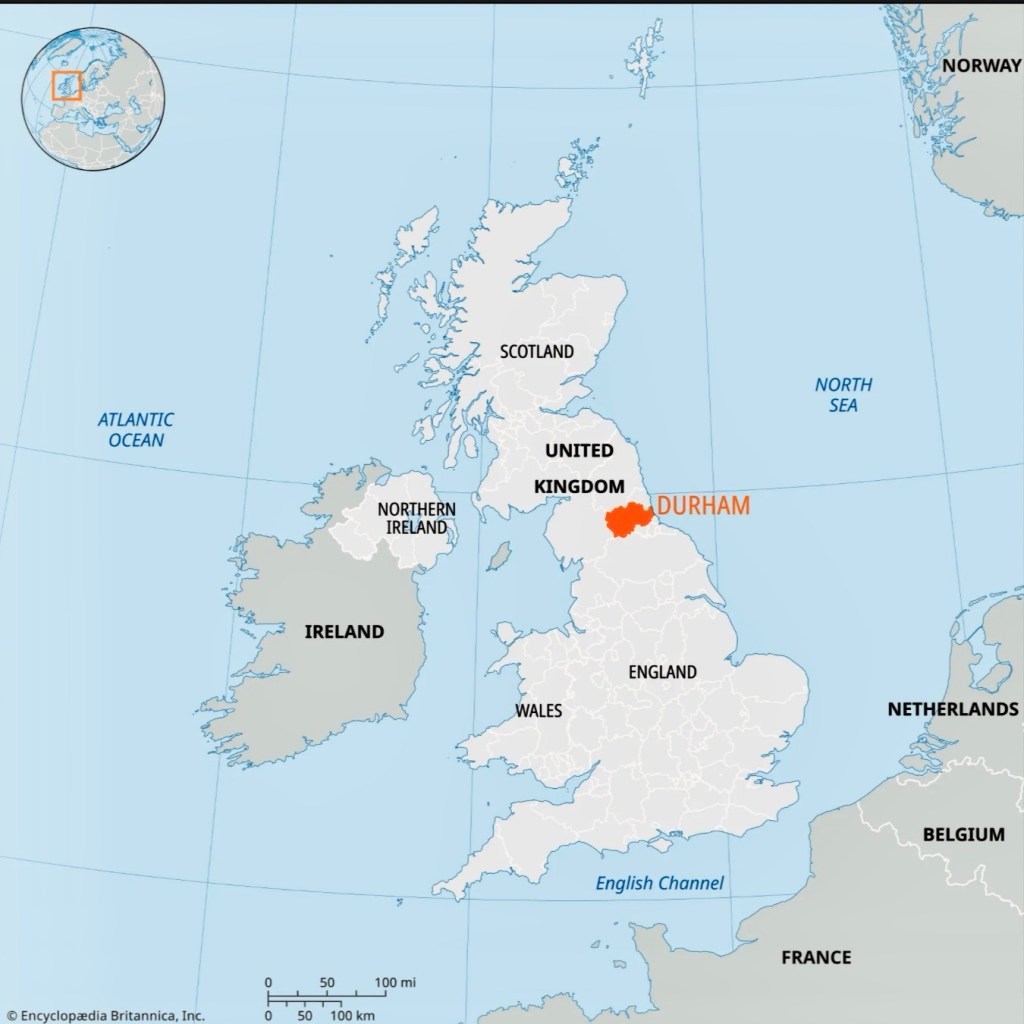
The ceremonial county is officially named Durham, but the county has long been commonly known as County Durham and it is the only English county name prefixed with “County” in common usage (a practice common in Ireland). Its unusual naming (for an English shire) is explained to some extent by the relationship with the Bishops of Durham, who for centuries governed Durham as a county palatine (the County Palatine of Durham) outside the usual structure of county administration in England.
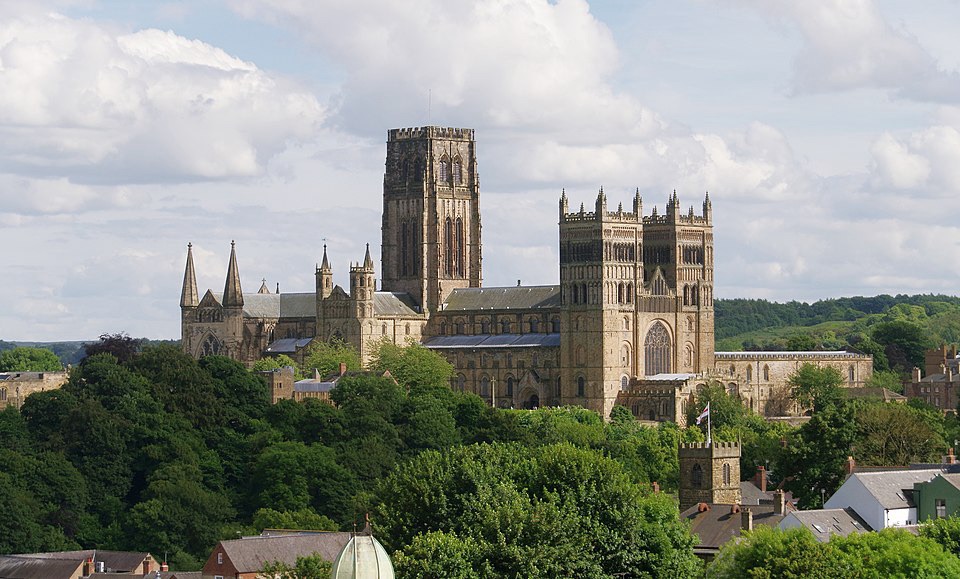
In 995 CE, St Cuthbert’s community, who had been transporting Cuthbert’s remains around, partly in an attempt to avoid them falling into the hands of Viking raiders, settled at Dunholm (Durham) on a site that was defensively favourable due to the horseshoe-like course of the River Wear.[12] St Cuthbert’s remains were placed in a shrine in the White Church, which was originally a wooden structure but was eventually fortified into a stone building.
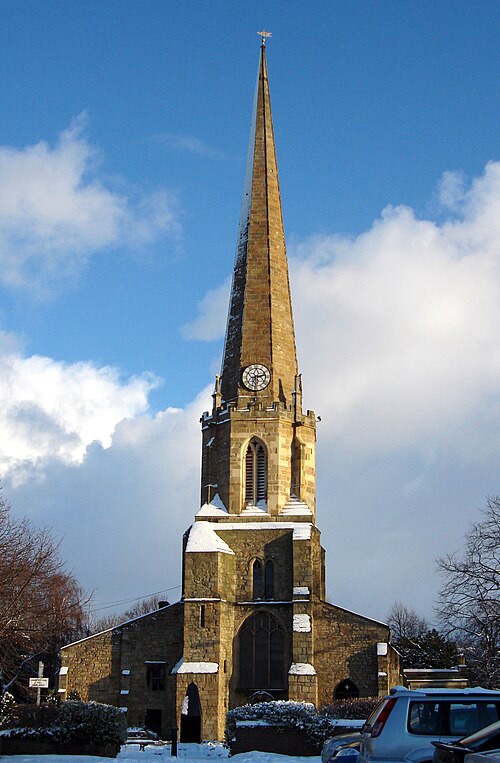
The Church of St Mary and St Cuthbert, Chester-le-Street, on the site of the wooden ninth century church built by the Lindisfarne monks
Cuthbert[a] (/ˈkʌθ.bɜːrt/) (c. 634 – 20 March 687) was a saint of the early Northumbrian church in the Celtic tradition. He was a monk, bishop and hermit, associated with the monasteries of Melrose and Lindisfarne in the Kingdom of Northumbria, today in north-eastern England and south-eastern Scotland. Both during his life and after his death, he became a popular medieval saint of Northern England, with a cult centered on his tomb at Durham Cathedral. Cuthbert is regarded as the patron saint of Northumbria. His feast days are 20 March (Catholic Church, Church of England, Eastern Orthodox Church, Episcopal Church) and 4 September (Church in Wales, Catholic Church).
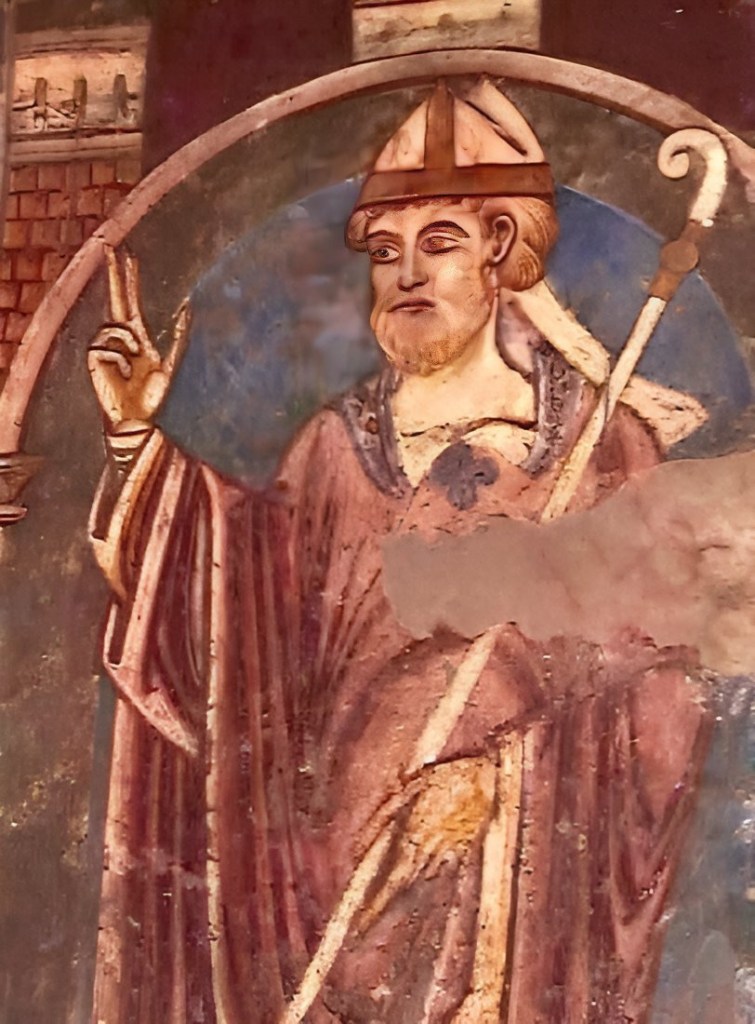
Cuthbert was known for his humility and piety. He was appointed Bishop and led with distinction. He retired and became a hermit.
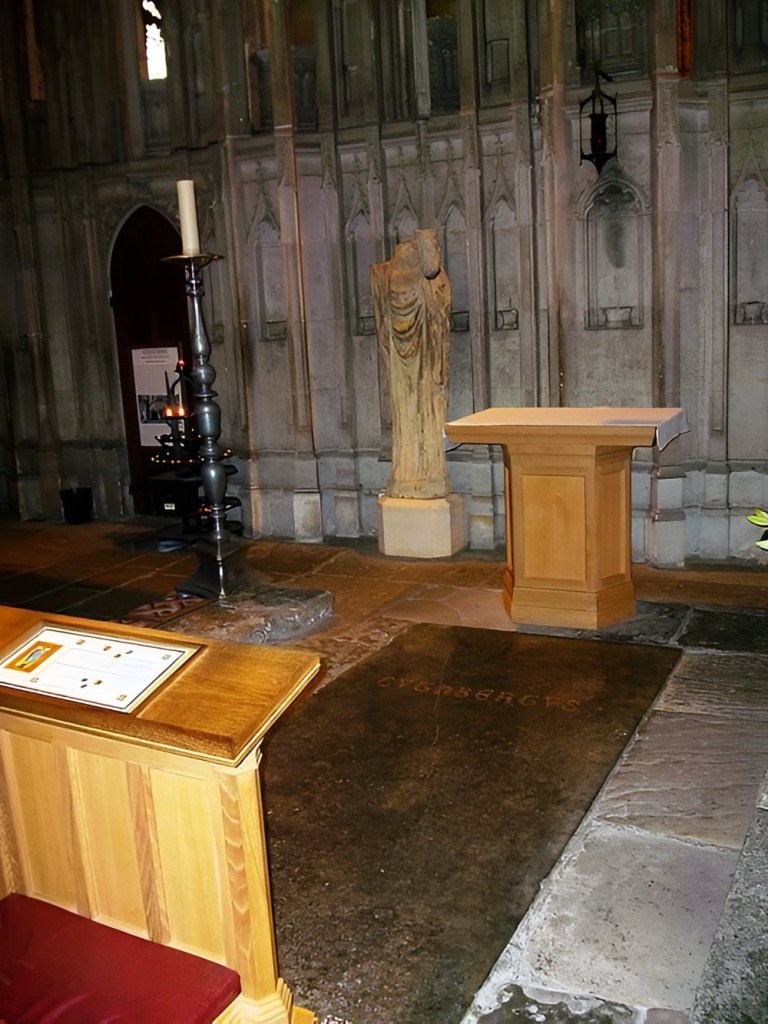
Location of St Cuthbert’s tomb and reburial in Durham Cathedral; behind is a damaged statue of St Cuthbert, holding the head of the St Oswald (whose head was reburied with Cuthbert)
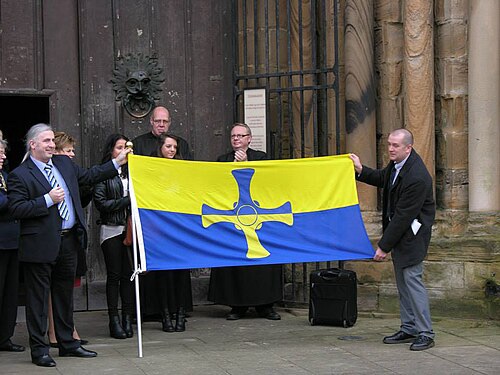
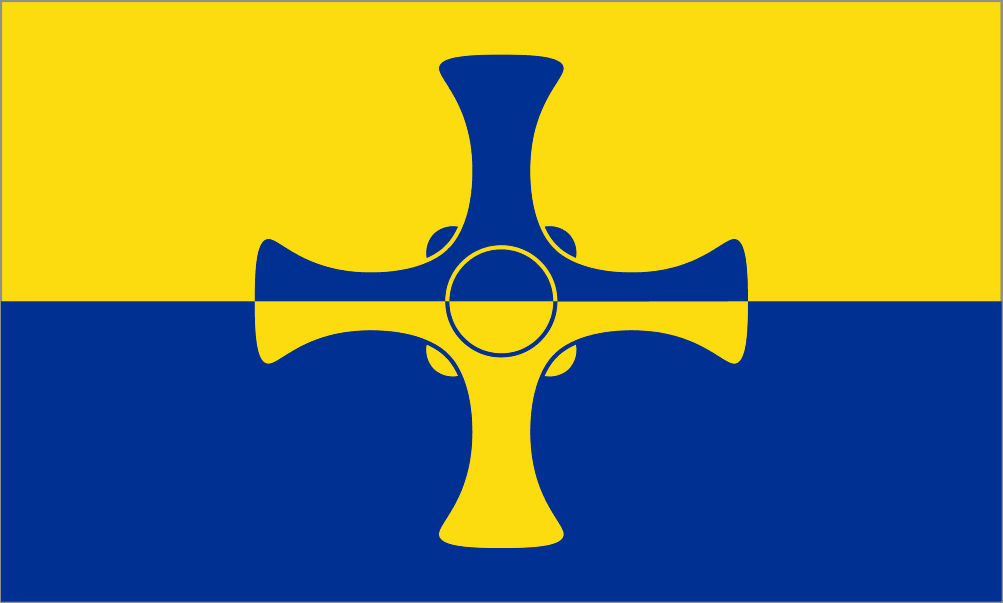
The unfurling of the county flag at Durham Cathedral in November 2013
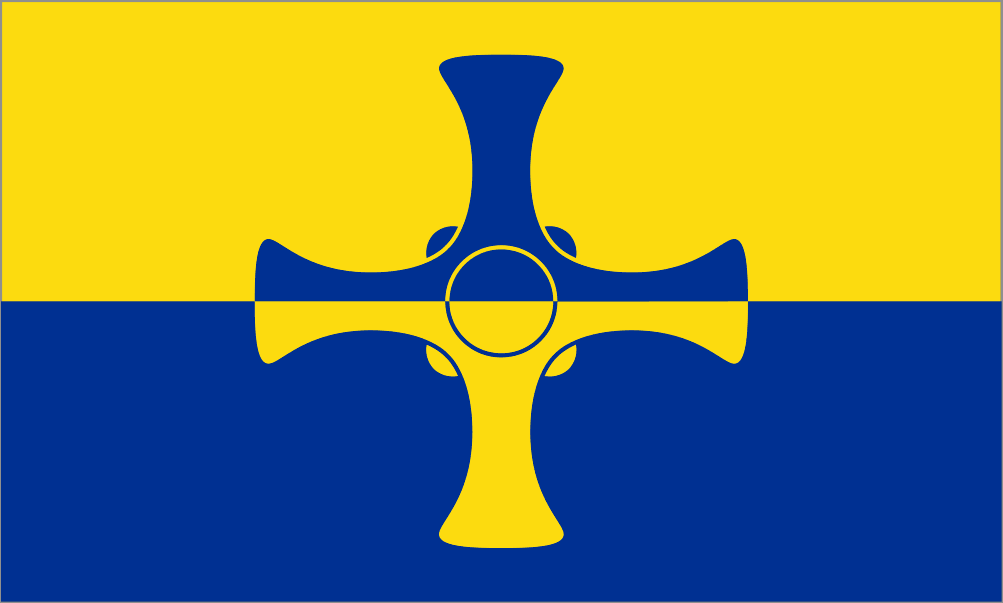
“The County Durham Flag is a community flag proclaiming the unique identity of this historic English county.
It is based on the St Cuthbert’s cross, with the whole design counter-changed horizontally between the County Durham colours of blue and yellow.” [The Flag Institute]
The flag is a bicolour, the upper half gold and the lower blue. On this is a counterchanged depiction of the pectoral cross of St Cuthbert.
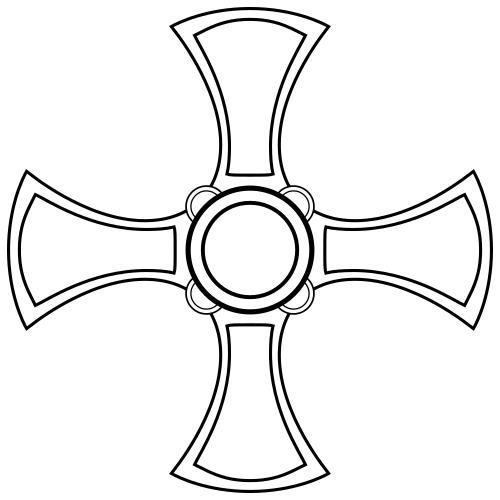
It is said that Cuthbert was buried with his cross. The design of the flag is close to the flag of Kirkcudbrightshire Scotland.
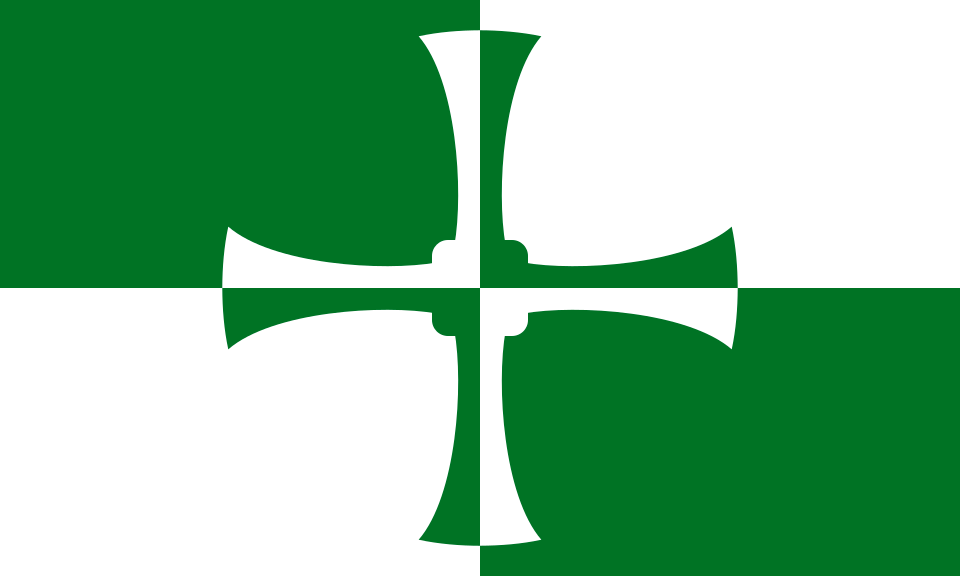
I do enjoy the design/symbolism of the County Durham flag.

 deliriouslove1970. The life & times of Gary and Denise Flanders. (Free and worth every penny. If you would like to compliment the editor, send to garytheflan@deliriouslove1970.com. If you would like to complain, call your mother.)
Leave a comment