
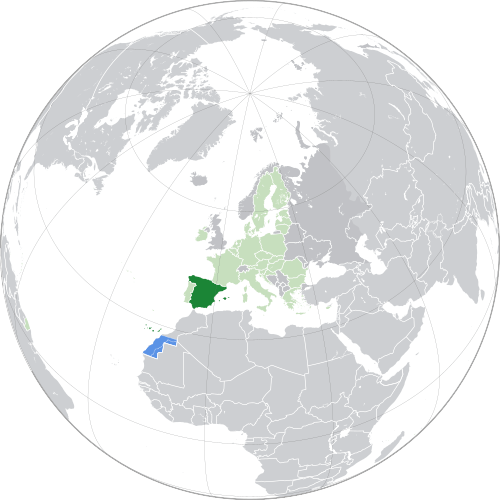
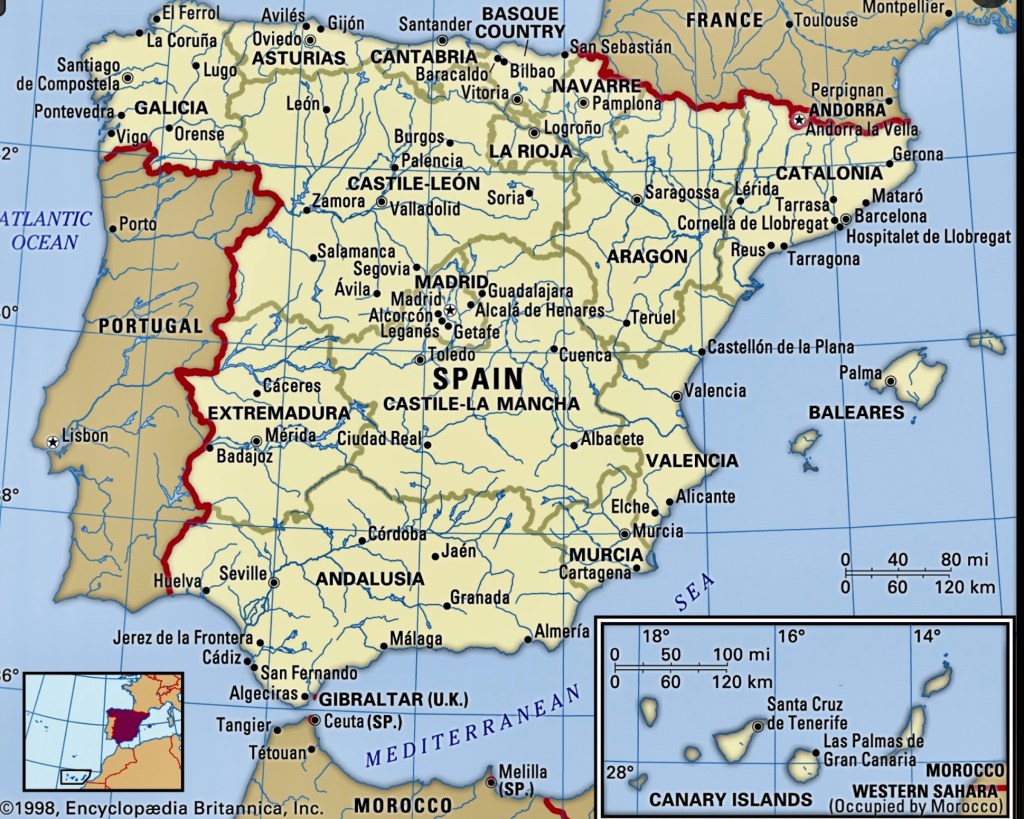
Spain, officially the Kingdom of Spain, is a country in Southernand Western Europe with territories in North Africa. Featuring the southernmost point of continental Europe, it is the largest country in Southern Europe and the fourth-most populous European Union(EU) member state. Spanning the majority of the Iberian Peninsula, its territory also includes the Canary Islands, in the Eastern Atlantic Ocean; the Balearic Islands, in the Western Mediterranean Sea; and the autonomous cities of Ceuta and Melilla, in mainland Africa. Peninsular Spain is bordered to the north by France, Andorra, and the Bay of Biscay; to the east and south by the Mediterranean Sea and Gibraltar and Morocco, through its exclaves in North Africa; and to the west by Portugal and the Atlantic Ocean. Spain’s capital and largest city is Madrid; other major urban areas include Barcelona, Valencia, Seville, Zaragoza, Málaga, Murcia, and Palma de Mallorca.
Spain is a storied country of stone castles, snowcapped mountains, vast monuments, and sophisticated cities, all of which have made it a favored travel destination. The country is geographically and culturally diverse. Its heartland is the Meseta, a broad central plateau half a mile above sea level. Much of the region is traditionally given over to cattle ranching and grain production; it was in this rural setting that Miguel de Cervantes’s Don Quixote tilted at the tall windmills that still dot the landscape in several places.
The name of Spain (España) comes from Hispania, the name used by the Ancient Romans for the Iberian Peninsula during the Roman Republic and the Roman Empire. The etymology of the term Hispania remains uncertain.
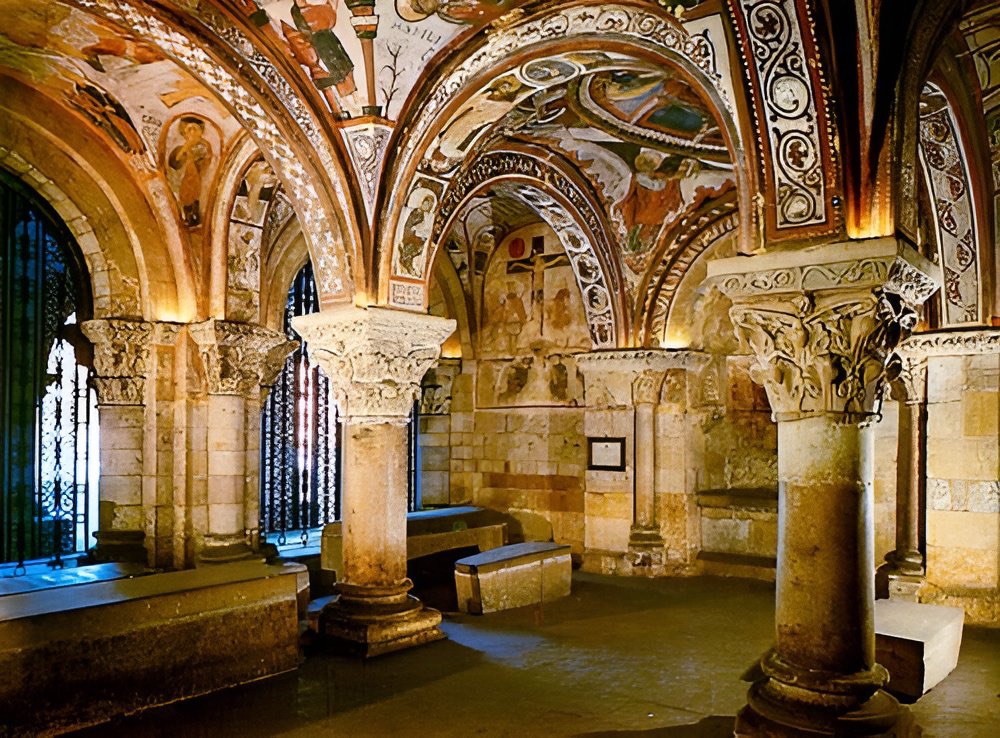
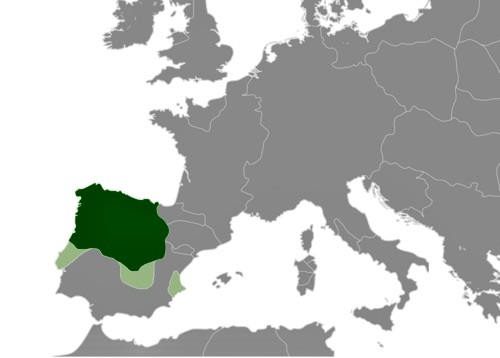
Royal Panteon of San Isidoro, Kingdom of León
The Kingdom of León was the strongest Christian kingdom for centuries. In 1188, the first form (restricted to the bishops, the magnates, and ‘the elected citizens of each city’) of modern parliamentary session in Europe was held in León (Cortes of León).
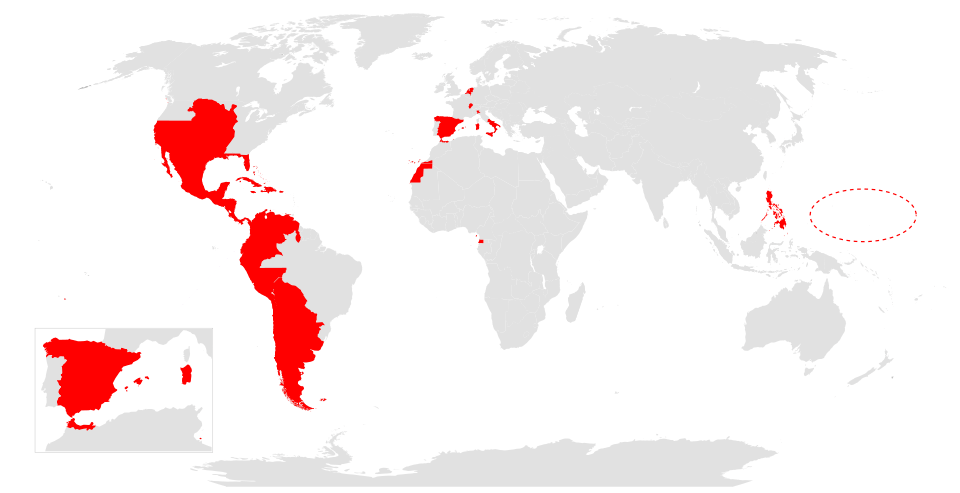
Spain was not only a force in Europe, it’s empire stretched throughout the entire world.
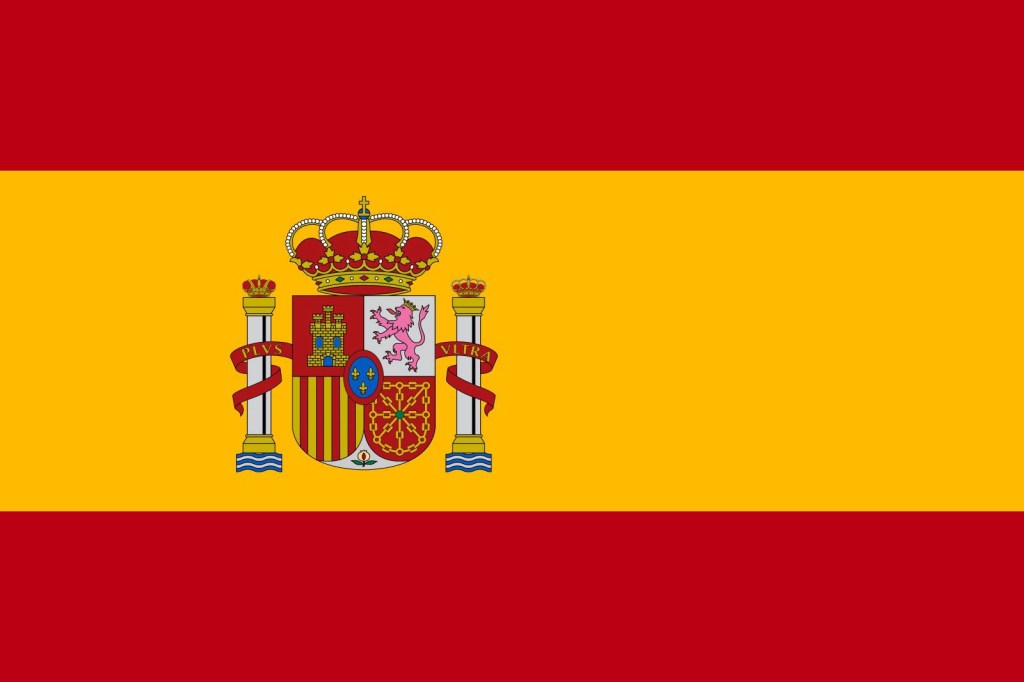
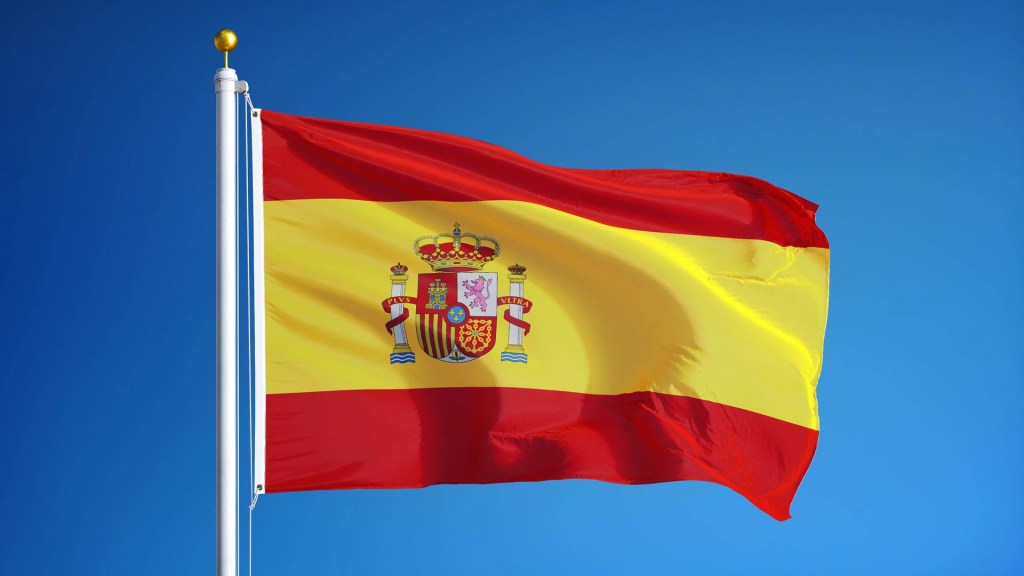
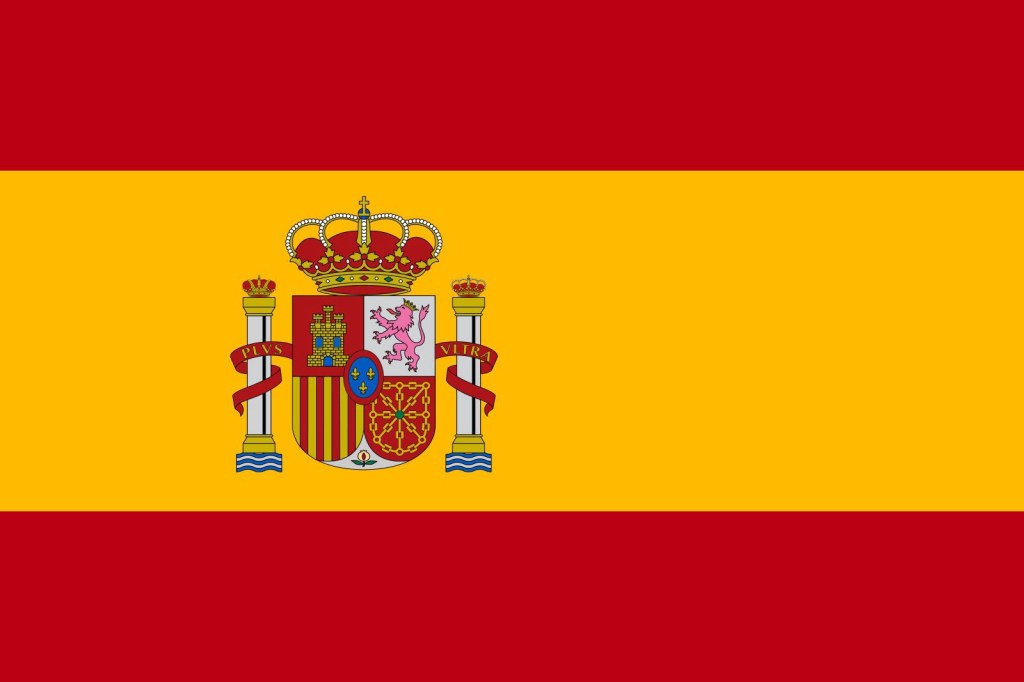
The national flag of Spain (Spanish: Bandera de España), as it is defined in the Constitution of 1978, consists of three horizontal lines: red, yellow and red, the yellow stripe being twice the height of each red stripe. Traditionally, the middle stripe color was called by the archaic term gualda (weld, a natural dye); hence the flag’s nickname la Rojigualda (the red–weld). The middle stripe bears the coat of arms of Spain, being mandatory in several cases.
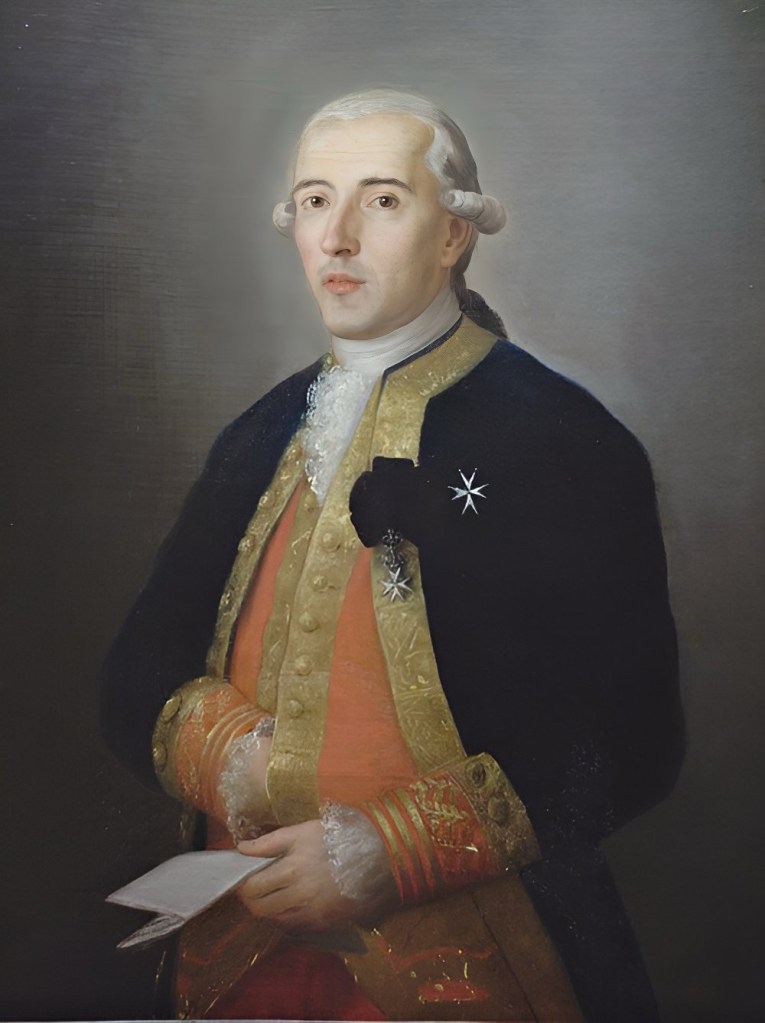
The origin of the current flag of Spain is the naval ensign of 1785, Pabellón de la Marina de Guerra, by Decrée of Charles III of Spain, where it is also referred as national flag. It was chosen by Charles III among 12 different flags designed by Antonio Valdés y Bazán.
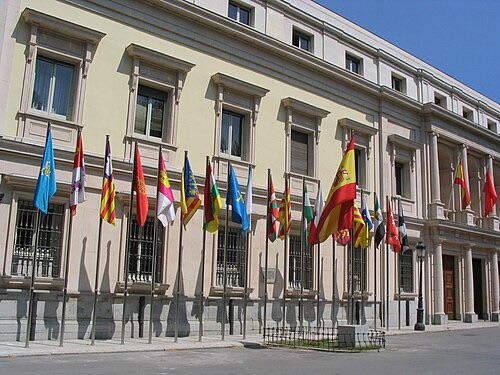
The flag must only be flown horizontally. It can be flown from public buildings, private homes, businesses, ships, town squares, or during official ceremonies. While the flag should be flown from sunrise to sunset, government offices in Spain and abroad must fly the flag on a 24-hour basis; during the night, and in poor light, it must be properly lit. The flags must conform to the legal standards, and cannot be soiled or damaged in any way.

 deliriouslove1970. The life & times of Gary and Denise Flanders. (Free and worth every penny. If you would like to compliment the editor, send to garytheflan@deliriouslove1970.com. If you would like to complain, call your mother.)
Leave a comment