

Ireland. An island in the North Atlantic. It is separated from Great Britain to its east by the North Channel, the Irish Sea, and St George’s Channel. Ireland is the second-largest island of the British Isles, the third-largest in Europe, and the twentieth-largest on Earth.
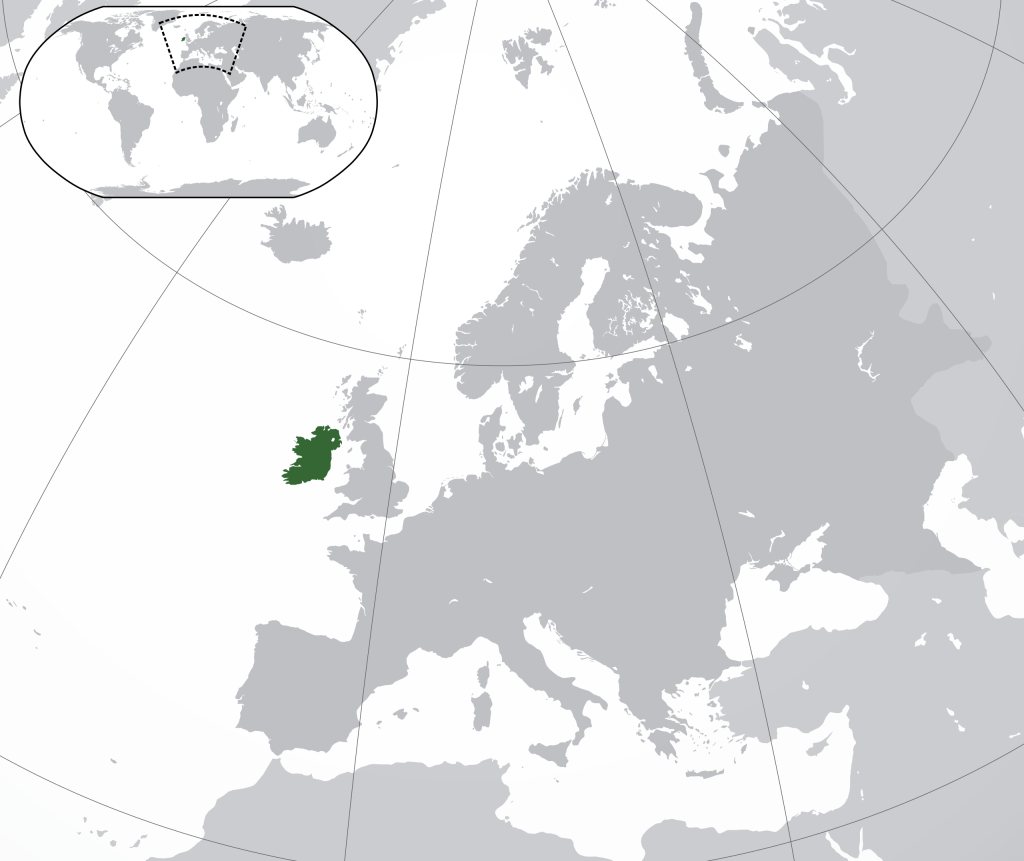
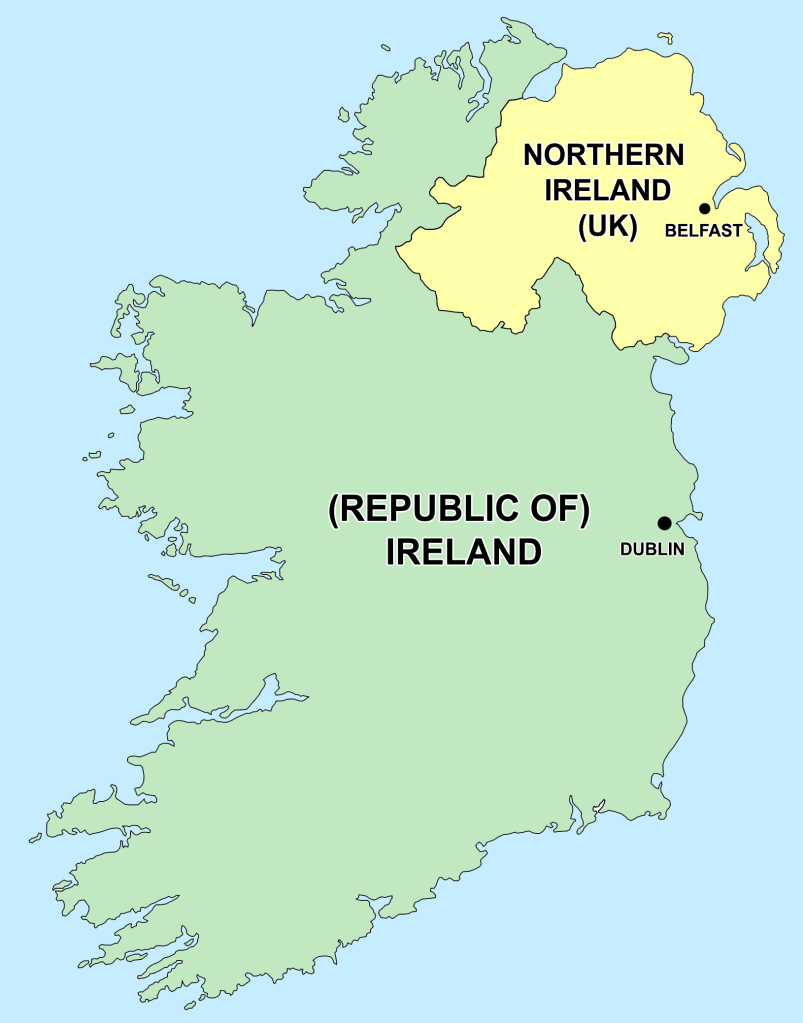
With a human history dating back to 10,500 BC, it has always had a contentious relationship with Britain. It has also had a geopolitical division for hundreds of years. Ireland is divided between the larger Republic of Ireland and Northern Ireland which remains closely related to the United Kingdom.
The flag, which is a good representation of the division is known as the Irish Tricolor. The basic design has been in existence since 1848. It is the hoped for union of the Catholics and Protestants. The green represents the Roman Catholics with the orange standing for the followers of William of Orange, the Protestants. The white in the middle is meant to be the peace, the hand shake, the union of these two groups.

We took a wee trip to The Republic a few months ago. A real highlight was the time we spent at St. Patrick’s Cathedral in Dublin.

It was a fascinating time to learn some of the history of Ireland

We visited Trinity College and learned more about the struggles and tensions in this important part of the British Isles. This is a photo inside the Library at Trinity College.
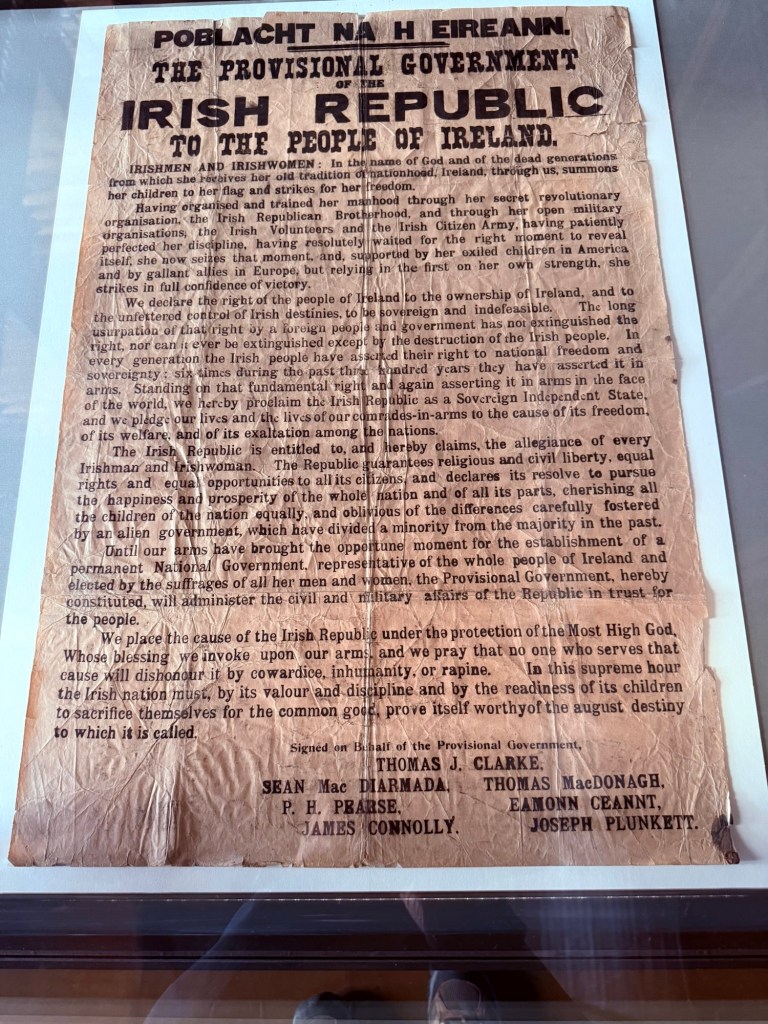
The original Proclamation of the Republic.
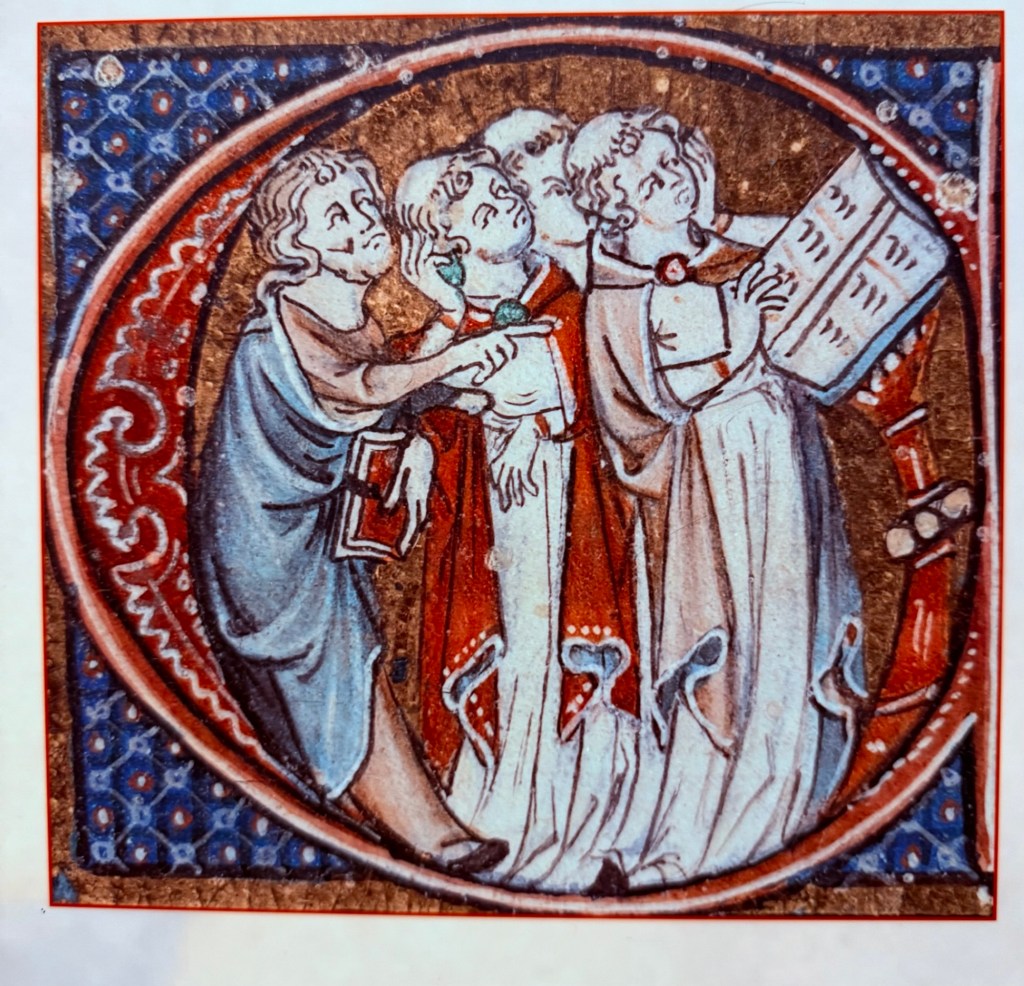
Trinity College is also the home to the Book of Kells.
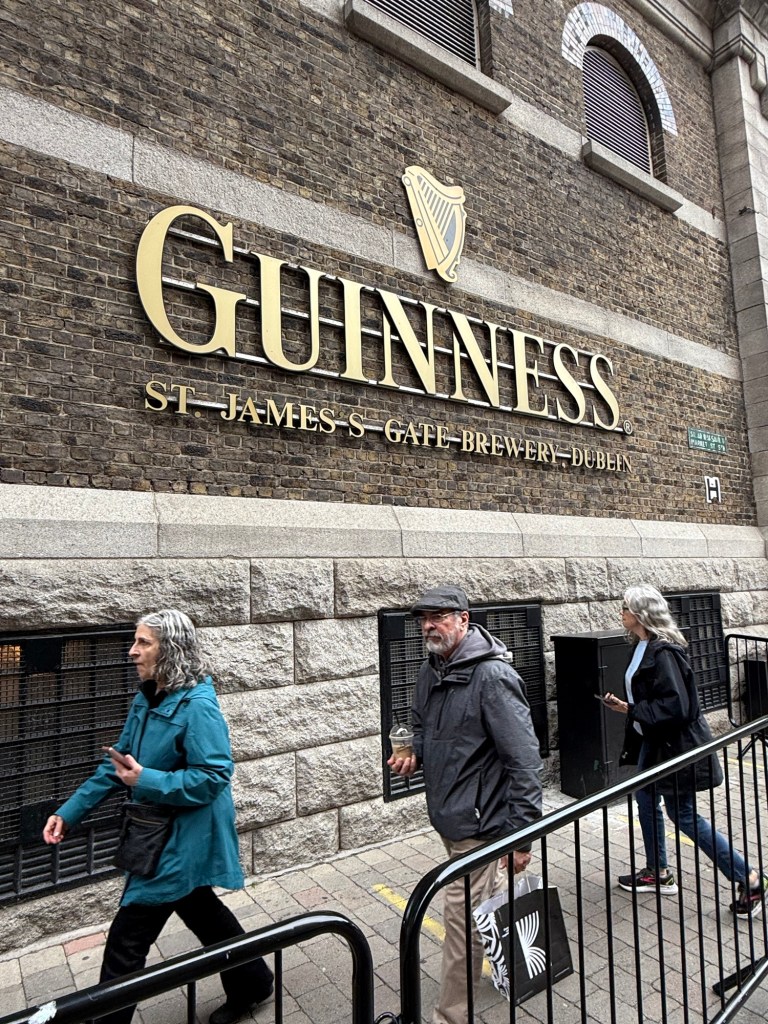
And, Dublin is home to the most popular tourist attraction in Europe: The Guinness Brewery tour.
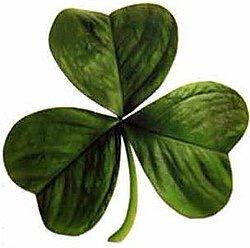
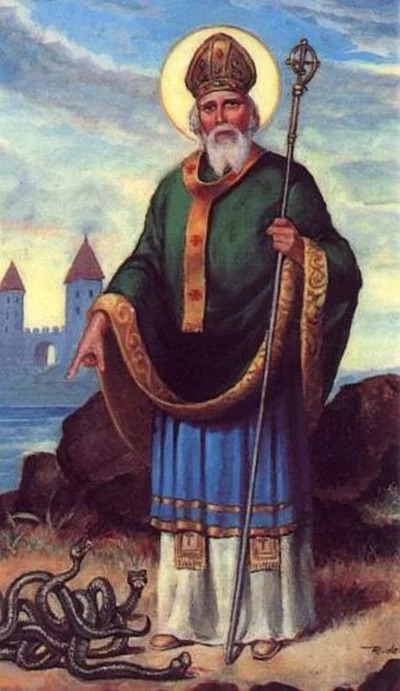
Who was St Patrick and why is the three leafed shamrock always used for his day?
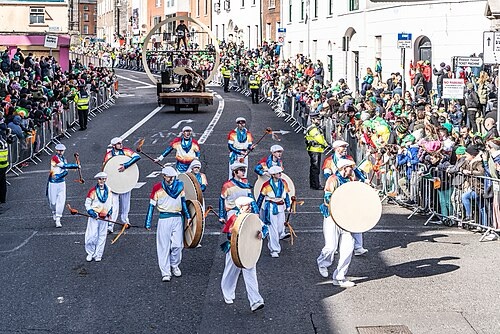
Saint Patrick’s Day, or the Feast of Saint Patrick (Irish: Lá Fhéile Pádraig, lit. ‘the Day of the Festival of Patrick’), is a religious and cultural holiday held on 17 March, the traditional death date of Saint Patrick(c. 385 – c. 461), the foremost patron saint of Irel
and.
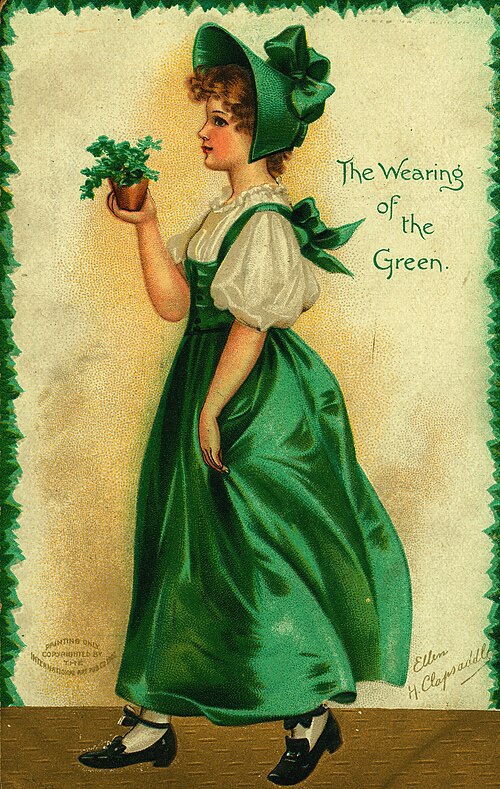
Saint Patrick was a 5th-century Christian missionary and bishop in Ireland. Much of what is known about Saint Patrick comes from the Declaration, which was allegedly written by Patrick himself. It is believed that he was born in Roman Britain in the fourth century, into a wealthy Romano-British family. His father was a Christian deacon and his grandfather a priest. According to the Declaration, at the age of sixteen, he was kidnapped by Irish raiders and taken as a slave to Gaelic Ireland. It says that he spent six years there working as a shepherd and that during this time he found God. The Declaration says that God told Patrick to flee to the coast, where a ship would be waiting to take him home. After making his way home, Patrick went on to become a priest. (The green shamrock is what he used to explain the Holy Trinity and thus converted Ireland to Christianity.)
[But, what about the snakes? “According to legend, St. Patrick drove the snakes out of Ireland during his mission to convert the Irish people to Christianity in the 5th century. This story is often used to explain the lack of snakes in the country, as well as Patrick’s influence. However, scientists have debunked this story, noting that Ireland has never had snakes. Instead, the legend is regarded as a metaphor for the saint’s Christianizing efforts, perhaps stemming from Judeo-Christian tradition that portrays snakes and serpents as symbols of evil (for example, in the biblical story of Adam and Eve).”]



 deliriouslove1970. The life & times of Gary and Denise Flanders. (Free and worth every penny. If you would like to compliment the editor, send to garytheflan@deliriouslove1970.com. If you would like to complain, call your mother.)
Leave a comment