
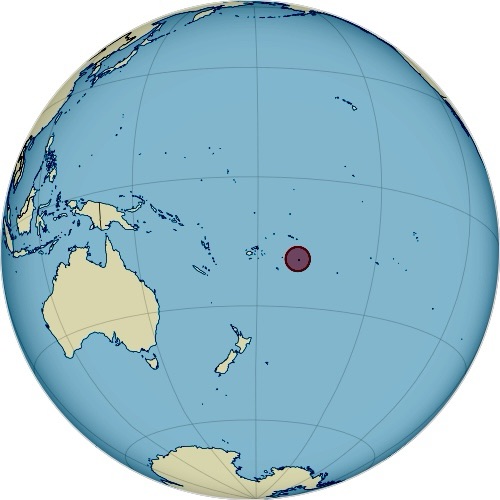
Niue is a self-governing island country in free association with New Zealand. It is situated in the South Pacific Ocean, is part of Polynesia, and is predominantly inhabited by Polynesians.
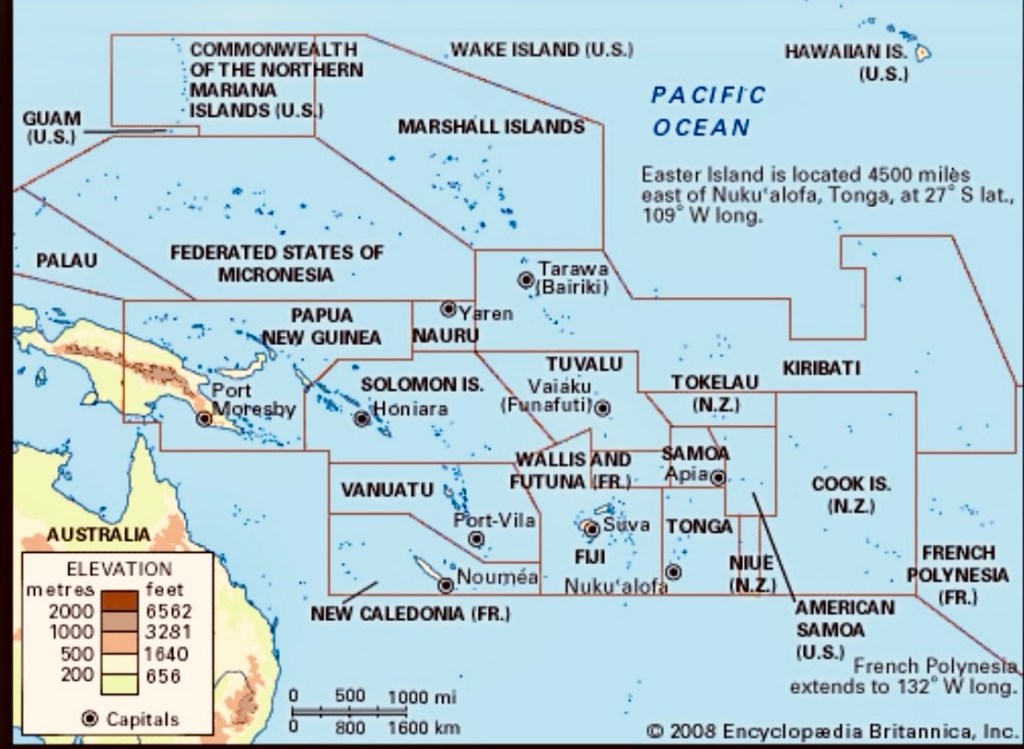
Niue’s position is inside a triangle drawn between Tonga, Samoa, and the Cook Islands. It is 2,400 kilometres (1,500 mi) northeast of New Zealand, and 604 kilometres (375 mi) northeast of Tonga. Niue’s land area is about 261.46 square kilometres (100.95 mi2) and its population was 1,689 at the Census in 2022.
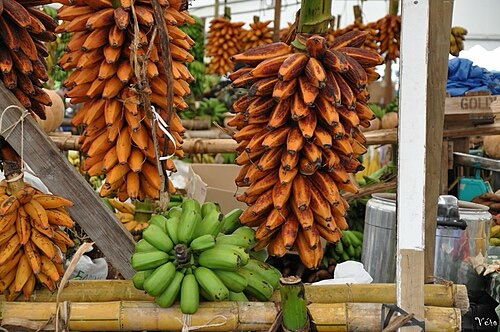
The first Europeans to sight Niue sailed under Captain James Cook in 1774. Cook made three attempts to land, but the inhabitants refused to grant permission to do so. He named the island “Savage Island” because, as legend has it, the natives who “greeted” him were painted in what appeared to be blood. The substance on their teeth was hulahula, a native red fe’i banana. For the next couple of centuries, Niue was known as “Savage Island” until its original name, “Niue”, which translates as “behold the coconut”, regained use.
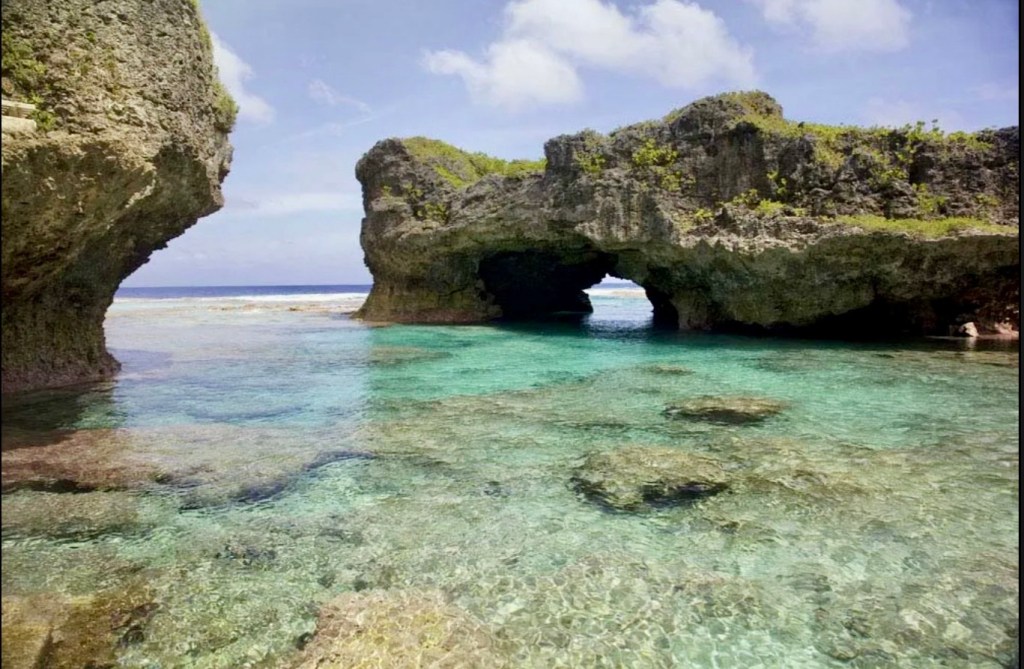
Niue is a roughly oval, raised coral island that is about 40 miles (65 km) in circumference. The island has two distinct levels. The upper level, a central plateau with a maximum elevation of approximately 200 feet (60 metres), slopes steeply down at its edges to the lower level, a coastal terrace about 0.3 miles (0.5 km) wide and 80–90 feet (25–27 metres) high, which in turn slopes down to meet the sea in small cliffs. A fringing reef surrounds the island. Erosion has created craggy stone formations in the porous limestone along the coastline, resulting in caves and pools such as the Limu Pools on the northwest edge of the island.
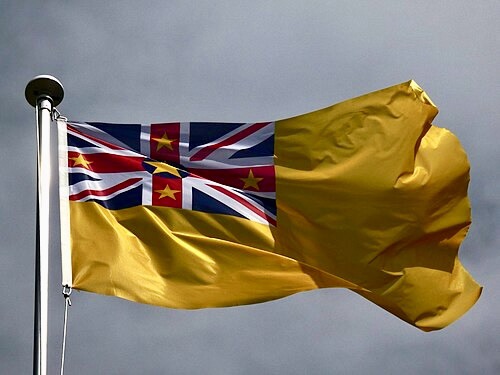
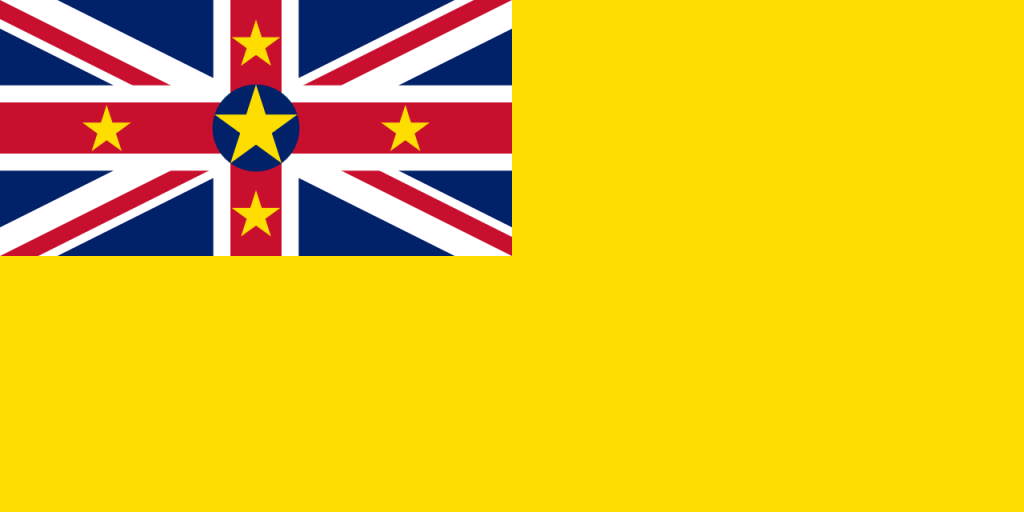
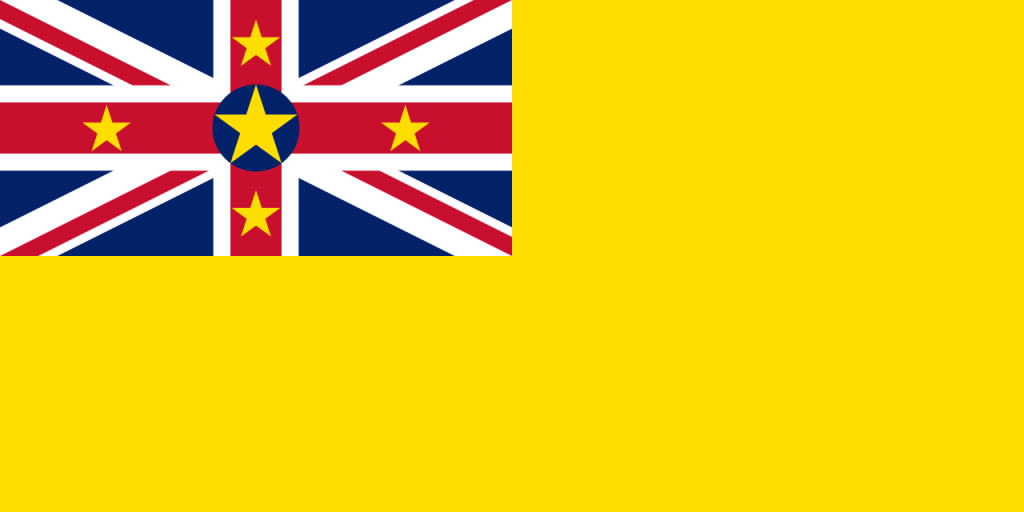
The flag of Niue was adopted on 15 October 1975. It consists of the Union Jack in the upper left corner with a star in the middle of the Union Jack and four stars forming a diamond around it. It is very unusual for a flag based on a British ensign design, in having not only a yellow background, but also a defaced Union Jack in the canton. It was designed by Patricia Rex, the wife of the then-Premier Robert Rex.
The symbolism represented by the flag is described in the (Niuean flag) Act. The Union Jack symbolises the protection granted by the United Kingdom in 1900 after petitioning by the Kings and Chiefs of Niue. The yellow field symbolises “the bright sunshine of Niue and the warm feelings of the Niuean people towards New Zealand and her people.”[3] The association with New Zealand, which took over responsibility and administration of Niue in 1901, is also represented by the four small stars that depict the Southern Cross. Finally, the blue disc containing a larger star represents the deep blue sea surrounding the self-governing island of Niue.

 deliriouslove1970. The life & times of Gary and Denise Flanders. (Free and worth every penny. If you would like to compliment the editor, send to garytheflan@deliriouslove1970.com. If you would like to complain, call your mother.)
Leave a comment