

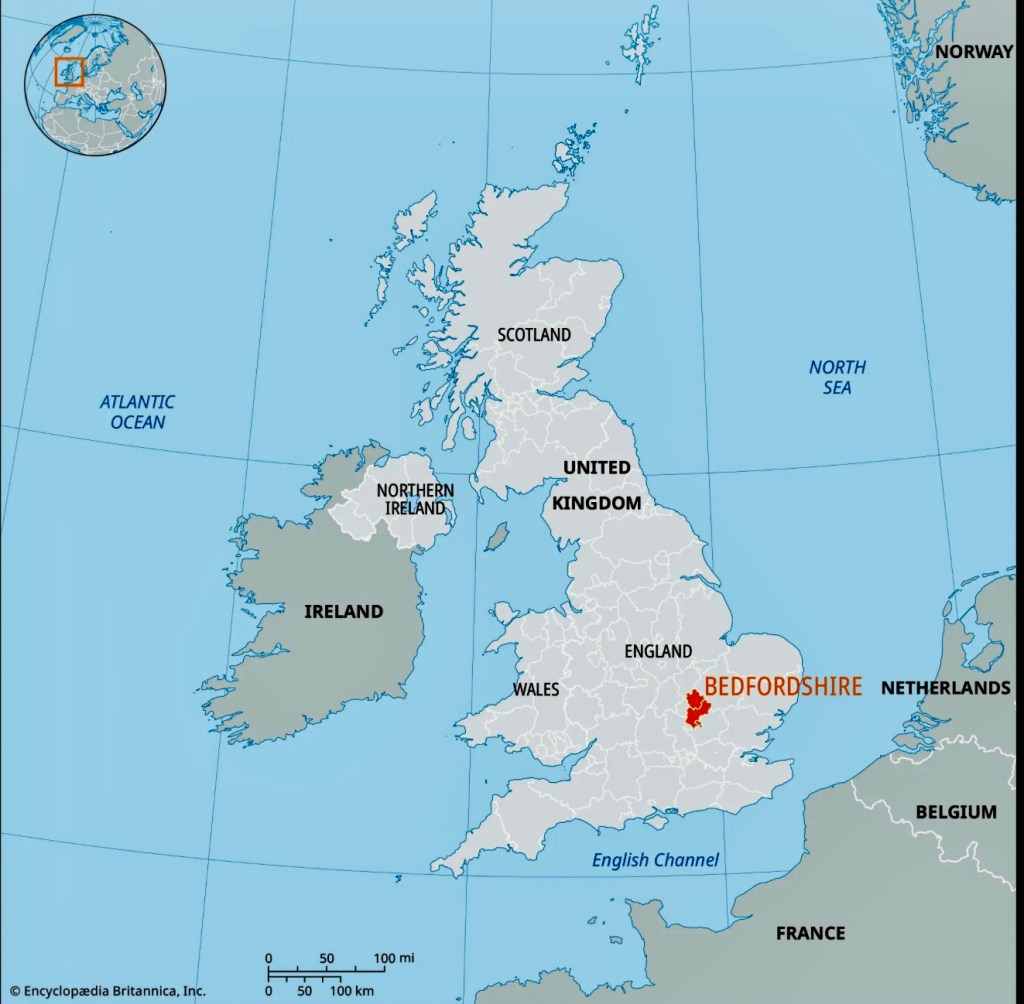
Bedfordshire (/ˈbɛdfərdʃɪər,-ʃər/; abbreviated Beds) is a ceremonial county in the East of England. It is bordered by Northamptonshire to the north, Cambridgeshire to the north-east, Hertfordshire to the south and the south-east, and Buckinghamshire to the west. The largest settlement is Luton(225,262),and Bedford is the county town.

The first recorded use of the name in 1011 was “Bedanfordscir“, meaning the shire or county of Bedford, which itself means “Beda’s ford” (river crossing).


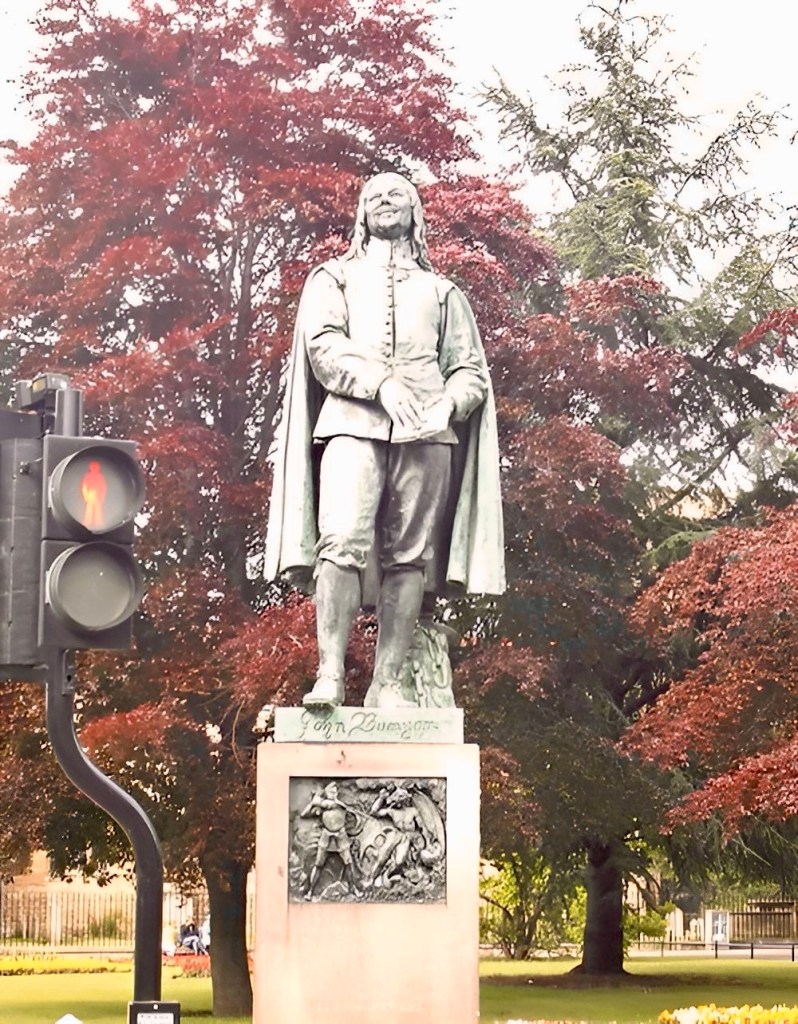
John Bunyan (/ˈbʌnjən/; 1628 – 31 August 1688) was an English writer and nonconformist preacher. He is best remembered as the author of the Christian allegoryThe Pilgrim’s Progress, which also became an influential literary model. In addition to The Pilgrim’s Progress, Bunyan wrote nearly sixty titles, many of them expanded sermons.

Bunyan came from the village of Elstow, near Bedford. He had some schooling and, at the age of sixteen, joined the Parliamentary Army at Newport Pagnell during the first stageof the English Civil War. After three years in the army, he returned to Elstow and took up the trade of tinker, which he had learned from his father. He became interested in religion after his marriage, attending first the parish church and then joining the Bedford Meeting, a nonconformist group in St John’s church in Bedford, and later became a preacher. After the restoration of the monarchy in 1660, when the freedom of nonconformists was curtailed, Bunyan was arrested and spent the next twelve years in prison because he refused to give up preaching. During this time, he wrote a spiritual autobiography, Grace Abounding to the Chief of Sinners, and began work on his most famous book, The Pilgrim’s Progress.


The Pilgrim’s Progress from This World, to That Which Is to Come is a 1678 Christian allegory written by John Bunyan. It is commonly regarded as one of the most significant works of Protestant devotional literature and of wider early modern English literature. It has been translated into more than 200 languages and has never been out of print. It appeared in Dutch in 1681, in German in 1703 and in Swedish in 1727. The first North American edition was issued in 1681. It has also been cited as the first novel written in English. According to literary editor Robert McCrum, “there’s no book in English, apart from the Bible, to equal Bunyan’s masterpiece for the range of its readership.

The entire book is presented as a dream sequence narrated by an omniscient narrator. The allegory’s protagonist, Christian, is an everyman character, and the plot centres on his journey from his hometown, the “City of Destruction” (“this world”), to the “Celestial City” (“that which is to come”: Heaven) atop Mount Zion. Christian is weighed down by a great burden—the knowledge of his sin—which he believed came from his reading “the book in his hand” (the Bible).
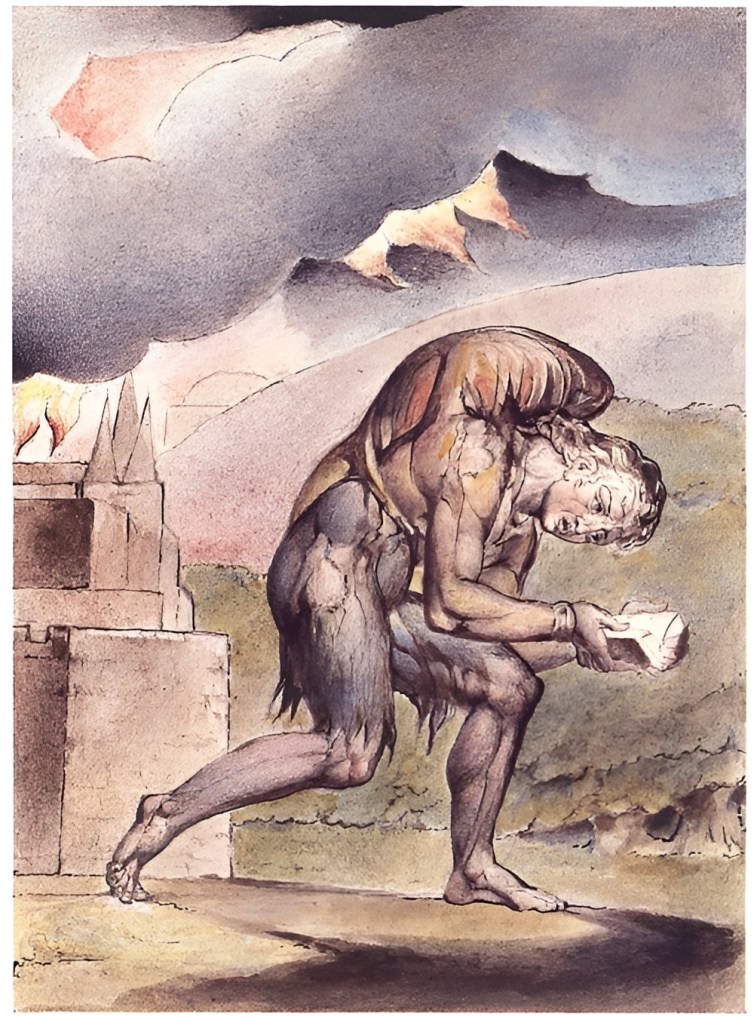
Christian must follow a map to get from the City of Destruction to the Celestial City.

The Second Part of The Pilgrim’s Progress presents the pilgrimage of Christian’s wife, Christiana, and their sons, and the maiden, Mercy. They visit the same stopping places that Christian visited, with the addition of Gaius’ Inn between the Valley of the Shadow of Death and Vanity Fair, but they take a longer time in order to accommodate marriage and childbirth for the four sons and their wives. The hero of the story is Greatheart, a servant of the Interpreter, who is the pilgrims’ guide to the Celestial City. He kills four giants called Giant Grim, Giant Maul, Giant Slay-Good, and Giant Despair and participates in the slaying of a monster called Legion that terrorizes the city of Vanity Fair.

Beelzebub, literally “Lord of the Flies”, is one of Satan’s companion archdemons, who has erected a fort near the Wicket Gate from which he and his soldiers can shoot arrows of fire at those about to enter the Wicket Gate so they will never enter it. He is also the lord, god, king, master, and prince of Vanity Fair. Christian calls him “captain” of the Foul Fiend Apollyon, who he later met in the Valley of Humiliation.
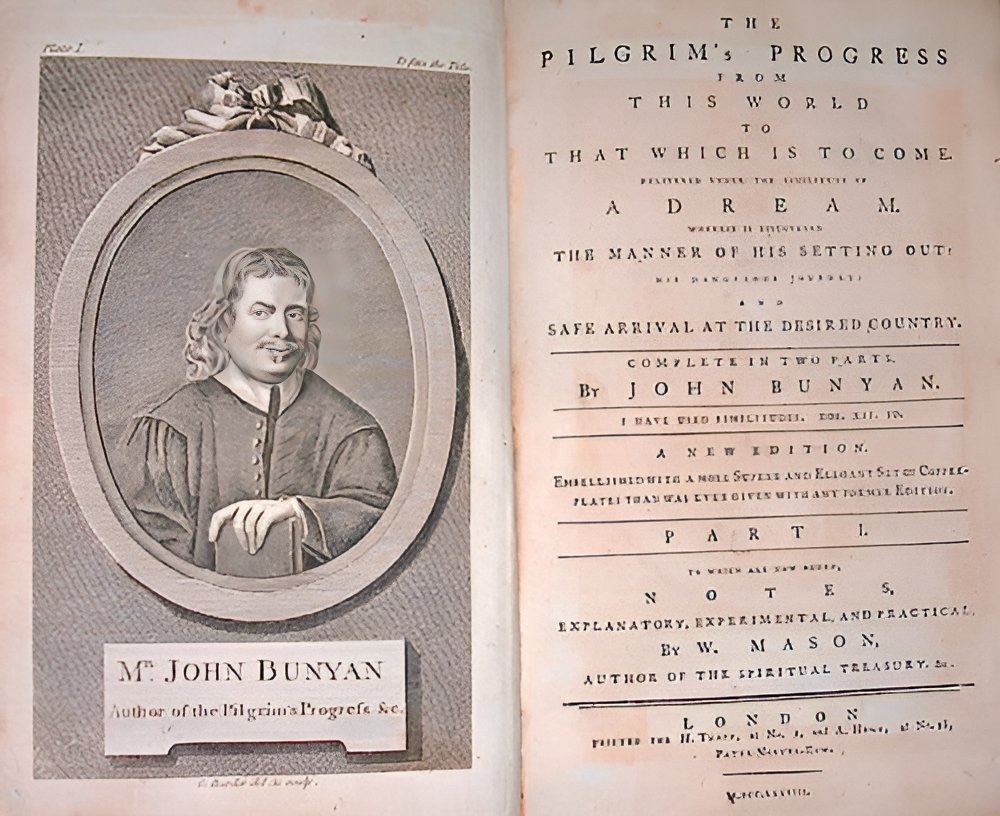
Pilgrims Progress has been one of the most influential books ever written about what became Evangelical Christianity. It has been translated into so many languages it is difficult to keep track of them. It is an allegory that has guided millions of believers for hundreds of years.



 deliriouslove1970. The life & times of Gary and Denise Flanders. (Free and worth every penny. If you would like to compliment the editor, send to garytheflan@deliriouslove1970.com. If you would like to complain, call your mother.)
Leave a comment