

Bedfordshire (/ˈbɛdfərdʃɪər,-ʃər/; abbreviated Beds) is a ceremonial county in the East of England. It is bordered by Northamptonshire to the north, Cambridgeshire to the north-east, Hertfordshire to the south and the south-east, and Buckinghamshire to the west. The largest settlement is Luton(225,262),and Bedford is the county town.

The first recorded use of the name in 1011 was “Bedanfordscir“, meaning the shire or county of Bedford, which itself means “Beda’s ford” (river crossing).
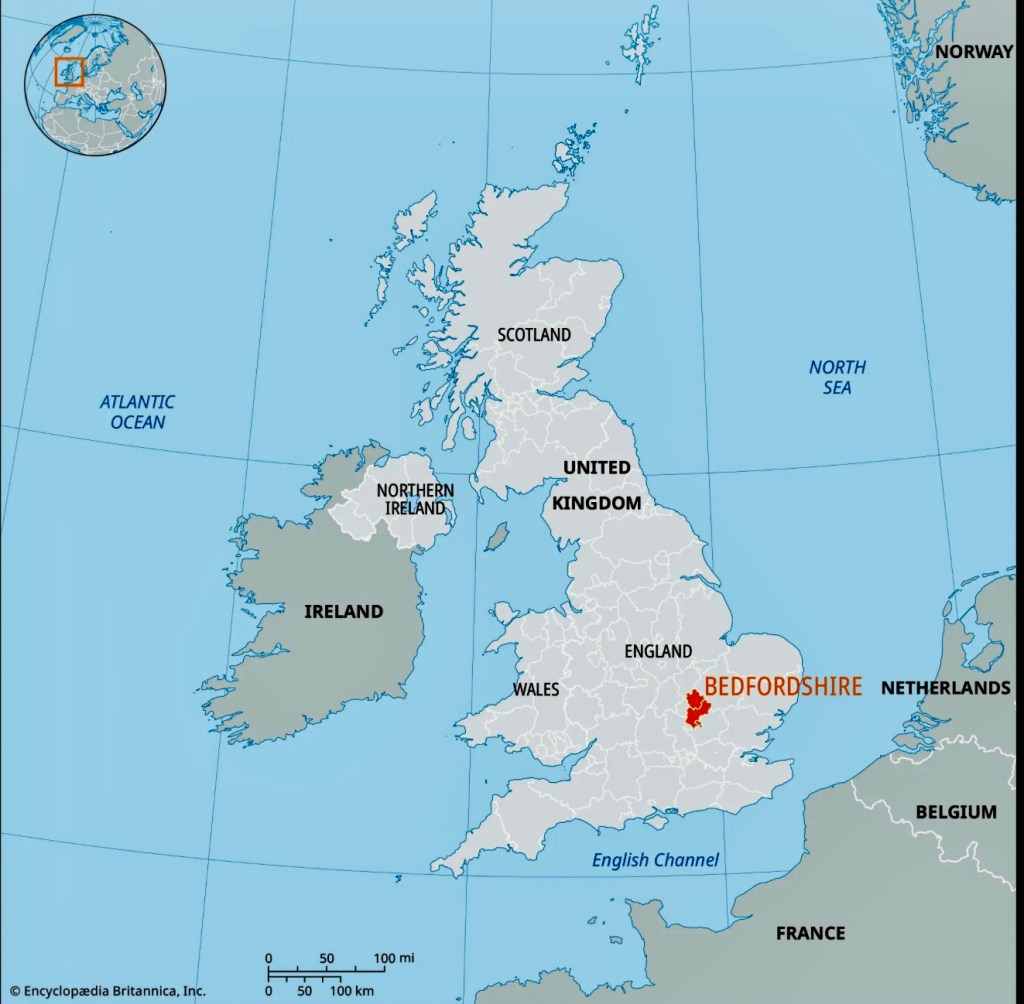
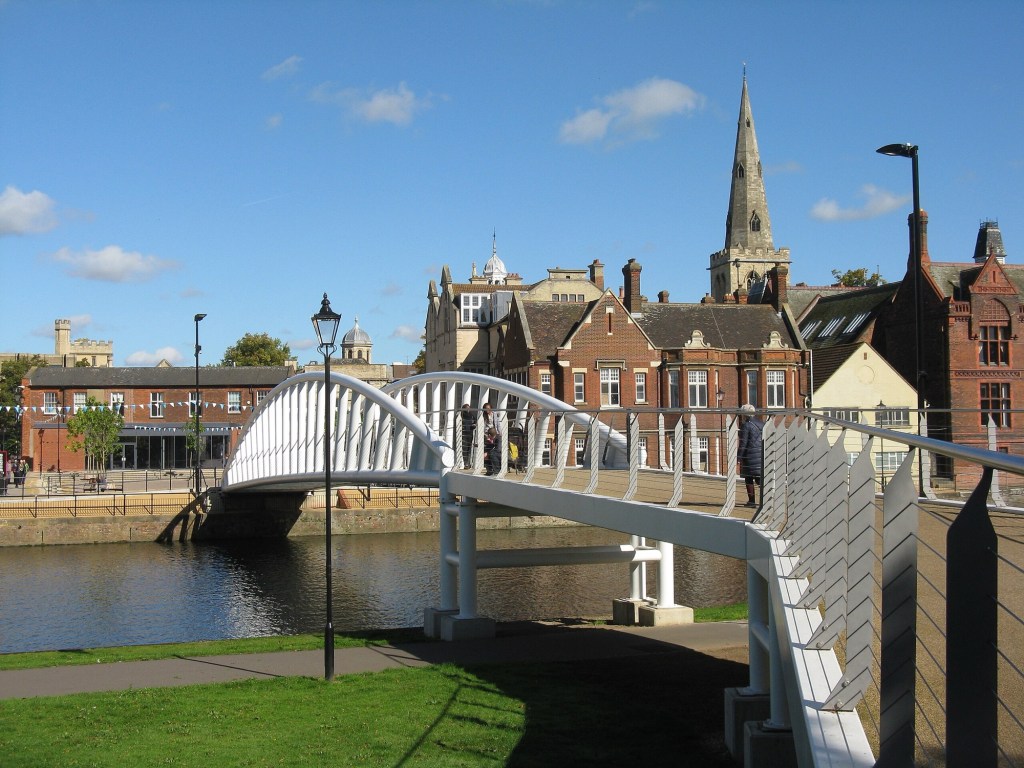

Bedfordshire celebrates a holiday on January 18. It is known as ‘The Return to Earldom Day’. It marks the day in 1088 when William II became the Earl of Warwick Castle.

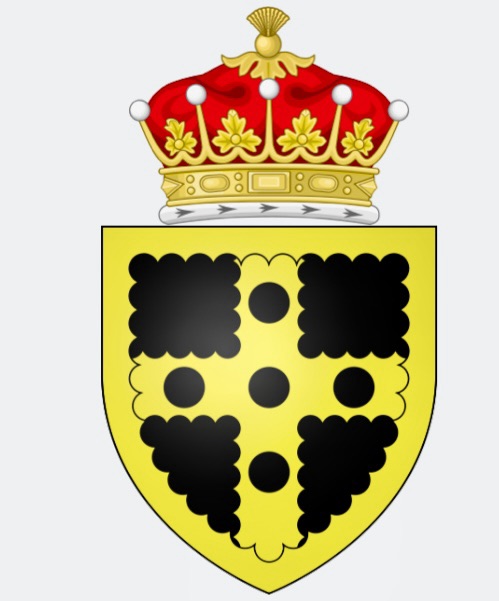
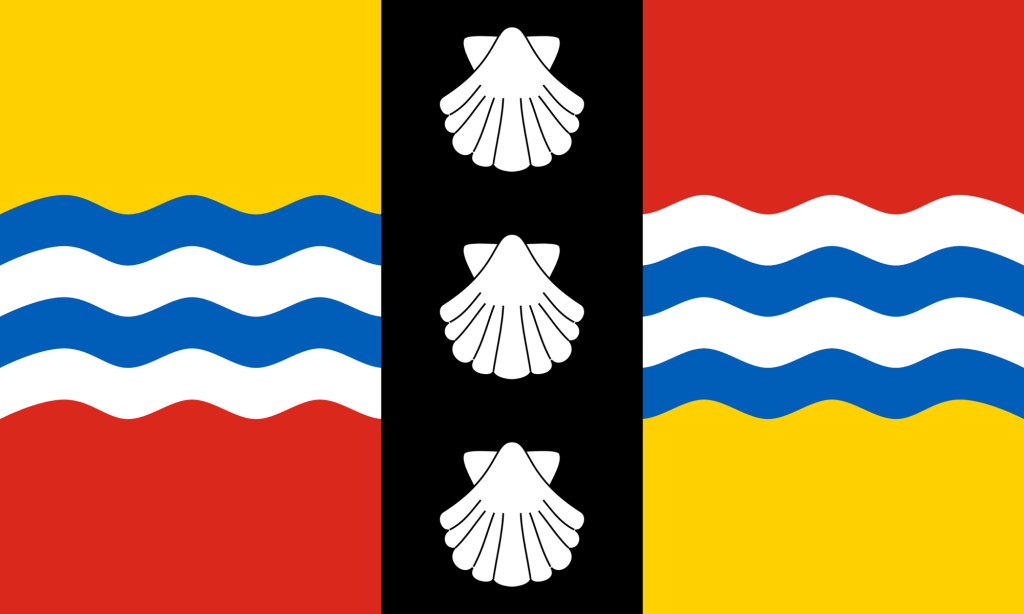
The Bedfordshire flag is based on the banner of the arms of the former Bedfordshire County Council, which was granted the arms in 1951 by the College of Arms. This design was adopted as the flag of the historic county in September 2014, with the support of the High Sheriff of the county.

The design of the flag is a composite of several symbols significant to the county. In heraldic terms the design is Quarterly Or and Gules a Fess wavy barry way of four Argent and Azure surmounted by a Pale Sable charged with three Escallops of the third.
The yellow and red quadrants (Quarterly Or and Gules) are taken from the arms of the Beauchamp family, powerful in the county after the Norman conquest of England and constructors of Bedford Castle. The blue and white wavy lines (a Fess wavy barry way of four Argent and Azure) are symbolic of the Great Ouse, which flows through the county, including the county town of Bedford. The three vertically-arranged shells (or scallops) on a black panel (a Pale Sable charged with three Escallops) are taken from the coat of arms of the Dukes of Bedford.

A High Sheriff in England is a ceremonial officer for each county, responsible for maintaining law and order, supporting royal visits, and assisting High Court Judges on Circuit. They are appointed annually by the Crown through the Privy Council, and their role dates back to Saxon times. Despite some changes over the years, the office of High Sheriff still holds important responsibilities and traditions in England’s legal system.

November 25 is Saint Catherine’s Day, celebrated in Bedfordshire
Saint Catherine’s Day, also called the Feast of Saint Catherine or Catterntide. It has retained its popularity throughout the centuries. It commemorates the martyrdom of SaintCatherine of Alexandria, one of the Fourteen Holy Helpers.
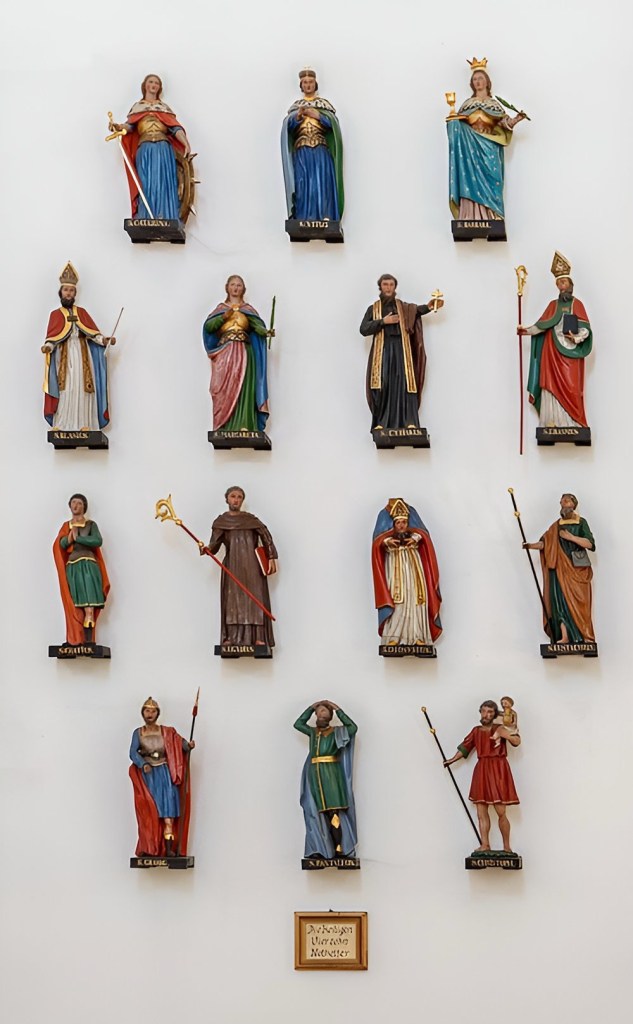
According to traditional accounts, St Catherine was beheaded by Emperor Maximinus II around 305 AD in Alexandria. 25 November became the commemoration date in the 10th century, and many churches and particularly nunneries in Europe were dedicated to St Catherine. In Lutheran countries, this day has also been associated with Catherine of Aragon, the first wife of Henry VIII.

Portrait by Lucas Horenbout, c. 1525
Catherine of Aragon (also spelt as Katherine, historical Spanish: Catharina, now: Catalina; 16 December 1485 – 7 January 1536) was Queen of England as the first wife of King Henry VIII from their marriage on 11 June 1509 until its annulment on 23 May 1533. She had previously been Princess of Wales while married to Henry’s elder brother, Arthur, Prince of Wales, for a short period before his death.

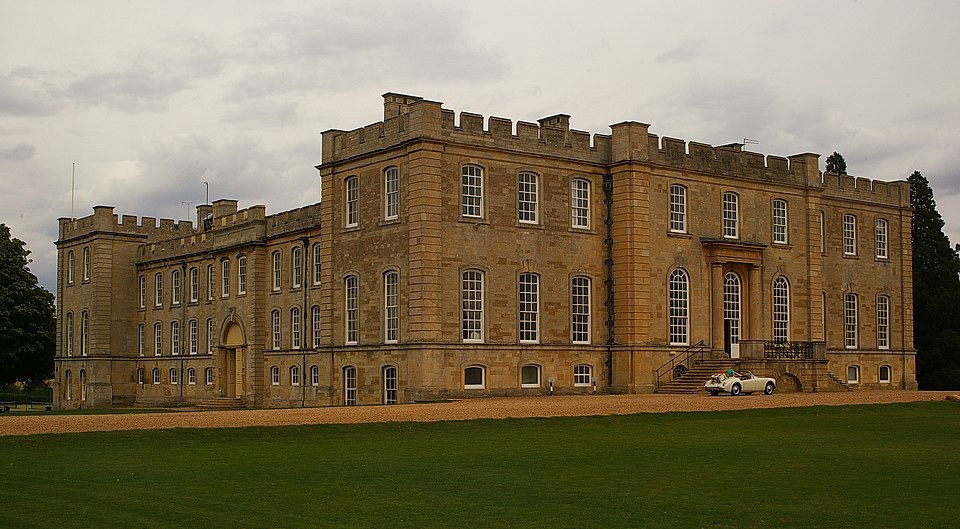
By 1526, Henry was infatuated with Anne Boleyn and dissatisfied that his marriage to Catherine had produced no surviving sons, leaving their daughter Mary as heir presumptive at a time when there was no established precedent for a woman on the throne. He sought to have their marriage annulled, setting in motion a chain of events that led to England’s schism with the Catholic Church. When Pope Clement VII refused to annul the marriage, Henry defied him by assuming supremacy over religious matters in England. In 1533, their marriage was consequently declared invalid and Henry married Anne on the judgement of clergy in England, without reference to the pope. Catherine refused to accept Henry as supreme head of the Church in England and considered herself the King’s rightful wife and queen, attracting much popular sympathy. Despite this, Henry acknowledged her only as dowager princess of Wales. After being banished from court by Henry, Catherine lived out the remainder of her life at Kimbolton Castle, dying there in January 1536 of cancer. The English people held Catherine in high esteem, and her death set off tremendous mourning. Her daughter Mary became the first undisputed English queen regnant in 1553.
St Catherine in the Catholic Church, one of the Fourteen Holy Helpers and Catherine of Aargon The Queen that Henry VIII scorned, both are part of the celebration of St Catherine’s Day in Bedfordshire.

 deliriouslove1970. The life & times of Gary and Denise Flanders. (Free and worth every penny. If you would like to compliment the editor, send to garytheflan@deliriouslove1970.com. If you would like to complain, call your mother.)
Leave a comment