
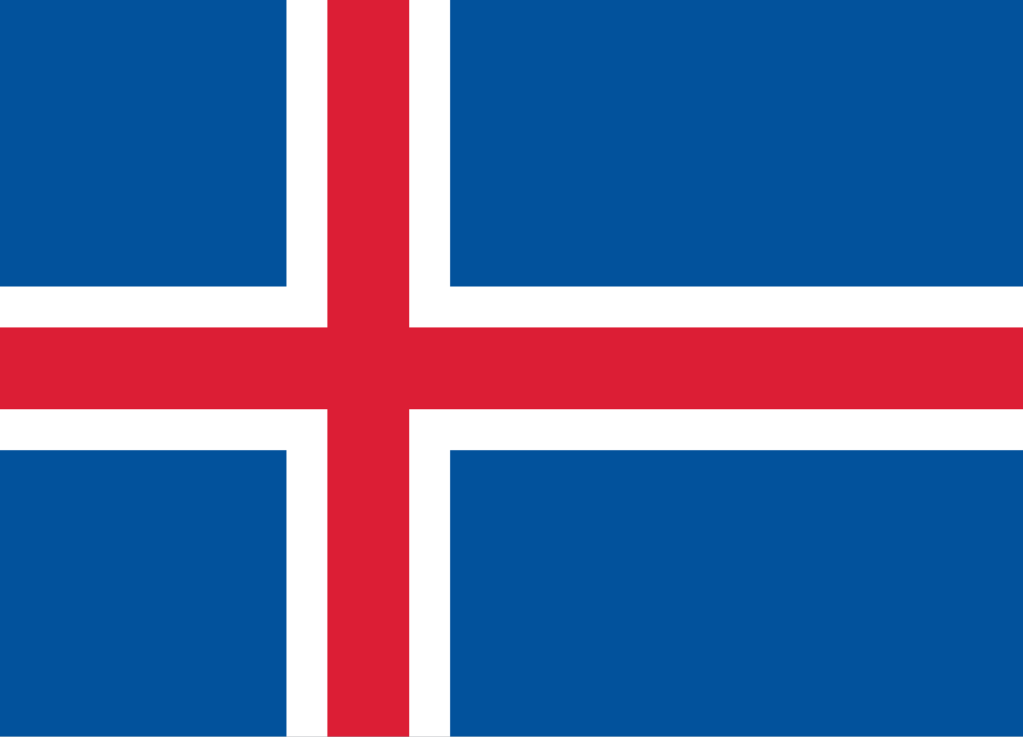
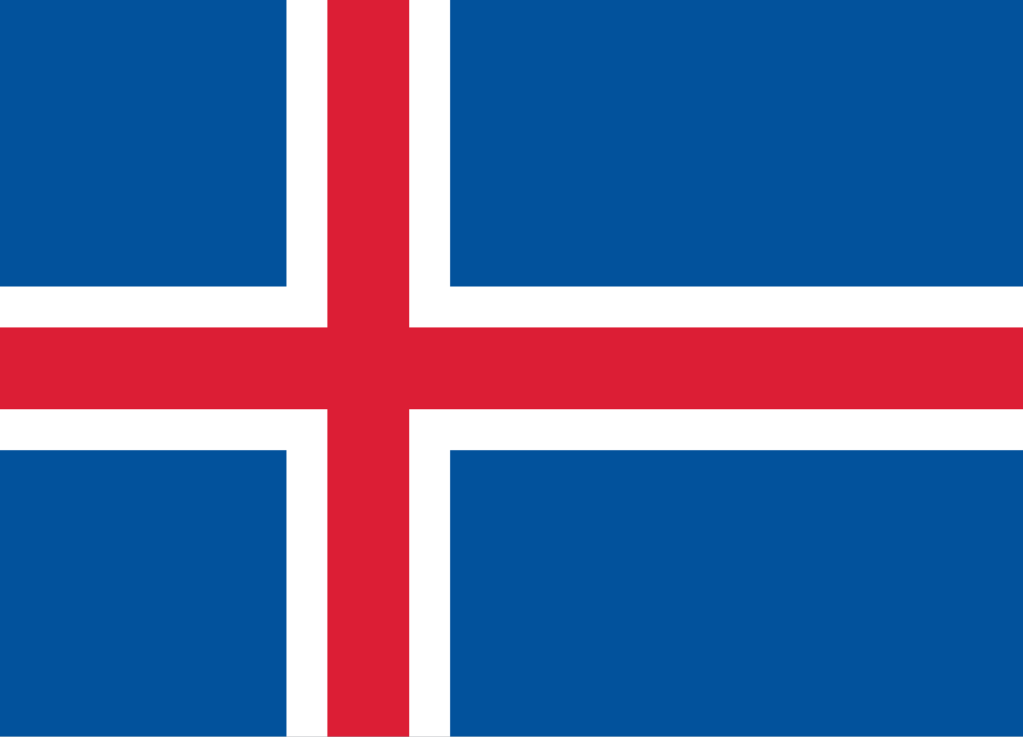
Iceland, island country located in the North Atlantic Ocean. Lying on the constantly active geologic border between North America and Europe, Iceland is a land of vivid contrasts of climate, geography, and culture. Sparkling glaciers, such as Vatna Glacier (Vatnajökull), Europe’s largest, lie across its ruggedly beautiful mountain ranges; abundant hot geysers provide heat for many of the country’s homes and buildings and allow for hothouse agriculture year-round; and the offshore Gulf Stream provides a surprisingly mild climate for what is one of the northernmost inhabited places on the planet.
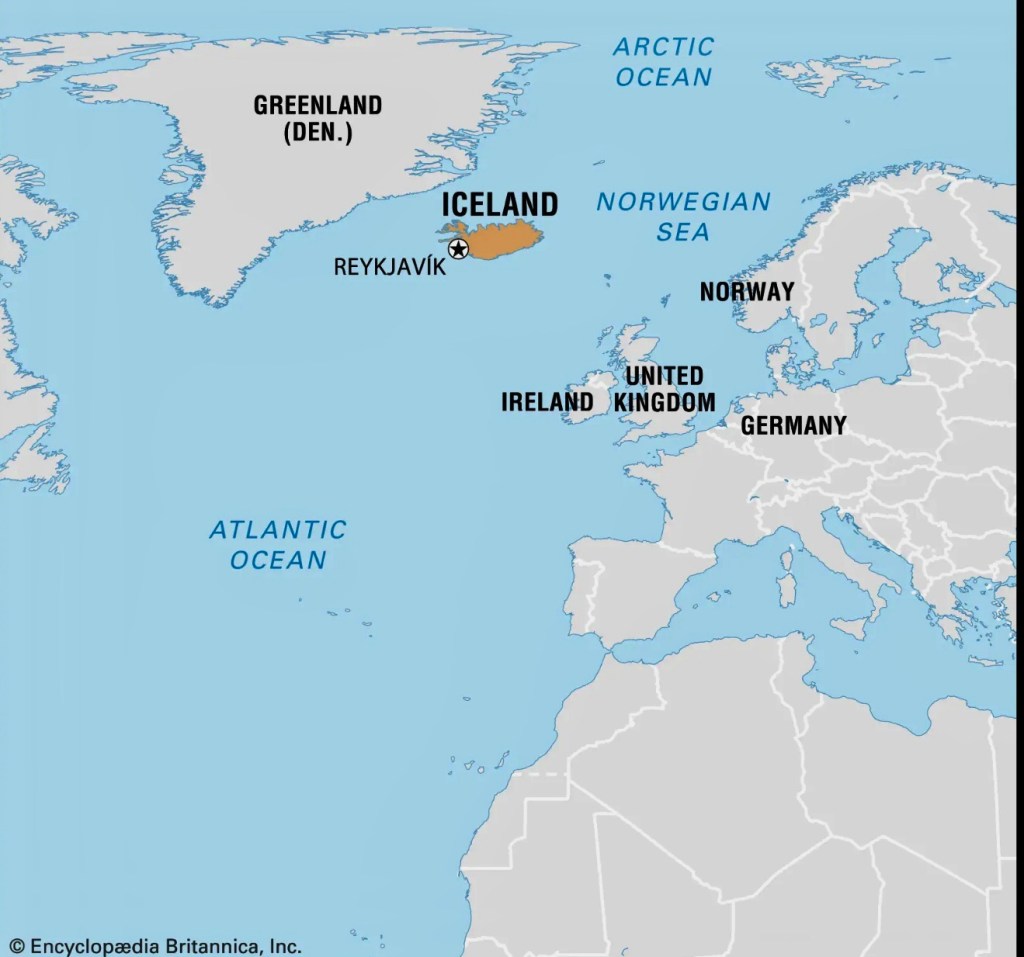
Iceland was founded more than 1,000 years ago during the Viking age of exploration and settled by a mixed Norse and Celtic population. The early settlement, made up primarily of Norwegian seafarers and adventurers, fostered further excursions to Greenland and the coast of North America (which the Norse called Vinland). Despite its physical isolation some 500 miles (800 km) from Scotland—its nearest European neighbour—Iceland has remained throughout its history very much a part of European civilization. The Icelandic sagas, most of which recount heroic episodes that took place at the time the island was settled, are regarded as among the finest literary achievements of the Middle Ages, reflecting a European outlook while commemorating the history and customs of a people far removed from continental centres of commerce and culture.
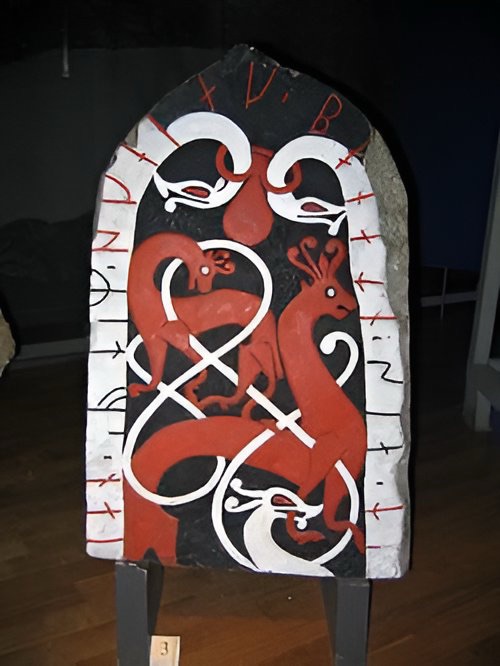
An almost mythic person is mentioned in the Sagas, Leif Erikson.
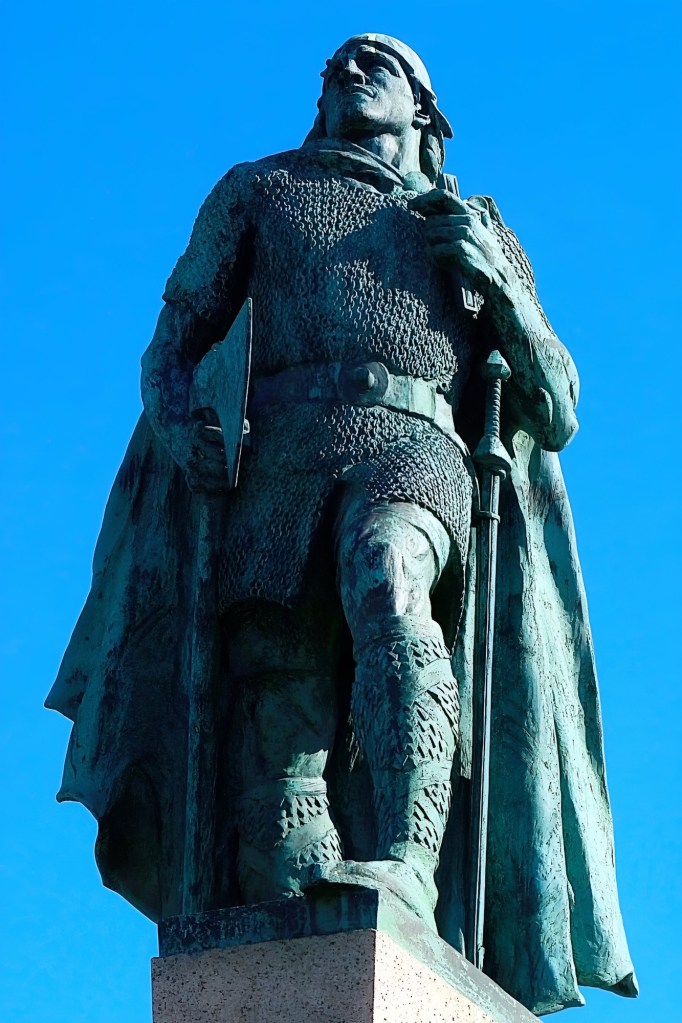
Erikson in approximately 1000CE, led the first Europeans believed to have set foot on the continent of North America (other than Greenland). Because the exact date of Leif’s arrival to the Americas is unknown, the October 9 date was chosen in commemoration of the ship Restauration‘s arrival to New York Harbor, carrying some of the first Norwegian immigrants to the United States. (This being the 200th anniversary of this event). The holiday occurs before Columbus Day.
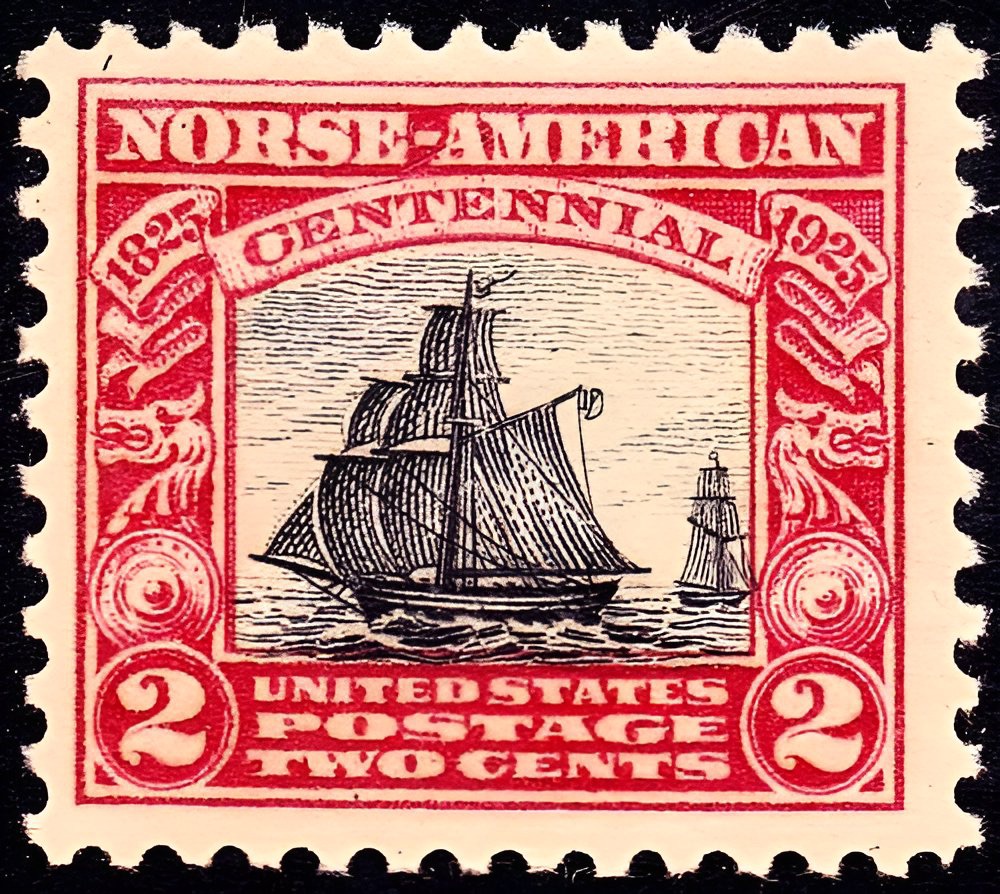
The 1874 book America Not Discovered by Columbus by Norwegian-AmericanRasmus B. Anderson helped popularize the idea that Vikings were the first Europeans in the New World, an idea that was verified in 1960.[4] In his speech during the Norse-American Centennial at the Minnesota State Fair in 1925, President Calvin Coolidge gave recognition to Leif Erikson as the discoverer of America. In 1929, Wisconsin became the first U.S. state to officially adopt Leif Erikson Day as a state holiday, thanks in large part to efforts by Rasmus Anderson. In 1931, Minnesota did also. As a result of efforts by the Leif Erikson Memorial Association of Saskatchewan, the Legislative Assembly of Saskatchewan proclaimed—through an order-in-council in 1936—that Leif Erikson Day would be observed on October 9. By 1956, Leif Erikson Day had been made an official observance in seven states (Wisconsin, Minnesota, South Dakota, Illinois, Colorado, Washington, and California) and one Canadian province (Saskatchewan).
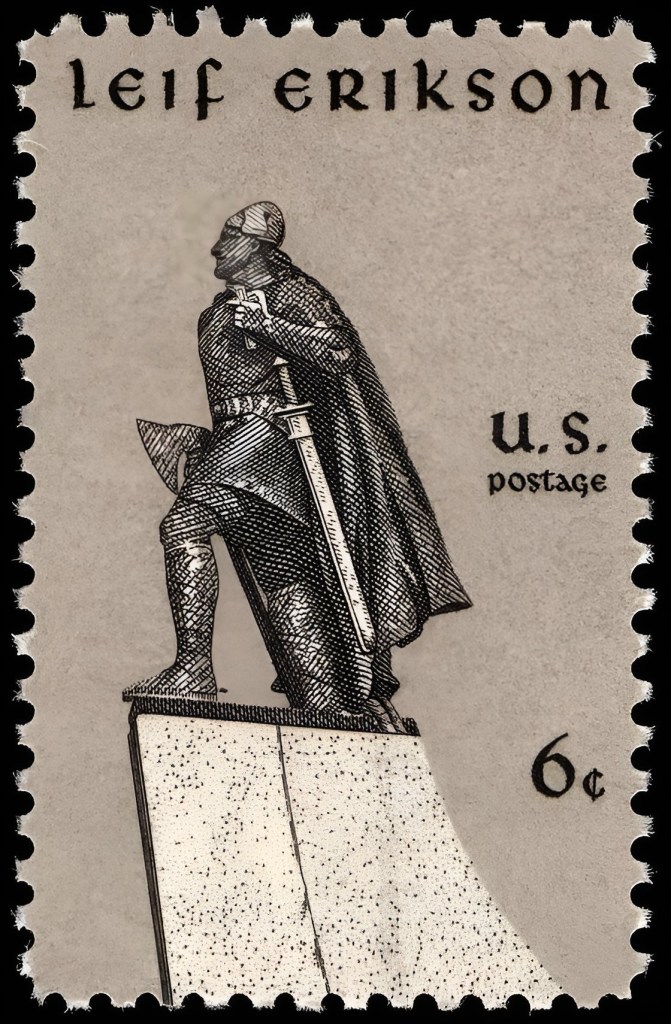
The federal government of the United States first recognized Leif Erikson Day in 1935 as a result of House Joint Resolution 26, which had been introduced during the 74th Congress (1935–1936) by Congressman Harry Sauthoff of Wisconsin. Originally, the resolution was written to request the US president annually proclaim October 9 as Leif Erikson Day, but it was amended in committee to be for 1935 only. After passing Congress, the legislation was signed into law by President Franklin D. Roosevelt on June 19, 1935. As requested in the joint resolution, Roosevelt then issued presidential proclamation 2135 on September 11, 1935, designating October 9 of that year as Leif Erikson Day.

Therefore, almost 500 years before Columbus someone came to North America.

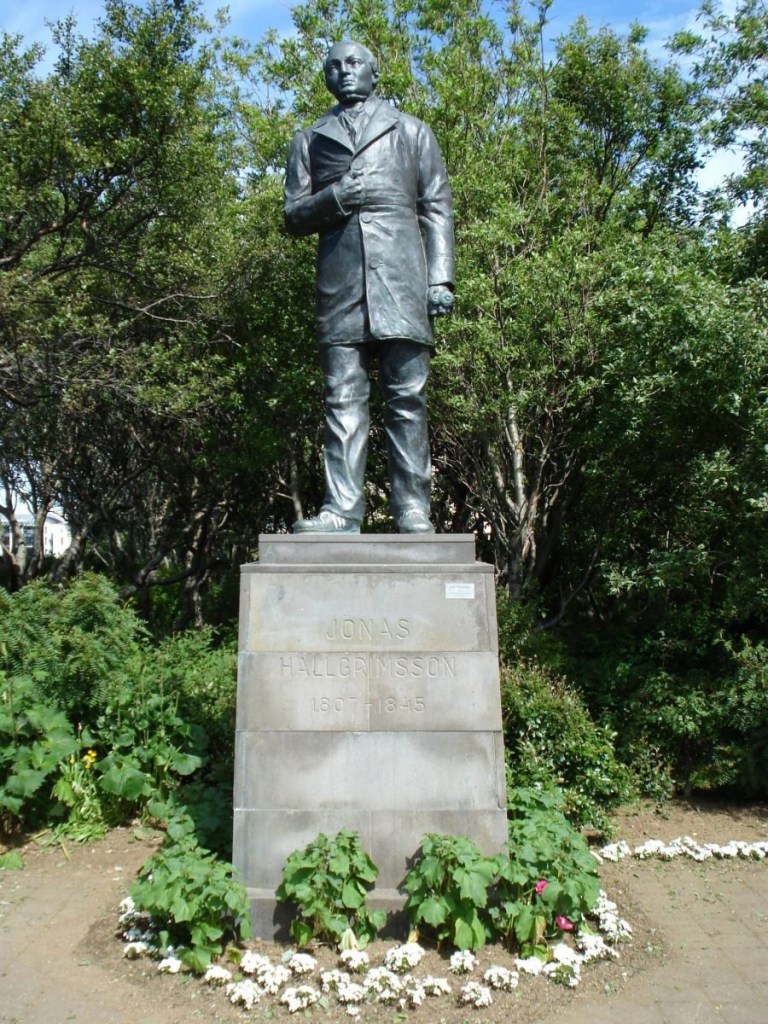
Jónas Hallgrímsson
Icelandic Language Day (Icelandic: dagur íslenskrar tungu, English: “day of the Icelandic tongue”) is a festival celebrated on 16 November each year in Iceland to celebrate the Icelandic language. This date was chosen to coincide with the birthday of the Icelandic poet Jónas Hallgrímsson.
In Autumn 1995, the Icelandic Minister of Education, Science and Culture, Björn Bjarnason, suggested that one day a year should be proposed to celebrate the Icelandic language, which has been well-preserved in its original form over the centuries, unlike most other languages; and the efforts to preserve this unique symbol of the country.
Jónas is considered one of the founding fathers, and best examples, of romanticism in Iceland. The imagery in his poetry was strongly influenced by the Icelandic landscape. He is also known for introducing foreign metres, such as pentameter, to Icelandic poetry.
‘Charming and fair is the land,and snow-white the peaks of the jokuls [glaciers],
Cloudless and blue is the sky,the ocean is shimmering bright,
But high on the lave fields, wherestill Osar river is flowingDown into Almanna gorge,
Althing no longer is held,Now Snorri’s booth serves as a sheepfold,the ling upon Logberg the sacredIs blue with berries every year,for children’s and ravens’ delight.
Oh, ye juvenile hostand full-grown manhood of Iceland!Thus is our forefathers’ fameforgotten and dormant withal.’


 deliriouslove1970. The life & times of Gary and Denise Flanders. (Free and worth every penny. If you would like to compliment the editor, send to garytheflan@deliriouslove1970.com. If you would like to complain, call your mother.)
Leave a comment