
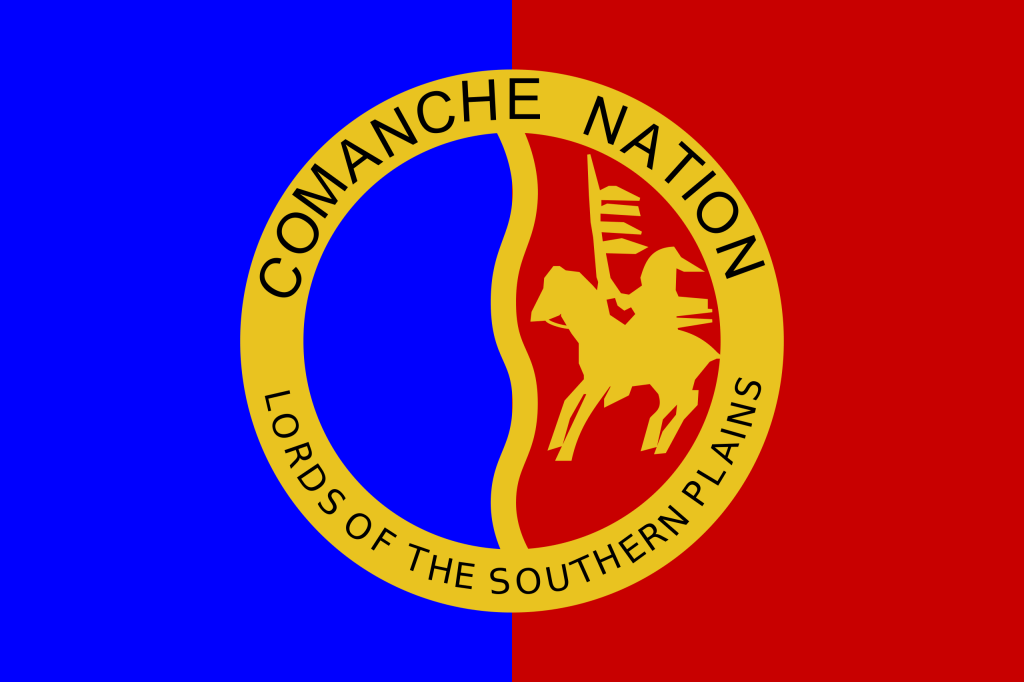
The dominate Indigenous Tribe of the Great Plains: The Comanche Nation. At one time they controlled large parts of Texas, Colorado, New Mexico, Oklahoma and Kansas in what they referred to as: Comancheria. Therefore they were know as ‘The Lords of The Southern Plains’. Today they are headquartered in Lawton Oklahoma. (They were one of the last tribes to submit to reservations.)

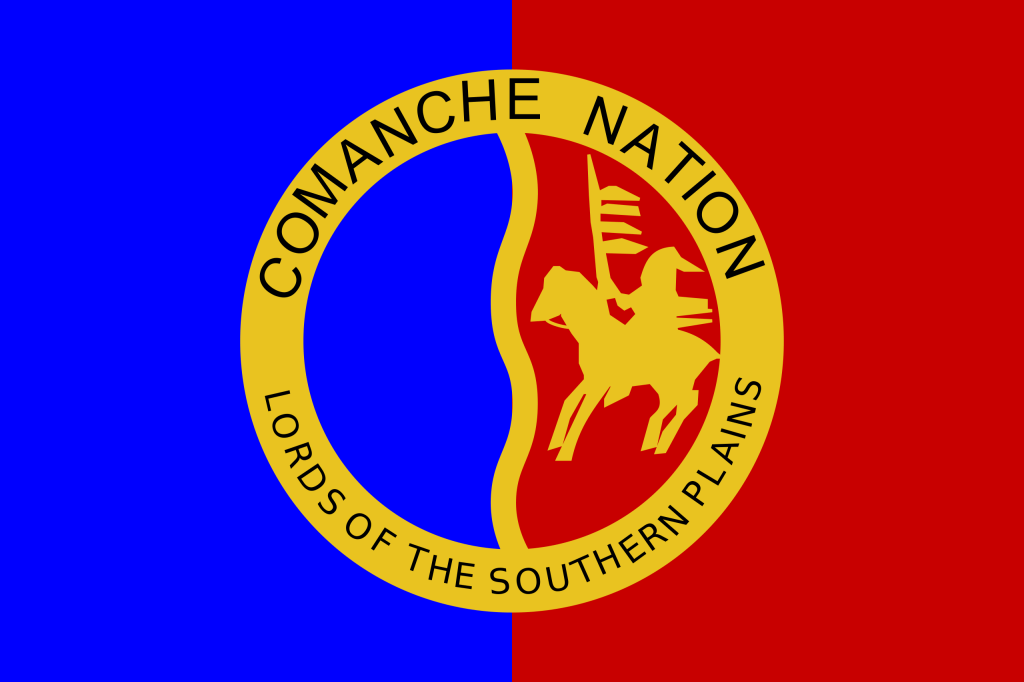
The flag definitely celebrates the historical status as the controlling Tribe in south-central United States. The field of the flag is divided vertically with blue (for loyalty) on the left and red (the name given to the Indigenous people by the European Settlers: Red Man) on the right. The Seal of the Comanche Nation is centered on the field.
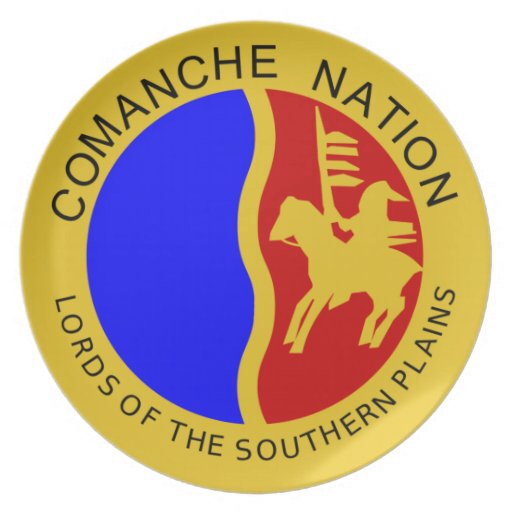
The seal is the Comanche battle shield divided roughly in half. The left portion is blue the right portion is red and bears the image of a Comanche warrior on horseback in yellow. The undulating border between the halves represents a snake moving backwards. [According to legend the Comanches were once know as the “Snakes”.] The yellow surrounding the seal represents the sun. The four feathers on the shield represents the sacred number: 4.

Obtaining Paint
The oldest materials used in the paint were derived from animal, vegetable, and mineral sources, with earth or mineral paint being the most common.
White and yellow paint was obtained from white and yellow clays along river beds, and buffalo gallstones produced a different kind of yellow. Green paint was obtained from copper ores. One type of blue paint came from drying a certain type of duck manure, and some tribes would combine bluish mud and yellow clay to make green paint.
Powdered charred wood and black earth were used in making black paint.
The base for red paints probably the most commonly used color was crimson-colored clay. A brownish-red paint could be obtained by baking yellow clay over ashes until it turned red.
Older Uses of Face Paint
The painting of a man’s face and body among the plains tribes during the buffalo days was said to be a form of mental conditioning. Warriors would paint themselves with personal protective designs and colors before they engaged in battle with an enemy. Hence the stereotypical term “war paint”.
This paint would have been prayed over. It was believed that Indians’ prayers were put into the paint, and when applied, the power of the prayers was conveyed to the wearer.
Other times there might even be special songs sung when the paint was applied. Some applied the paint themselves; others preferred to be painted by a holy person or medicine man.
Modern uses of face paint
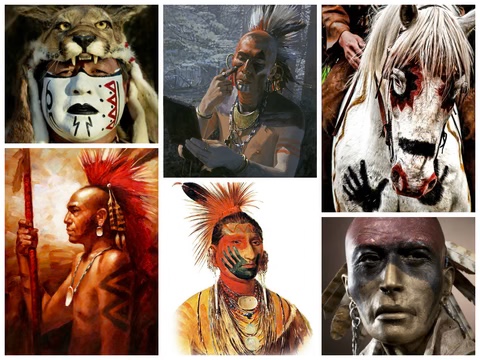
Today face paint is still used by many Plains tribe Indians for a variety of reasons. Many events, such as Sun Dance Ceremonies, Naming Ceremonies, Society Ceremonies, Healing Ceremonies, and events for returning veterans may involve the painting of faces in one form or another.
Some designs and color patterns may be “owned” by individuals, families, clans, or societies. Depending on the tribe, the right to wear a design and color pattern may be handed down from one individual to a younger relative. For example, an old combat veteran, too feeble to dance at pow wows anymore, could give his young grandson the right to use his face paint pattern and colors when he dances.
Other Native American tribes, including those of the Southern Plains, have similar variations of eye paint in different colors and different patterns such as in a “v” shape coming out from the corner of the eye, in a “v” shape with a center line or also known as a “crow’s foot” design, or a series of small dots.
Lastly, whether you are a Northern Traditional Dancer, a Southern Straight Dancer, a Fancy Feather Dancer, a Chicken Dancer, or a Grass Dancer, and you are considering wearing face paint, the first question you should ask yourself is “why”. Why should you be wearing it? It may be for protection; to honor someone else; to be part of your personal experiences as a veteran; to follow the dictates of a dream or visionary experience; or to show family, clan, or social ties.

 deliriouslove1970. The life & times of Gary and Denise Flanders. (Free and worth every penny. If you would like to compliment the editor, send to garytheflan@deliriouslove1970.com. If you would like to complain, call your mother.)
Leave a comment