
“London (/ˈlʌndən/LUN-dən) is the capital and largest city of both England and the United Kingdom, with a population of 8,866,180 in 2022. The wider metropolitan area is the largest in Western Europe, with a population of 14.9 million. London stands on the River Thames in southeast England, at the head of a 50-mile (80 km) estuary down to the North Sea, and has been a major settlement for nearly 2,000 years.
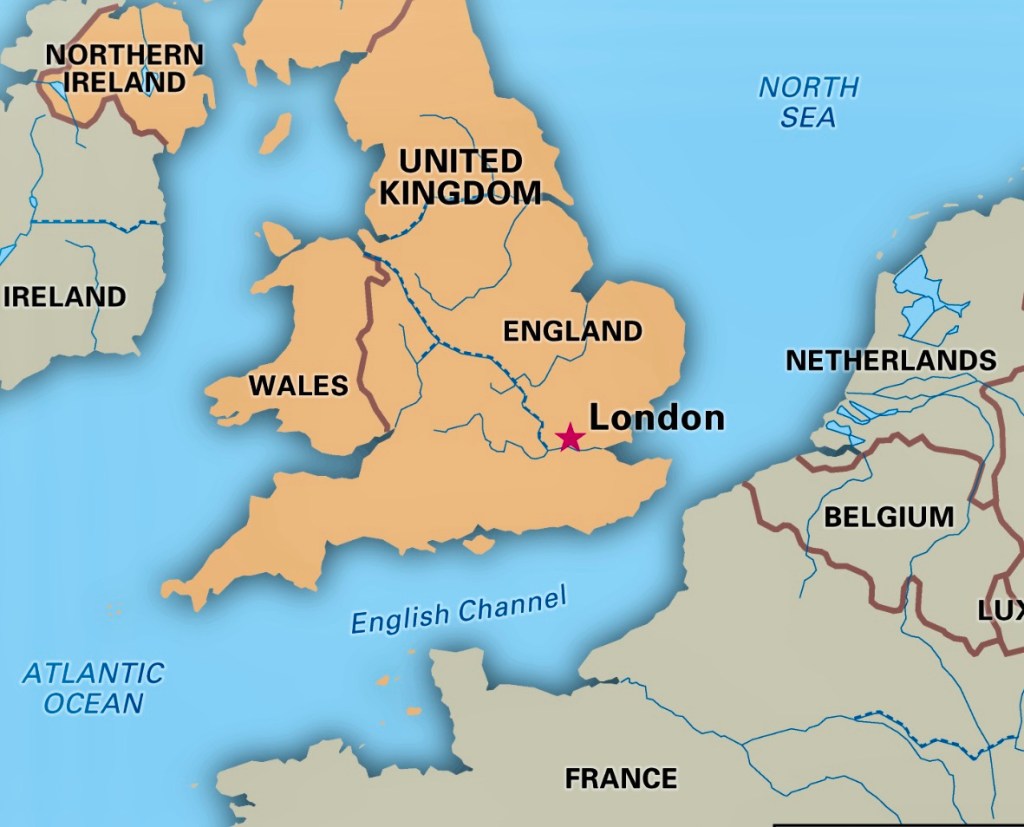
Its ancient core and financial centre, the City of London, was founded by the Romans as Londinium and has retained its medieval boundaries. The City of Westminster, to the west of the City of London, has been the centuries-long host of the national government and parliament. London grew rapidly in the 19th century, becoming the world’s largest city at the time. Since the 19th century, the name “London” has referred to the metropolis around the City of London, historically split between the counties of Middlesex, Essex, Surrey, Kent, and Hertfordshire, which since 1965 has largely comprised the administrative area of Greater London, governed by 33 local authorities and the Greater London Authority.”
“London’s diverse cultures encompass over 300 languages. The 2023 population of Greater London of just under 10 million made it Europe’s third-most populous city, accounting for 13.4% of the United Kingdom’s population and over 16% of England’s population. The Greater London Built-up Area is the fourth-most populous in Europe, with about 9.8 million inhabitants as of 2011. The London metropolitan area is the third-most populous in Europe, with about 14 million inhabitants as of 2016, making London a megacity.”

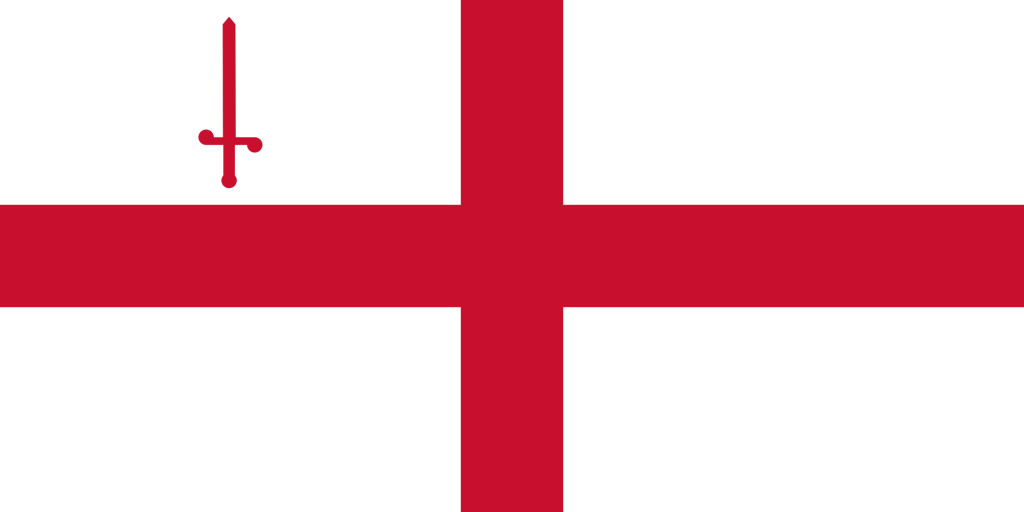
“The flag of the City of London is based on the flag of England, having a centred red St George’s Cross on a white background, with the red swordin the upper hoist canton (the top left quarter). The sword is believed to represent the sword that beheaded Saint Paul, who is the patron saint of the city. The tip of the sword always points upwards; therefore, when the flag is held on its side as a banner, the sword would be printed to face hoist and would be located on the left as it is hanging down .
This flag does not represent Greater London as a whole, only the historical City of London which covers approximately 1 square mile (2.6 km). All references in this article relate to that city, not Greater London.
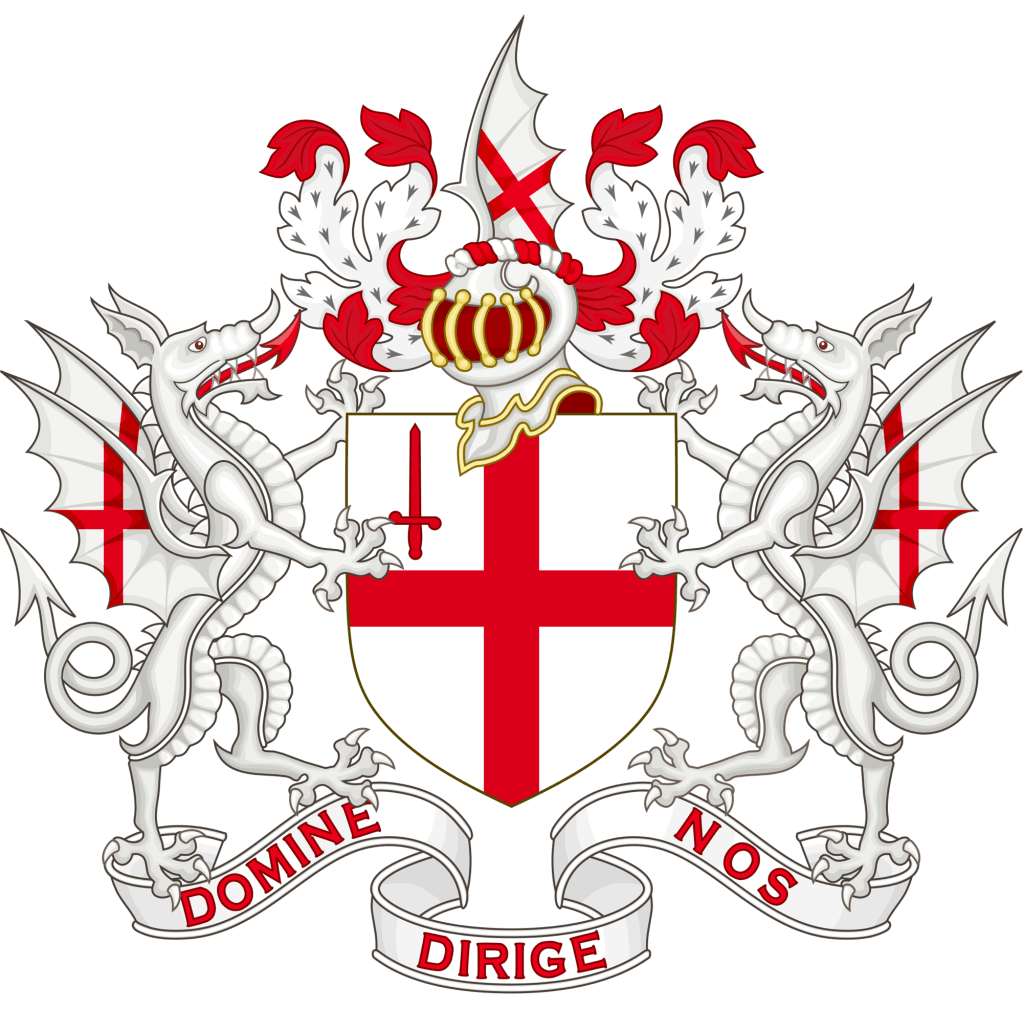
The flag is a banner of arms, derived from the City’s coat of arms with the sword symbolising the sword that beheaded St Paul who is the patron saint of the city. St Paul has featured as a symbol of the city since about the 13th century. His full figure representation was rapidly replaced with his symbolic representation of the sword.




 deliriouslove1970. The life & times of Gary and Denise Flanders. (Free and worth every penny. If you would like to compliment the editor, send to garytheflan@deliriouslove1970.com. If you would like to complain, call your mother.)
Leave a comment