

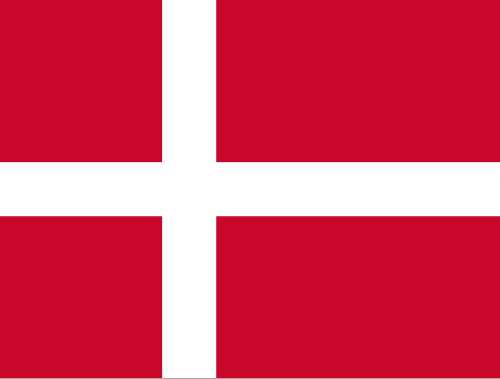
The Dannebrog (Danish: Dannebrog, pronounced [ˈtænəˌpʁoˀ]) is the flag of Denmark. The flag is red with a white Nordic cross, which means that the cross extends to the edges of the flag and that the vertical part of the cross is shifted to the hoist side.
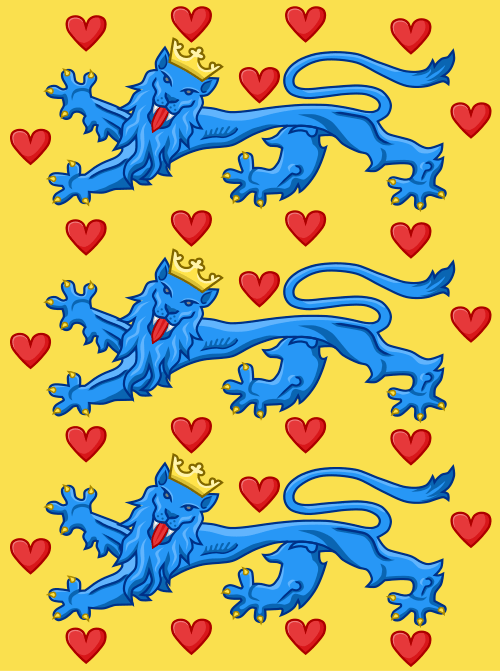
In the official calendar of Denmark, there are over twenty flag-flying days. They include national holidays, certain religious holidays, birthdays in the Royal Family, and a number of important military anniversaries. One of Denmark’s military flag-flying days is the anniversary of the assault on Friedrichstadt that occurred on October 4, 1850.
The assault on Friedrichstadt was the last major battle of the First Schleswig War, referred to as the Schleswig-Holstein War in Germany and as Three Years’ War in Denmark. It was fought between Denmark and the German Confederation over the issue of who should control the duchies of Schleswig and Holstein. The duchies were in personal union in Denmark, but many of their residents were pro-German and wanted to join the German Confederation.
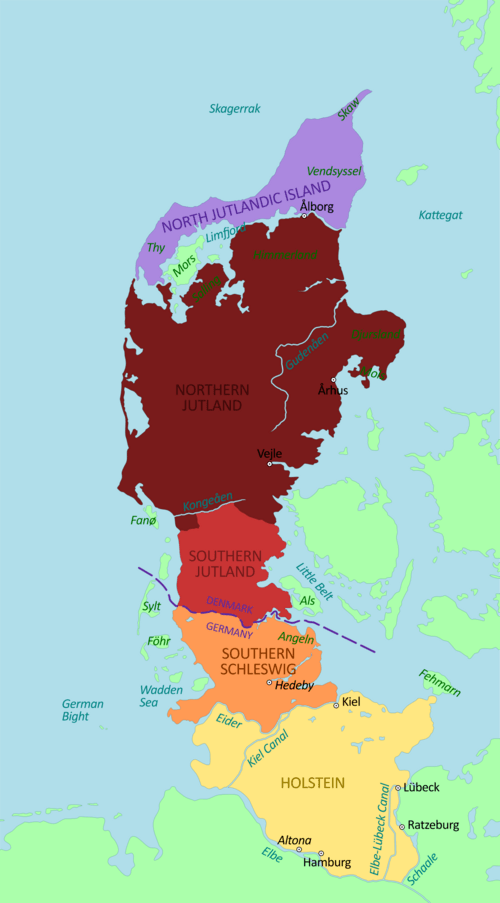
The Jutland peninsula showing the modern border between Denmark and Germany. Holstein is shown in yellow, southern Schleswig in orange, northern Schleswig in red, and the other Danish parts of Jutland in dark red.
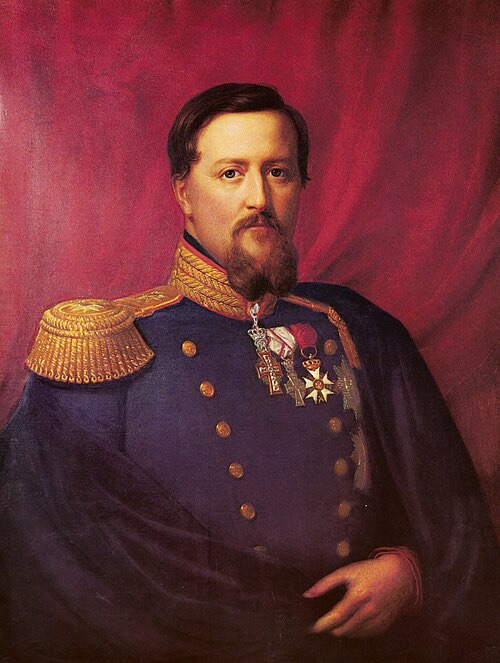
On 27 March 1848, King Frederik VII of Denmark announced to the people of Schleswig the promulgation of a liberal constitution under which the duchy, while preserving its local autonomy, would become an integral part of Denmark. This led to an open uprising by the German majority in both Schleswig and Holstein in support of independence from Denmark and of close association with the German Confederation. The military intervention of the Kingdom of Prussia supported the uprising: the Prussian army drove Denmark’s troops from Schleswig and Holstein, beginning the First Schleswig War (1848–1851), which ended in a Danish victory at Idstedt; with the London Protocol, the international community agreed on the duchies’ status.
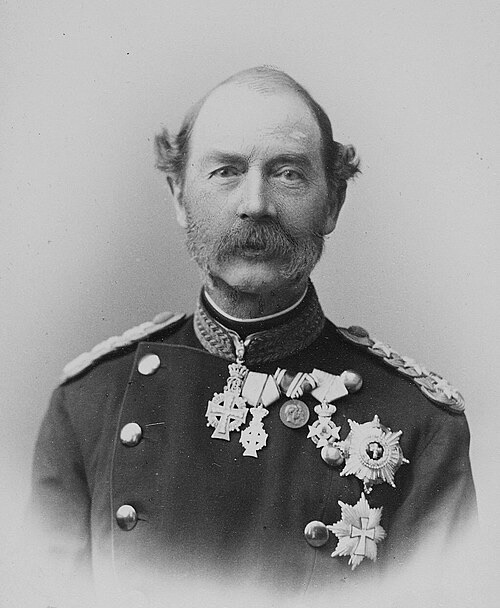
Peace didn’t last. When King Frederik died his successor, Christian IX decided he didn’t like the agreement and went after Schleswig again. This brought about the second war that ended in Schleswig becoming part of Germany.
But the defense of Friedrichstadt, during the first Schleswig War is still considered a major victory in the military history of Denmark, and its anniversary was declared a flag day.

 deliriouslove1970. The life & times of Gary and Denise Flanders. (Free and worth every penny. If you would like to compliment the editor, send to garytheflan@deliriouslove1970.com. If you would like to complain, call your mother.)
Leave a comment