

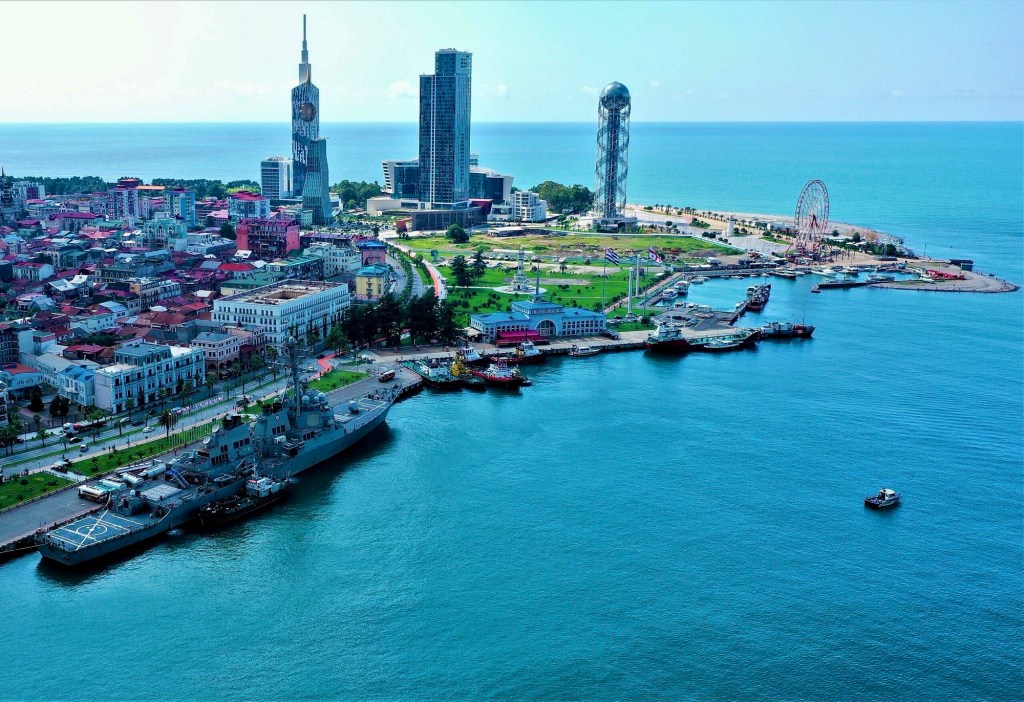
The Republic of Georgia is a country in the Caucasus region on the coast of the Black Sea. It is located at the intersection of Eastern Europe and West Asia, and is today generally regarded as part of Europe. It is bordered to the north and northeast by Russia, to the south by Turkey and Armenia, and to the southeast by Azerbaijan.
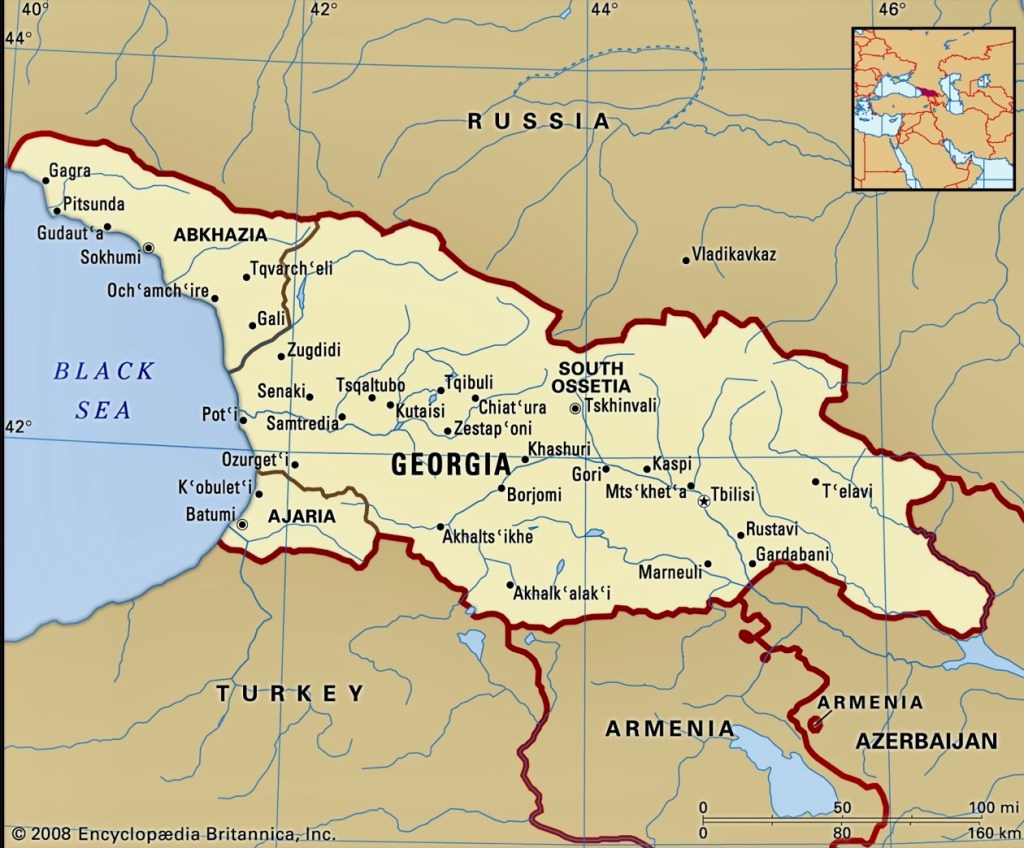
Georgia has been inhabited since prehistory, hosting the world’s earliest known sites of winemaking, gold mining, and textiles. In the early fourth century, Georgians officially adopted Christianity, which contributed to their unification under the Kingdom of Georgia. Georgia reached its Golden Age during the High Middle Ages under the reigns of King David IV and Queen Tamar.
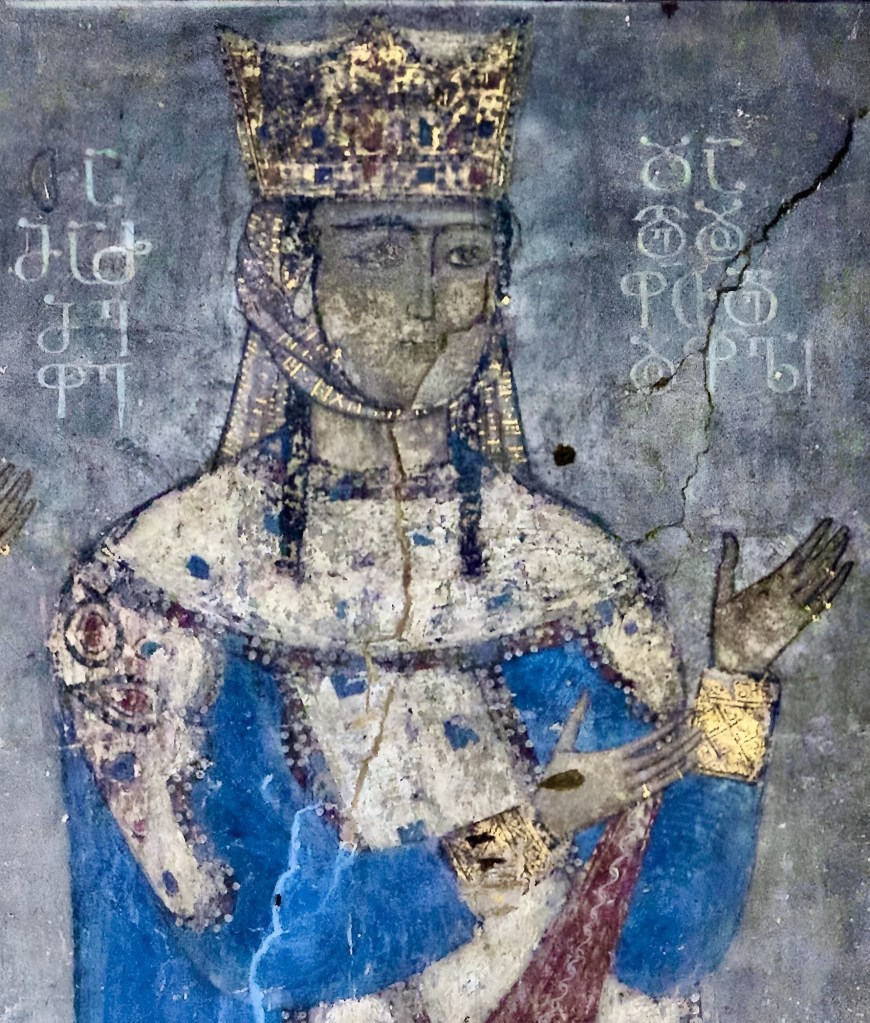
Tamar ruled from 1184 to 1213. Tamar was proclaimed heir and co-ruler by her reigning father George III in 1178, but she faced significant opposition from the aristocracy upon her ascension to full ruling powers after George’s death. Tamar was successful in neutralizing this opposition and embarked on an energetic foreign policy.
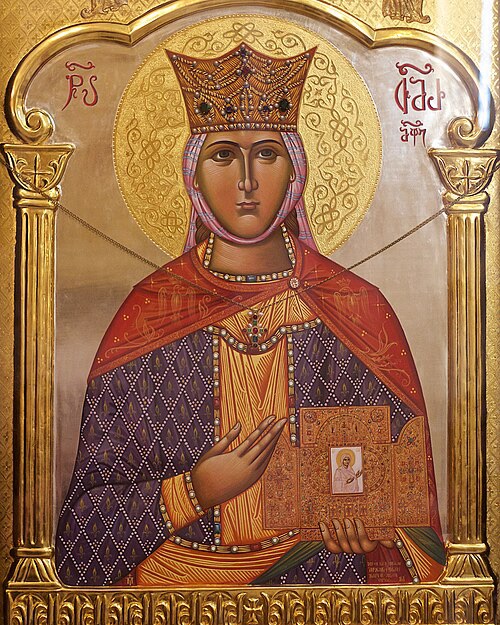
Tamar’s reign is associated with a period of marked political and military successes and cultural achievements. This, combined with her role as a female ruler, has contributed to her status as an idealized and romanticized figure in Georgian arts and historical memory. She remains an important symbol in Georgian popular culture.
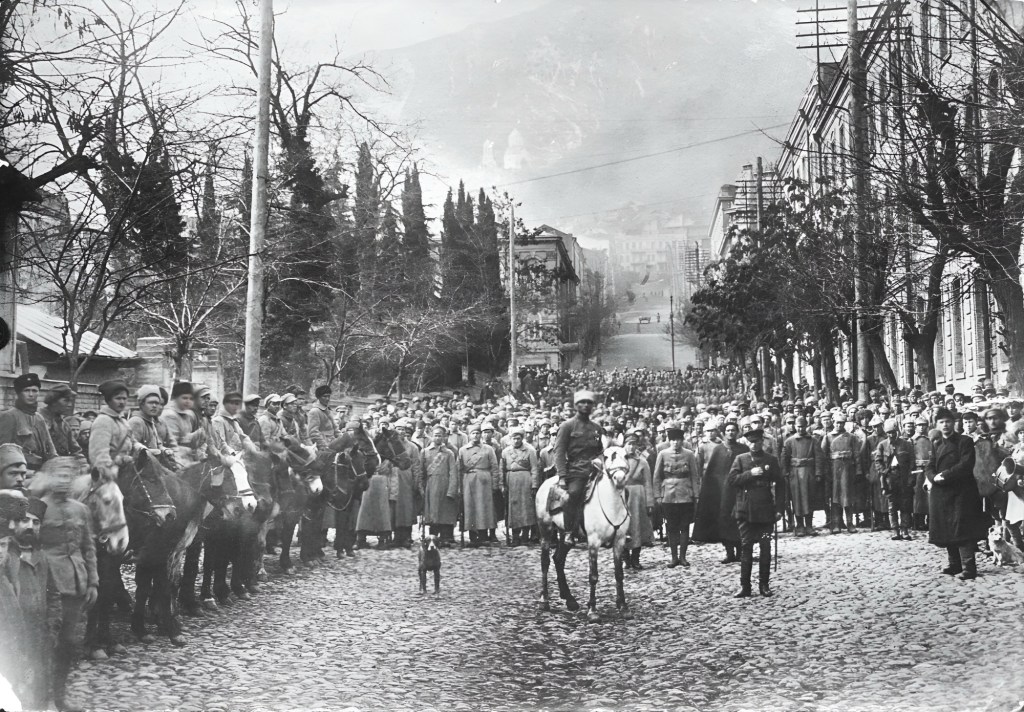
Georgia’s next door neighbor, just to the north continually caused tension and often outright hostilities. Russia wanted the land and on more than one occasion came to take it. After the Russian Revolution in 1917, Georgia joined with its other neighbors to form an alliance to protect them all from Russia.
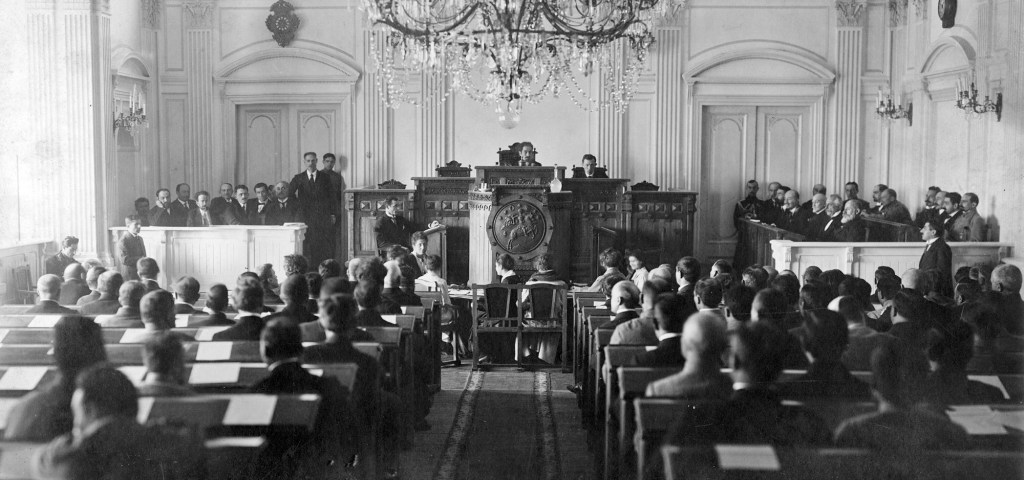
In 1921 Georgia declared independence and wrote their own constitution. In February of 1921 the Red Army invaded Georgia and captured Tbilisi, the capital. For decades Georgia was for all intents and purposes Russian. Significant Russian leaders came from Georgia, including Joseph Stalin.

During World War II, 20% of the Russian Army was from Georgia. One half of all of these soldiers died. After Stalin’s death in 1953 protests erupted with people demanding independence. It took until 1991 for Georgia to once again declare its independence.
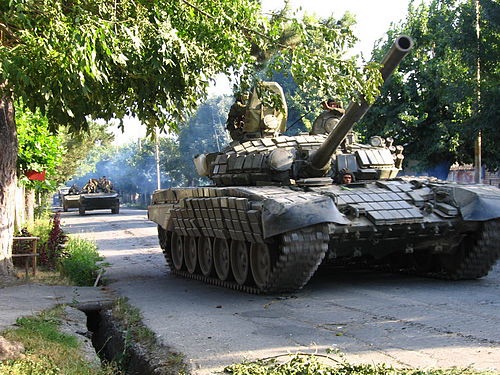
Things were never easy for Georgia. Constant tension with Russia led to the invasion once again by Russia in 2008 and a short war in August of that year. It has never been easy for Georgia. Non-stop Russian aggression has been a problem with invasion always on the horizon.
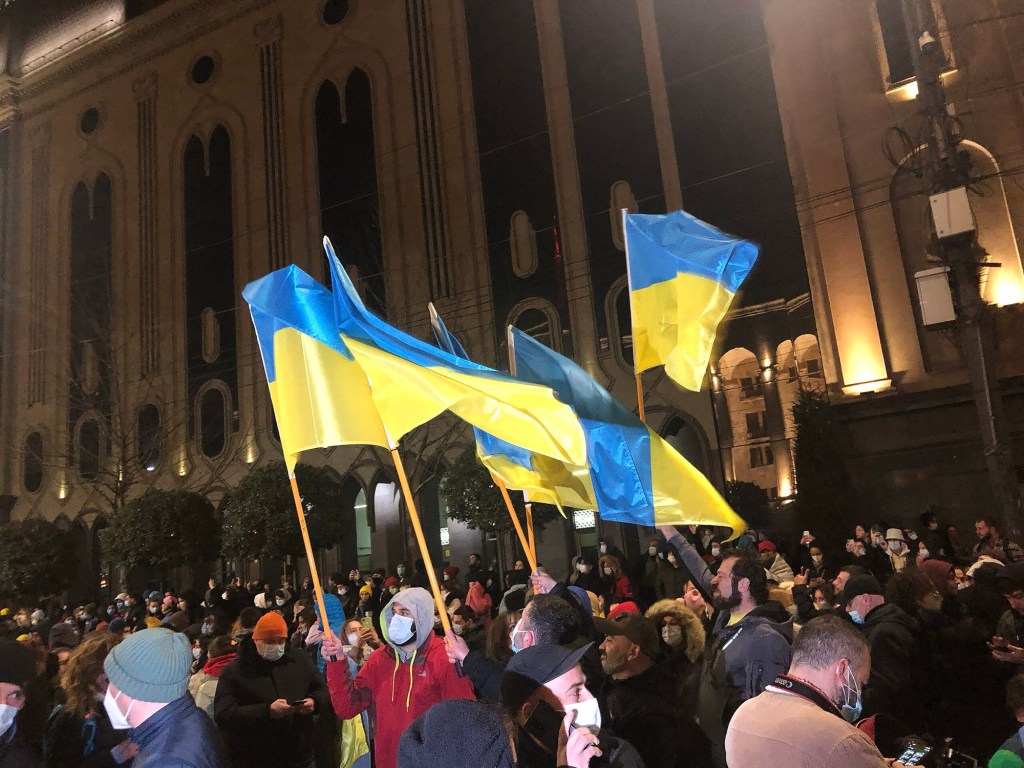
During the Russian invasion of Ukraine in 2022, Georgia provided diplomatic and humanitarian support for Ukraine but did not join other countries in imposing sanctions on Russia. Since the beginning of the war Georgia has topped the list of countries to which Russian exiles moved. Russians, just like many foreigners, were allowed to stay in Georgia for one year without a visa, though many Georgians began to view the presence of more Russian citizens in Georgia as a security risk. Shortly after the outbreak of the war, Georgia applied for membership of the EU at the same time as Ukraine and Moldova. While the latter two received the candidate status a few months later, Georgia was given preconditions to receive the candidate status, which predominantly focused on judicial reforms, rule of law, de-oligarchization and addressing the highly polarized political and media climate. To join the EU and NATO would significantly distance itself from Russia.
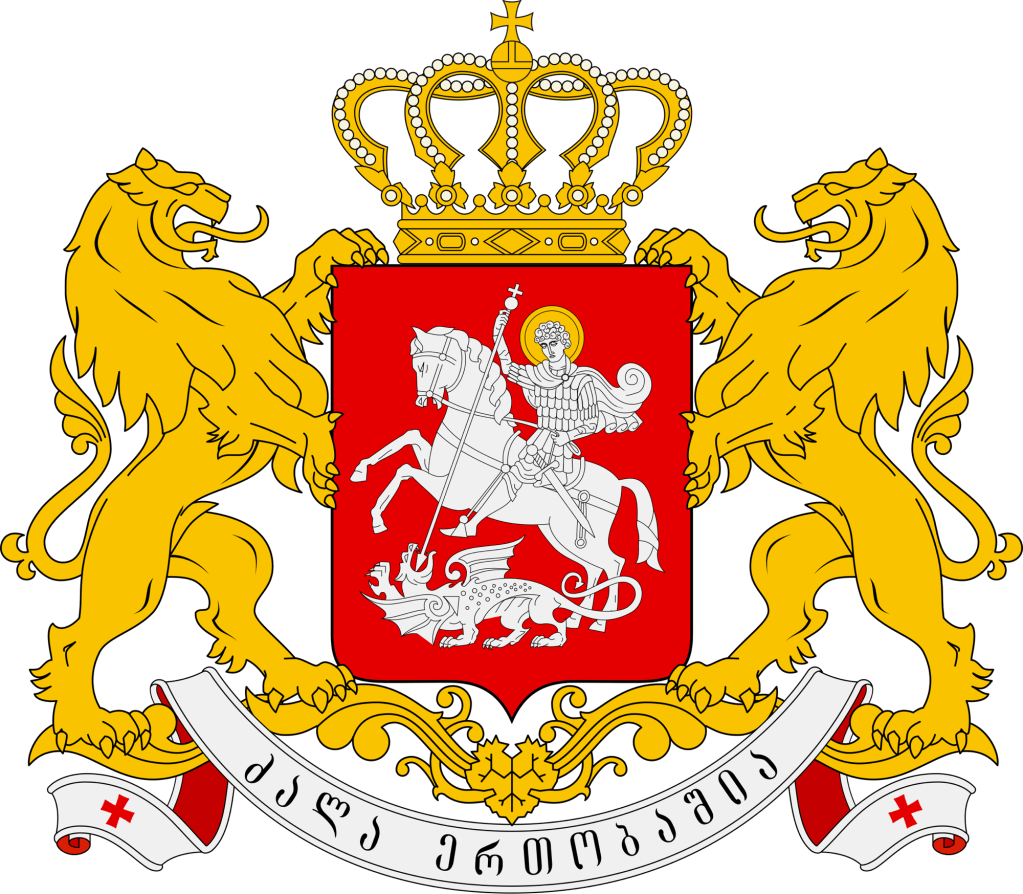
“Historically, there had been a number of independent kingdoms in the Caucasus Mountains that eventually united to form Georgia, but all of them made use of the colours white and cherry (or carnelian) red (as well as black) for their flags. Most of these banners were carried by military forces or used by royalty, since modern national flags did not exist. Queen Tamara, or Tamar (1184–1213), the most famous ruler in Georgian history, according to tradition used a white flag with a dark red cross and a star. All these flags were suppressed in 1801 when Georgia was annexed by Russia.”

“Following World War I, an independent Georgian Democratic Republic was proclaimed on May 26, 1918. The national flag, designed by Jakob Nikoladze, had been first hoisted on March 25, 1917, and it continued to be displayed until Soviet forces crushed Georgian independence in 1921. The flag was cherry red with a canton of black and white stripes. Cherry red was (and still is) considered the national colour; black stood for the tragedies of the past, white for hopes for the future. Under the Soviet regime, various flags were used before the adoption of a distinctive Georgian flag on April 11, 1951. Its background was red, and its canton was blue with red rays surrounding a red hammer, sickle, and star; from the canton a blue horizontal stripe extended to the end of the flag. The 1918–21 flag was readopted on November 14, 1990, and independence was again proclaimed on April 9, 1991.”

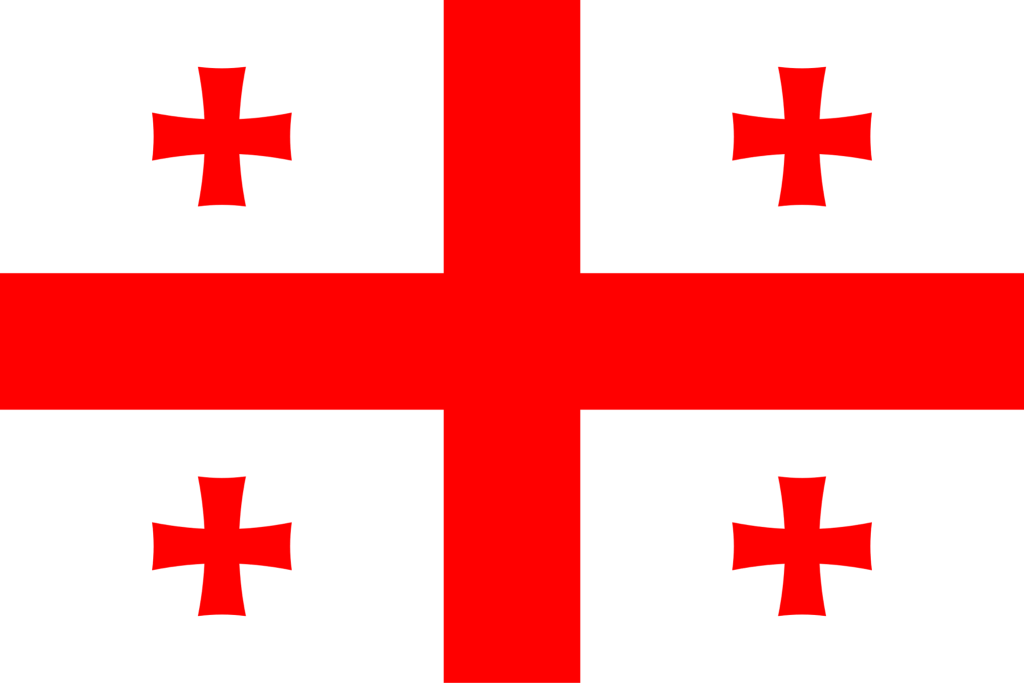
“A white flag depicting five red crosses (the Cross of St. George and four smaller ones) was probably first used in the 14th century. In 1999 the Georgia legislature voted to make it the national flag, but President Eduard Shevardnadze did not sign the bill. The flag then became a popular symbol for those opposing Shevardnadze’s government, and it was officially adopted on January 14, 2004, after a new national government had been installed.” [All three flag information paragraphs were written by Whitney Smith, the ‘Godfather’ of NAVA flag ‘nerdery’.]
This long discussion has centered on the political life of Georgia, but what about the people?
“To understand the world knowledge is not enough, you must see it, touch it, live in its presence.”
—Teilhard de Chardin,Hymn of the Universe

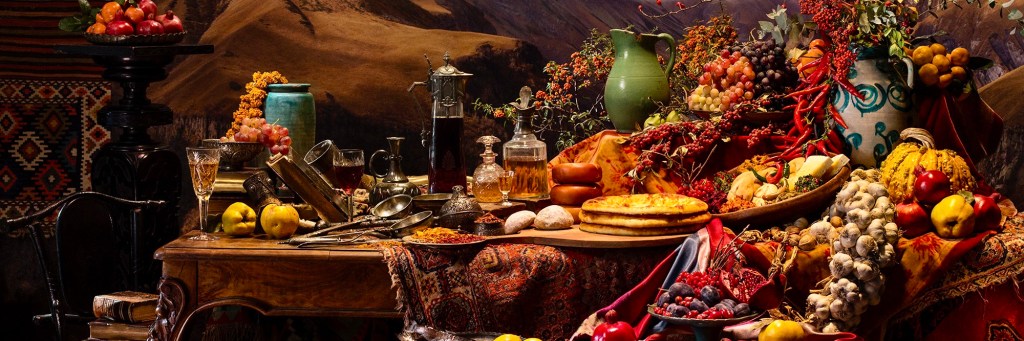
It sounds trite but a wonderful modern experience of how the people are coping is found on a fun TV show on Netflix. In season 8, episode 4 Phil Rosenthal visits Georgia to met people and…well eat.


There is political and there is people, Georgia is a fascinating place.


 deliriouslove1970. The life & times of Gary and Denise Flanders. (Free and worth every penny. If you would like to compliment the editor, send to garytheflan@deliriouslove1970.com. If you would like to complain, call your mother.)
Leave a comment