
“Vanuatu, country in the southwestern Pacific Ocean, consisting of a chain of 13 principal and many smaller islands located about 500 miles (800 km) west of Fiji and 1,100 miles (1,770 km) east of Australia. The islands extend north-south for some 400 miles (650 km) in an irregular Y shape. The Torres Islands are the northernmost group. Southward from the Torres group, the main islands are Vanua Lava and Santa Maria (Gaua) in the Banks Islands group, Espiritu Santo, Aoba (Ambae), Maéwo, Pentecost, Malakula, Ambrym, Épi, Éfaté, Erromango, Tanna, and Anatom. Some 200 miles (320 km) to the southeast of Anatom, two uninhabited islands, Hunter and Matthew, are claimed by both Vanuatu and France (as part of New Caledonia).”
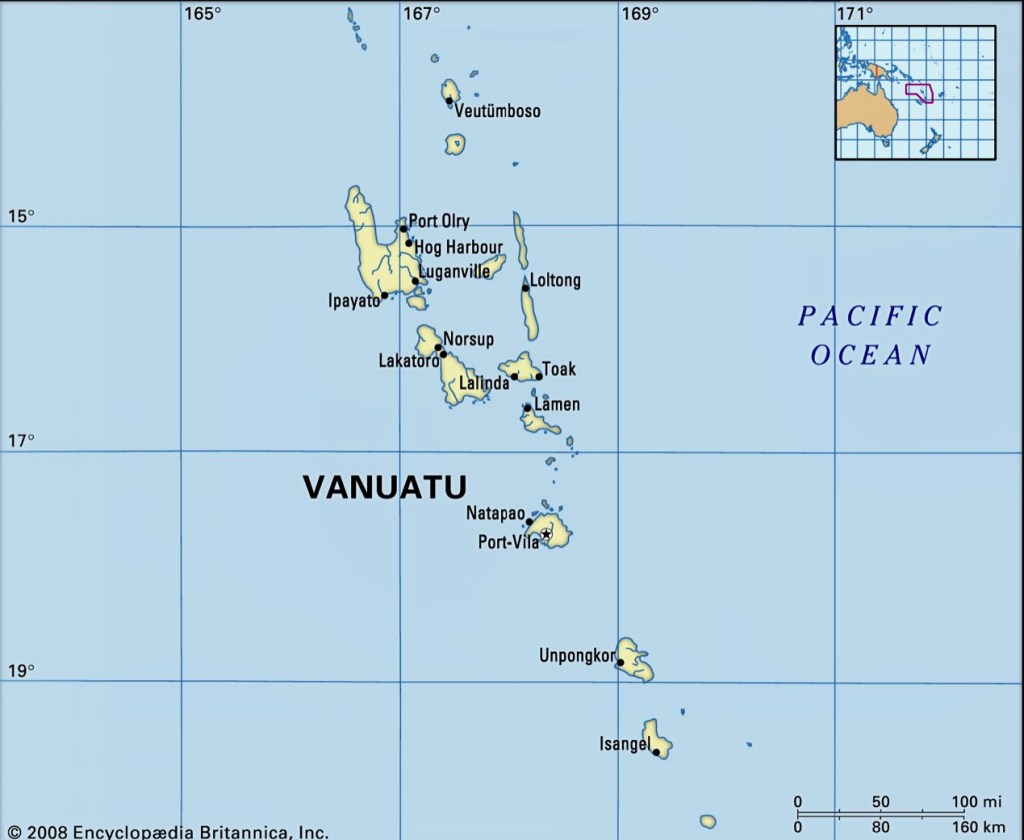

“Formerly the jointly administered Anglo-French condominium of the New Hebrides, Vanuatu achieved independence in 1980. The name Vanuatu means “Our Land Forever” in many of the locally used Melanesian languages. The capital, largest city, and commercial centre is Port-Vila (Vila), on Éfaté.”

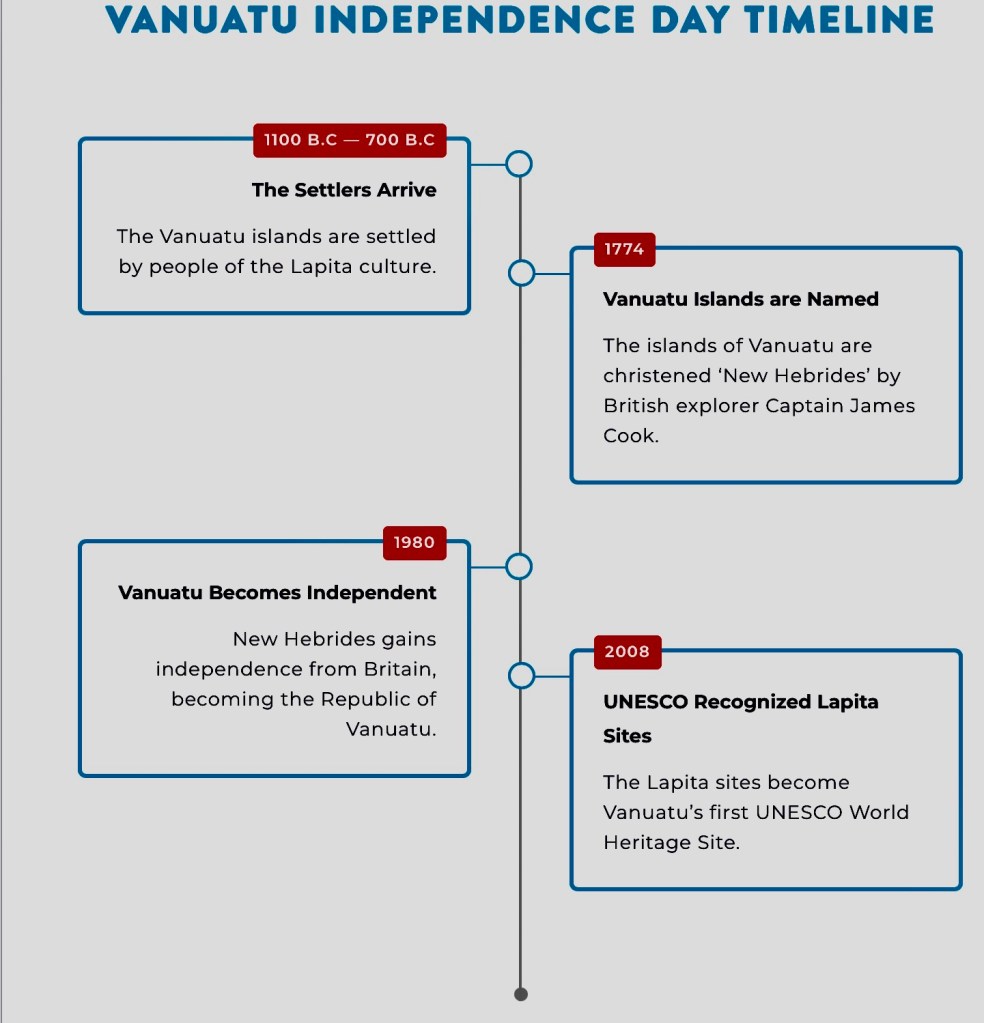
Vanuatu gained independence from Great Britain in 1980. British interference with Vanuatu began in July 1774 when Captain James Cook — a British explorer — arrived on the islands. He investigated the islands from July to September 1774, eventually naming them ‘New Hebrides’ —a reference to the Hebrides off Scotland’s west coast. From 1839 onwards, a growing number of Europeans — mostly Protestant and Roman Catholic missionaries — arrived in the New Hebrides in an attempt to convert the islanders to Christianity. Cotton, coffee, cocoa, bananas, and coconuts were among the commodities brought in by British subjects from Australia. French settlers followed in their footsteps, and by 1906, the French population outnumbered the British population by 173.
The indigenous population, called ni-Vanuatu, is overwhelmingly Melanesian, though some of the outlying islands have Polynesian populations. There are also small minorities of Europeans, Micronesians, Chinese, and Vietnamese. Roughly three-fourths of the population lives in rural areas, but since independence the urban centres of Luganville and Port-Vila have drawn a significant number of people attracted by better opportunities. More than 100 local Melanesian languages and dialects are spoken; Bislama, an English-based Melanesian pidgin, is the national language and, along with English and French, is one of three official languages”
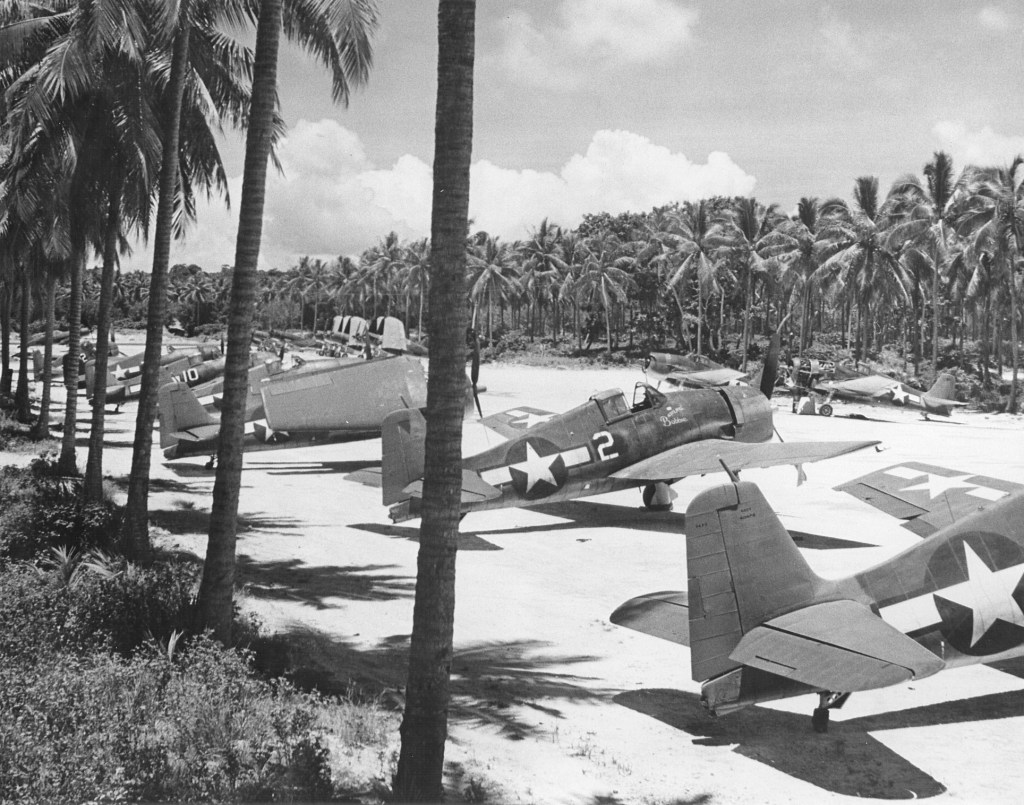
Because of its strategic position the islands served an important role in World War II. After France fell to Germany the US and Australia used Vanuatu to protect the pacific, especially Australia from Japanese invasion. After the war due to its lush beauty tourism became a major industry. Developers attempted to buy land but the government passed a law saying no land could be sold to foreigners.
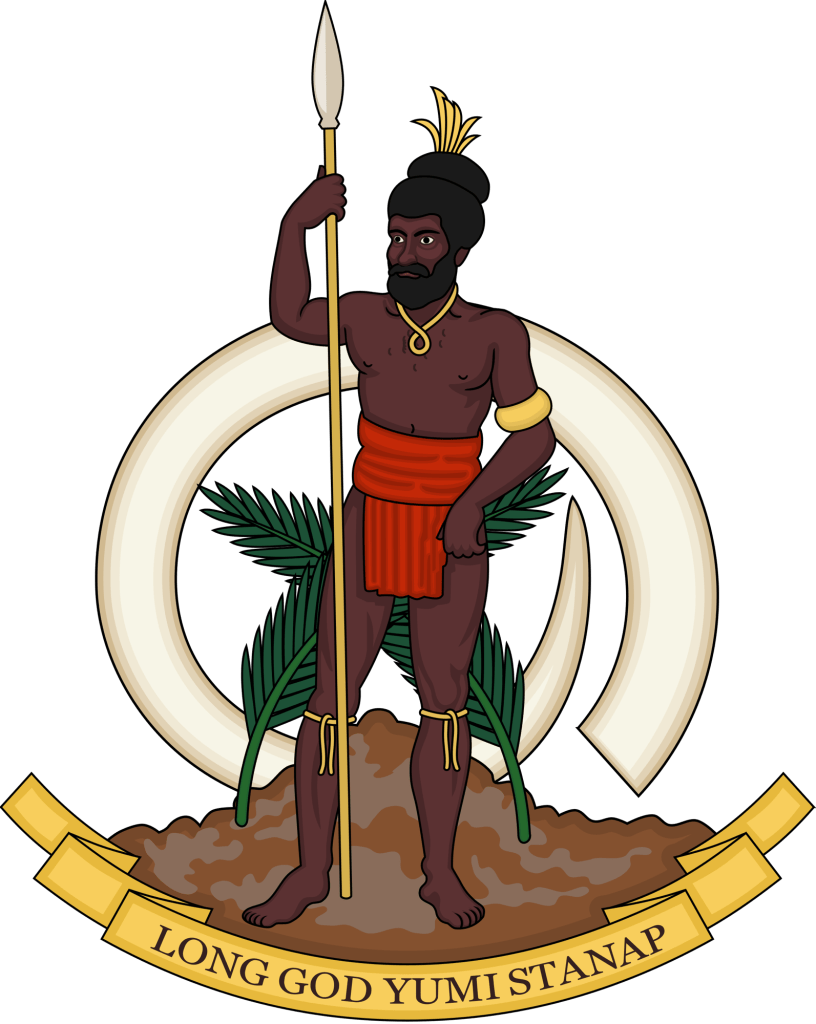
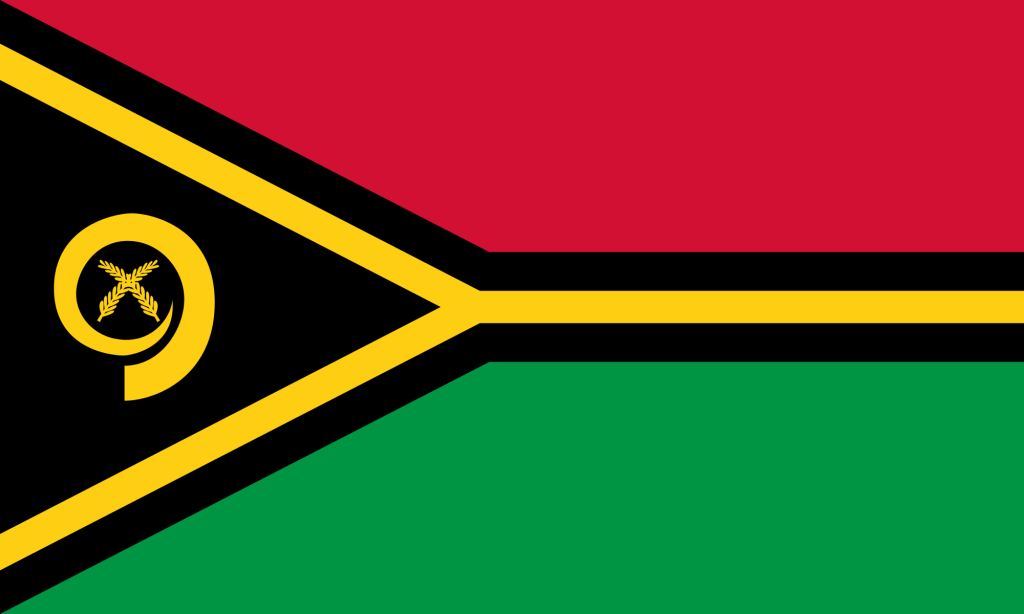
The themes of the coat of arms are symbolic and carried on in the flag. The pig’s tusk and the fern leaves represent peace and prosperity. The moto on the bottom, in the language, states: ‘We stand with God’ These are words from the first Prime Minister, Walter Lini uttered upon the Independence of Vanuatu.
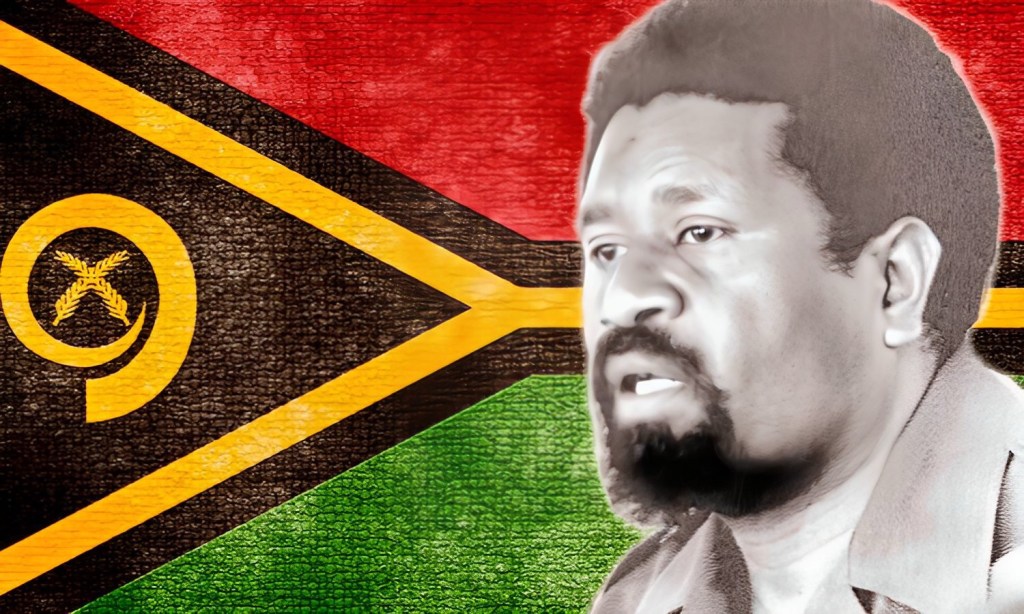
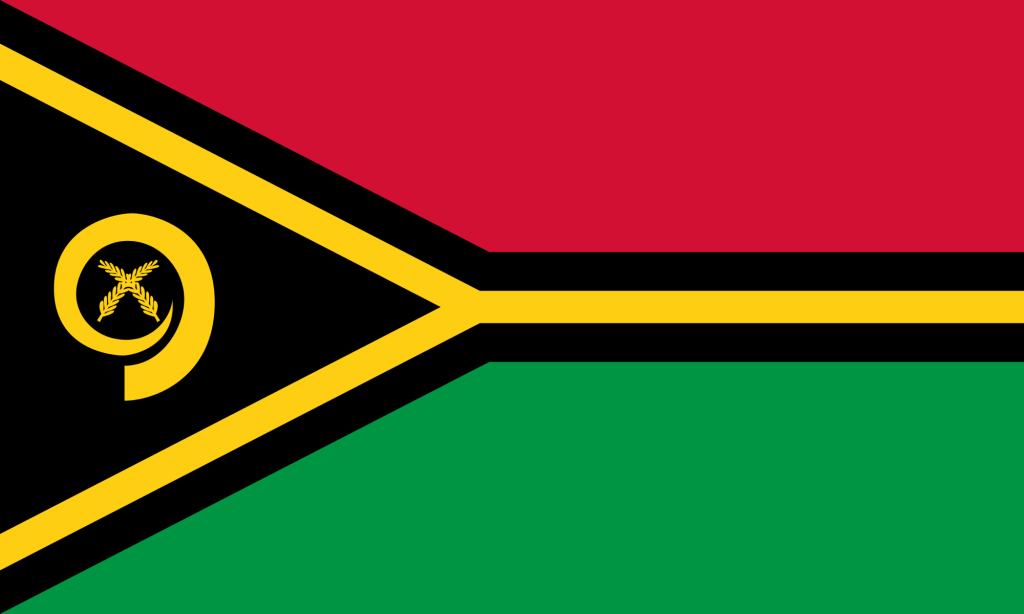
“At the first South Pacific Games in 1963 a team from the New Hebrides (now Vanuatu) displayed a flag of blue-yellow-white vertical stripes with a central emblem. Later, political parties developed flags of their own. Not surprisingly for a Melanesian-populated area, the traditional colours red, black, and green found favour. In 1977 a flag of almost the same colours and symbolism as the future national flag was designed by local artist Kalontas Malon (Malon Kalontas) and adopted by the Vanuatu Party. Following minor modifications, it was hoisted as the national flag on Independence Day, July 30, 1980. Its black triangle is symbolic of both the rich soil of the islands and the people who live there. The lush vegetation is suggested by the green stripe, while the red is associated with the local religious traditions. The sacrifice of pigs is a common religious rite on Vanuatu; their blood is reflected in the dark red stripe. The emblem on the triangle is a further acknowledgment of that important ritual: it is a full-round pig’s tusk, held in high veneration by the people. Within the circle of the tusk are two crossed nameleleaves. The yellow Y-shape that spreads from the hoist to the fly end of the flag suggests the layout of the islands forming Vanuatu, while its yellow colour stands for peace and “the light of Christianity spreading through the archipelago.” The references to traditional beliefs and Christianity are also reflected in the national motto, “We stand with God,” which appears on the coat of arms.” [Whitney Smith, the ‘Godfather of Vexillology’]

 deliriouslove1970. The life & times of Gary and Denise Flanders. (Free and worth every penny. If you would like to compliment the editor, send to garytheflan@deliriouslove1970.com. If you would like to complain, call your mother.)
Leave a comment