

An American flag older that the ‘Stars and Stripes‘. The continental flag sometimes referred to as The 3rd New England Flag. The story goes it was a flag carried into the Battle of Bunker Hill.
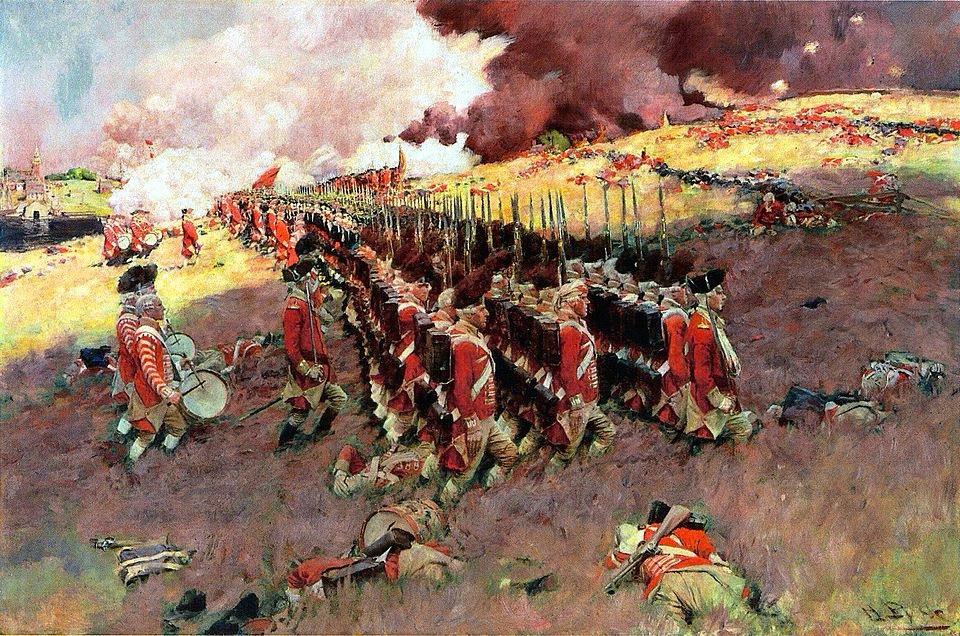
The Battle of Bunker Hill was fought on June 17, 1775, during the Siege of Boston in the first stage of the American Revolutionary War. The battle is named after Bunker Hill in Charlestown, Massachusetts, which was peripherally involved. It was the original objective of both the colonial and British troops, though the majority of combat took place on the adjacent hill, which became known as Breed’s Hill.
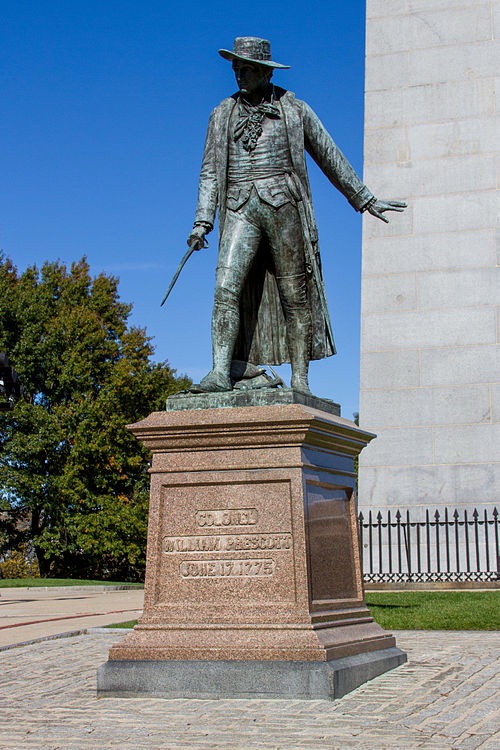
In 1774, when Massachusetts towns began forming militia companies, Prescott was commissioned to command a company and laid siege to Boston after the Battle of Concord. Prescott was then chosen to lead 1,200 men onto the Charlestown peninsula and erect defenses on Bunker Hill on the night of June 16, 1775. Prescott is credited with uttering, “Do not fire until you see the whites of their eyes”, so that the colonial troops could shoot more accurately and so conserve their limited stocks of ammunition.

The Battle of Bunker Hill was one of the bloodiest of the Revolutionary War. There were 226 British killed and 828 wounded. The colonists lost 115 men, with 305 wounded and 30 captured. Even though the British technically won by taking the peninsula, it was a huge blow to their military superiority. They lost nearly one third of their men and the supposedly “ragtag” colonists demonstrated they were not afraid to fight off their British oppressors.
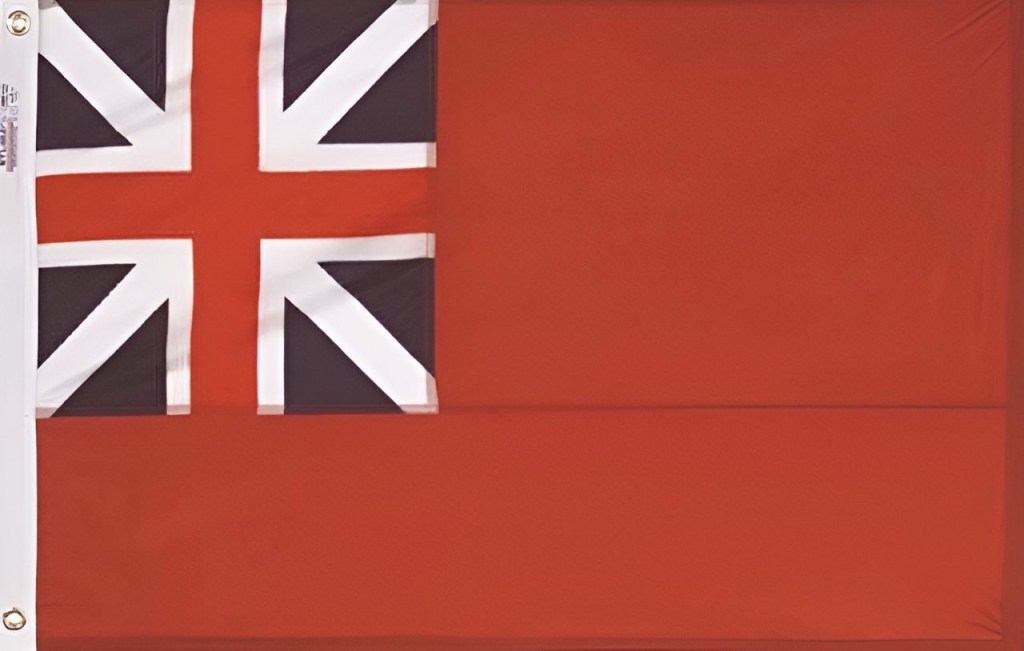
All of the colonists’ flags were variations on already existing British Flags. Most took the British Red Ensign Flag as their model. This was the official flag of the British Empire from 1707 until 1801. As such, it was the first official flag of the colonies and the first official flag of the United States. George Washington flew a variation of this flag at Cambridge in January 1776 called the Grand Union flag.
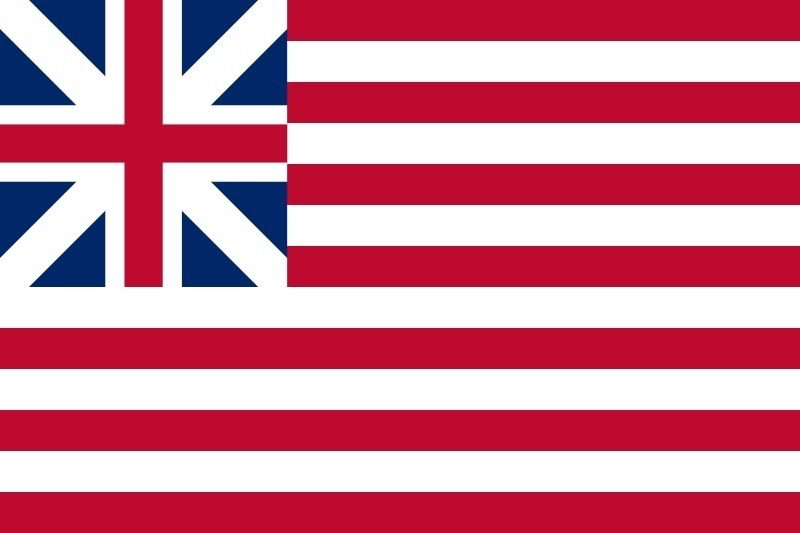
Various New England Flags also took an earlier version called the English Red Ensign and added the pine tree. The First Flag of New England is such a flag, and is an example of a precursor to the Continental Flag. The Continental Flag simply removed the St. George’s cross (the red cross, which was the symbol of England) from the canton. Other flags, such as the Bunker Hill Flag and the Washington Cruisers Flag used the pine tree as well.
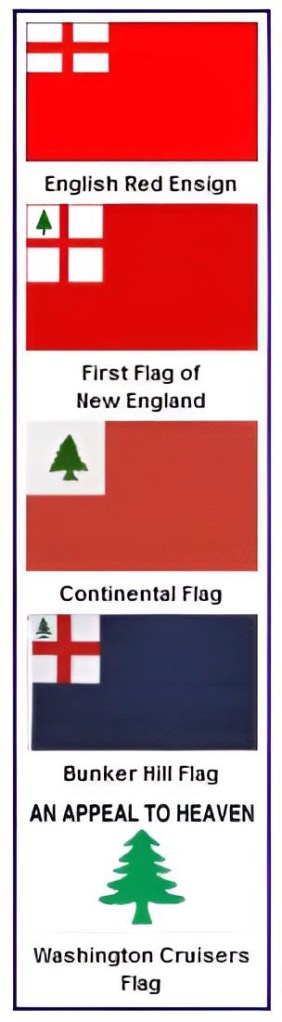
The pine tree was a common symbol of liberty in New England. Its use dates back to pre-colonial times to the Penacook First Americans, an Algonquin Tribe that lived in New England. Penacook means “Children of the Pine Tree.” To this day, the symbol of the Iroquois First Americans is a pine tree with an eagle on the top. The First Americans that helped the Pilgrims of Plymouth Rock survive their first winter were allegedly Penacooks. From that time on, the Pine Tree would often appear as a symbol of freedom in colonial literature and symbolism.

The Continental Flag has come to represent the American colonists and their fight for freedom in the Revolutionary War

 deliriouslove1970. The life & times of Gary and Denise Flanders. (Free and worth every penny. If you would like to compliment the editor, send to garytheflan@deliriouslove1970.com. If you would like to complain, call your mother.)
Leave a comment