

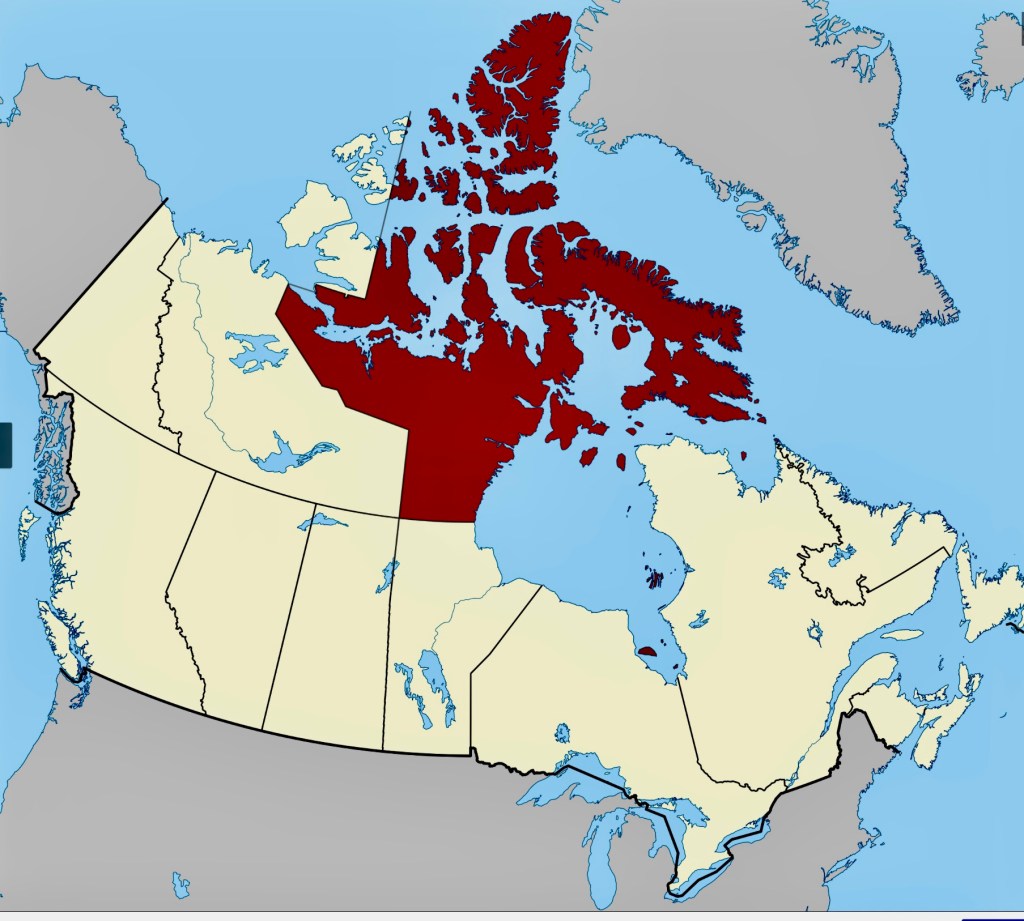
“Nunavut is the largest and northernmost territory of Canada. It was separated officially from the Northwest Territories on April 1, 1999, via the Nunavut Act and the Nunavut Land Claims Agreement Act, which provided this territory to the Inuit for self-government. The boundaries had been drawn in 1993. The creation of Nunavut resulted in the first major change to Canada’s political map in half a century since the province of Newfoundland (now Newfoundland and Labrador) was admitted in 1949.”
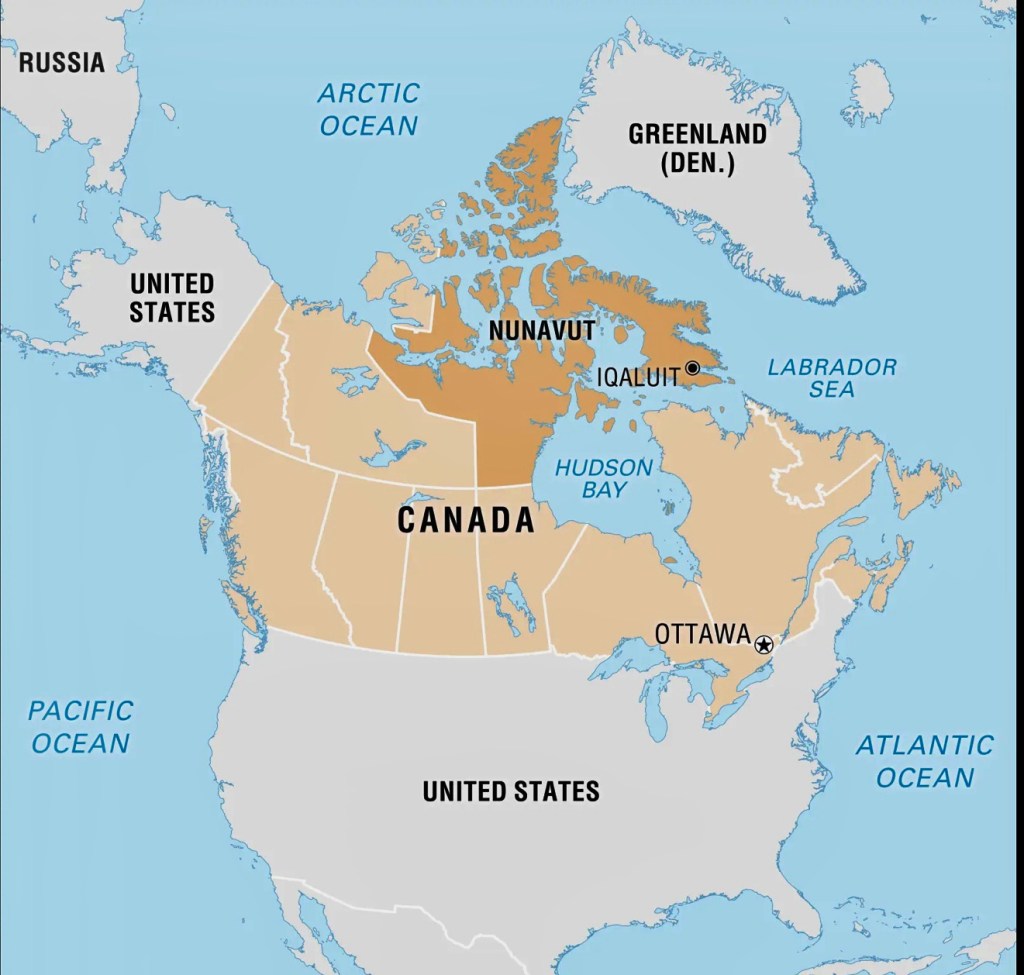
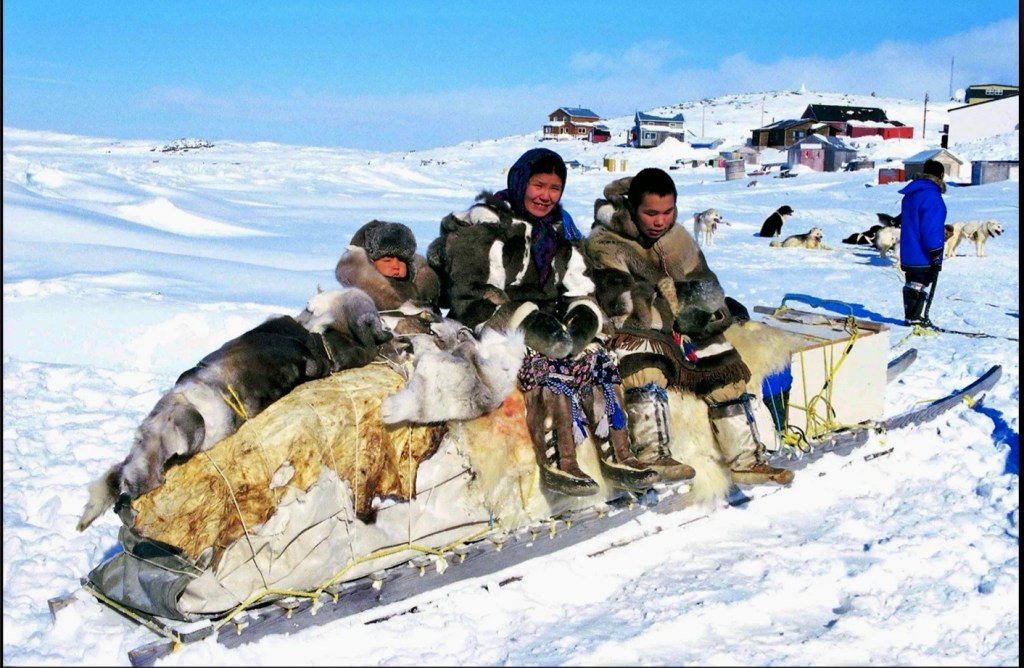
“Nunavut is the least densely populated major country sub-division in the world (not considering Antarctica), being even less densely populated than Denmark’s Greenland. With a population of 36,858 as of the 2021 Canadian census (up from 35,944 in 2016) consisting mostly of Inuit, and a land mass almost as large as Mexico.”
It is a territory, not a province – what is the difference?
- Provinces are autonomous, self-governing regions with their own legislative assemblies, while territories are under federal jurisdiction and are governed by the Canadian government.
- Provinces have greater control over their natural resources and economy, while territories have less autonomy in these areas.
- Provinces receive transfer payments from the federal government to help fund their programs and services, while territories receive larger transfer payments due to their smaller populations and more remote locations.
- Provinces are represented in the Senate, while territories are not.
In short, provinces have more political and economic autonomy than territories, but both are integral parts of Canada. 🇨🇦
Nunavut includes Ellesmere Island and Cornwallis Islands. (Way up at the ‘tippy top’ of the map)
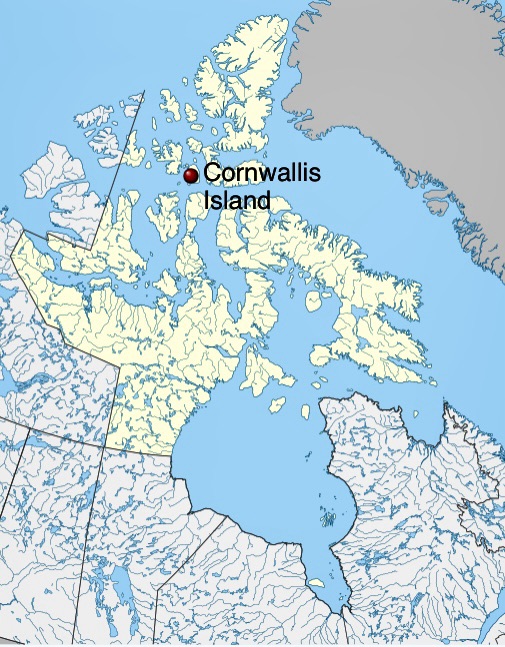
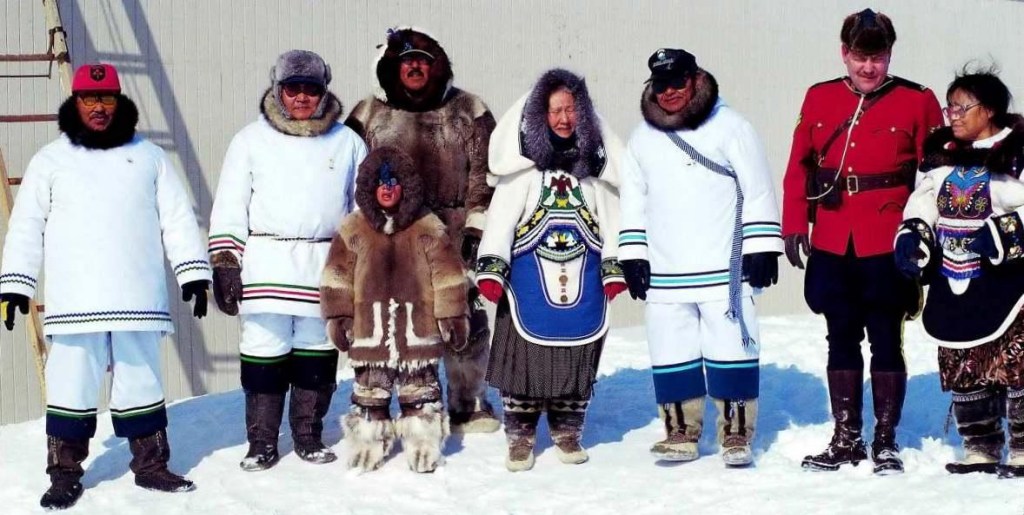
“Cornwallis and Ellesmere Islands featured in the history of the Cold War in the 1950s. Concerned about the area’s strategic geopolitical position, the federal government, as part of the High Arctic relocation, relocated Inuit from Nunavik(northern Quebec) to Resolute and Grise Fiord. In the unfamiliar and hostile conditions, they faced starvation but were forced to stay.
- Forty years later, the Royal Commission on Aboriginal Peoples issued a 1994 report titled The High Arctic Relocation: A Report on the 1953–55 Relocation. The government paid compensation to those affected and their descendants.
- On August 18, 2010, in Inukjuak, the Honourable John Duncan, PC, MP, previously Minister of Indian Affairs and Northern Development and Federal Interlocutor for Métis and Non-Status Indians, formally apologized on behalf of the Government of Canada for the High Arctic relocation.
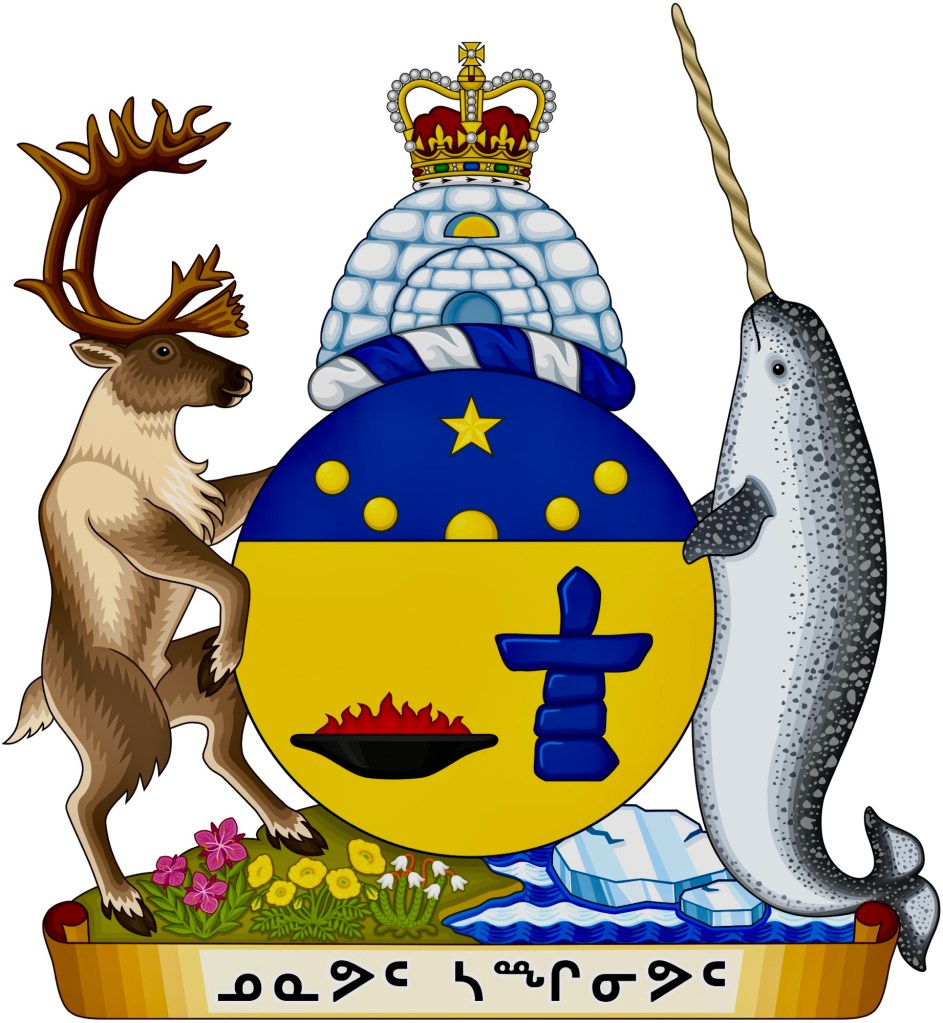
Created by Inuit elders, leaders artists and general population. The shield is blue and gold symbolizing the riches of the land. The main section is rounded rather than a traditional English square. The igloo is still under the crown showing Nunavut’s membership in the Commonwealth. On each side is a Dexter caribou and a narwhal, representing the sustenance of the territory. Inside the main section is a stone lamp representing the warmth of home and a stone guidepost (an inukshuk) symbolizing the boundaries of the territory.
Under all of this are Arctic Poppies, arctic fireweed and Arctic heather. The motto in Inuktitut syllabary translates as ‘Our Land, Our Strength.’

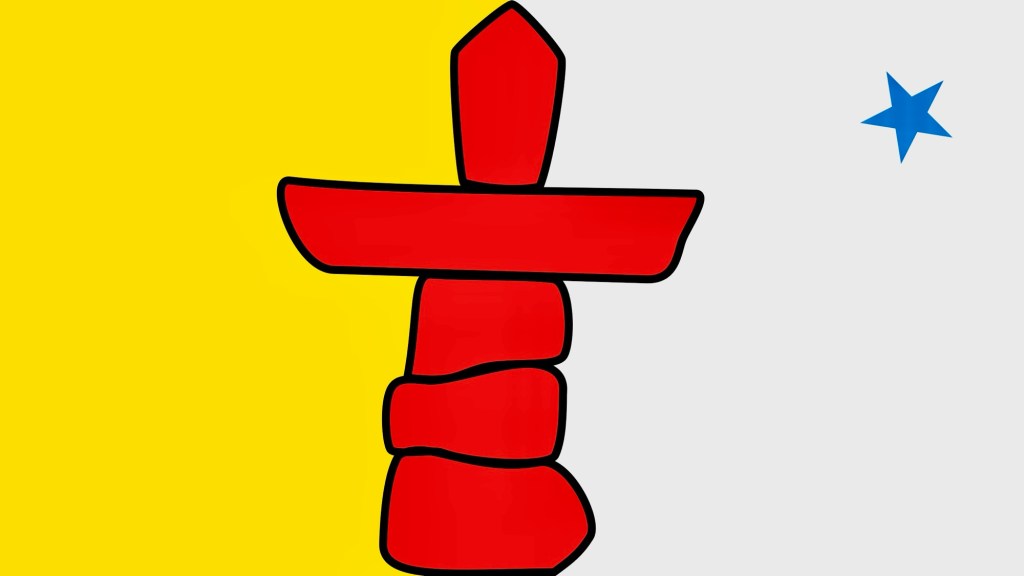
The official flag, also created in 1999 ‘consists of gold and white fields divided vertically by a red inuksuk with a blue star in the fly. The colours blue and gold were selected to represent the “riches of land, sea, and sky”, while red is used to represent Canada as a whole. The inuksuk, which divides the flag, is a traditional stone monument used to guide travellers and to mark sacred sites. In the upper fly, the blue star represents the North Star (Niqirtsituk / Niqirtsuituq), an important object due to its key role as a navigational beacon, and as symbolically representing the wisdom and leadership of community elders.’
July 9 is Nunavut day in Canada.
https://destinationnunavut.ca/discover/13-facts-you-didnt-know-about-nunavut

It is a creative, good flag which is what drew my attention. Also, there is a brand new television series on Netflix, created by The Canadian Broadcasting Corporation called ‘North of North.’ It is filmed in a Nunavut village with Inuit actors. It shows real life and has some fun, funny moments. It is worth a watch.

 deliriouslove1970. The life & times of Gary and Denise Flanders. (Free and worth every penny. If you would like to compliment the editor, send to garytheflan@deliriouslove1970.com. If you would like to complain, call your mother.)
Leave a comment