
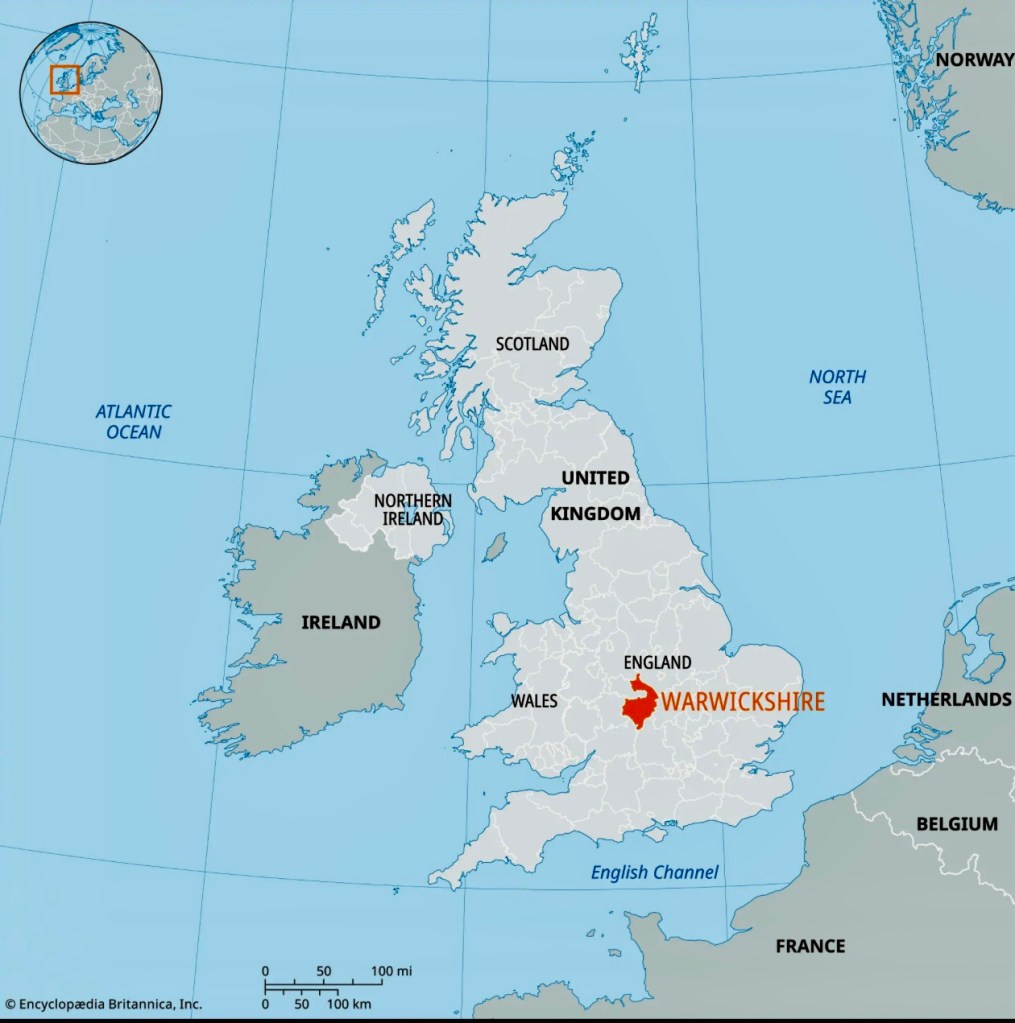
Warwickshire (/ˈwɒrɪkʃər,-ʃɪər/abbreviated Warks) is a ceremonial county in the West Midlands of England. It is bordered by Staffordshire and Leicestershireto the north, Northamptonshire to the east, Oxfordshire and Gloucestershire to the south, and Worcestershire and the West Midlands county to the west. The largest settlement is Nuneaton and the county town is Warwick
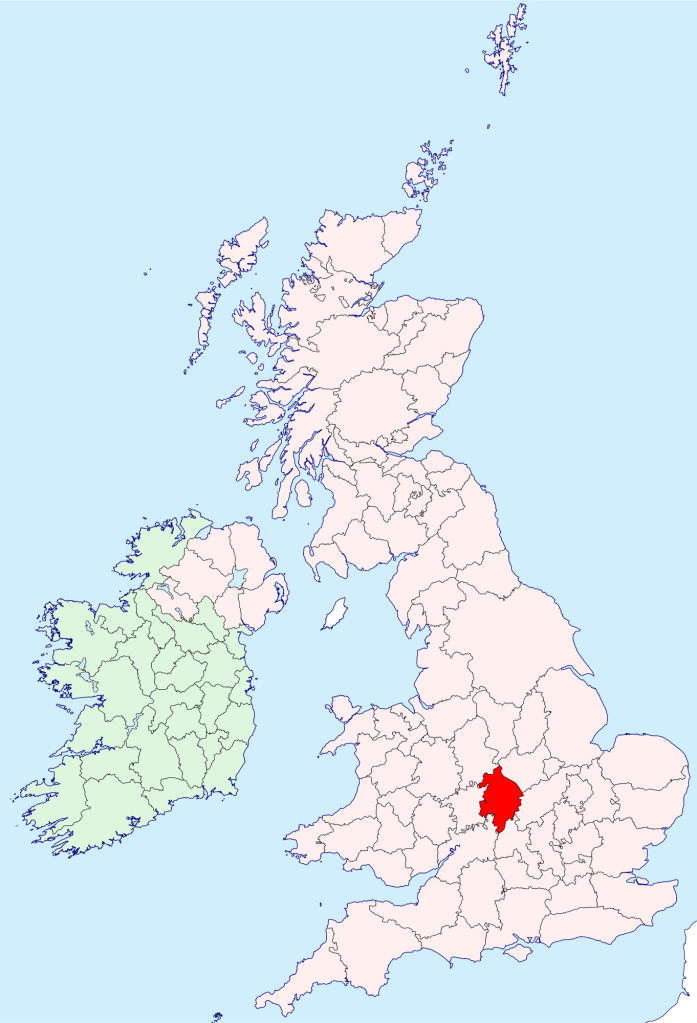
The county is largely rural; it has an area of 763 sq mi (1,980 km2) and an estimated population of 607,604 in 2022. After Nuneaton (88,813), the largest settlements are Rugby(78,125), Leamington Spa (50,923), Warwick (36,665), Bedworth(31,090) and Stratford-upon-Avon(30,495).
In early times much of the historic county was heavily wooded, and prehistoric settlement seems to have been sparse. Of the several major Roman roads that passed through the area, one—Watling Street—still forms the county boundary with Leicestershire to the northeast. However, there were no important Roman settlements. In Anglo-Saxon times the area was part of the kingdom of Mercia, which was absorbed during the 9th century by the kingdom of Wessex. The lands north of the Avon, which became known as Arden, were heavily wooded, with dispersed settlement and isolated farmsteads. South of the Avon lay Feldon, open countryside with nucleated villages such as Brailes and Kineton. That geographic distinction continued well into the Norman era.
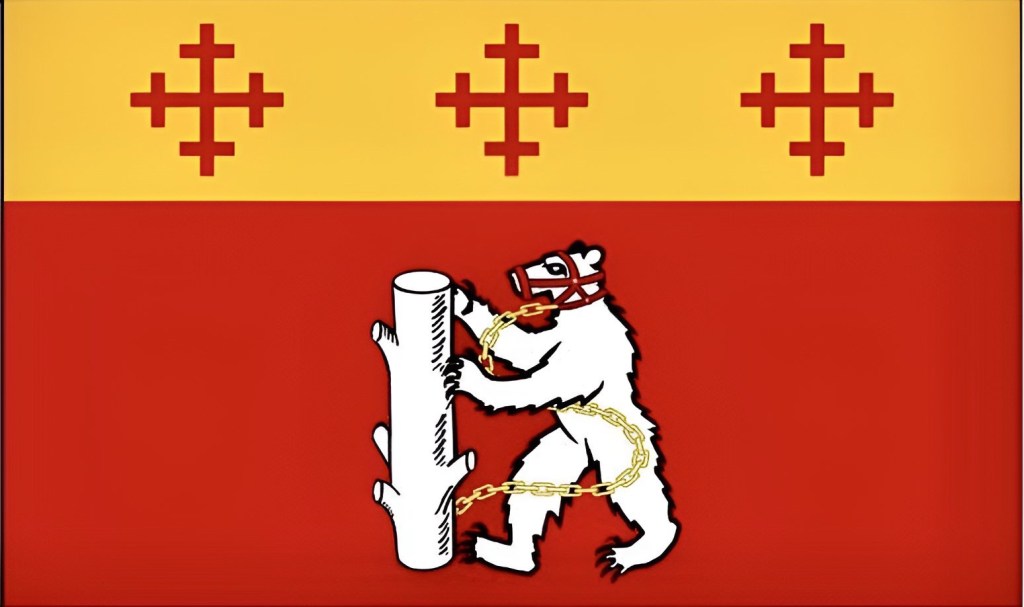
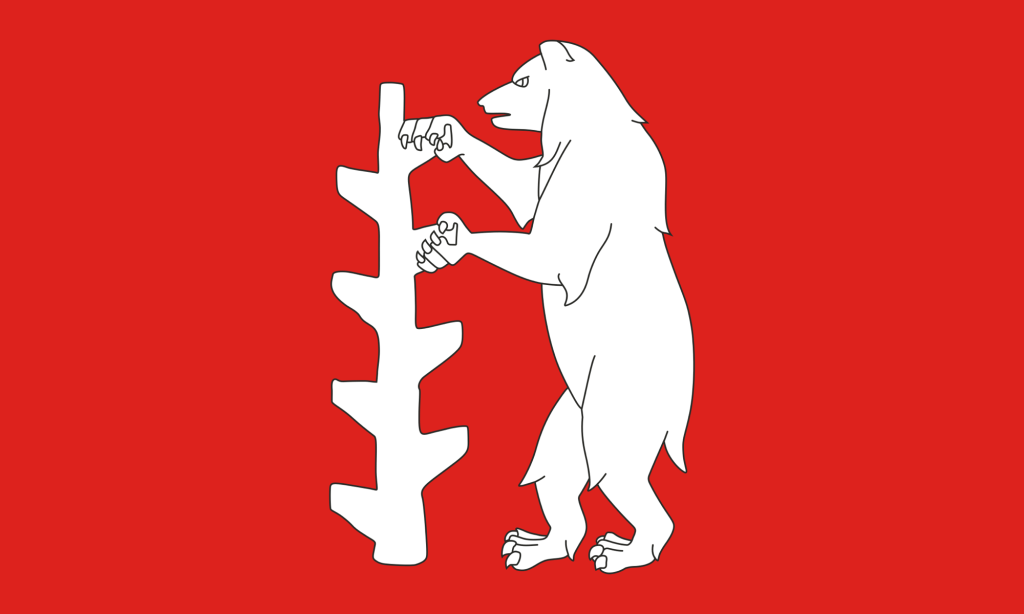
The flag was not officially registered with The Flag Institute (recall, I am a member), until 2016. There was a cooperative effort of a dozen county organizations and the sanction of both the Lord Lieutenant and the High Sheriff.
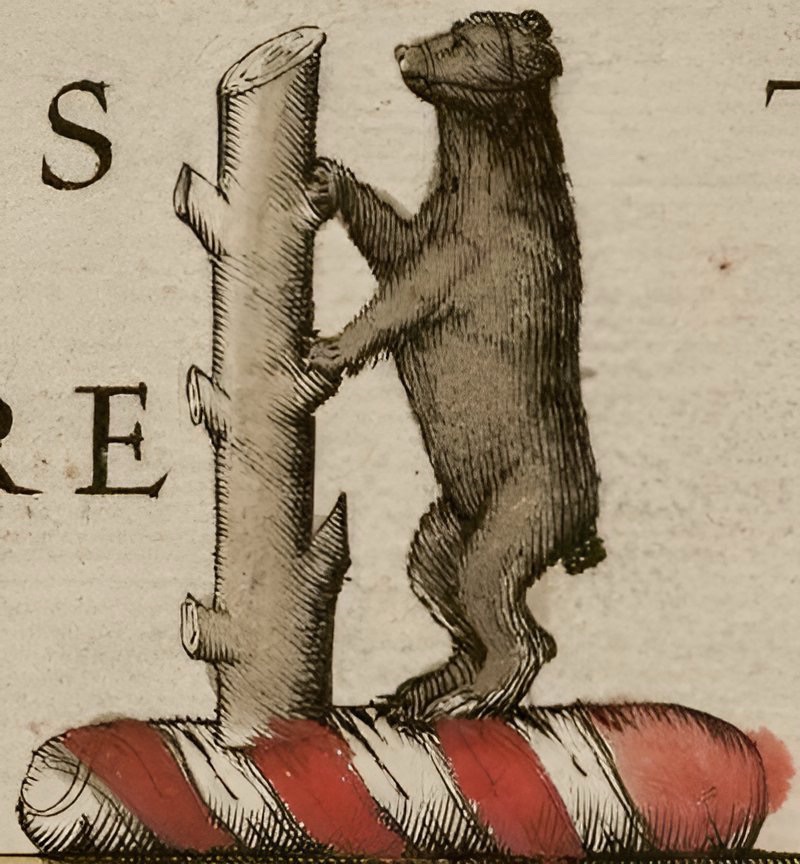
Since the Middle Ages the traditional bear and ragged staff have been used as a symbol of the Earls of Warwick.
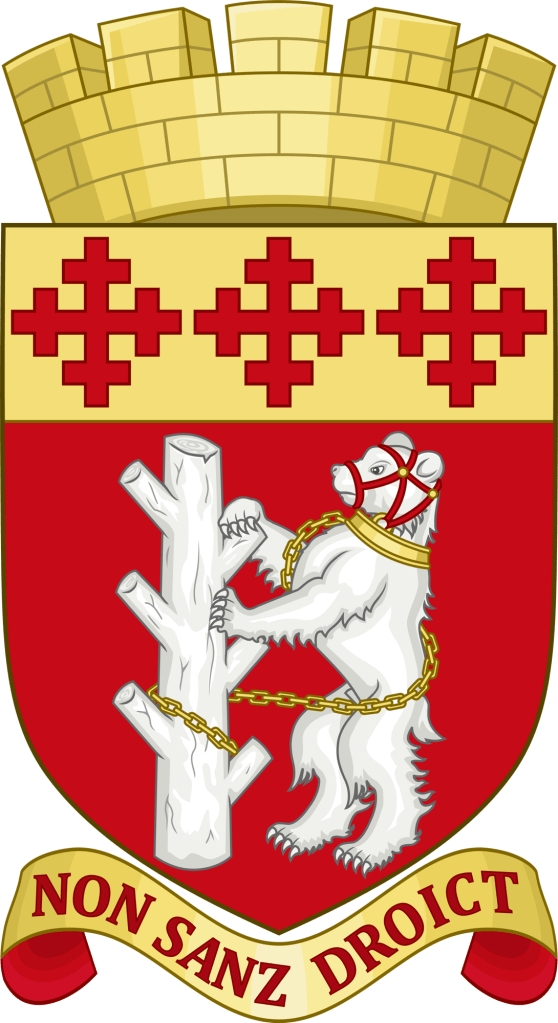
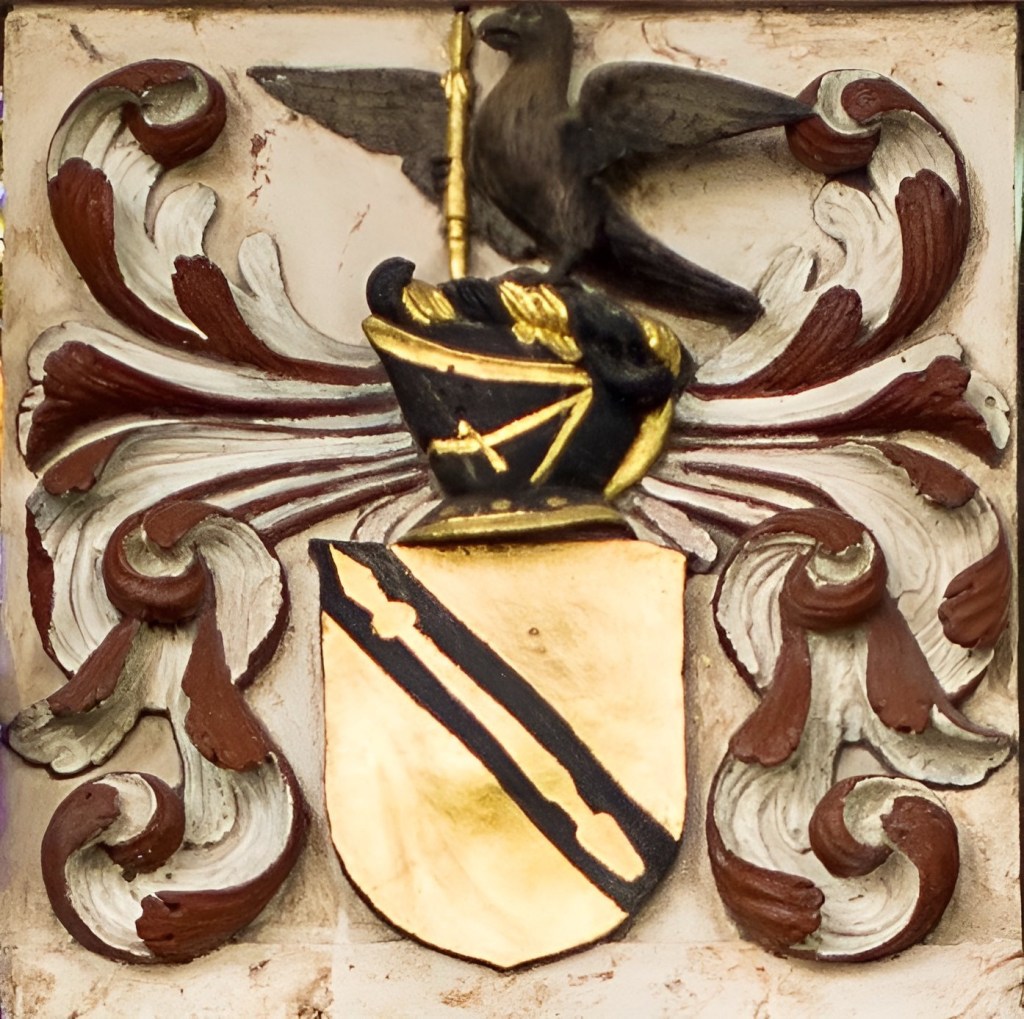
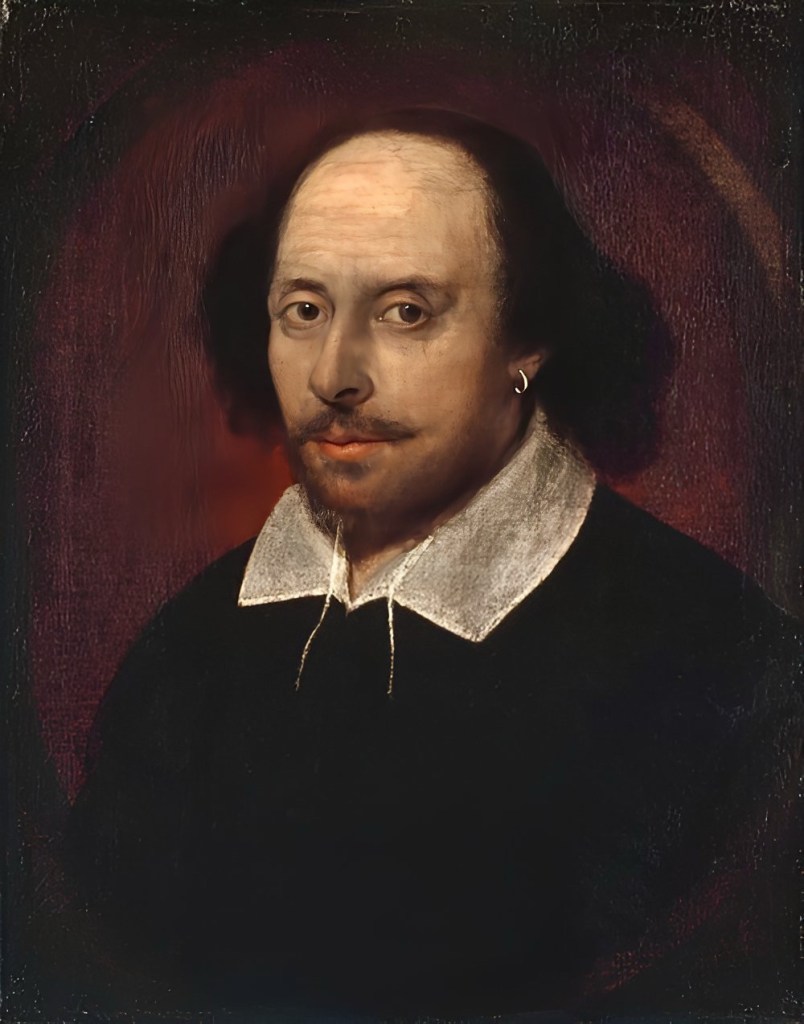
An interesting aside, the motto was first found on the Shakespeare coat of arms. It was granted to John Shakespeare and later used by his son William for his coat of arms and mentioned in William’s plays.
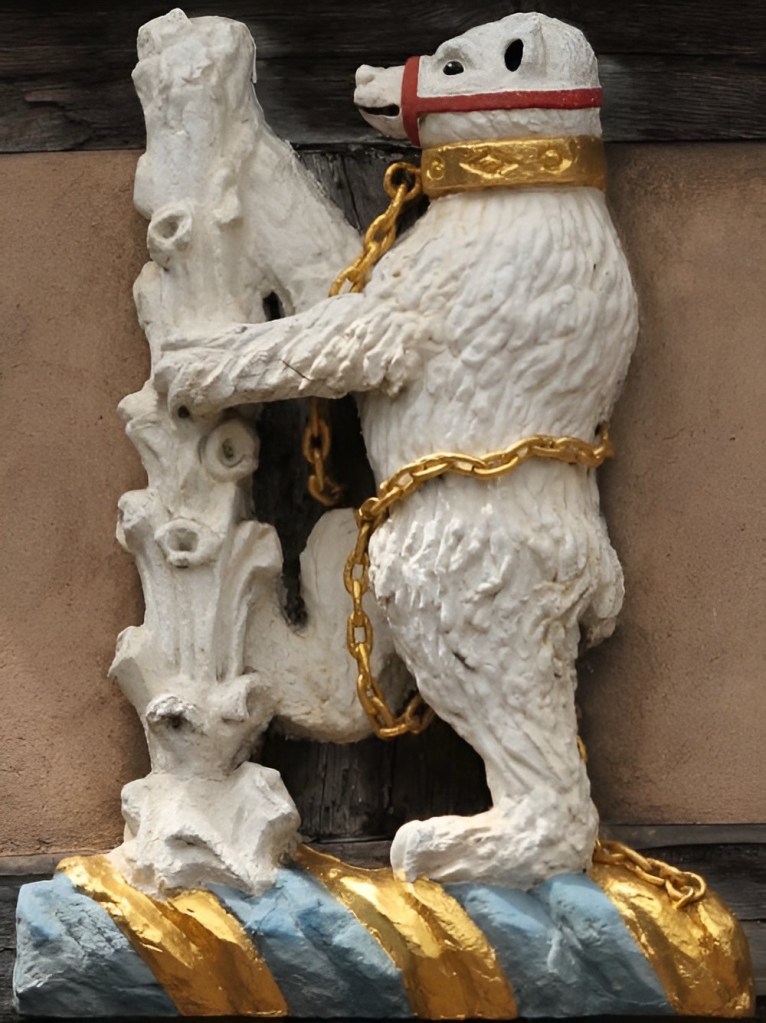
Back to the flag and the bear and staff. Through the years the flag and the coat of arms have been changed. Somewhat of a controversy was why is the bear chained and muzzled? “In heraldic language, it stands as “gules, a bear argent, muzzled of the first, collared and chained or, and supporting a ragged staff of the second, on a chief also or, three cross-crosslets of the first; surmounted by a mural crown”. “In ordinary terms this means a silver bear with red muzzle and gold collar and chain supporting a silver ragged staff on a red shield, with three red crosses (each of which has its arms crossed) on a gold band at the top, the whole surmounted by a crown.”
One prominent theory for the chains and muzzle is that the bear was often used in the sport of bear baiting in early England. The flag would represent the power and strength of the Earl. The chains and muzzle symbolize the Earl’s ability to control and subdue his enemies.
Rather than complaints from animal rights groups, the most likely explanation is that the county wanted to modernize and stylize the look so the chain and muzzle were dropped. It kept the idea of the theme and wanted to show a county that was going through a time of modernization.


 deliriouslove1970. The life & times of Gary and Denise Flanders. (Free and worth every penny. If you would like to compliment the editor, send to garytheflan@deliriouslove1970.com. If you would like to complain, call your mother.)
Leave a comment