
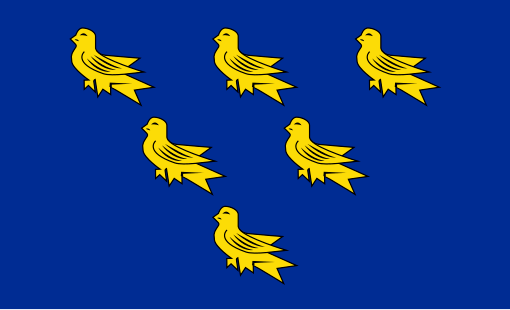
Sussex (/ˈsʌsɪks/; from the Old EnglishSūþseaxe; ‘South Saxons‘; ‘Sussex’) is an area within South East England that was historically a kingdom and, later, a county. It includes the ceremonial counties of East Sussex and West Sussex.

A ridge of chalk hills, the South Downs, runs across the county from east to west, reaching the sea in a line of imposingcliffs, notably at Beachy Head. The northern slopes of the Downs form an abrupt scarp line, where the chalk gives way to the heavy clays and sands of the Weald. To the south the Downs slope more gently toward the English Channel.

The Kingdom of Sussex emerged in the fifth century in the area that had previously been inhabited by the Regni tribe in the Romano-Britishperiod. In about 827, shortly after the Battle of Ellendun, Sussex was conquered by Wessex. From 860 it was ruled by the kings of Wessex, and in 927 it became part of the Kingdom of England.
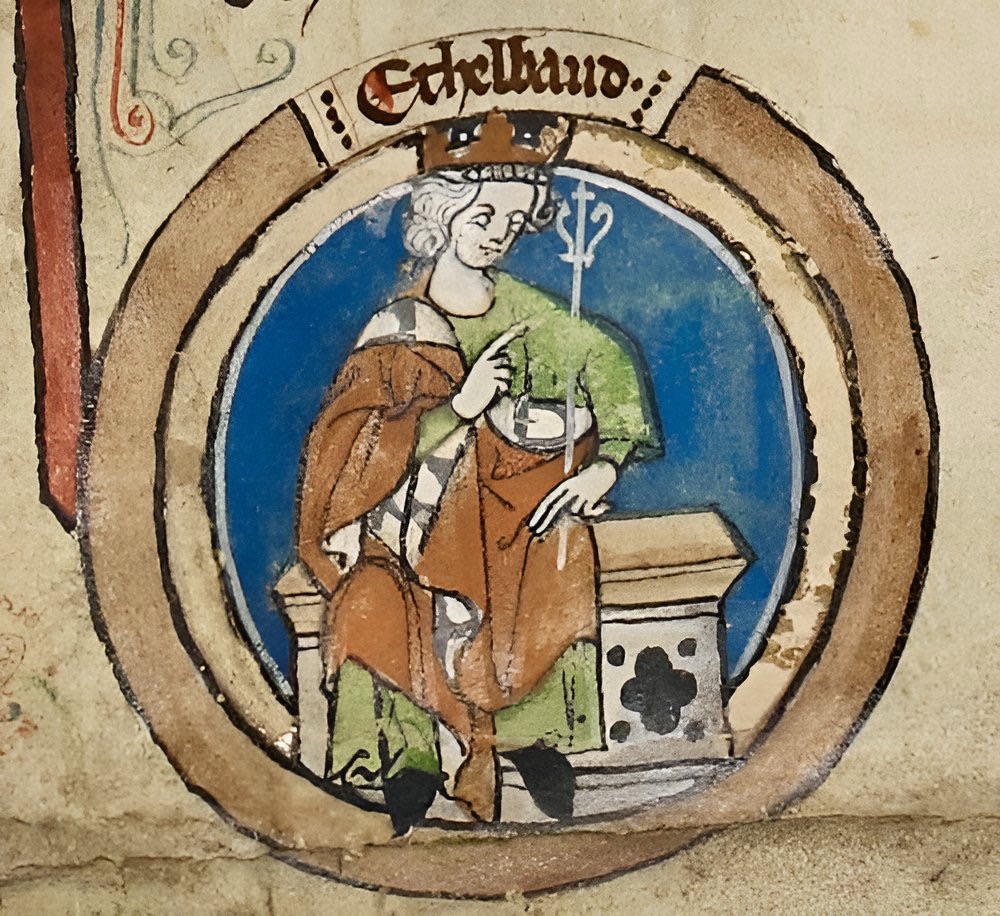
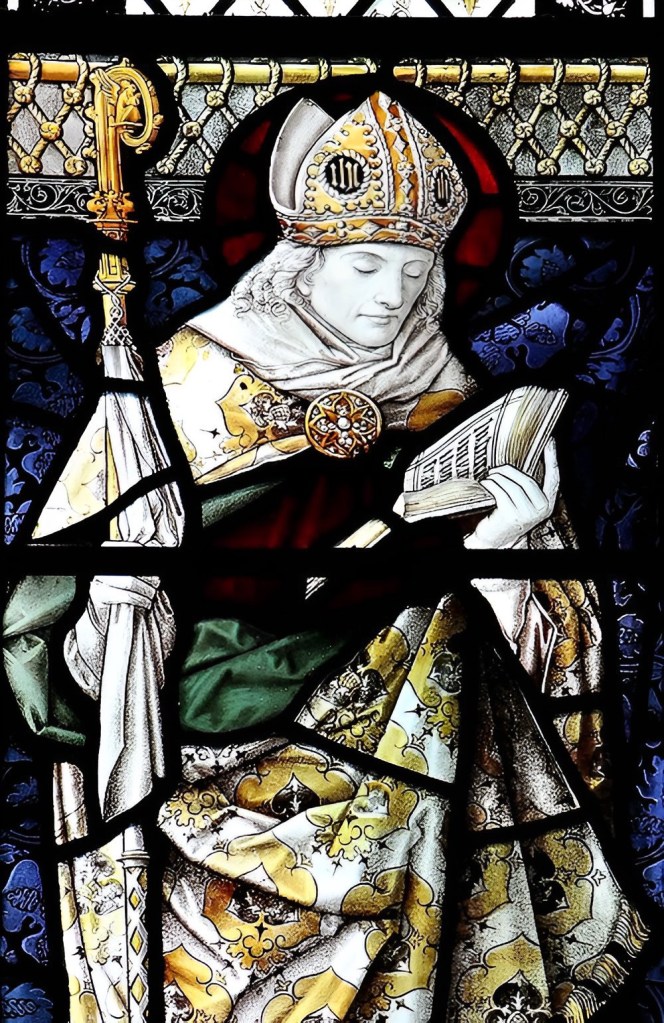
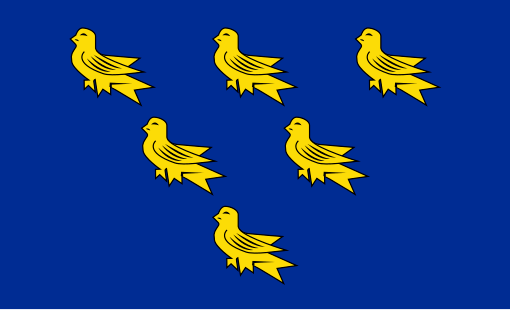
The flag of Sussex was registered as a result of a campaign started in August 2010, under the name of Saint Richard’s Flag, after the county’s patron saint, Saint Richard of Chichester. The flag was slightly altered from the original proposal before its registration by the Flag Institute. (I am a member of the Flag Institute). The flag represents the whole of Sussex and is based on the traditional emblem of Sussex, six gold martlets on a blue field representing the six rapes (A rape is what the English called a county) of Sussex. The first known recording of this emblem being used to represent the county was in 1611 when cartographer John Speed deployed it to represent the Kingdom of the South Saxons. However, it seems that Speed was repeating an earlier association between the emblem and the county, rather than being the inventor of the association. It is now firmly regarded that the county emblem originated and derived from the coat of arms of the 14th century Knight of the Shire, Sir John de Radynden.[4] Today it is used by many Sussex organisations, such as Sussex County Cricket Club, Sussex County Football Association and also features on the village sign of Ringmer in Sussex. The Flag Institute manages and maintains the national flag registry of the United Kingdom, and therefore this is now the definitive County Flag of Sussex.


The Sussex flag borrowed heavily from the theme of the West and East Sussex coats of arms.

A martlet in English heraldry is a mythical bird without feet that never roosts from the moment of its drop-birth until its death fall; martlets are proposed to be continuously on the wing. It is a compelling allegory for continuous effort, expressed in heraldic charge depicting a stylisedbird similar to a swift or a house martin, without feet. It should be distinguished from the merlette of French heraldry, which is a duck-like bird with a swan-neck and chopped-off beak and legs. The common swift rarely lands outside breeding season, and sleeps while airborne.
The Chairman of the judging panel of the Flag Institute, Graham Bartram said: “Well it had very clear Sussex symbolism. The colours were bright and I think it’s just going to look like a really nice flag.” Agreed.
 deliriouslove1970. The life & times of Gary and Denise Flanders. (Free and worth every penny. If you would like to compliment the editor, send to garytheflan@deliriouslove1970.com. If you would like to complain, call your mother.)
Leave a comment