
The Republic of Ecuador (aka Ecuador). A country in the northwest corner of South America. The Galápagos Islands are a part of this country. It is bordered by Columbia to the north, Peru to the east and the Pacific Ocean to the west.
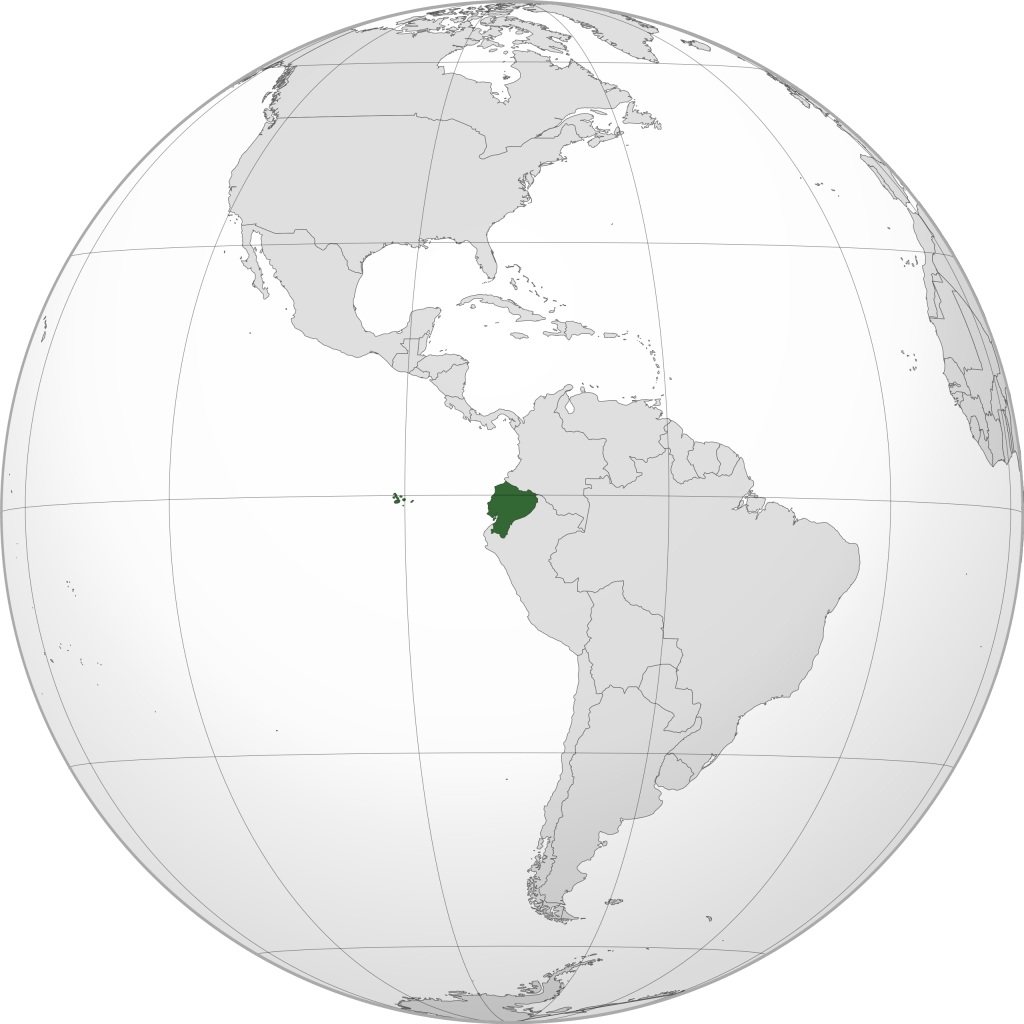
Amerindians have inhabited this area of South America for thousands of years. The Spanish colonized Ecuador until independence in 1830.
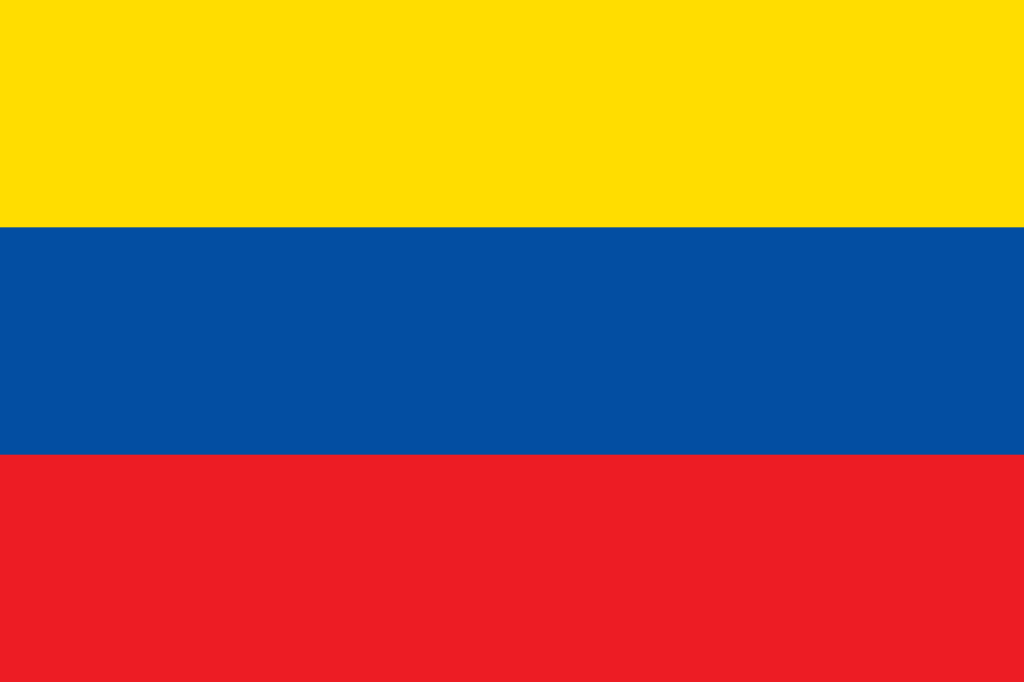
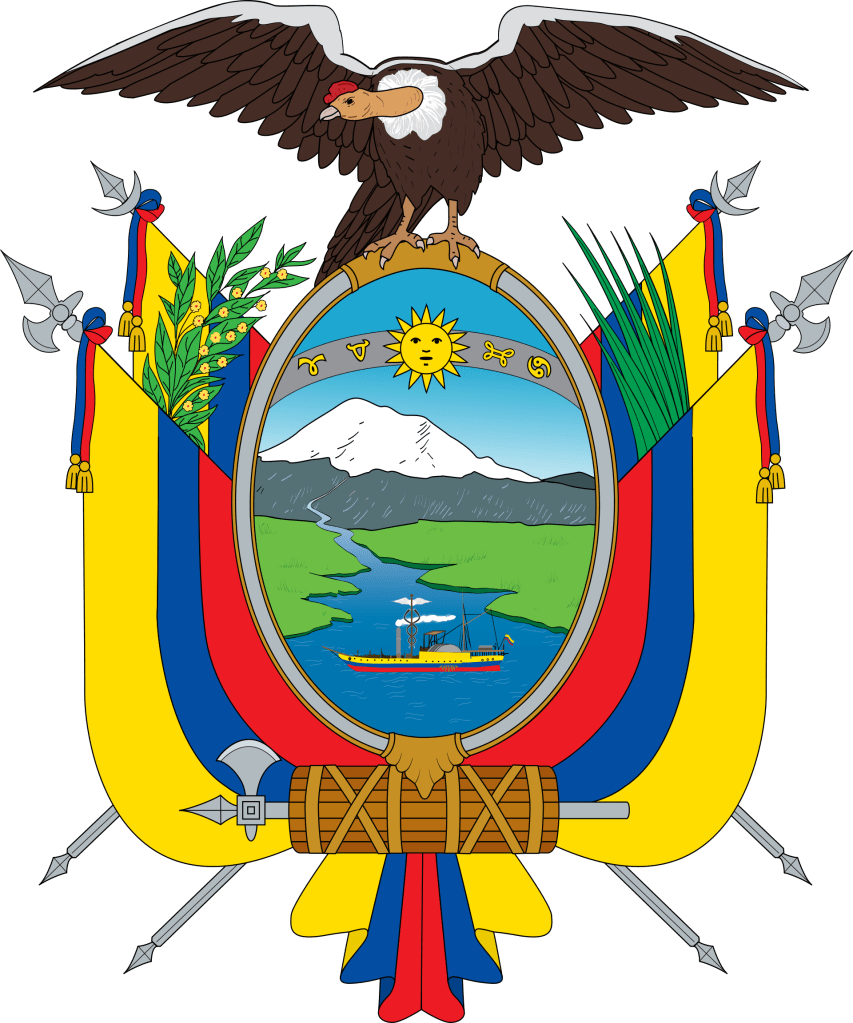
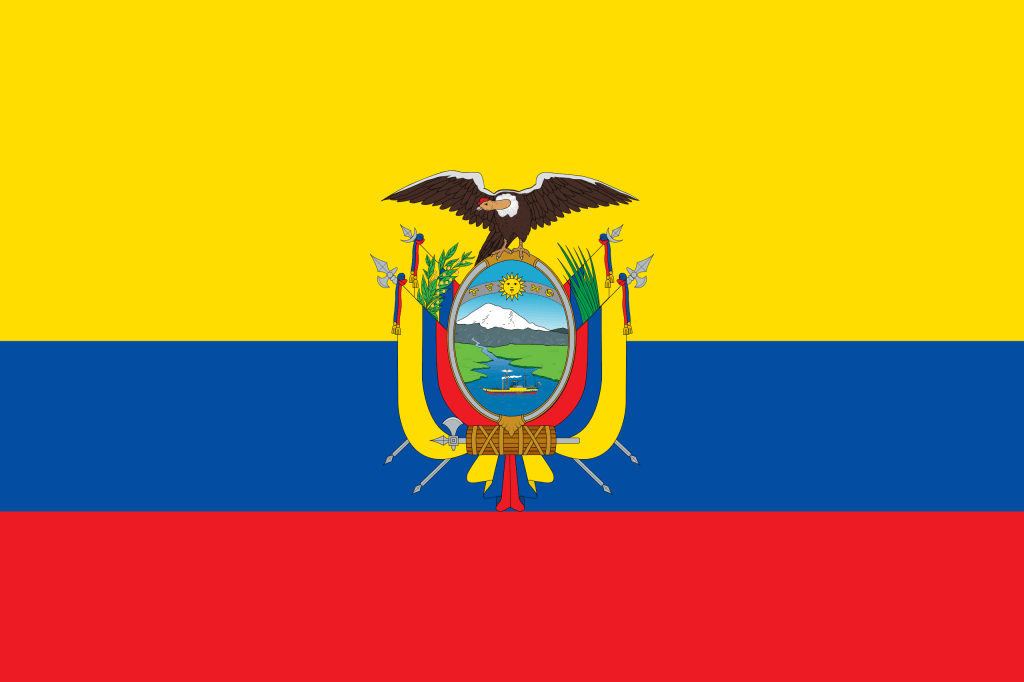
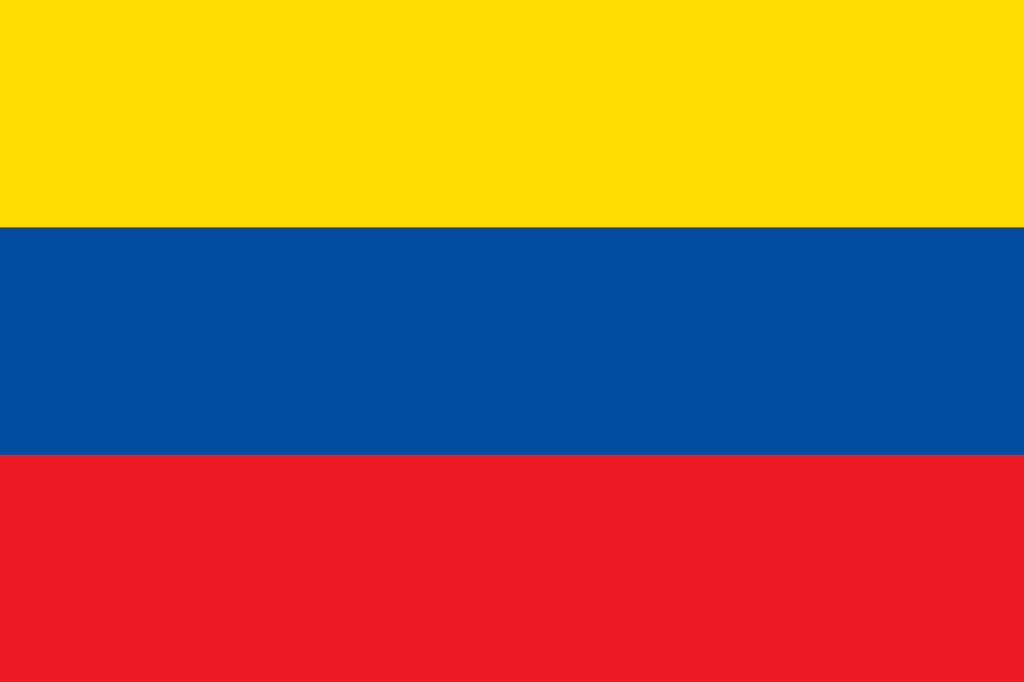
The flag is a simple equal horizontal bands of Yellow (crops and fertile soil), Blue (Ocean and clear skies) and Red (the blood spilled by the heroes gaining sovereignty.) The final adoption of the flag was on September 26, 1860. It is strikingly similar to the flags of Columbia and Venezuela. In 1900 the official national flag added the Ecuadorian Coat of Arms in the middle.
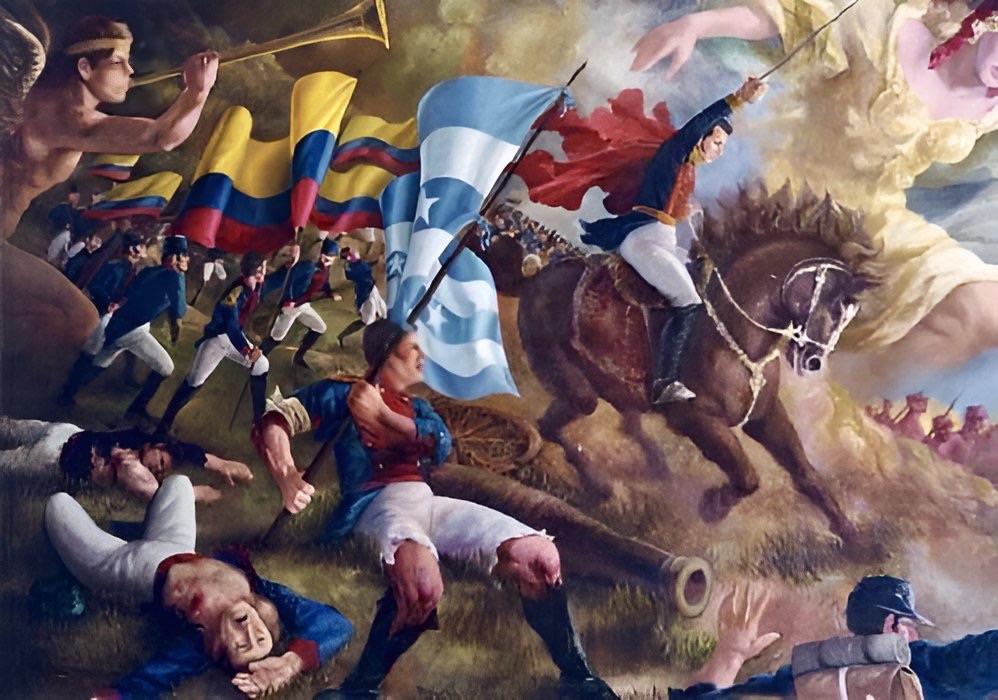
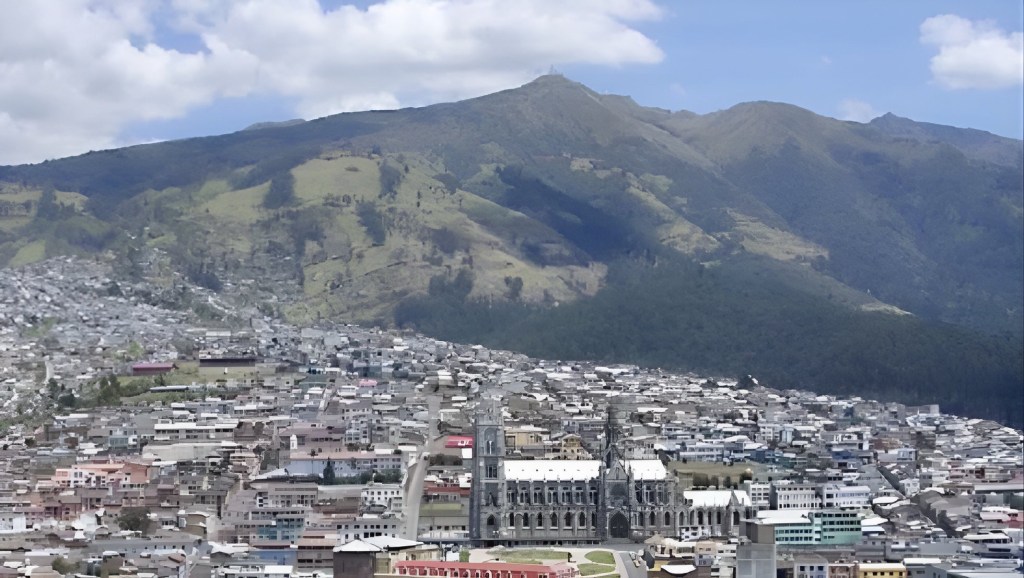
The Battle of Pichincha took place on 24 May 1822, on the slopes of the Pichincha volcano, 3,500 meters above sea-level, right next to the city of Quito, in modern Ecuador.
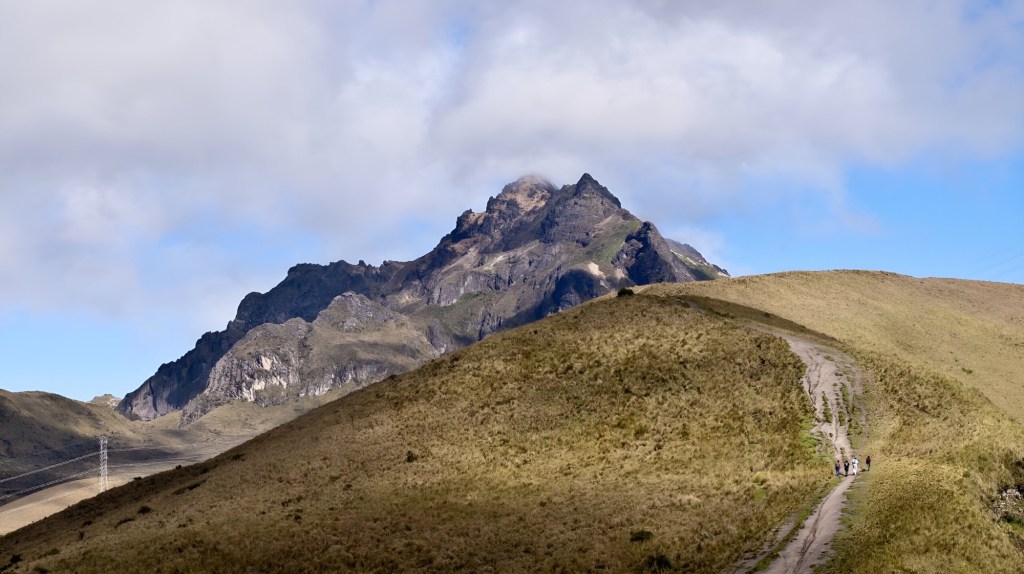
The encounter, fought in the context of the Spanish American wars of independence, pitted a Patriot army under General Antonio José de Sucre against a Royalist army commanded by Field Marshal Melchor Aymerich. The defeat of the Royalist forces loyal to Spain brought about the liberation of Quito, and secured the independence of the provinces belonging to the Real Audiencia de Quito, or Presidencia de Quito, the Spanish colonial administrative jurisdiction from which the Republic of Ecuadorwould eventually emerge.

The day after the battle Sucre wrote down his report of the action:
“The events at Pichincha have brought about the occupation of this city [Quito] as well as its forts on the afternoon of the 25, the possession and peace of the entire Department, and the taking of 1,100 prisoners, 160 officers, 14 artillery pieces, 1,700 rifles…Four hundred enemy soldiers and two hundred of our own lie dead on the field of battle; we have also counted 190 Spanish wounded, and 140 of our own…[A]mong the latter are Captains Cabal, Castro, and Alzuro; Lieutenants Calderón and Ramírez, and Second Lieutenants Borrero and Arango…I make a special mention of Lieutenant Calderón’s conduct, who having suffered four wounds in succession, refused to leave the field. He will probably die, but I am sure the Government of the Republic will compensate his family for the services rendered by this heroic officer.”


 deliriouslove1970. The life & times of Gary and Denise Flanders. (Free and worth every penny. If you would like to compliment the editor, send to garytheflan@deliriouslove1970.com. If you would like to complain, call your mother.)
Leave a comment