
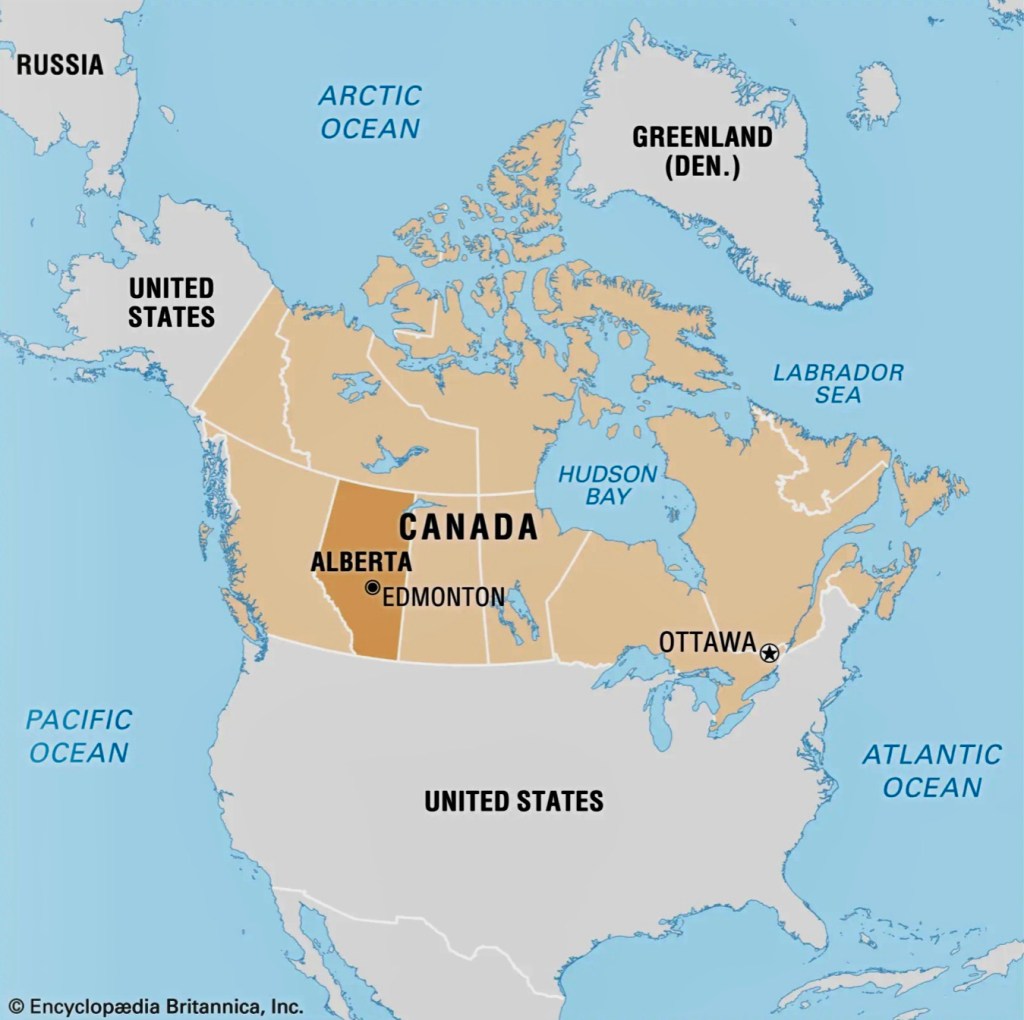
“Alberta, most westerly of Canada’s three Prairie Provinces, occupying the continental interior of the western part of the country. To the north the 60th parallel (latitude 60° N) forms its boundary with the Northwest Territories, to the east the 110th meridian (longitude 110° W) forms the boundary with its prairie neighbour, Saskatchewan, to the south the 49th parallel forms the international boundary with the U.S. state of Montana, and to the west the boundary with British Columbia is formed by the 120th meridian and the crest of the Rocky Mountains. The province is about 750 miles (1,200 km) in extent from north to south and about 400 miles (640 km) across at the greatest width. Alberta was established as a district of the North-West Territories in 1882 and was enlarged to its present boundaries on becoming a province in 1905. The provincial government has its seat in Edmonton.”
“Alberta is the fourth-largest province by area at 661,848 square kilometres (255,541 square miles),[10] and the fourth-most populous, being home to 4,262,635 people.
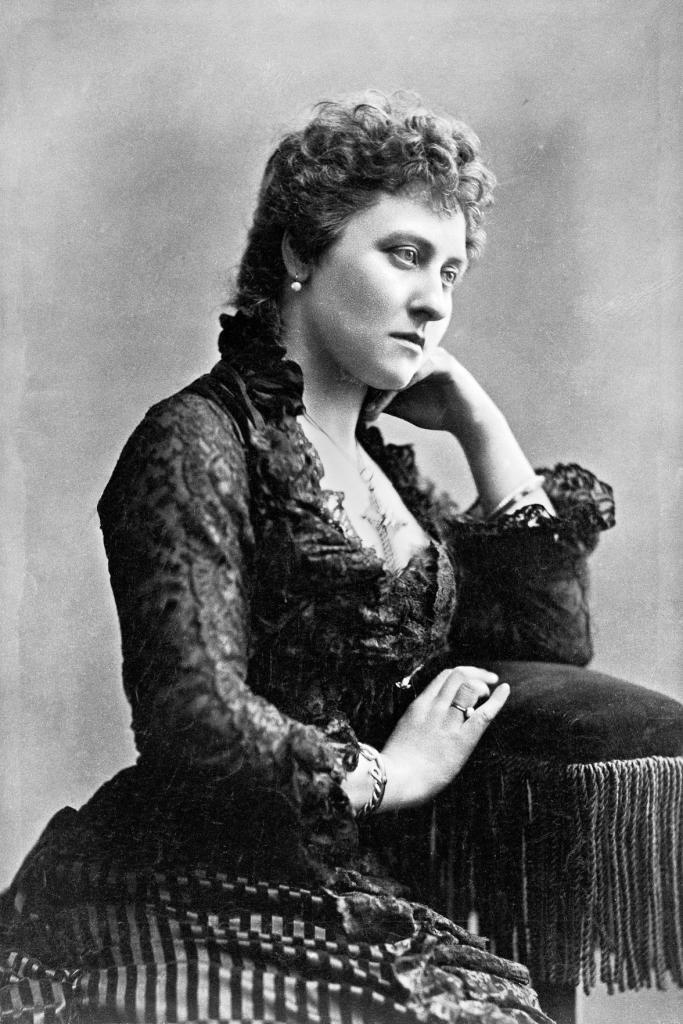
Alberta is named after Princess Louise, Duchess of Argyll (Louisa Caroline Alberta; 18 March 1848 – 3 December 1939) was the sixth child and fourth daughter of Queen Victoria and Prince Albert.
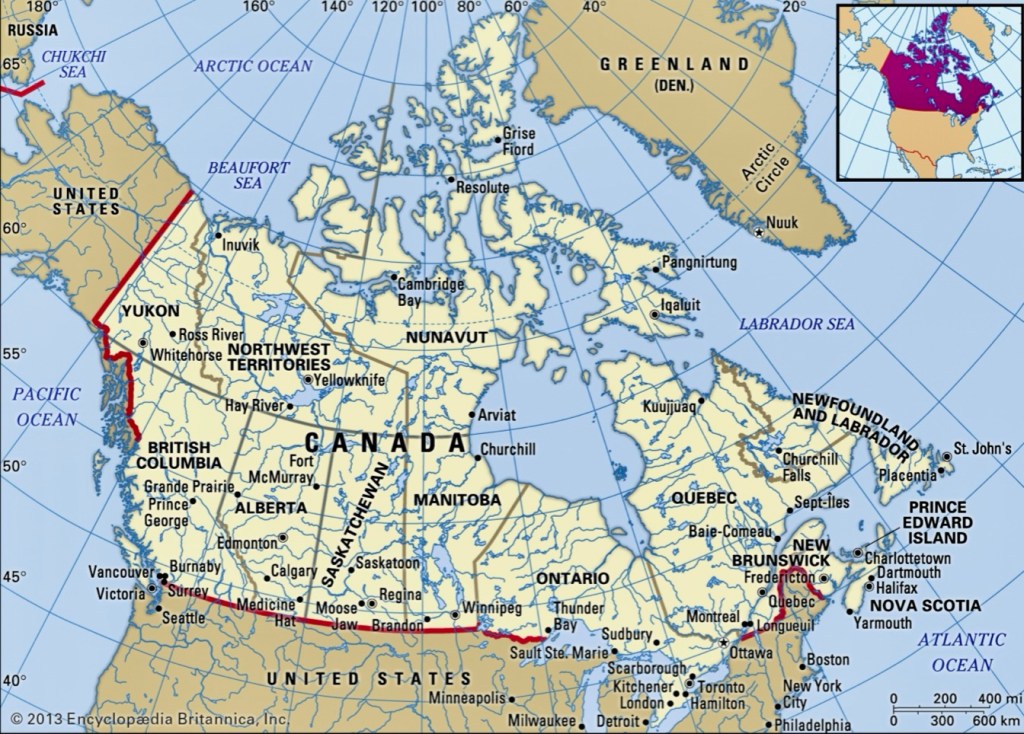
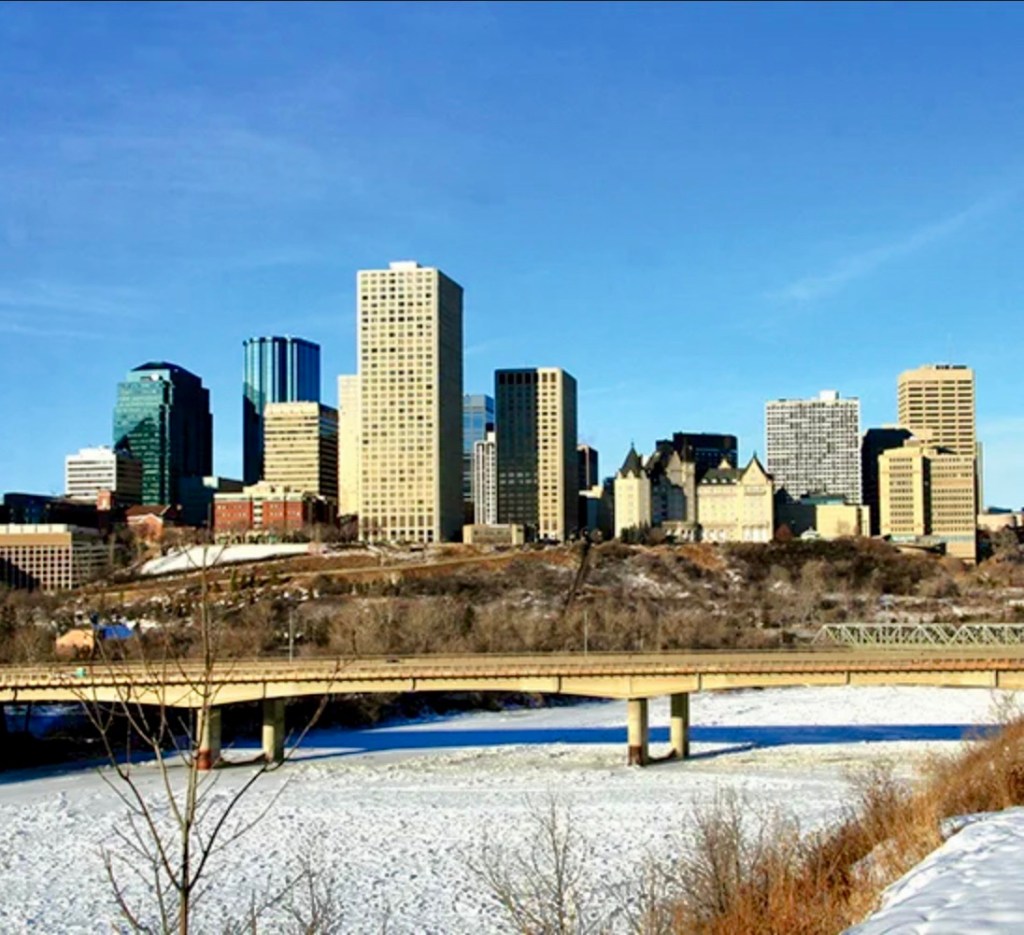
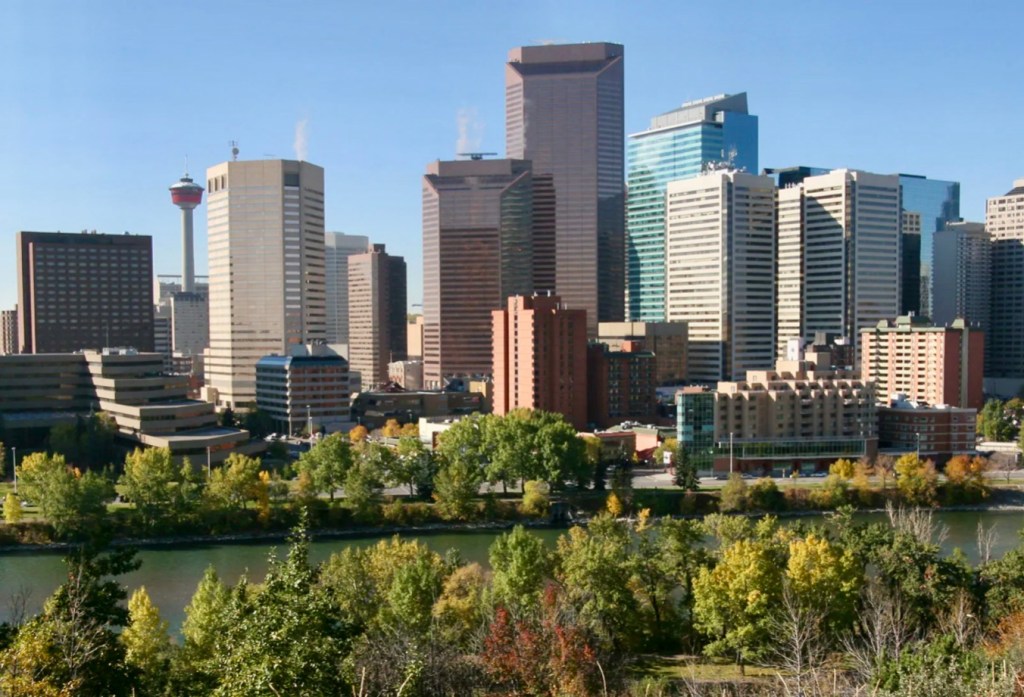
Alberta’s capital is Edmonton while Calgary is its largest city. More than half of Albertans live in either Edmonton or Calgary with a healthy rivalry between the two.
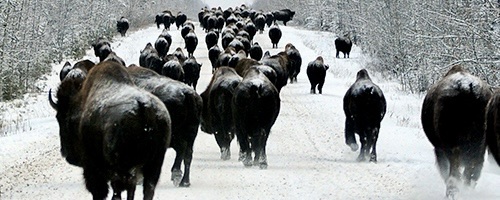
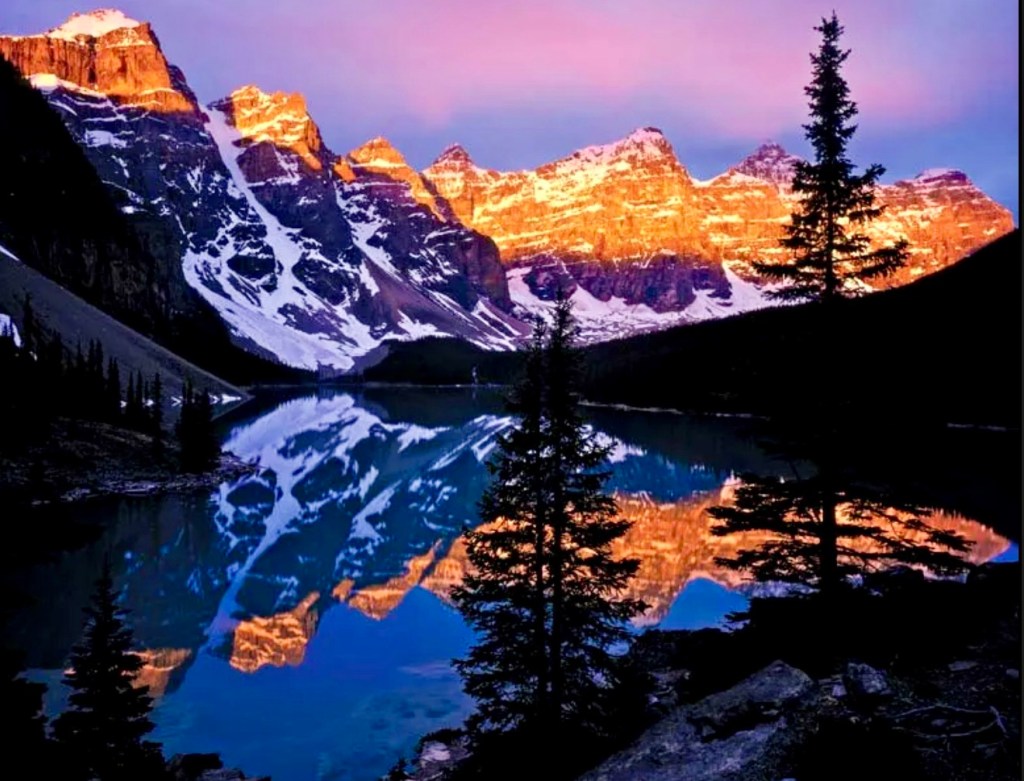
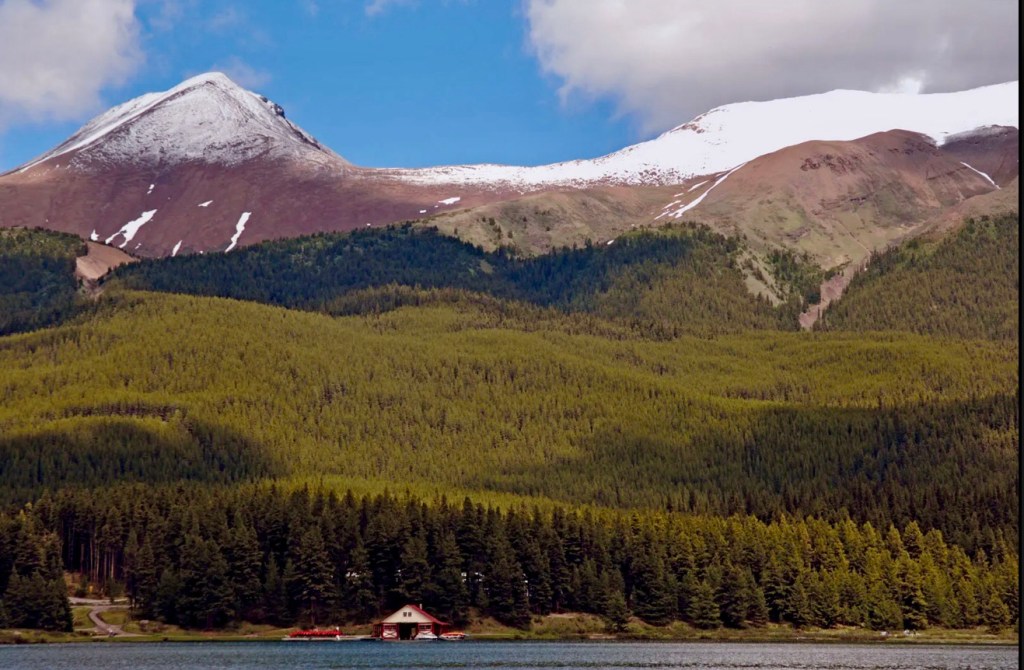
Alberta is home to spectacular national parks: Wood Buffalo National Park; Banff and Jasper National Parks.
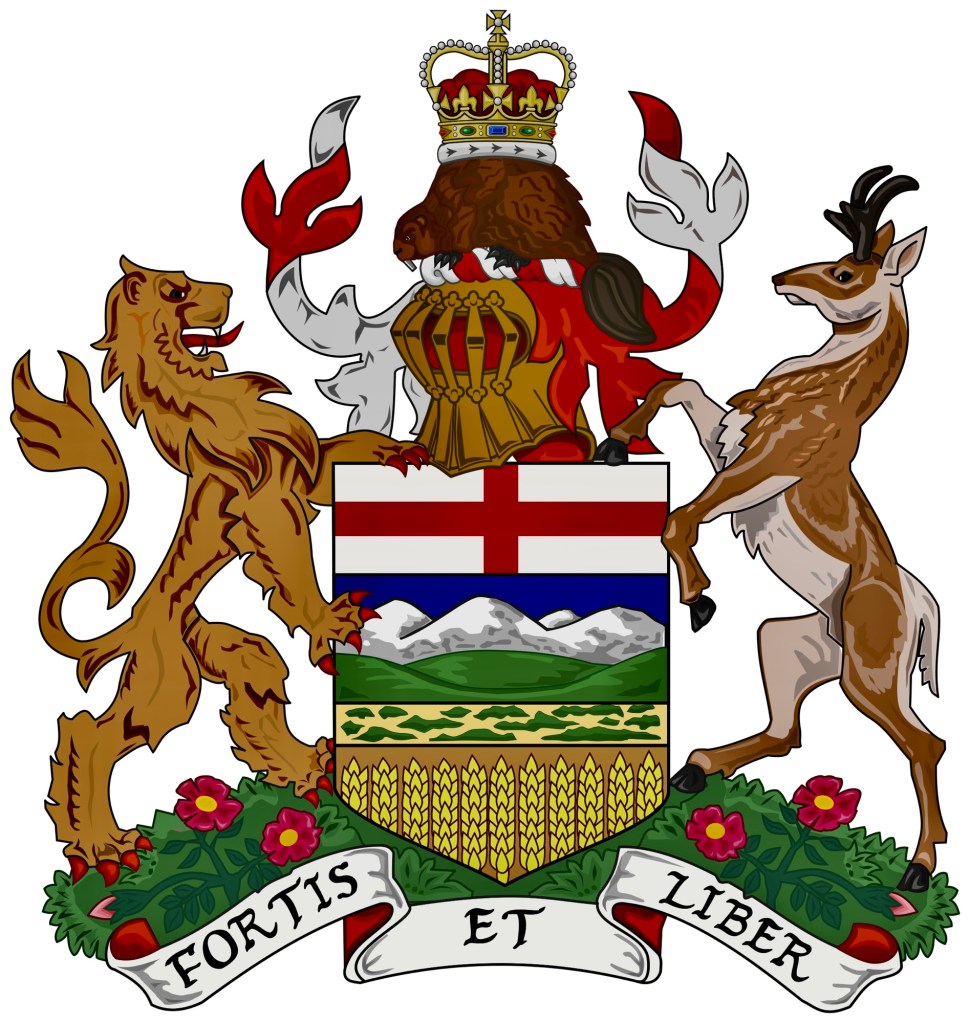
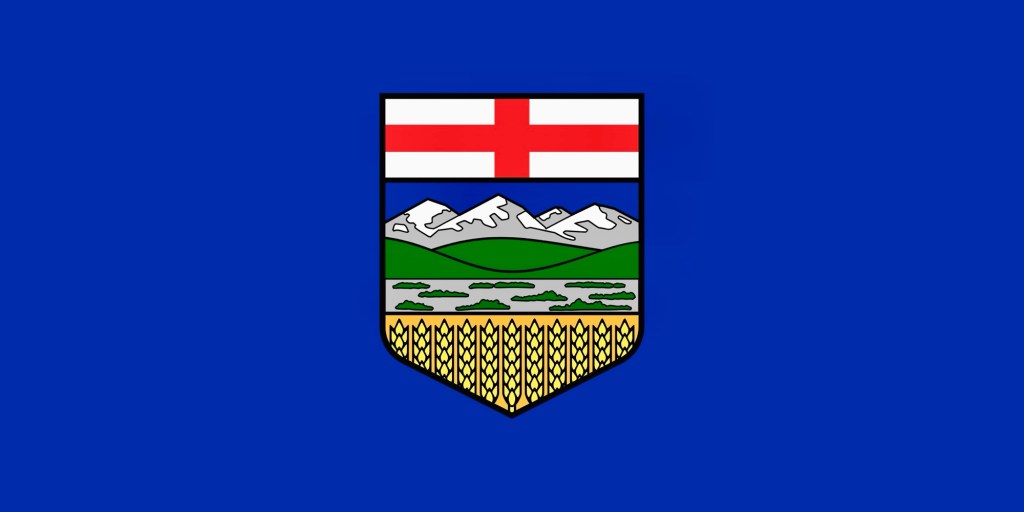
Alberta follows the pattern of taking themes from it’s official coat of arms to form the basis of the center of the flag. (The British College of Arms had objections to the first design but finally did approve this one. It was established by royal Warrant in 1907.)
The crest in the center of the coat of arms includes from bottom to top: typical wheat fields of the province; rough prairie land; foothills; and finally the Rocky Mountains under a blue sky. At the very top is the cross of St George, recalling the English settlement of the region.
The crest is placed in the middle of a blue field, it is an ultramarine blue that is also referred to as ‘Alberta Blue’ with the gold of the wheat fields being referred to as ‘Alberta gold’. (The moto in Latin is: ‘Strong and Free’.
[As an aside, “In 2001, a survey conducted by the North American Vexillological Association(NAVA) placed the Alberta provincial flag 35th in design quality out of the 72 Canadian provincial, U.S. state, and U.S. territory flags ranked. Out of all Canadian flags, only Ontario and Manitoba ranked lower.”]

 deliriouslove1970. The life & times of Gary and Denise Flanders. (Free and worth every penny. If you would like to compliment the editor, send to garytheflan@deliriouslove1970.com. If you would like to complain, call your mother.)
Leave a comment