

The Republic of Zimbabwe, a land locked country in Southern Africa. It is a relatively new country with 16 official languages.
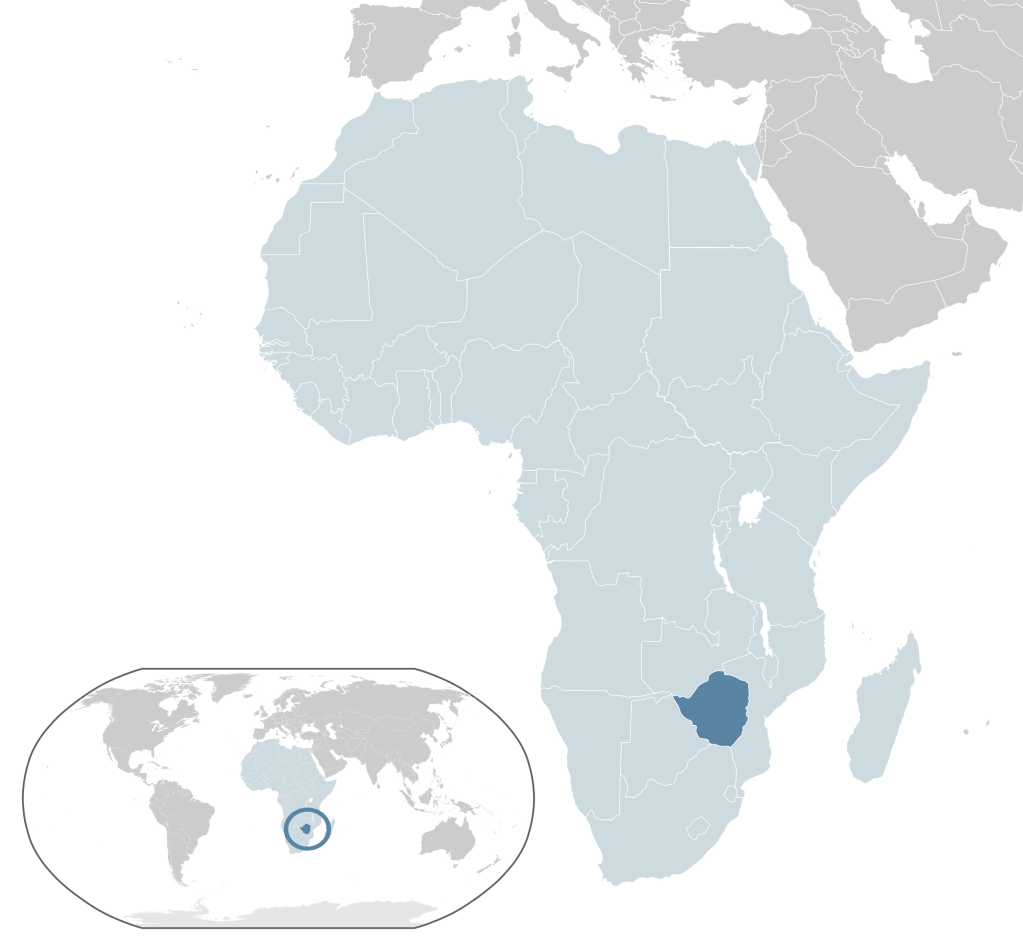
The land has a long and unfortunate history and was the area that saw the worst of the British system of colonization. In 1890 a British Trading Company owned by Cecil Rhodes walked onto the land and said, ‘this is mine now – I don’t care if people have been here for thousands of years, we now claim it.’ The Rhodes company ‘owned’ the land until 1923 when it officially became a British Colony called ‘South Rhodesia’. The British ruled the colony until 1965 when a right wing ultra conservative white minority unilaterally declared independence as ‘Rhodesia’. International condemnation and a 15 year gorilla war ensued. Finally in 1980 the ‘new’ country of Zimbabwe was formed.
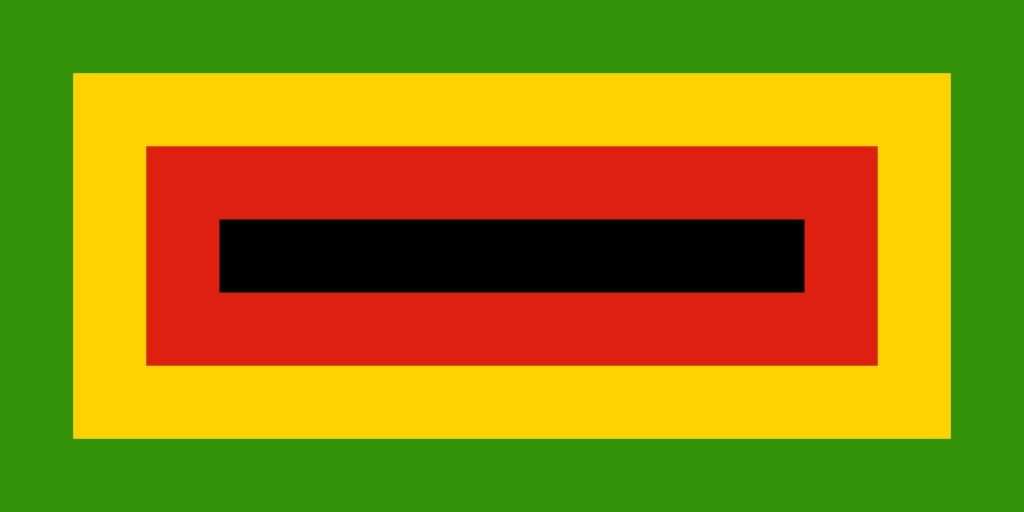
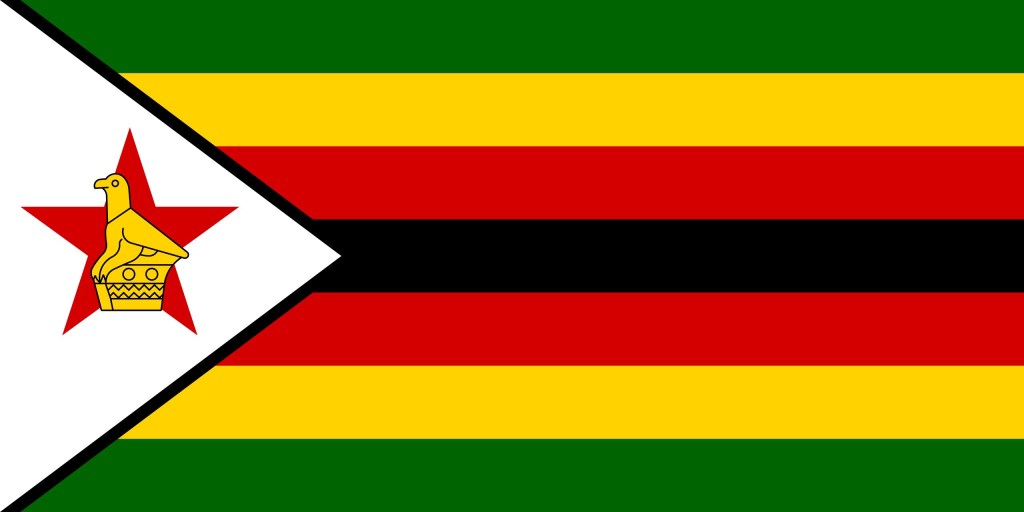
The flag is 7 horizontal stripes of green, gold, red and black with a white triangle containing a red 5 pointed star with a Zimbabwe bird. It was officially adopted in 1980. The basic design follows the Zimbabwe African National Union – Patriotic Front flag.
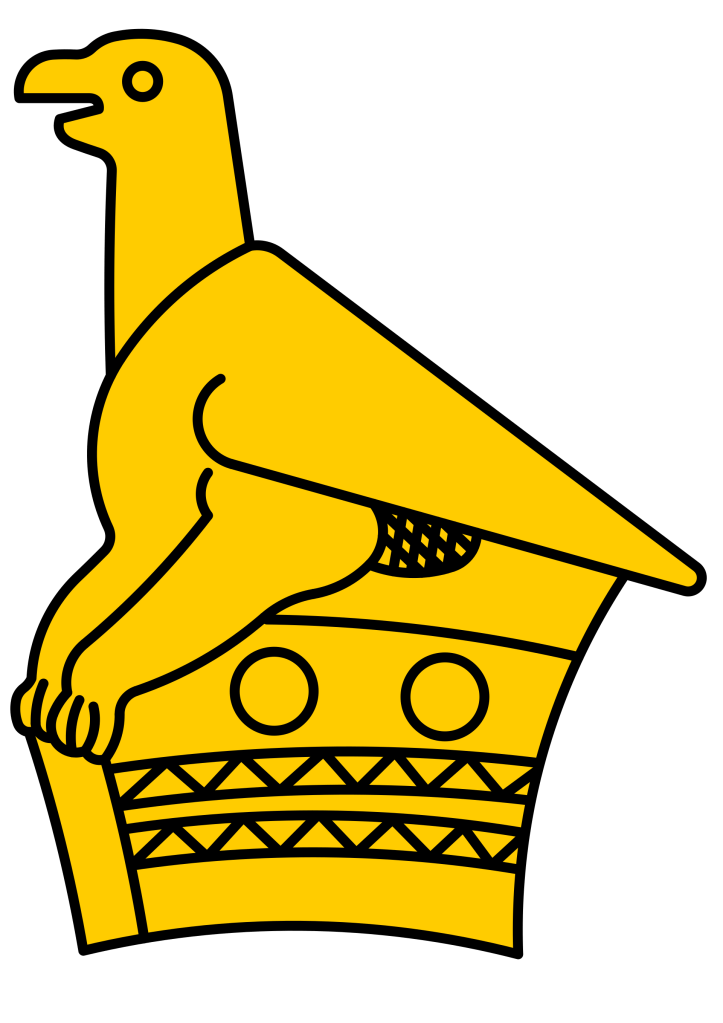
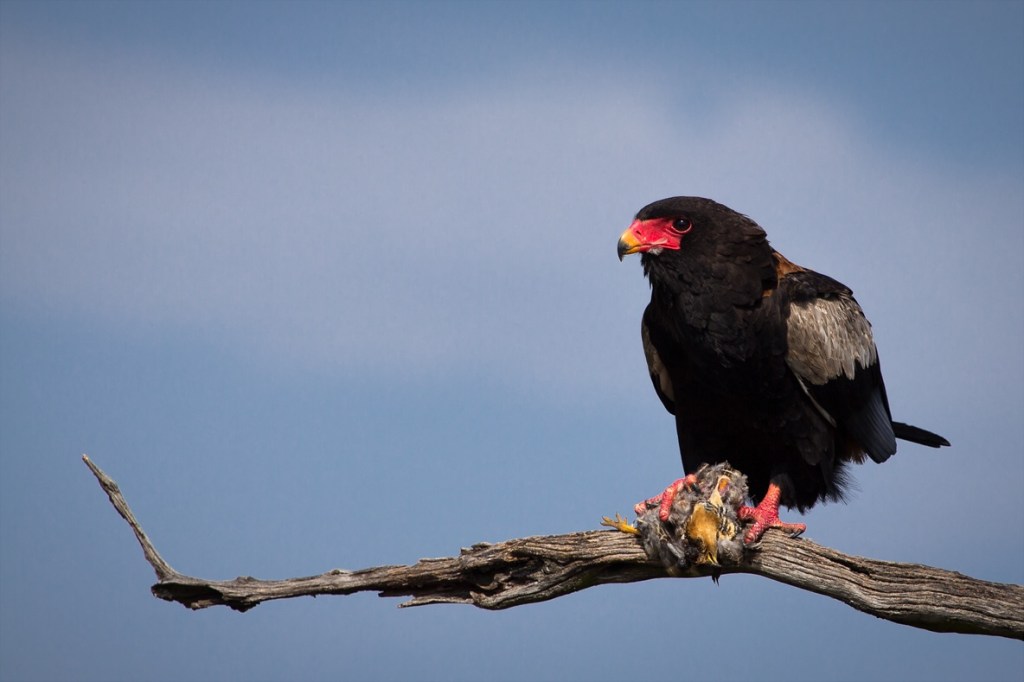
The bird represents a statuette of a bird found at the ruins of the Great Zimbabwe. It is most likely a Bateleur Eagle.
“Zimbabwe Independence Day On this day in 1980, Southern-Rhodesia gained independence from the British, taking the name Zimbabwe. The day marked the end of racial segregation after a protracted war of liberation that claimed many lives. In the ninety year span that Zimbabwe was a colony, it was administered by the British South African Company (BSAC) under the name Rhodesia and the Responsible Government under the name Southern Rhodesia. Both administrative systems were under the British monarchy. In 1965, Zimbabwe became autonomous and was led by a white segregationist government after Ian Douglas Smith made a Unilateral Declaration of Independence (UDI) from Britain. This was after the British government had made majority rule a condition for the independence of Rhodesia from Britain. Smith followed the UDI by declaring Rhodesia a Republic, which however, did not have international recognition. From June 1979, the Republic of Southern Rhodesia was replaced by Zimbabwe-Rhodesia after Abel Tendekayi Muzorewa won the first majority elections. Lacking international recognition, after about three months, the country was taken back into the hands of Britain, as per the Lancaster House Agreement which was meant to facilitate transition. The country once again became a British colony known as Southern Rhodesia. In the April 1980 elections, Robert Mugabe, head of the Zimbabwe African National Union (ZANU) won the majority and became the Prime Minister of Zimbabwe.”
 deliriouslove1970. The life & times of Gary and Denise Flanders. (Free and worth every penny. If you would like to compliment the editor, send to garytheflan@deliriouslove1970.com. If you would like to complain, call your mother.)
Leave a comment