
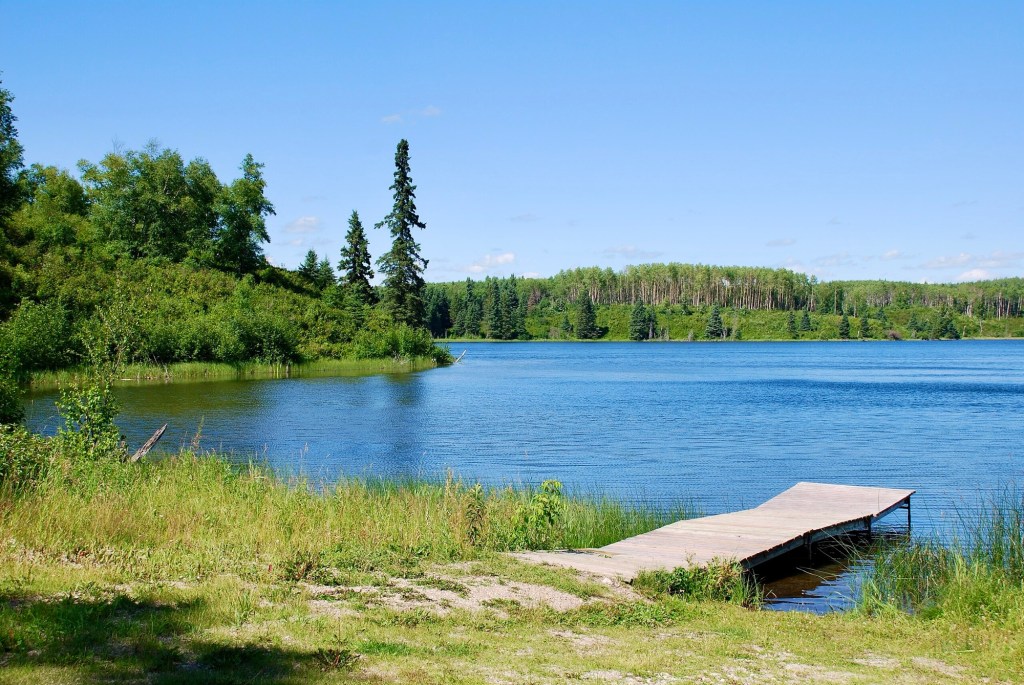
“Manitoba, province of Canada, one of the Prairie Provinces, lying midway between the Atlantic and the Pacific oceans. The province is bounded to the north by Nunavut territory, to the northeast by Hudson Bay, to the east by Ontario, to the south by the U.S. states of Minnesotaand North Dakota, and to the west by Saskatchewan. Manitoba contains more than 100,000 lakes, including Lake Winnipeg, one of the world’s largest inland bodies of fresh water. More than two-fifths of the province’s land area is forested. Winnipeg, Manitoba’s largest city, is the capital. The province’s name comes from a Cree word meaning “the narrows of the Great Spirit,” in reference to Lake Manitoba, which narrows at its centre.”
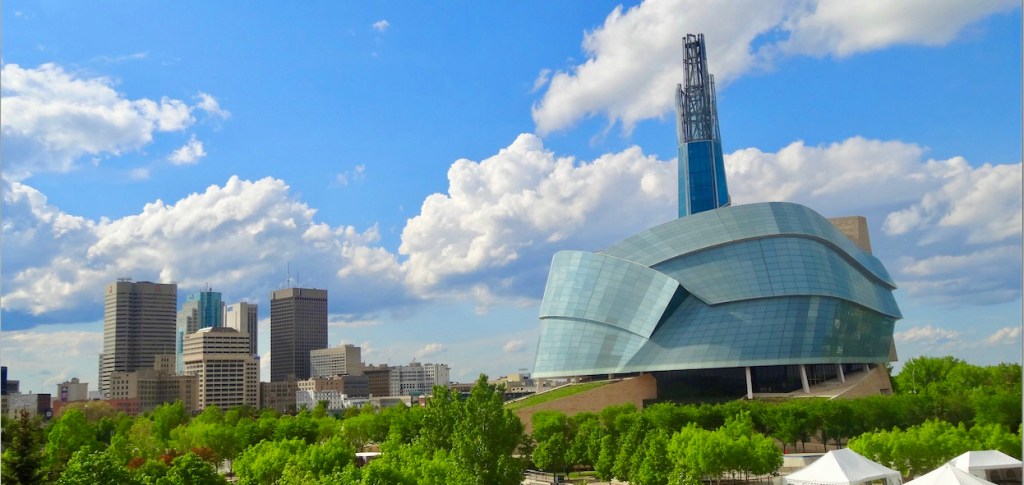
“Manitoba became Canada’s fifth province when the area that had been the Red River Settlement was admitted to the confederation in 1870. The present-day province straddles the boundary between the Prairie and Central Canada, and it has both a large agricultural sector and a topography similar to those of the provinces of Saskatchewan and Alberta. It also has a mixed economy, an urban orientation, and a multiethnic character, all of which are more like Ontario than the Prairie West. While other areas of the Canadian West have experienced economic cycles of boom and bust, Manitoba has maintained a steadier pace. Similarly, the province’s political and cultural life has largely avoided the extremes that tend to characterize western Canadian society. Area 250,116 square miles (647,797 square km), of which about one-sixth is inland water. Pop. (2021) 1,342,153; (2023 est.) 1,465,440.”
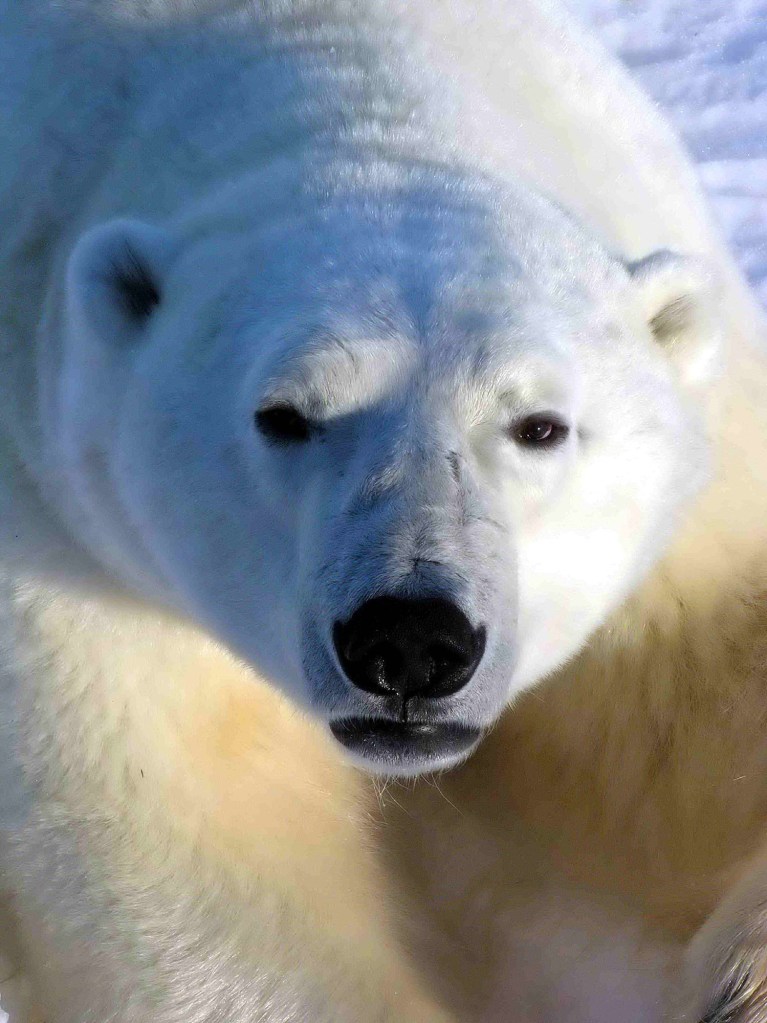
“Manitoba is especially noted for its northern polar bear population; Churchill is commonly referred to as the “Polar Bear Capital”. In the waters off the northern coast of the province are numerous marine species, including the beluga whale. Other populations of animals, including moose, white-tailed deer, mule deer, blackand brown bears, coyote, cougar, red fox, Canada lynx, and grey wolf, are distributed throughout the province, especially in the provincial and national parks. There is a large population of red-sided garter snakes near Narcisse; the overwintering dens there are seasonally home to the world’s largest concentration of snakes.”


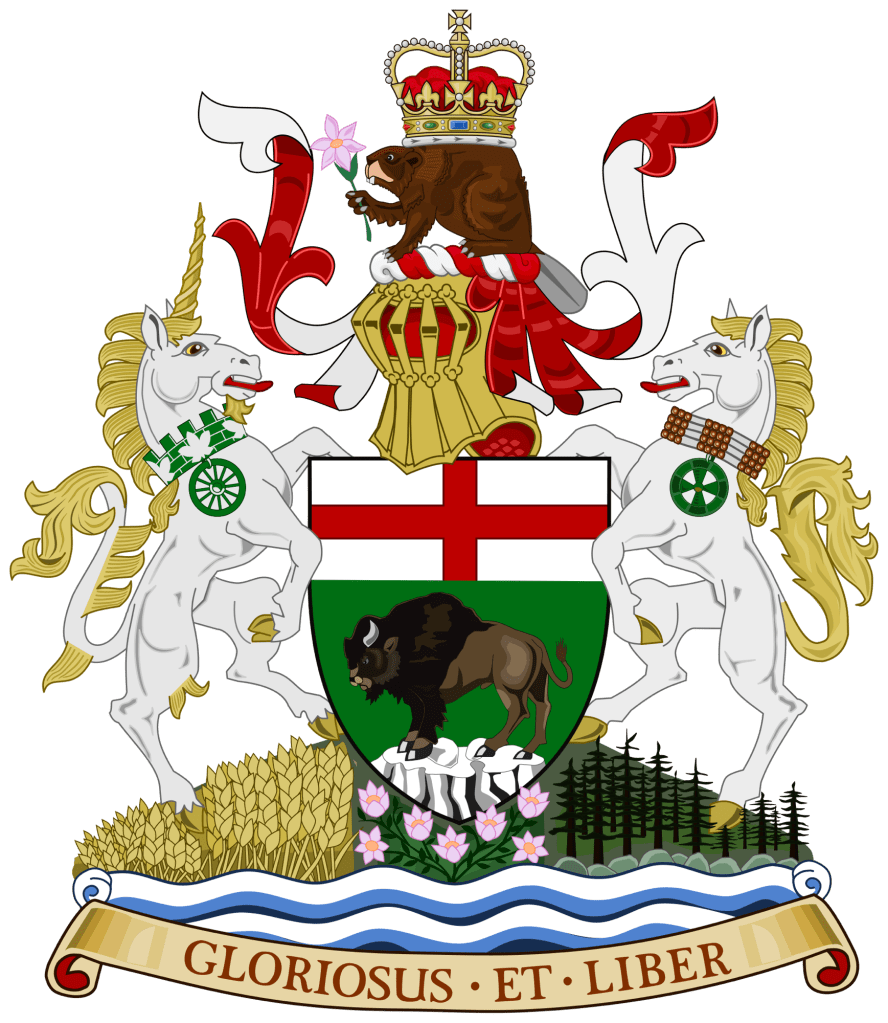
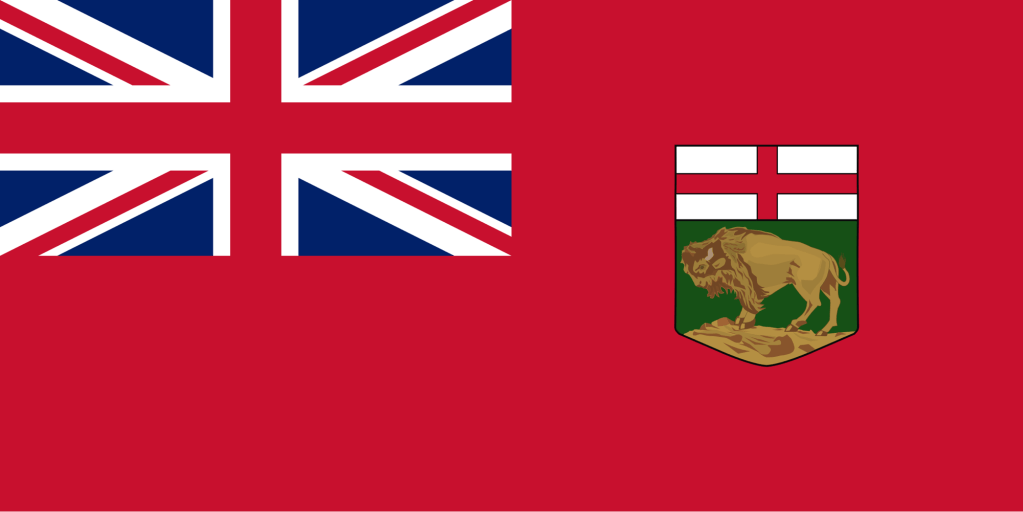
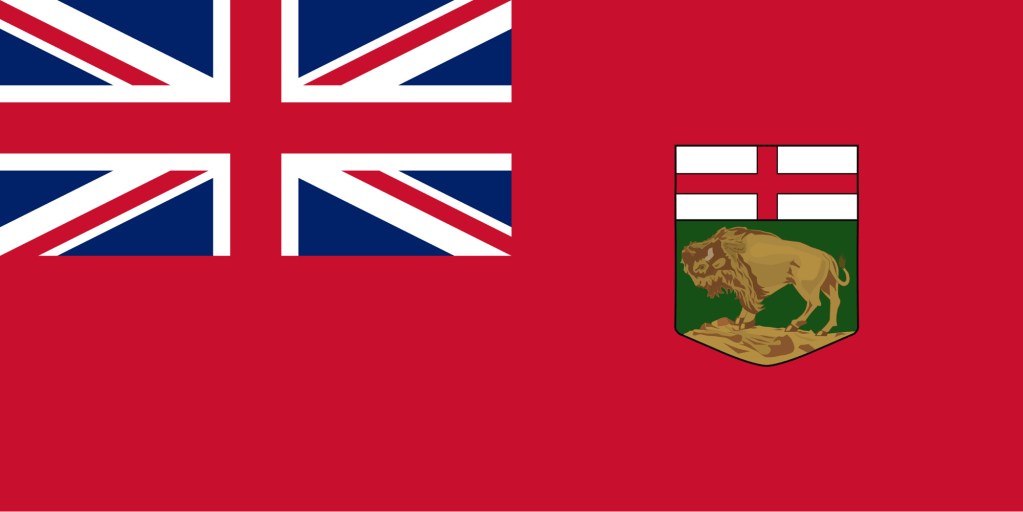
The flag, similar to many flags, takes its themes from their coat of arms. “The arms contains symbols reflecting Manitoba’s British heritage along with local symbols. At the upper part of the shield is the red cross of St. George, representing England. On the left, the unicorn represents Scotland. The lower portion of the shield features a bison standing atop a rock on a green background, a symbol of First Nations peoples of the area who derived food and clothing from the animal.”
“The helmet above the shield is gold and faces left, a symbol of Manitoba’s co-sovereign status in Confederation. The mantling is in the national colours of Canada. The crest is a beaver, Canada’s national animal, holding a prairie crocus, Manitoba’s provincial flower. The crest is surmounted by a crown, representing royal sovereignty.”
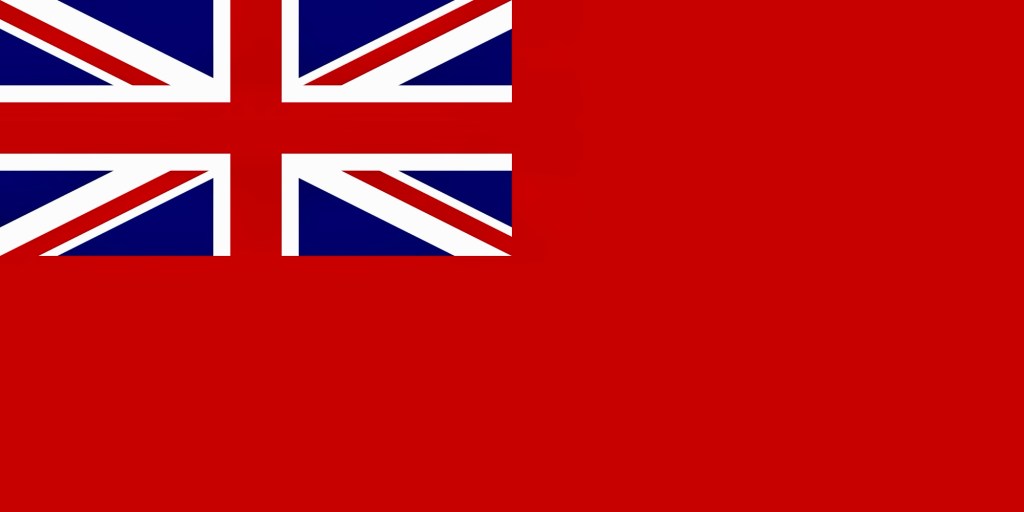
The Manitoba flag starts with a ‘Red Ensign’ also known as a ‘Red Duster‘ it is a common flag template and can be plain or with something on it (Vexillologist term is ‘defaced’.)
From the ‘Red Duster’ the symbol from the coat of arms, the bison and the cross of St George are placed in the right center panel.
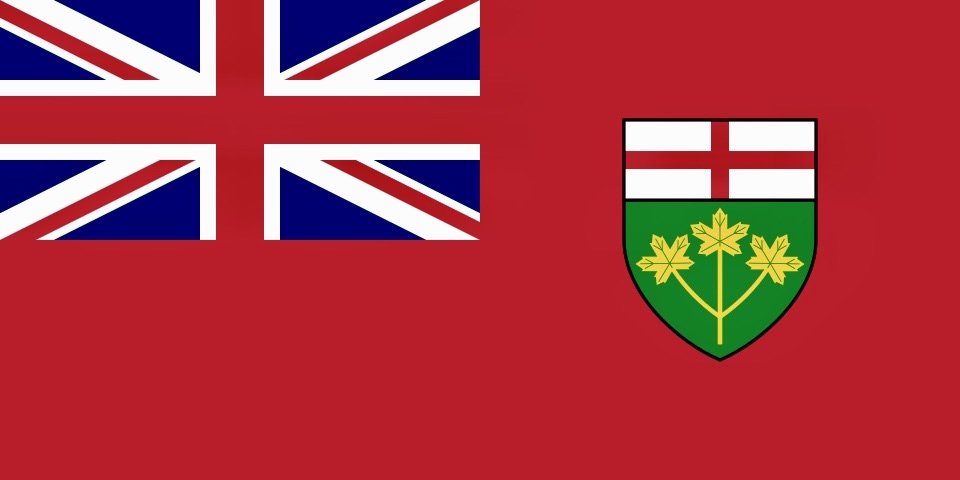
The strong similarities between the Manitoba and Ontario flags had some people thinking it was time the Manitoba had its own identity. In 2001 the Winnipeg Free Press held a contest to come ups with a new design for the flag.
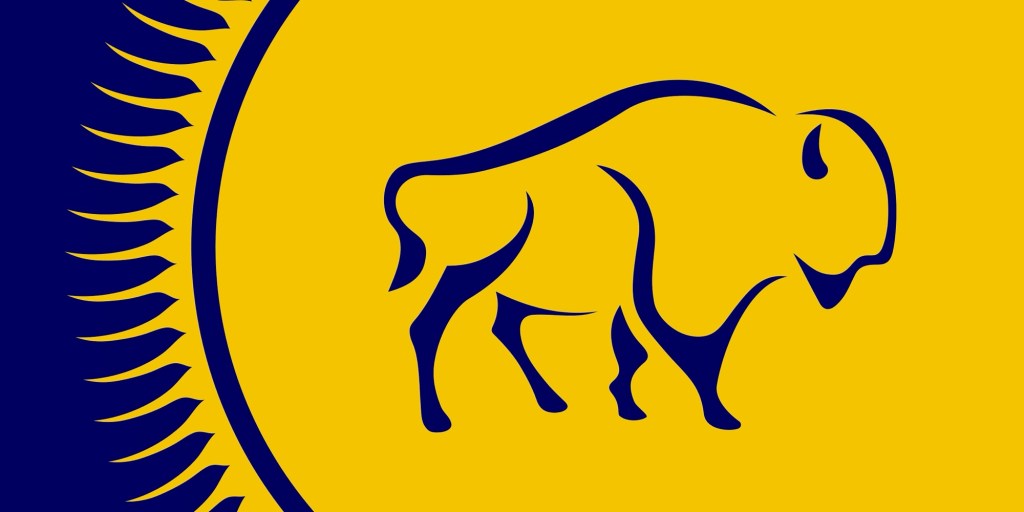
This was the winner of the contest. ‘The bison is the province’s most recognizable symbol, while the sun invokes the slogan “Sunny Manitoba”.’ This flag was never adopted by the province. Oh well.
 deliriouslove1970. The life & times of Gary and Denise Flanders. (Free and worth every penny. If you would like to compliment the editor, send to garytheflan@deliriouslove1970.com. If you would like to complain, call your mother.)
Leave a comment