

“Denmark is a Nordic country in Northern Europe. It is the metropole and most populous constituent of the Kingdom of Denmark, also known as the Danish Realm, a constitutionally unitary state that includes the autonomous territories of the Faroe Islands and Greenland in the north Atlantic Ocean. Metropolitan Denmark, also called “continental Denmark” or “Denmark proper”, consists of the northern Jutlandpeninsula and an archipelago of 406 islands. It is the southernmost of the Scandinavian countries, lying southwest and south of Sweden, south of Norway, and north of Germany, with which it shares a short border. Denmark proper is situated between the North Sea to the west and the Baltic Sea to the east.”
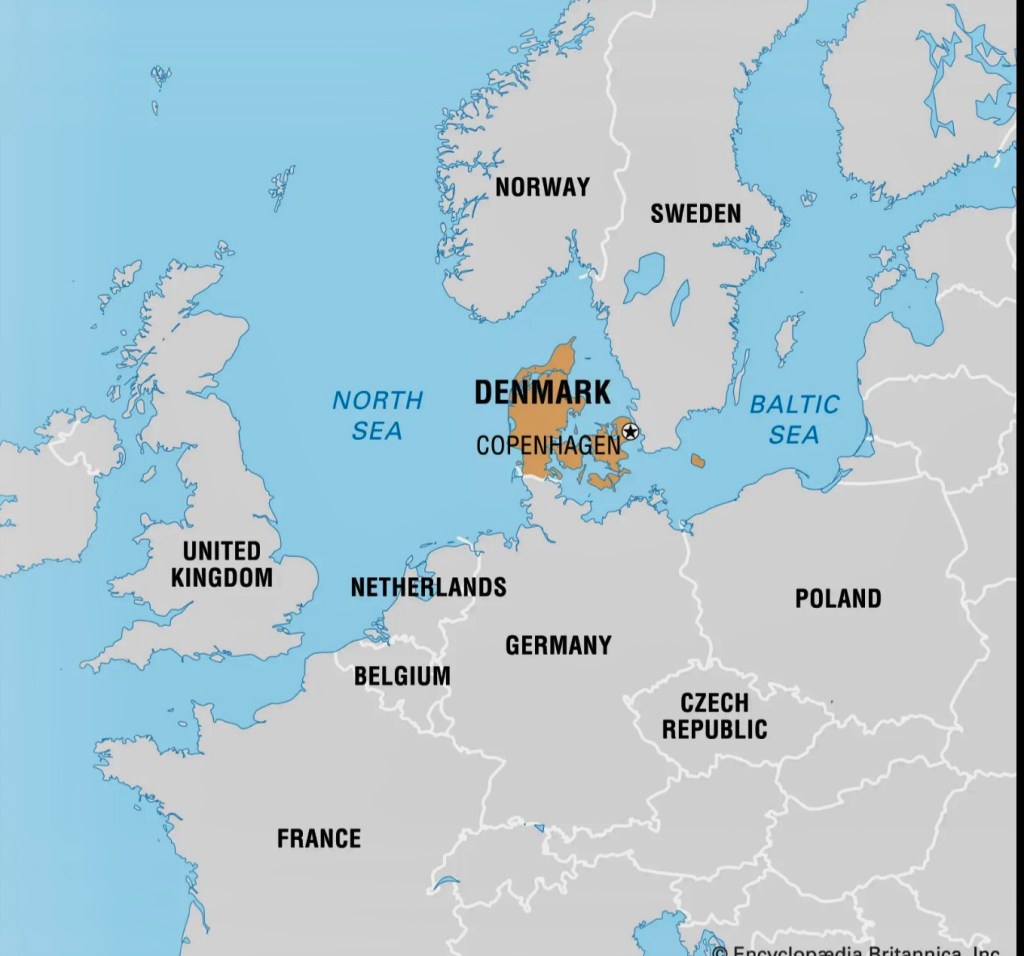
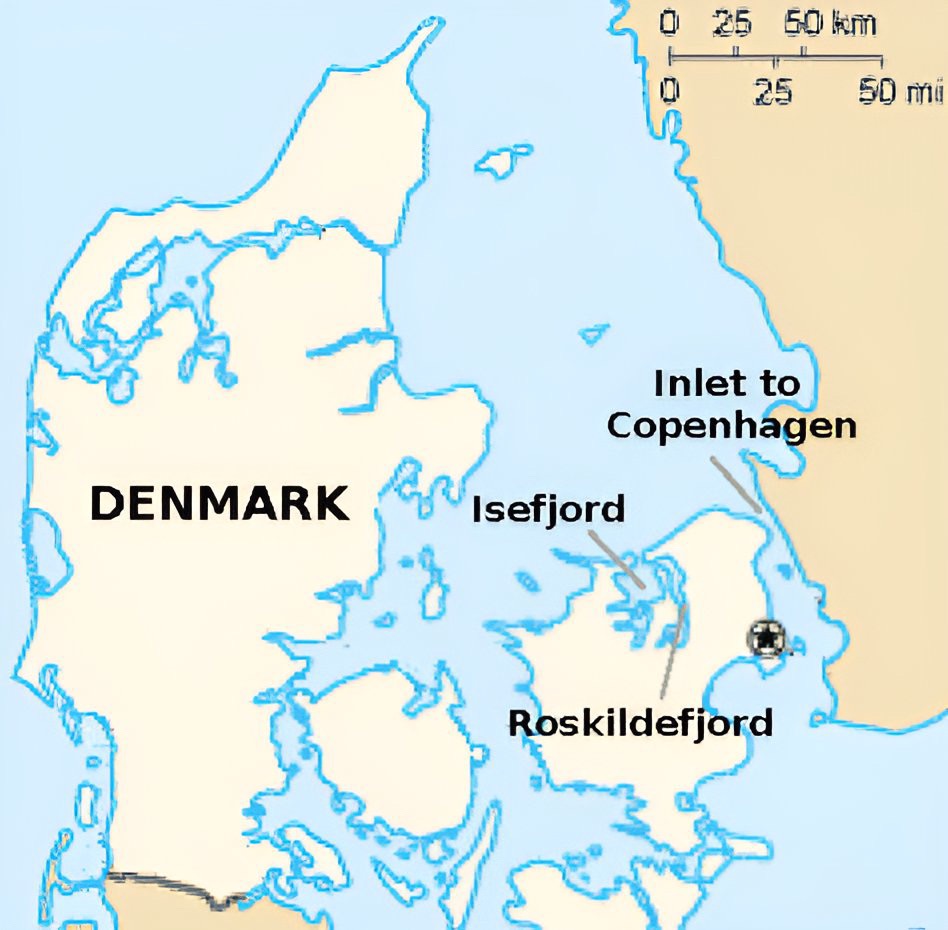
The reason April 2 is remembered in Denmark’s history is this is the day the Battle of Copenhagen took place in 1801. The Royal British Navy could not sail into the Baltic Sea without going through the Inlet to Copenhagen.
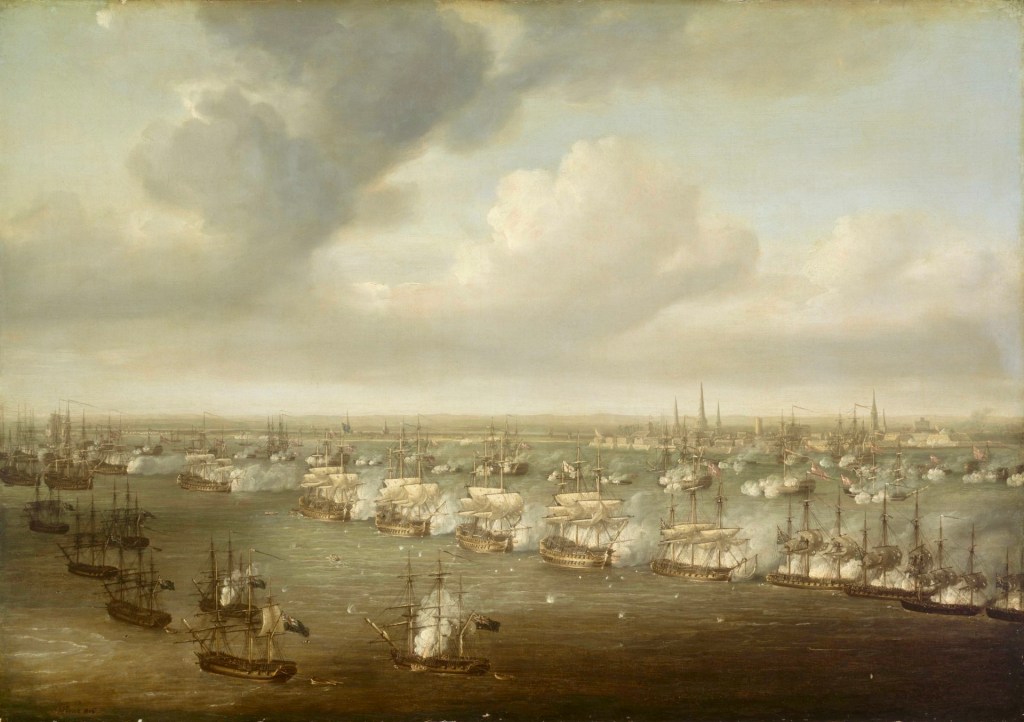
“The Battle of Copenhagen of 1801 (Danish: Slaget på Reden, meaning “the battle of the roadstead [of Copenhagen Harbour]”), also known as the First Battle of Copenhagento distinguish it from the Second Battle of Copenhagen in 1807, was a naval battle in which a British fleet fought and defeated a smaller force of the Dano-Norwegian Navy anchored near Copenhagenon 2 April 1801. The battle came about over British fears that the powerful Danish fleet would ally with France, and a breakdown in diplomatic communications on both sides.”
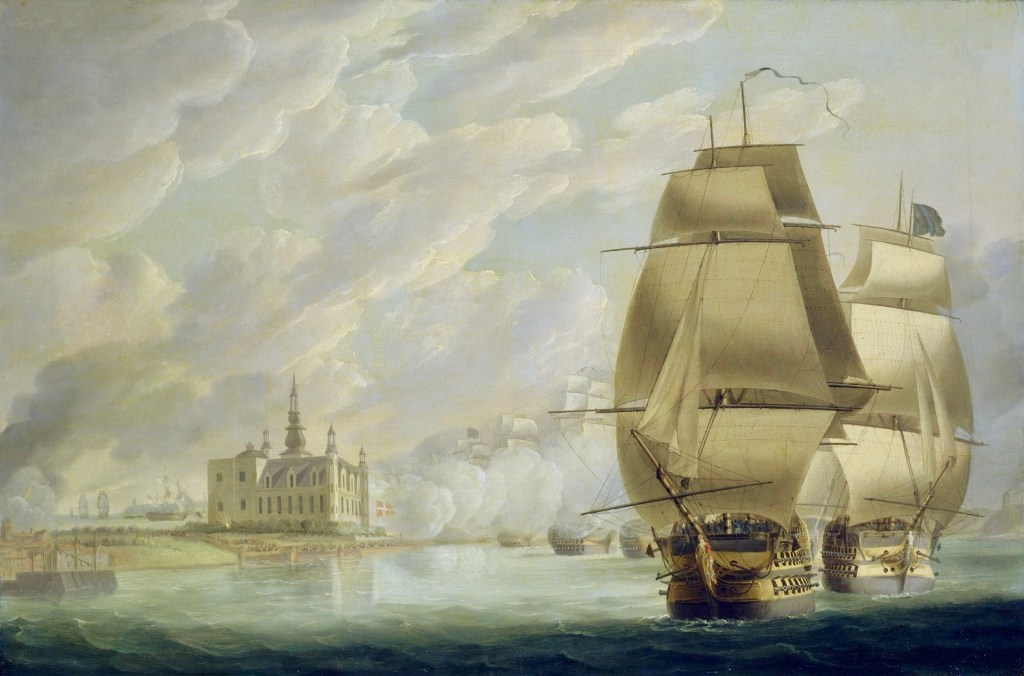
“The battle was the result of multiple failures of diplomacy in the latter half of the 18th century. At the beginning of 1801, during the French Revolutionary Wars, Britain’s principal advantage over France was its naval superiority. The Royal Navy searched neutral ships trading with French ports, seizing their cargoes if they were deemed to be trading with France. It was in the British interest to guarantee its naval supremacy and all trade advantages that resulted from it.”

The British fleet was under the command of Admiral Hyde Parker with his Vice Admiral Horatio Nelson. The English faced a precarious angle with what looked like a hopeless situation. Unfavorable winds prevented reinforcements from arriving in time. Admiral Parker was a cautious man and hesitated in forcing the attack. At one point he signaled a retreat, but the other part of his fleet, under Horatio Nelson did not retreat. Nelson in a famous move did not retreat. He did acknowledge the first signal to retreat, but would not acknowledge the second signal. He said to his flag captain “You know, Foley, I only have one eye – I have the right to be blind sometimes” then holding his telescope to his blind eye, said, “I really do not see the signal.”
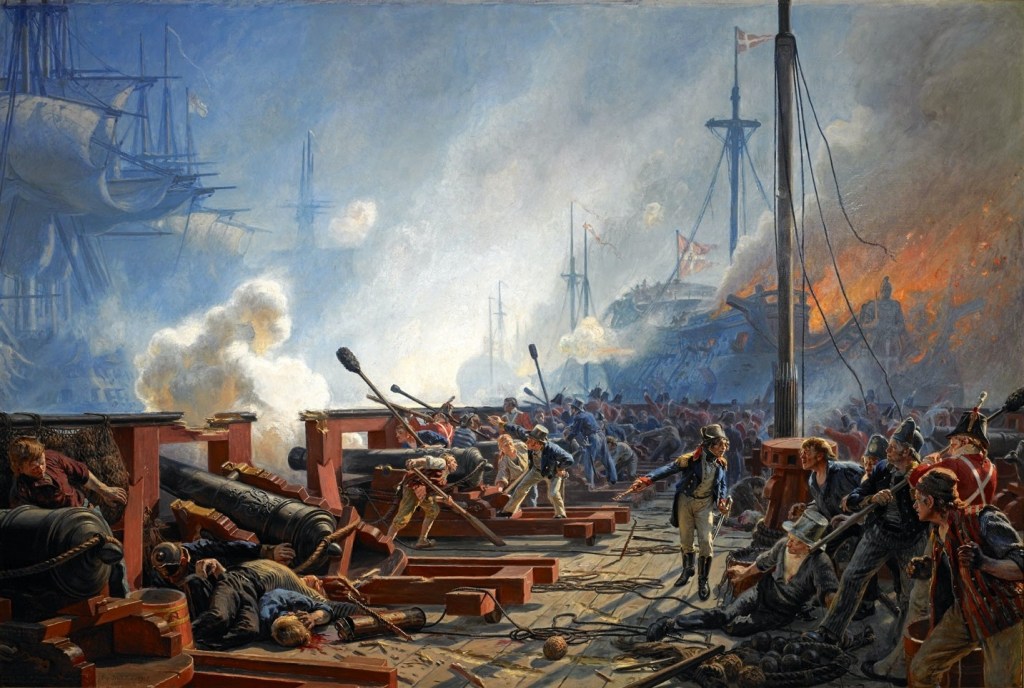
Because of Nelson’s refusal to retreat and his heavy bombardment to the Danish fleet, reinforcements arrived and Copenhagen fell.
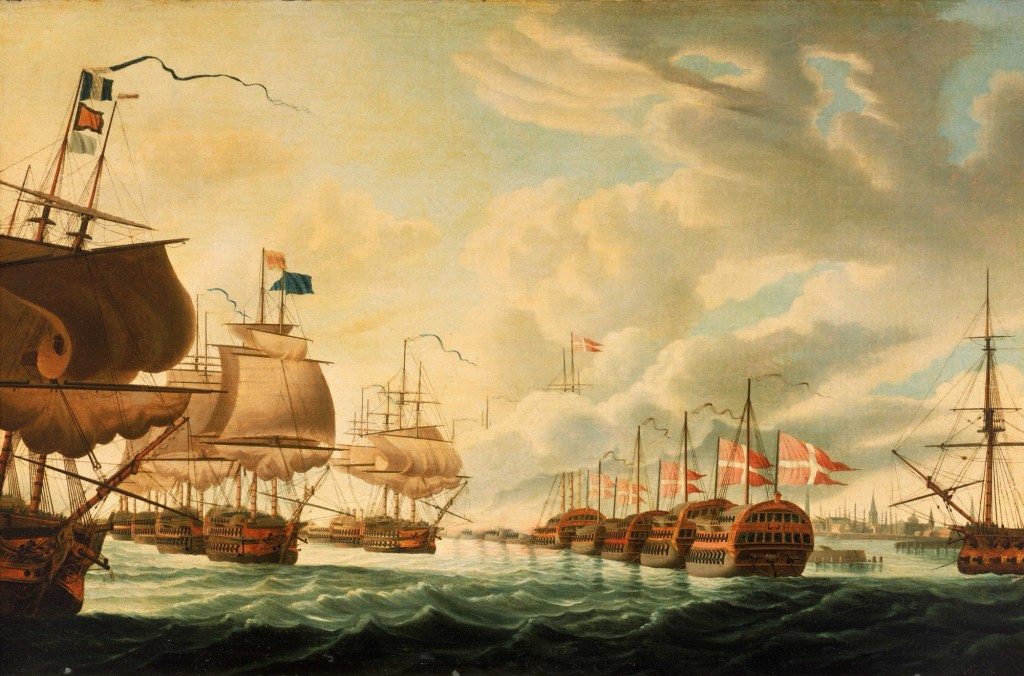
Nelson could have pressed his advantage and completely destroyed Copenhagen and cruelly dealt with the Danish survivors, but he did not. He wrote a note to the King of Denmark: “Lord Nelson, with humble duty to His Royal Highness the Prince of Denmark, will consider this the greatest victory he has ever gained, if it may be the cause of a happy reconciliation and union between his own most gracious Sovereign, and His Majesty the King of Denmark.”
As a result of the battle Lord Nelson was named Viscount of the Nile.


 deliriouslove1970. The life & times of Gary and Denise Flanders. (Free and worth every penny. If you would like to compliment the editor, send to garytheflan@deliriouslove1970.com. If you would like to complain, call your mother.)
Leave a comment