
“Flintshire, county in the northeastern corner of Wales, bounded on the east by the River Dee and England and bounded on the west by Denbighshire. The present county of Flintshire encompasses an area along the lower Dee and the Dee estuary and extends inland to the Clwydian Range. The historic county of Flintshire, which covers a larger area, includes all of the present county as well as the northern portion of the present county of Denbighshire and the eastern portion of the county borough of Wrexham, which is an outlying exclave of the historic county of Flintshire. Mold is the administrative centre of the county.”
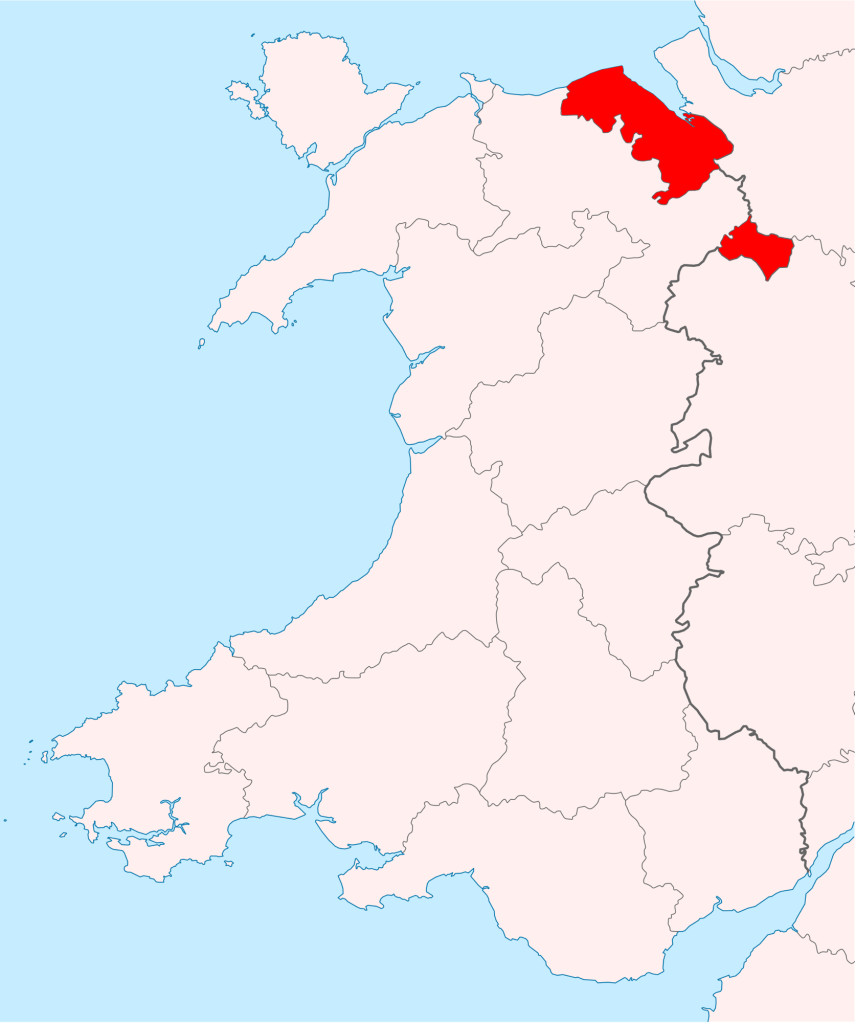
“Flintshire is one of the thirteen historic counties of Wales, in the north-east of Wales. The administrative county of Flint was abolished under the Local Government Act 1972 on 1 April 1974, and became part of the new administrative area of Clwyd. A unitary authority, also named Flintshire, was formed in 1996 under the Local Government (Wales) Act 1994.”

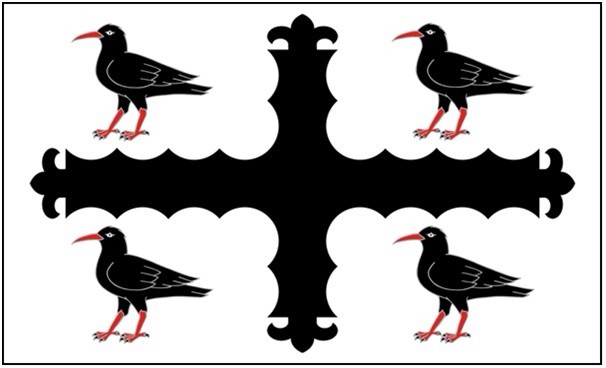
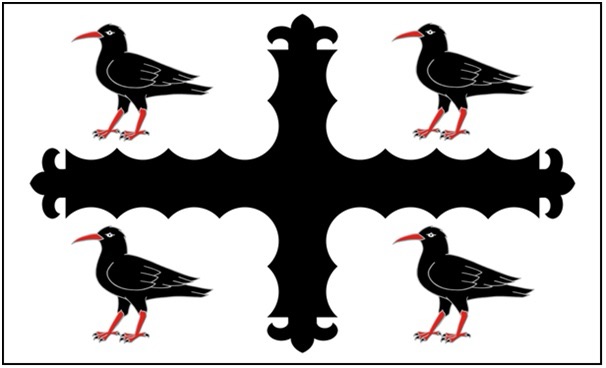
“The flag of Flintshire / Sir Y Fflint was registered on February 25th 2015. The design, a traditional county emblem, was proposed as the county flag by the Grŵp Cefnogwyr Baner Sir Fflint / Flintshire Flag Supporters Group and enjoyed extensive local support.”

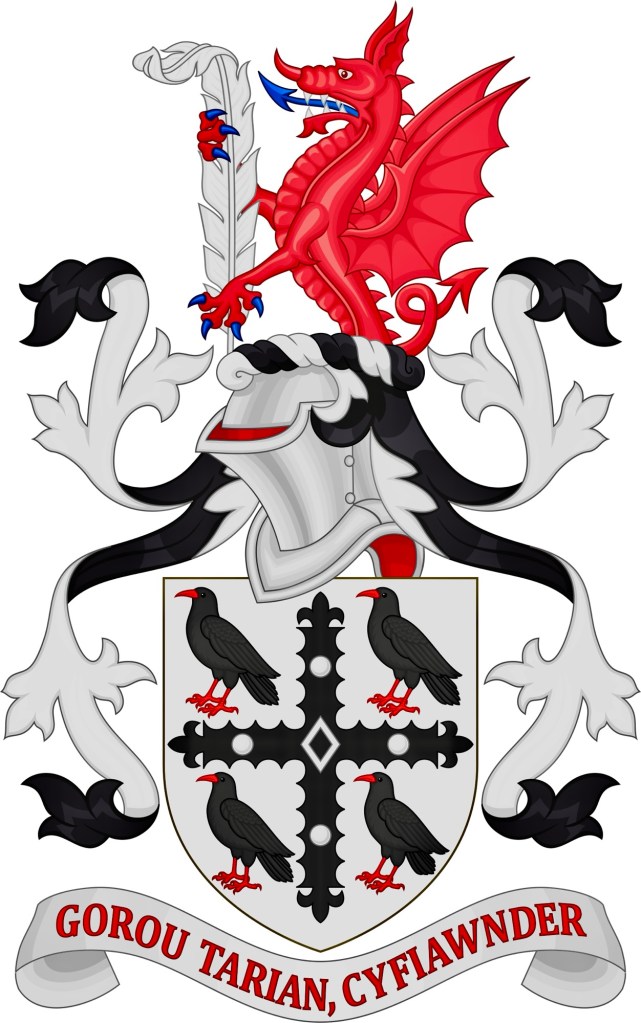
“The arms from which the flag is formed
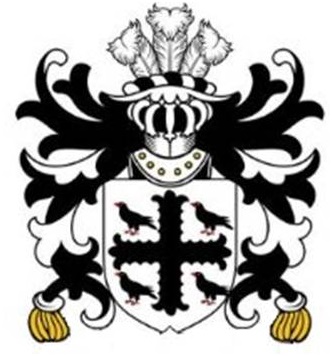
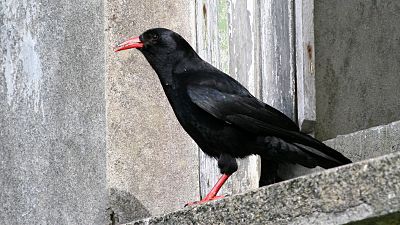
are attributed to the local 11th century ruler, Edwin of Tegeingl, a Welsh “cantref” and sometime kingdom, that covered much of the territory of Flintshire. They feature a black engrailed, flory cross on a white field, between four choughs, a bird once likely to have been widespread in the vicinity, in black and red. The bird occupied a symbolic place in Welsh cultural tradition and according to the 18thcentury Welsh naturalist Thomas Pennant once flourished on the limestone range which runs along part of Flintshire’s coast, M.P. Siddons, in his 1993 work The Development of Welsh Heraldry, Vol. II reports that the arms first appear in the 14thcentury, on a seal used in 1389 by one ‘Le Grand Ithel’, a Flintshire soldier and probable descendant of Edwin who captained a body of Welshmen in the service of the French king during the Hundred Years War.
One of the earliest known appearances of the arms of Edwin of Tegeingl is in a window at Llanrhos church, just along the coast in Caernarfonshire, probably erected by, or commemorating Richard ap Hywel of Mostyn (c.1468-1540) who fought for Henry Tudor at Bosworth.”
We enjoy learning about places we find interesting and flags that catch your attention.

 deliriouslove1970. The life & times of Gary and Denise Flanders. (Free and worth every penny. If you would like to compliment the editor, send to garytheflan@deliriouslove1970.com. If you would like to complain, call your mother.)
Leave a comment