

“Shropshire (/ˈʃrɒpʃər, -ʃɪər/; abbreviated Salop) is a ceremonial county in the West Midlands of England, on the border with Wales. It is bordered by Cheshire to the north-east, Staffordshire to the east, Worcestershire to the south-east, Herefordshire to the south, and the Welsh principal areas of Powys and Wrexham to the west and north-west respectively. The largest settlement is Telford, while Shrewsbury is the county town.”

“The River Severn divides the geographic county of Shropshire into the hilly southwest—a series of ridges and “hogsbacks” running northeast-southwest and separated by deep valleys—and an undulating drift-covered plain in the northeast, with sluggish streams and large areas of former marsh (e.g., the Wealdmoors), peat mosses, and meres (near Ellesmere). Toward the east, tributaries of the Severn have dissected the plain into a series of valleys and low ridges running generally north-south. The climate tends to be humid.”

This area of England has an ancient and rich history. In the 4th Century the largest city in Roman Britain was located here. After the Romans left the Shropshire area became a part of Wales. Various empires came and went such as the Vikings until finally in 1457 King Henry VI ‘gave’ the area to his son, Prince Edward to rule and for several hundred years the English have ruled.
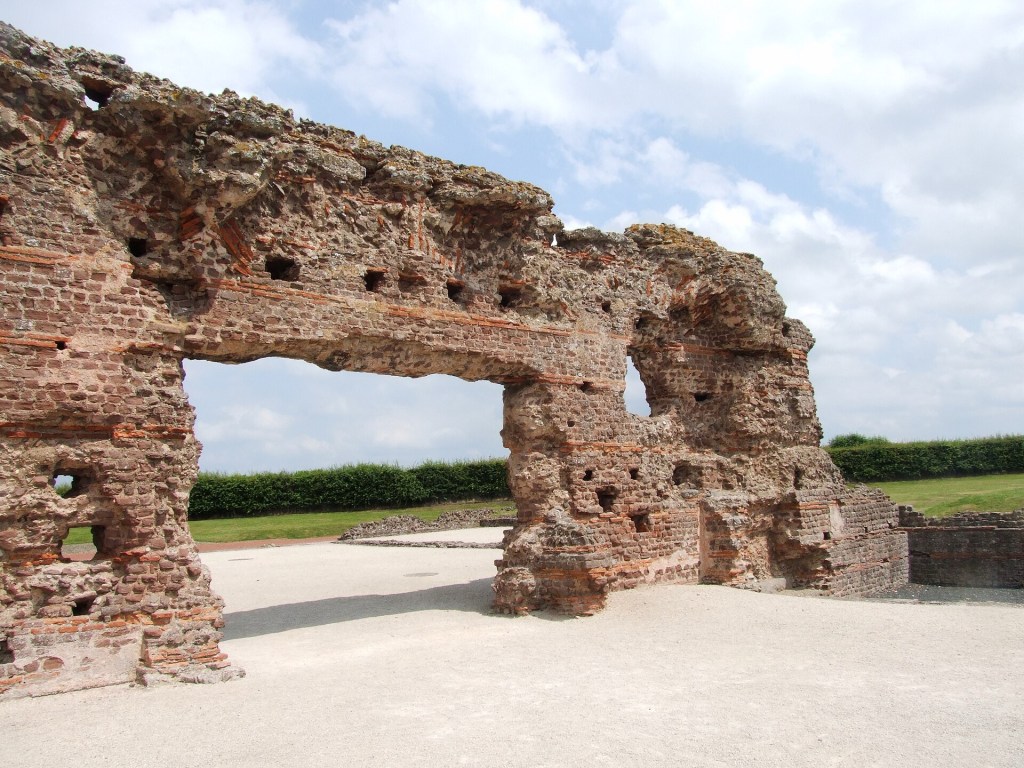
The area became known for the arts, specifically literature. The Lord of Whittington in Shropshire most likely was the inspiration for the Robin Hood legend. The poet A. E. Houseman used the area as the setting of many of his poems. D. H. Lawrence’s novella, St. Mawr is set here.
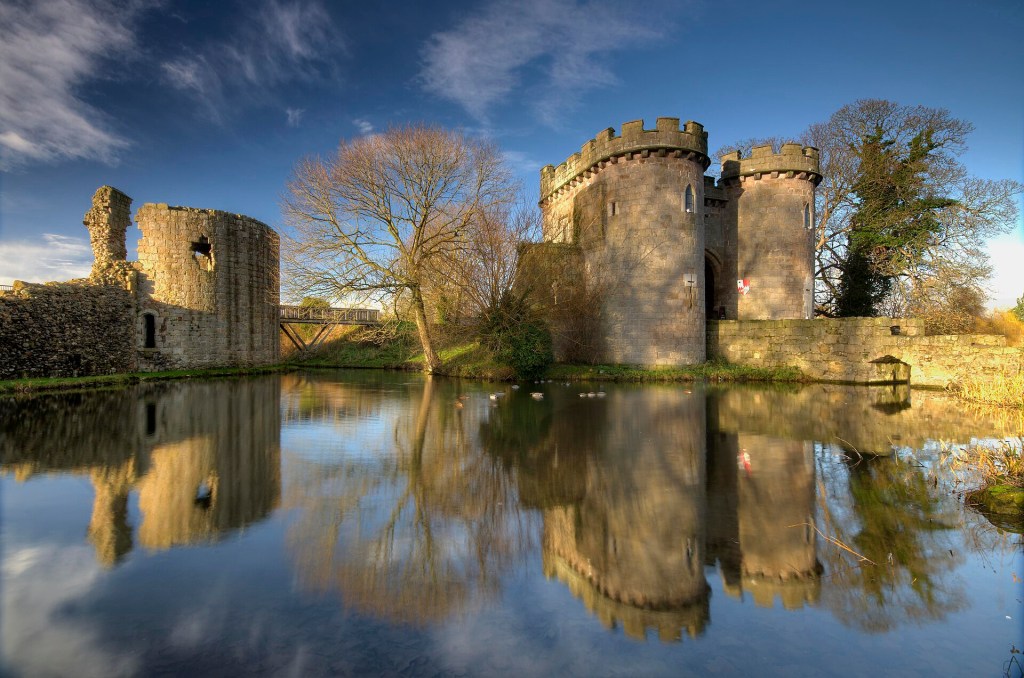

The hilly southwest of Shropshire is the influence for J. R. Tolkien’s landscape of the Shire in The Lord of The Rings. He is believed to also use Wrenkin Mountain for the Lonely Mountain and Ellesmere as Laketown.
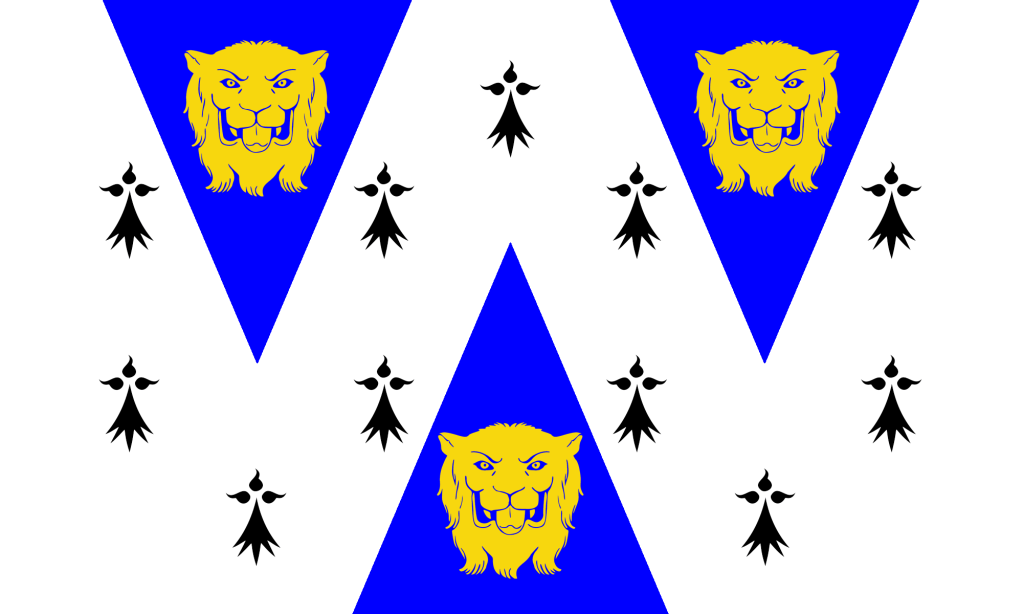
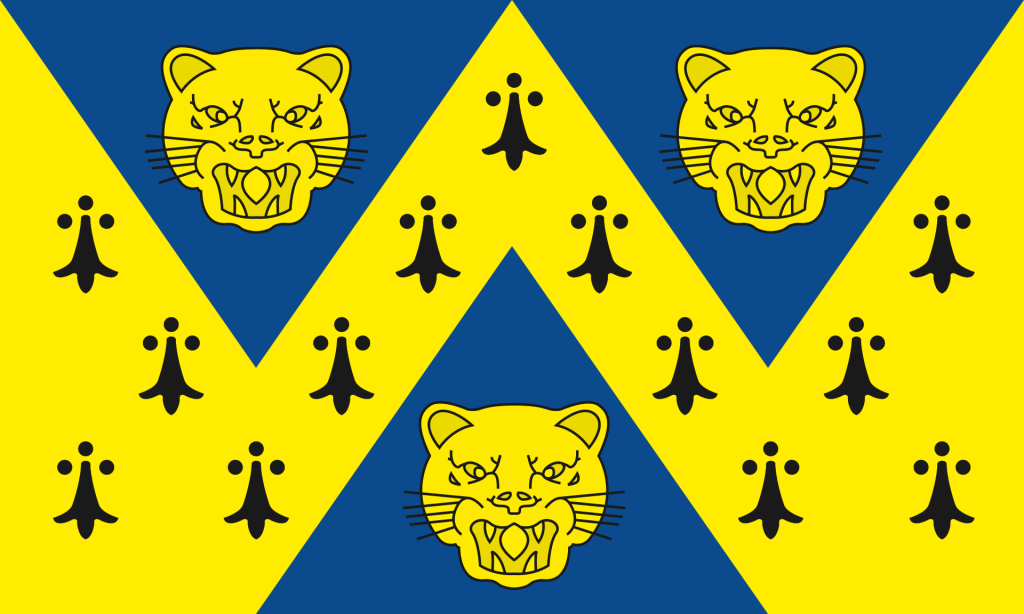
“The flag is a banner of the arms of the former Shropshire (or Salop) County Council which were awarded in 1895. The leopards‘ faces, referred to as “loggerheads” locally, are a traditional emblem for Shropshire and several of its towns. It is believed that the loggerheads derive from the Royal Arms of England and that the blue and yellow colours represent those of Roger de Montgomery, Earl of Shrewsbury.”
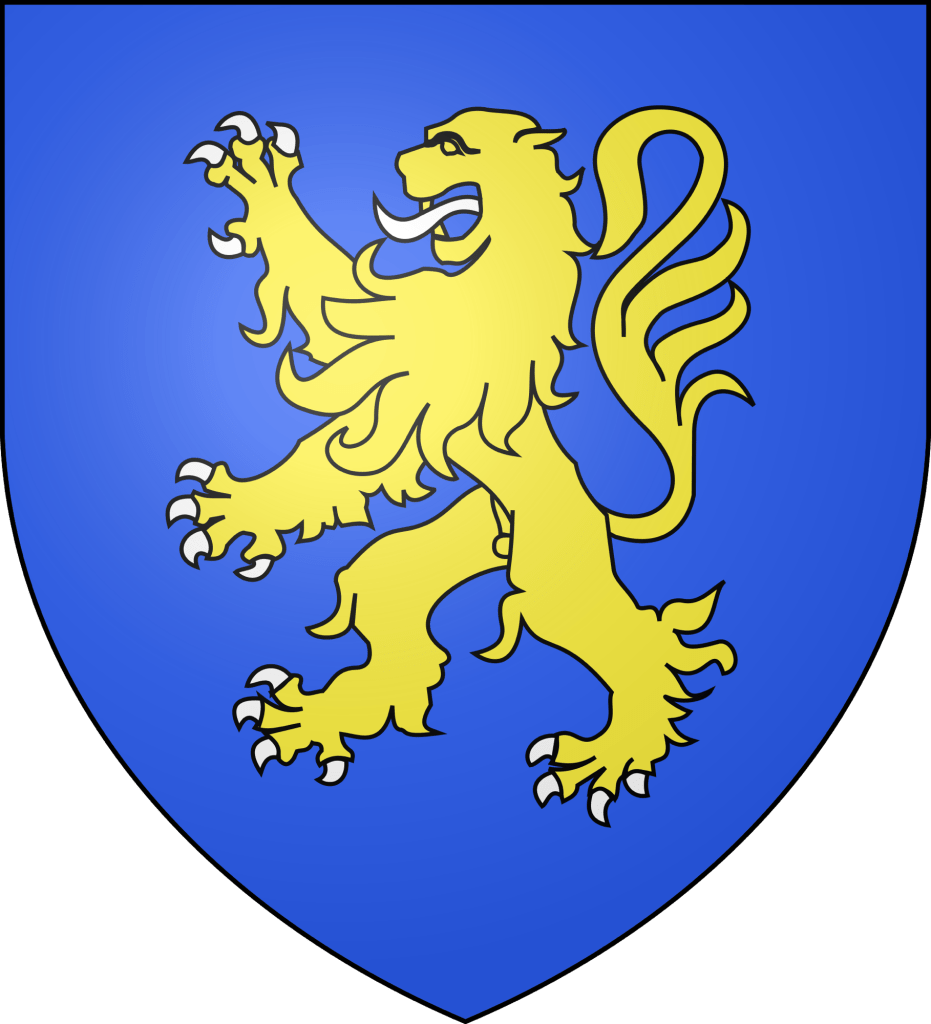
“Roger de Montgomery (died 1094), also known as Roger the Great, was the first Earl of Shrewsbury, and Earl of Arundel, in Sussex. His father was Roger de Montgomery, seigneur of Montgomery, a member of the House of Montgomery, and was probably a grandnephew of the Duchess Gunnor, wife of Duke Richard I of Normandy, the great-grandfather of William the Conqueror. “
There is the motif of the leopards and the blue and yellow colors from Roger and the squiggly things called Ermines.
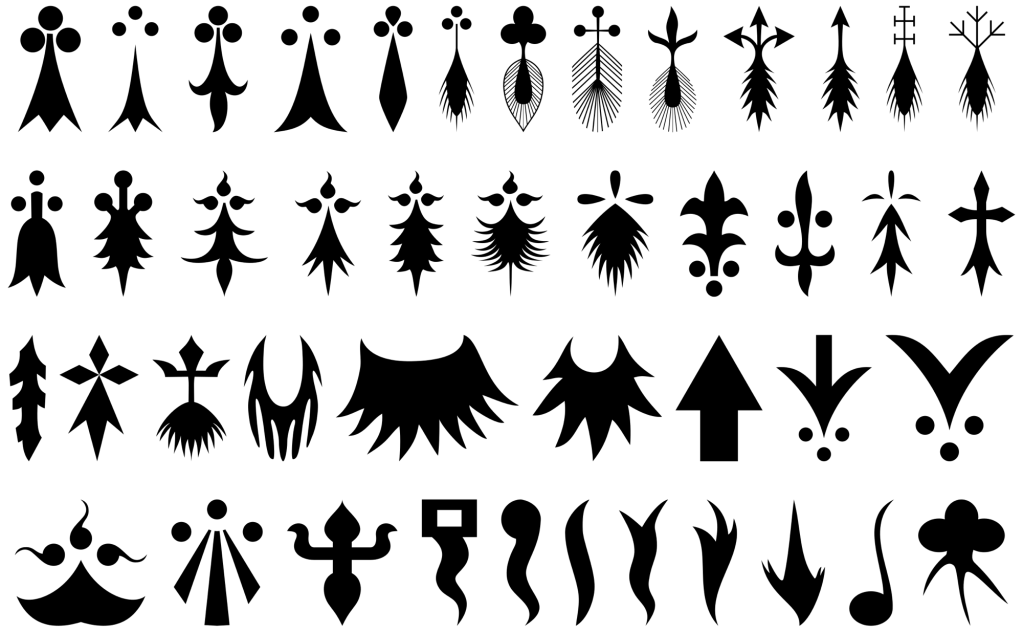
Ermines are a commonly used device in English Heraldry. Ermines represent the winter coat of the stoat, a species of weasel with white fur and a black tipped tail. Why is the stoat so important and used so often…I am afraid that is above my pay grade.

 deliriouslove1970. The life & times of Gary and Denise Flanders. (Free and worth every penny. If you would like to compliment the editor, send to garytheflan@deliriouslove1970.com. If you would like to complain, call your mother.)
Leave a comment