
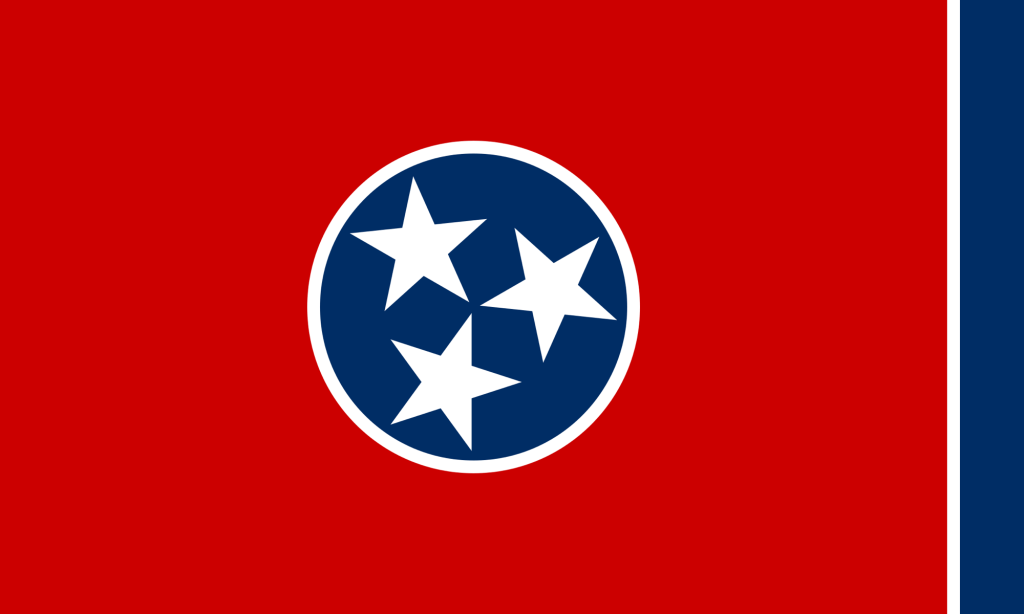
State of Tennessee, is a landlocked state inthe Southeastern region of the United States. It borders Kentucky to the north, Virginia to the northeast, North Carolina to the east, Georgia, Alabama, and Mississippi to the-south, Arkansasto the southwest, and Missouri to the northwest. Tennessee is the 36th-largest by area and the 15th-most populous of the 50 states.

The geographic diversity of Tennessee has generated a variety of economic, social, and cultural patterns that have led residents to perceive the state in terms of three “grand divisions”: East, Middle, and West Tennessee. East Tennessee, dominated geographically by the Great Smoky Mountains and the Cumberland Plateau (also called Cumberland Mountains), is the home of the state’s well-known mountain traditions. Chattanooga, Knoxville, and Kingsport are East Tennessee’s major population centers. Middle Tennessee has level, fertile land interrupted regularly by gently rolling hills; it traditionally has been a balanced agricultural and commercial region, with Nashville as its main urban center. West Tennessee is mainly flat land with rich soil and long has had an economy based on plantation agriculture, notably cotton. Memphis is by far the region’s dominant urban center.
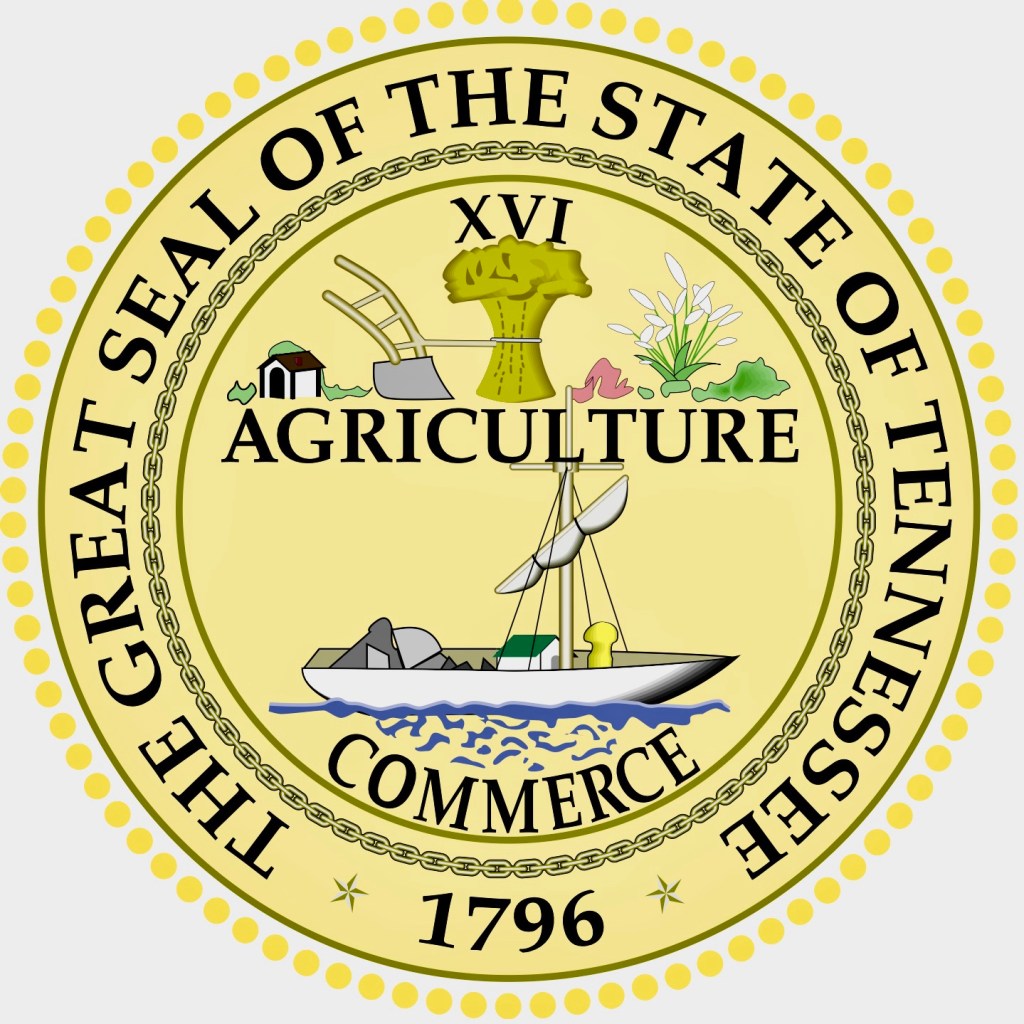
Its name derives from Tanasi a Cherokee town preceding the first European American settlement. Tennessee enjoys a rich Native Americanheritage, mainly from the Cherokee and Chickasaw, who populated the area at the time of white settlement in the 1770s. The Cherokee, who lived in the Smoky Mountains area, left a palpablelegacy in East Tennessee, despite white encroachment. In response to the challenges on the frontier, white settlers in Tennessee developed a strongly independent attitude that has revealed itself often in state and national politics. Tennessean Andrew Jackson, hero of the War of 1812 and seventh president of the United States, led the Democratic Party of the 1830s to become the party of the common people.
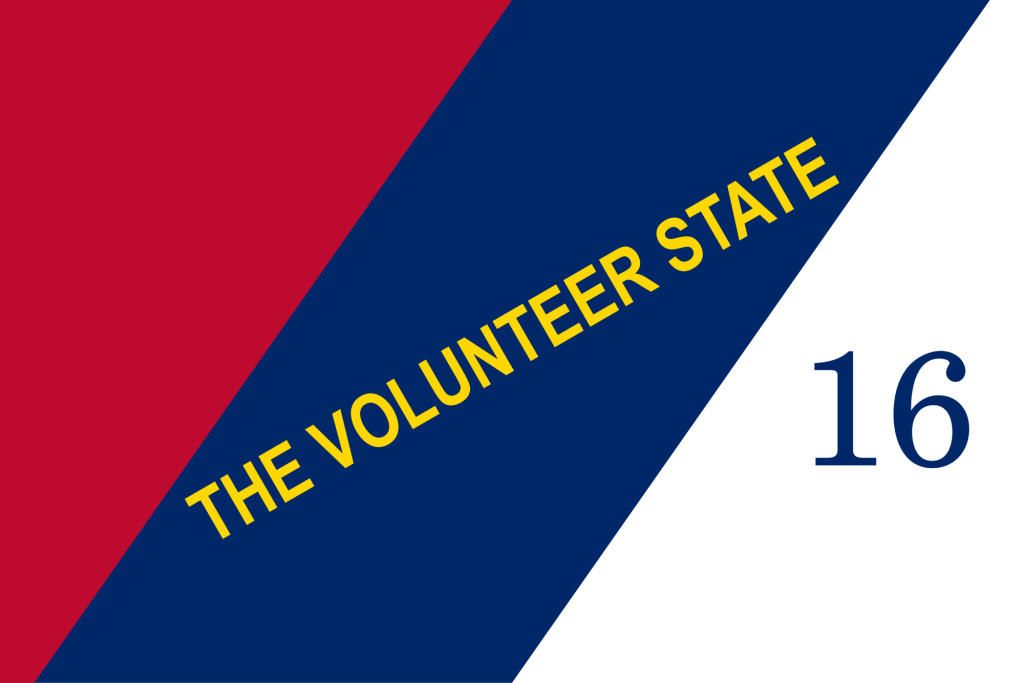
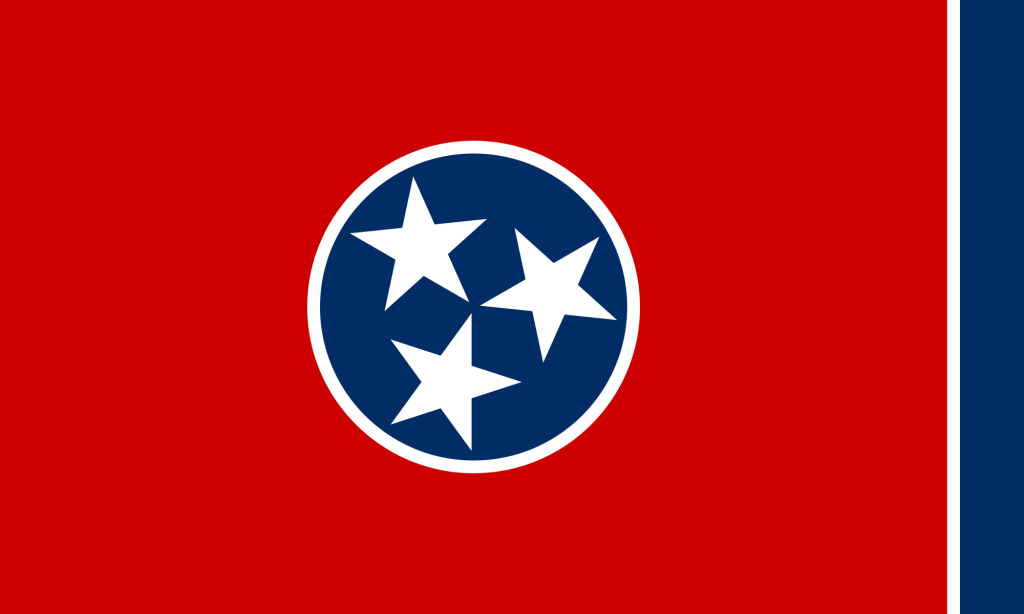
In 1897, Tennessee adopted a red, white, and blue tricolor. The three bars were deliberately slanted in an effort to represent the geographically distinct regions of Tennessee. The flag included the number “16”, Tennessee having been admitted as the 16th state of the Union, and the words “The Volunteer State”, the state’s official nickname.
In 1905, a Colonel in the Tennessee national guard designed the current flag. (NAVA considers it the 14th best flag in the US).
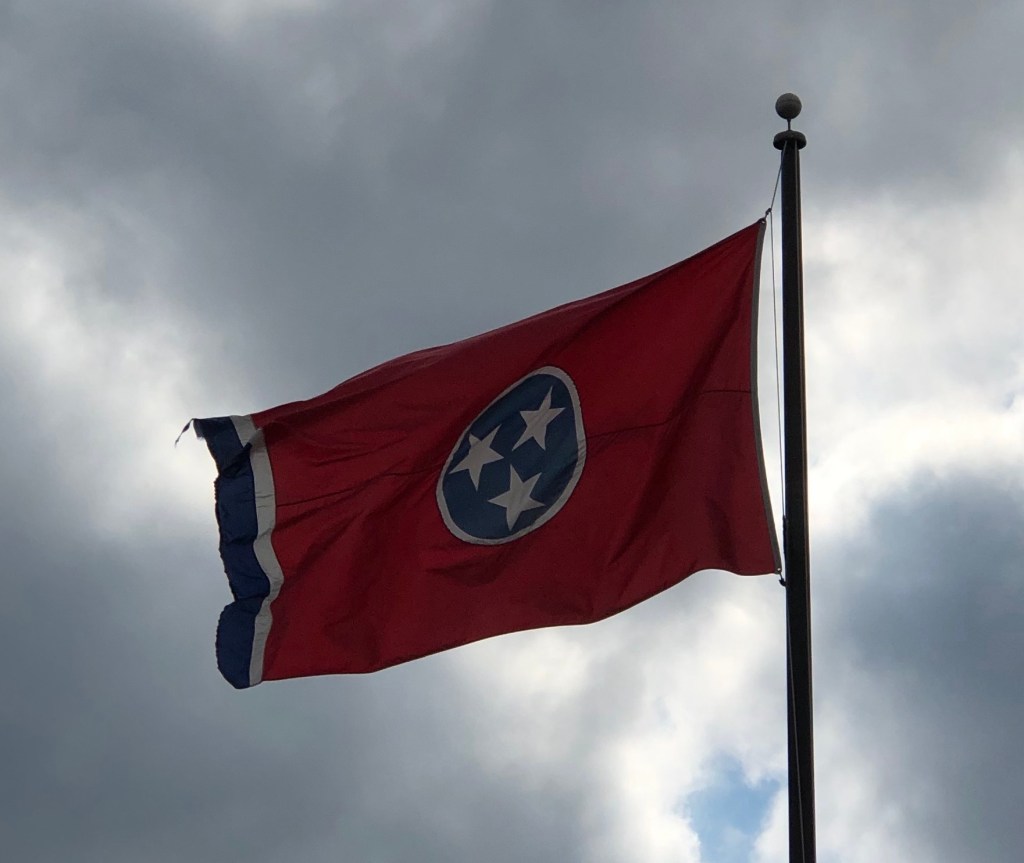
The stars represent the three geographically and legally distinct Grand Divisions of Tennessee (i.e. East, Middle, and West Tennessee). The blue circle around the stars represents the unity of those grand divisions. The blue bar at the edge of the flag was just a design consideration. When asked about the blue bar, Reeves stated “The final blue bar relieves the sameness of the crimson field and prevents the flag from showing too much crimson when hanging limp.”
Our interest in the Tennessee flag stems from our good friends Joe and Jennifer who are proud ‘Vols’ and good decent people.

 deliriouslove1970. The life & times of Gary and Denise Flanders. (Free and worth every penny. If you would like to compliment the editor, send to garytheflan@deliriouslove1970.com. If you would like to complain, call your mother.)
Leave a comment