
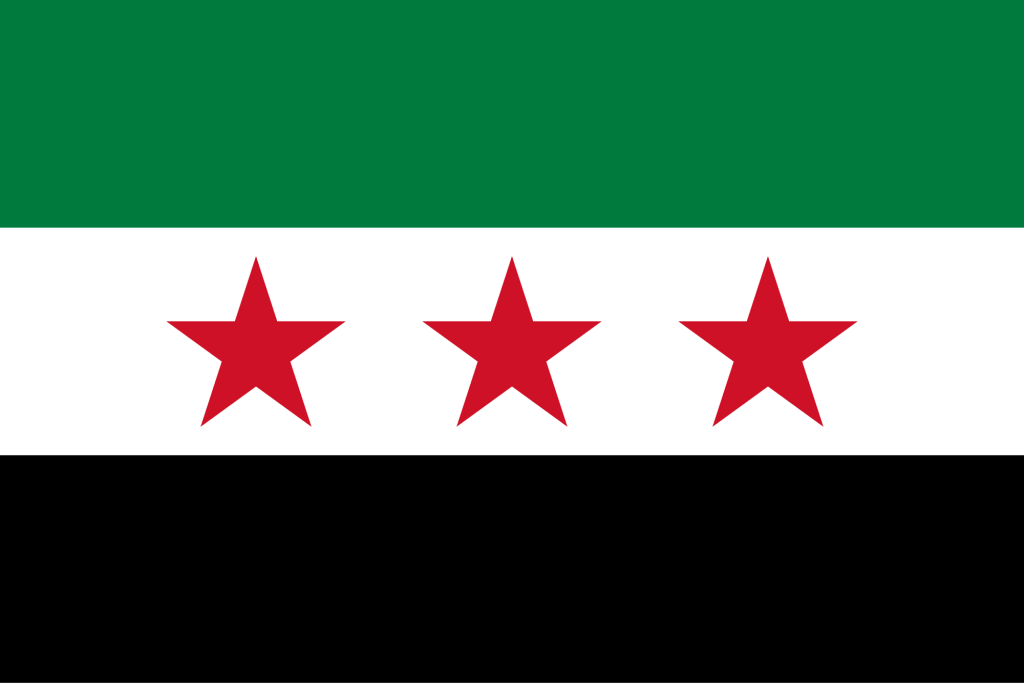
Syria, (لْجُمْهُورِيَّةُ ٱلْعَرَبِيَّةُ ٱلْسُوْرِيَّة – Arabic) officially the Syrian Arab Republic, is a country in West Asia located in the Eastern Mediterranean and the Levant. It is bounded by the Mediterranean Sea to the west, Turkey to the north, Iraq to the east and southeast, Jordan to the south, and Israel and Lebanon to the southwest. It is under a transitional government and comprises 14 governorates. Damascus is the capital and largest city. With a population of 25 million across an area of 185,180 square kilometres (71,500 sq mi), it is the 57th-most populous and 87th-largest country.
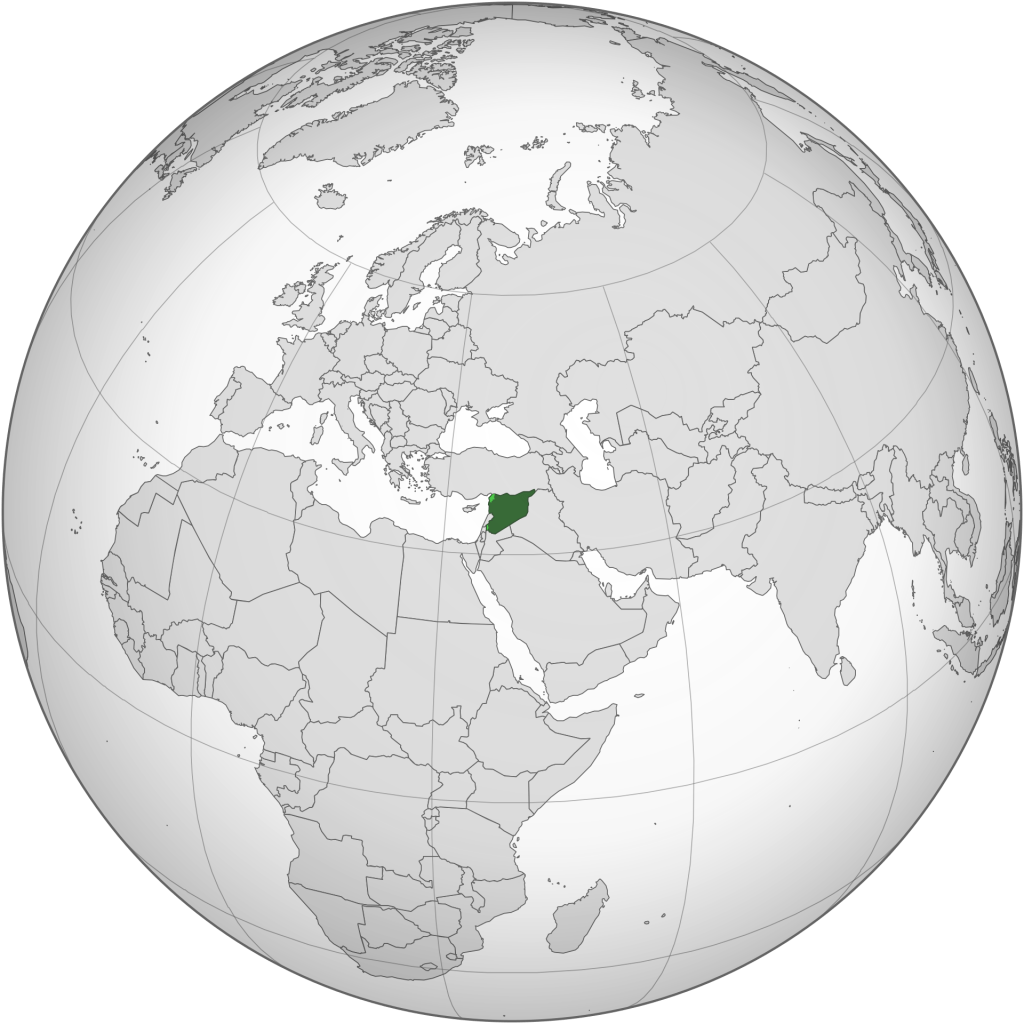
The name “Syria” historically referred to a wider region, broadly synonymous with the Levant and known in Arabic as ash-Sham. The modern state encompasses the sites of several ancient kingdoms and empires, including the Eblancivilization of the 3rd millennium BC.
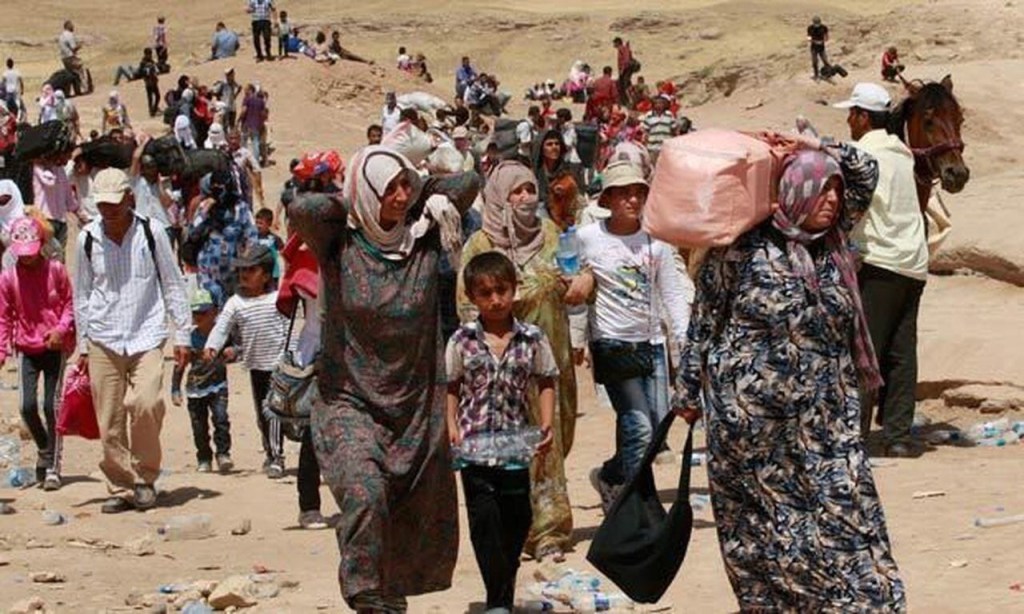
Since the Arab Spring in 2011, Syria has been embroiled in a multi-sided civil war with the involvement of several different countries, leading to a refugee crisis in which more than 6 million refugees were displaced from the country.
On December 8, 2024, after 25 years of rule by the brutal dictator Al Assad (and over 50 years of his family’s rule) the people of Syria toppled this cruel autocrat.

Assad was toppled after rebel forces launched a shock offensive, sweeping through Syria and gaining control of the country’s major cities in just 12 days.
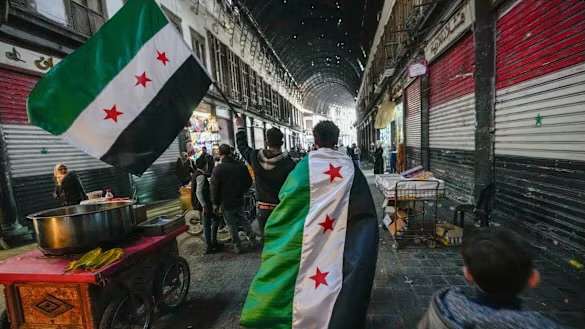
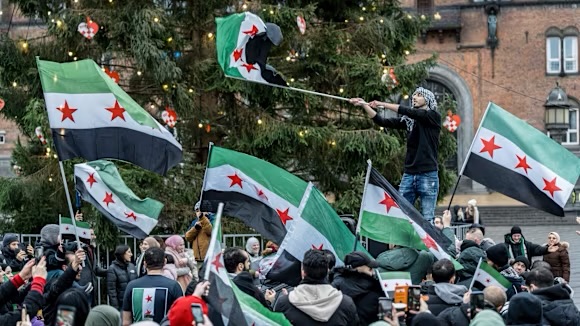
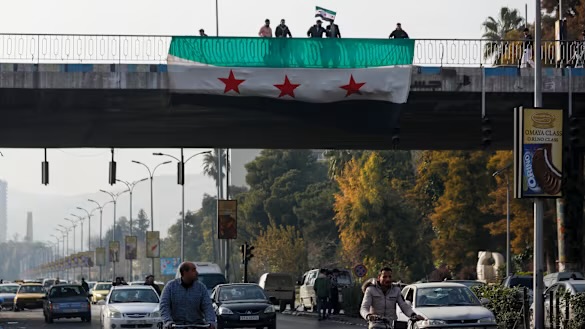
For many Syrians who have been caught up in over a decade of civil war, his departure signals a new dawn, marked by a new national flag – which has been raised over embassies, painted on faces, hung from bridges and waved jubilantly in cities across the world.
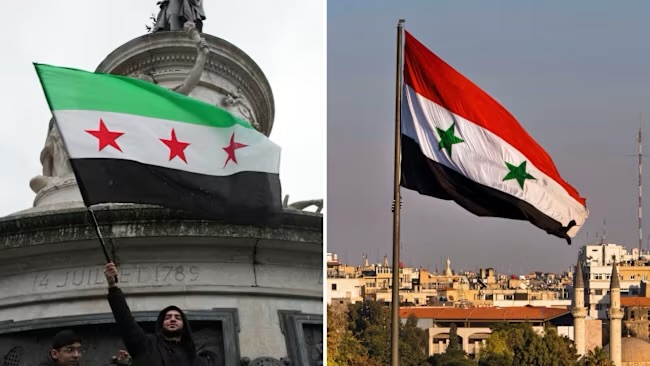
Under Assad, Syria’s flag featured horizontal red, white and black stripes, with two green stars across the central white stripe.
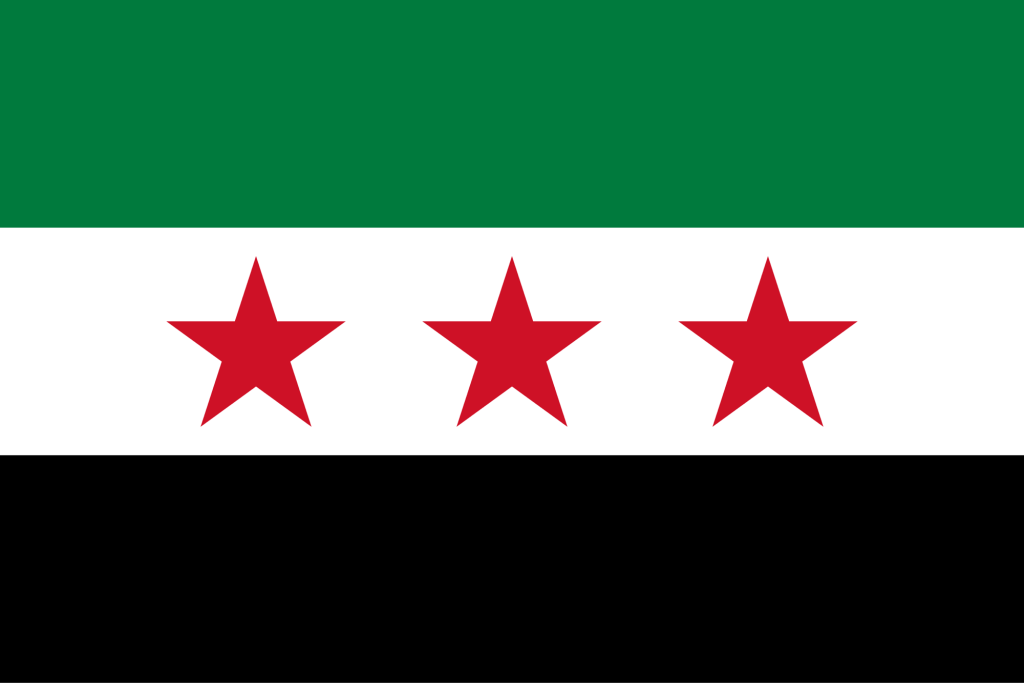
The new design replaces the red stripe with a green one and features three red stars along the white stripe. It is the official flag of the Syrian rebels.

The four colours have historical Islamic significance. White represents the Umayyad empire and red symbolises an Islamic movement known as Khawarij.
Black is believed to represent the Prophet Muhammed while the caliph Ali, his cousin, is depicted by the colour green.
However, the colours came to mean different things in the context of the struggle of independence in the 1930s and 40s.
Black stood for the dark past of oppression, white represented hope for the future and red symbolised the blood sacrificed to achieve that future.

 deliriouslove1970. The life & times of Gary and Denise Flanders. (Free and worth every penny. If you would like to compliment the editor, send to garytheflan@deliriouslove1970.com. If you would like to complain, call your mother.)
Leave a comment