
Louisiana[pronunciation French: Louisiane[lwizjan] Spanish: Luisiana[lwiˈsjana]; Louisiana Creole: Lwizyàn) is a state in the Deep South and South Centralregions of the United States. It borders Texas to the west, Arkansas to the north, and Mississippi to the east.
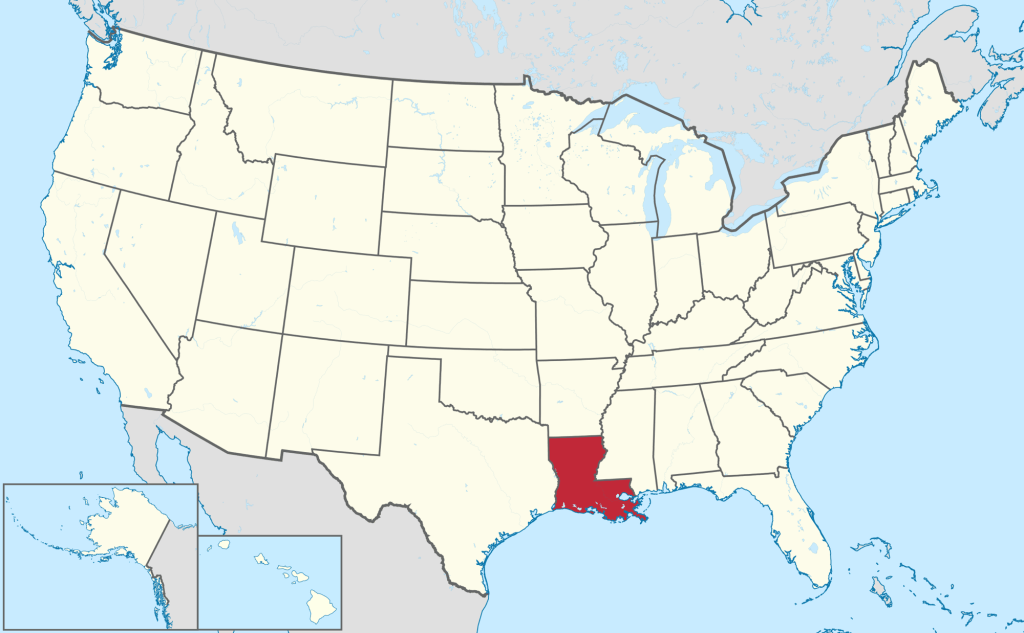
Reflecting its French heritage, Louisiana is the only U.S. state with political subdivisions termed parishes, which are equivalent to counties, making it one of only two U.S. states not subdivided into counties (the other being Alaskaand its boroughs). Baton Rouge is the state’s capital, and New Orleans, a French Louisiana region, is its largest city with a population of about 383,000 people.[10] Louisiana has a coastline with the Gulf of Mexico to the south; a large part of its eastern boundary is demarcated by the Mississippi River.
Based on national averages, Louisiana frequently ranks low among U.S. states in terms of health, education, and development, with high rates of poverty and homicide. In 2018, Louisiana was ranked as the least healthy state in the country, with high levels of drug-related deaths. It also has had the highest homicide rate in the United States since at least the 1990s.
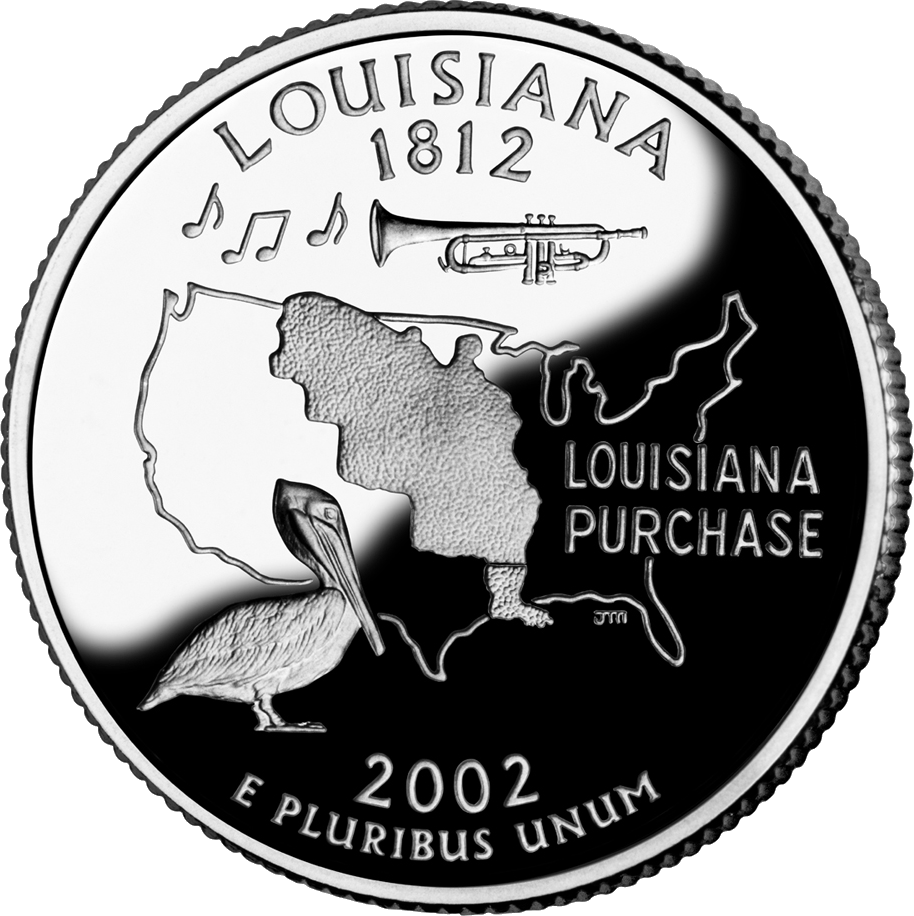
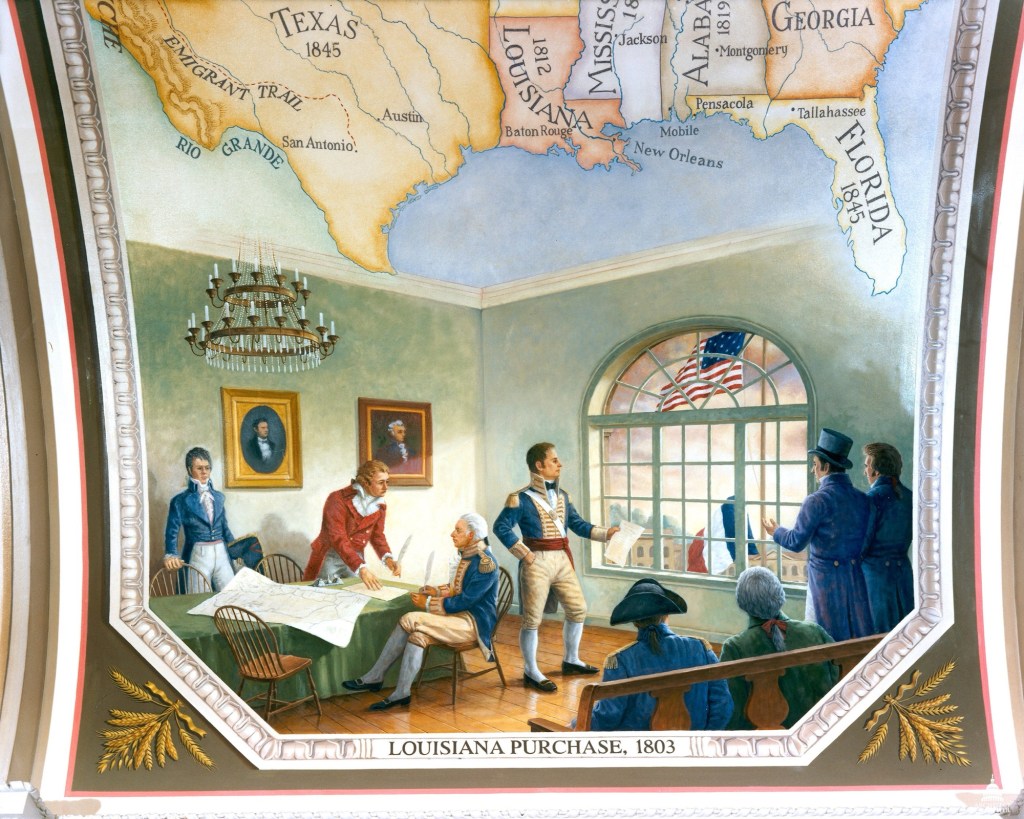
We all learned the very bare minimum about Louisiana in high school when we looked at the ‘Louisiana Purchase’. In 1803 President Thomas Jefferson was correctly nervous about Napoleon having a presence on the continent and that his wheeling and dealing with the Spanish could lead to an attempted take over by Europeans. Jefferson worked out a deal of his own buying the entire Louisiana Territory (828,000 square miles) for 15 million dollars.
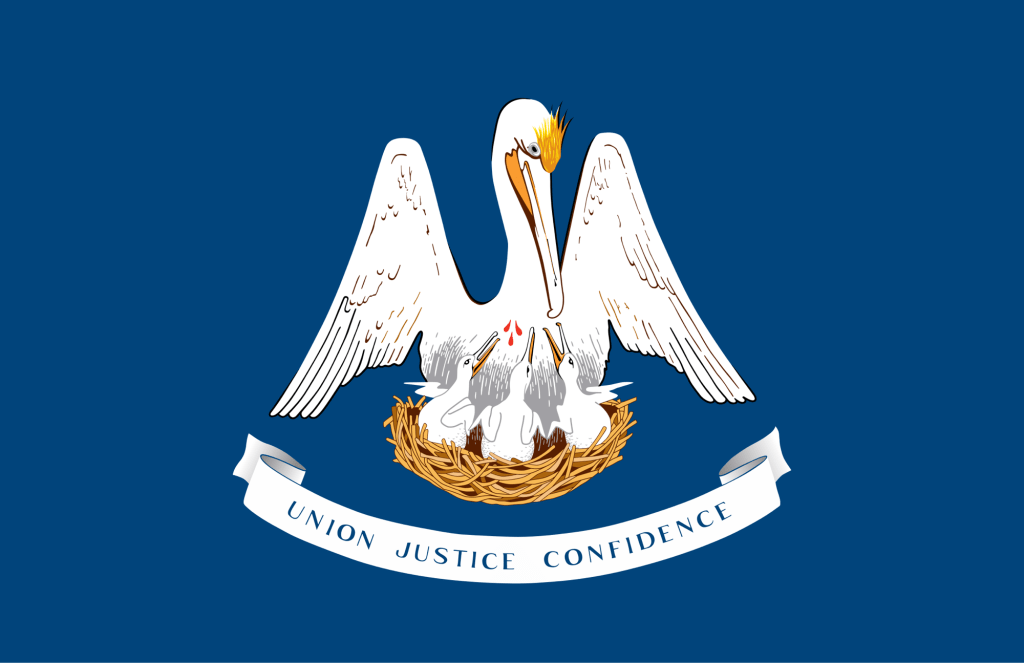
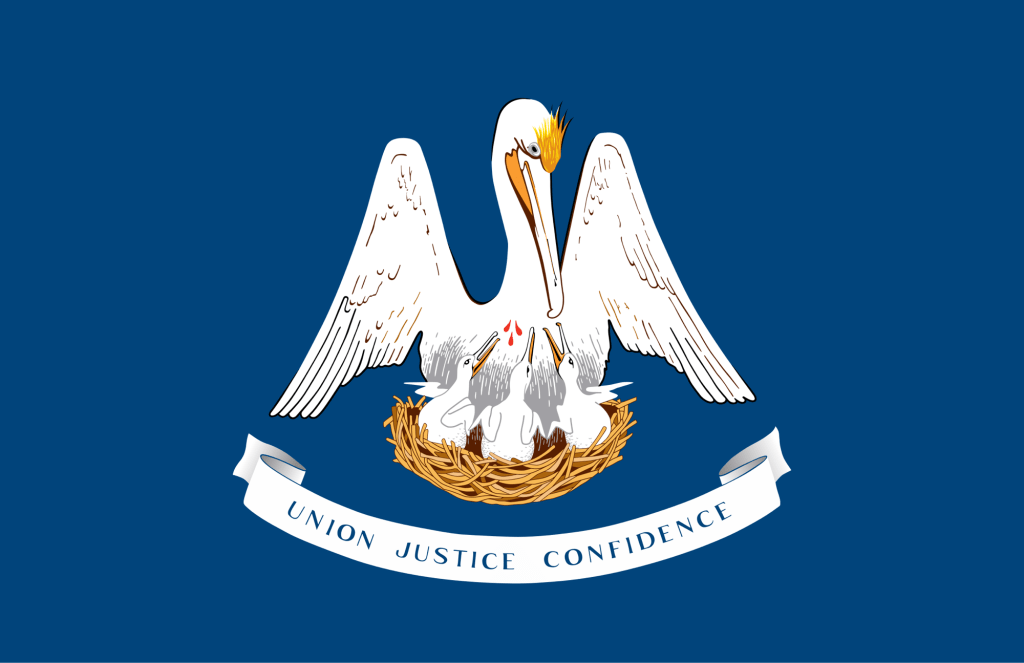
Now for the flag: an unusual state flag that is basically a unique godd design. The flag of Louisiana consists of a rectangular field of blue with the arms of Louisiana, a pelican vulning herself in white in the center, with a ribbon beneath, also in white, containing in blue the state motto: “Union Justice Confidence”. The flag was officially adopted July 1, 1912, and is often referred to as the Pelican flag.

As early as 1812 the brown pelican appeared on the Louisiana state seal. In medieval lore, pelicans were believed to be attentive to the needs of their chicks to the point of drawing their own blood (vulning) to feed their chicks when no other food was available. This image of the pelican in her piety came to symbolize the Passion of Jesus and the Eucharist.
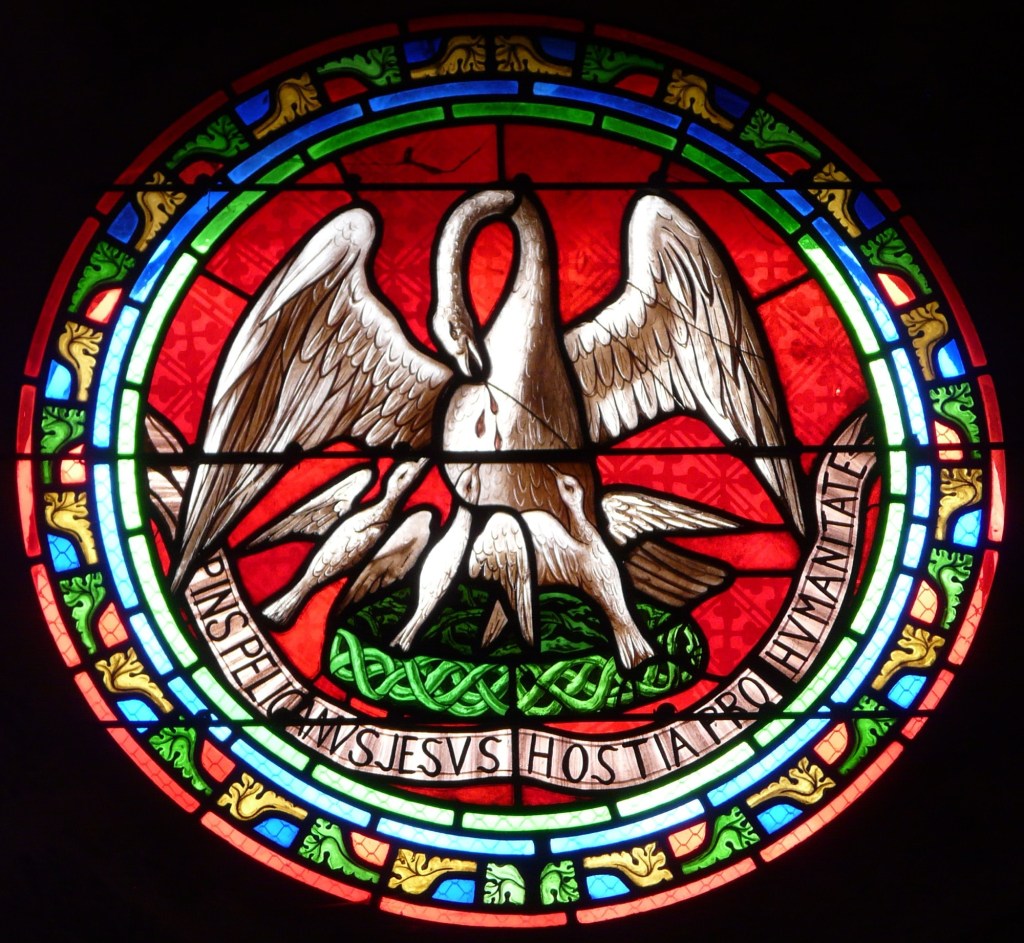
Stained glass depiction of The Pelican in Her Piety from a Catholic church in Saint-Bonnet-la-Riviera, France.
Real pelicans never perform this activity, but from the Middle Ages this symbol has represented the spirit of self-sacrifice and dedication to progeny.

 deliriouslove1970. The life & times of Gary and Denise Flanders. (Free and worth every penny. If you would like to compliment the editor, send to garytheflan@deliriouslove1970.com. If you would like to complain, call your mother.)
Leave a comment