
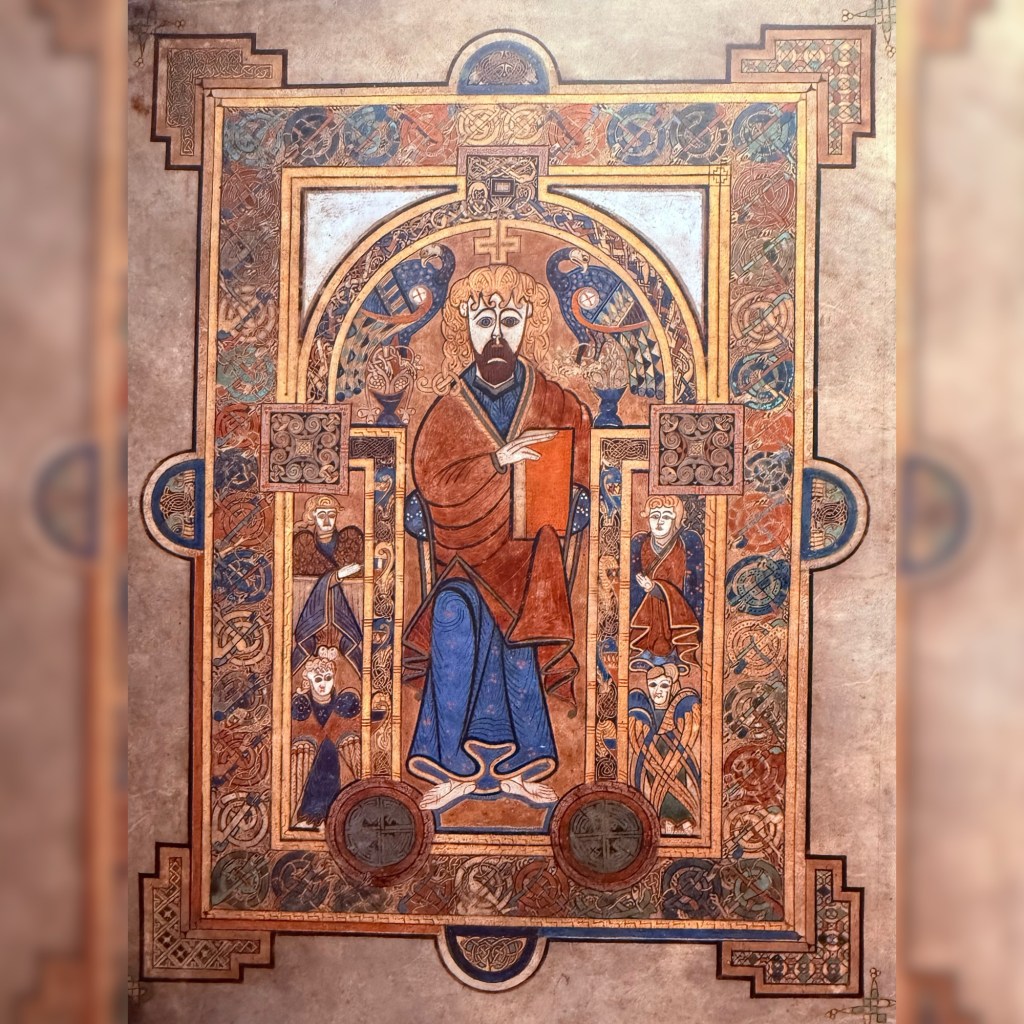
The Book of Kells is an illustrated manuscript containing the four Gospels of the New Testament. It is based on the Latin Vulgate, which was an early Latin translation. It was created by monks in Scotland or Ireland in approximately 800 AD.

It is regarded as a masterwork of Western Calligraphy. The manuscript takes its name from the Abbey of Kells which was its home for centuries. Bishop Henry Jones presented the Book of Kells to Trinity College in Dublin, between 1661 and 1662. It has been housed here ever since.
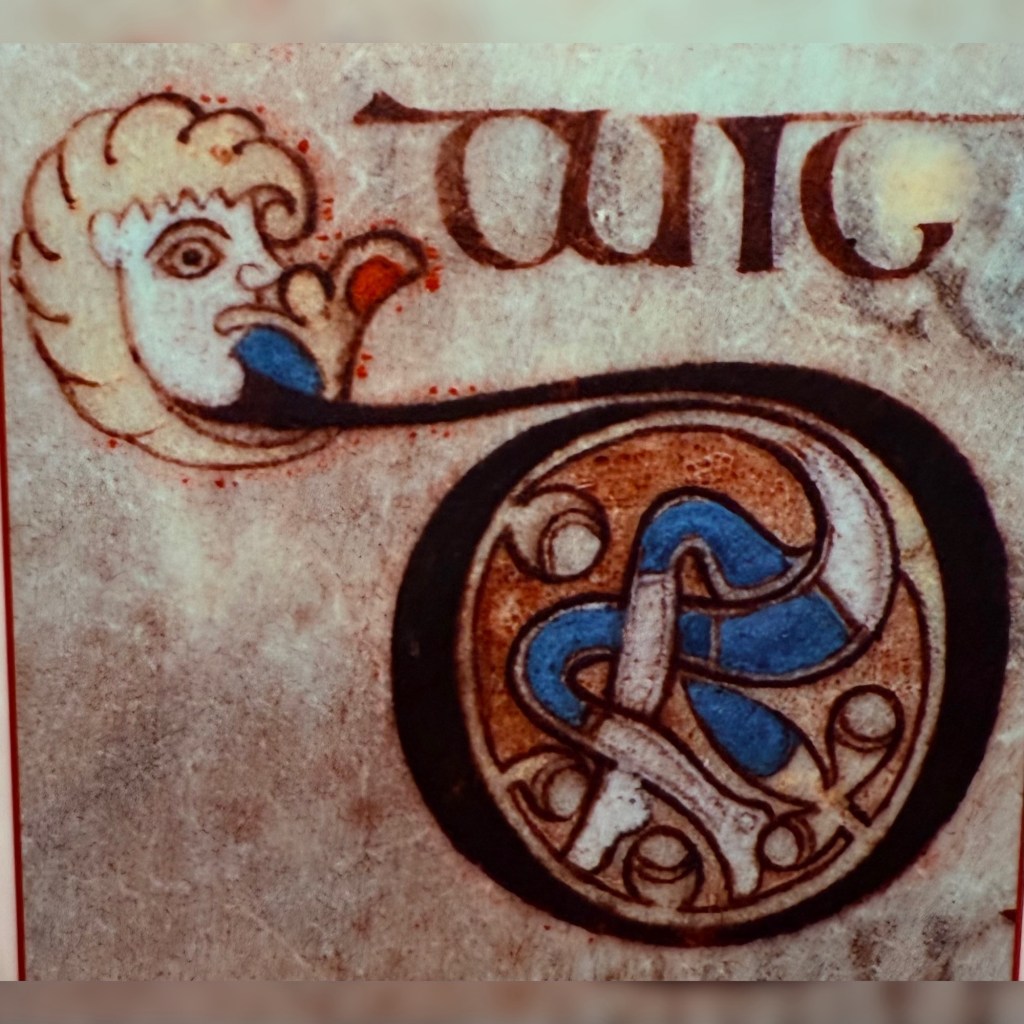
The illustrations and ornamentation are extravagant and complex. It might have been the work of only a few monks based on how consistent the lettering is. Fancy swirls containing figures of humans, animals and mythical beasts together with Celtic knots in vibrant colors enliven the manuscripts pages.
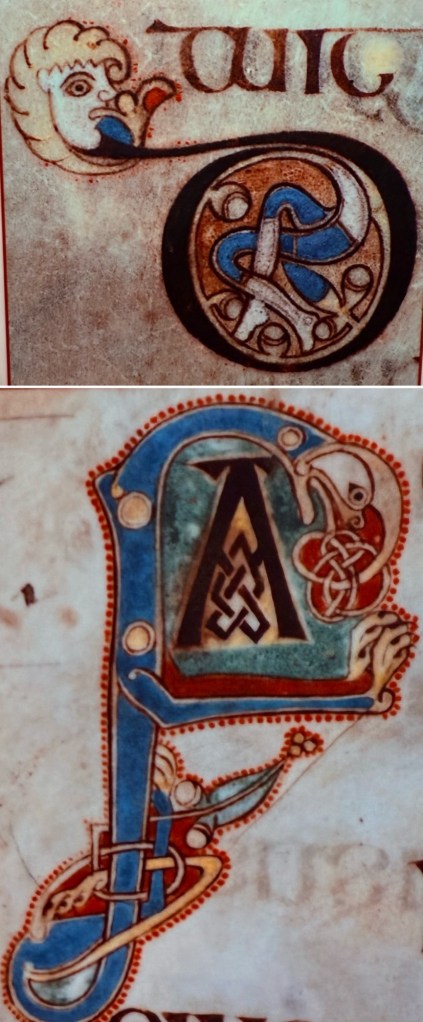
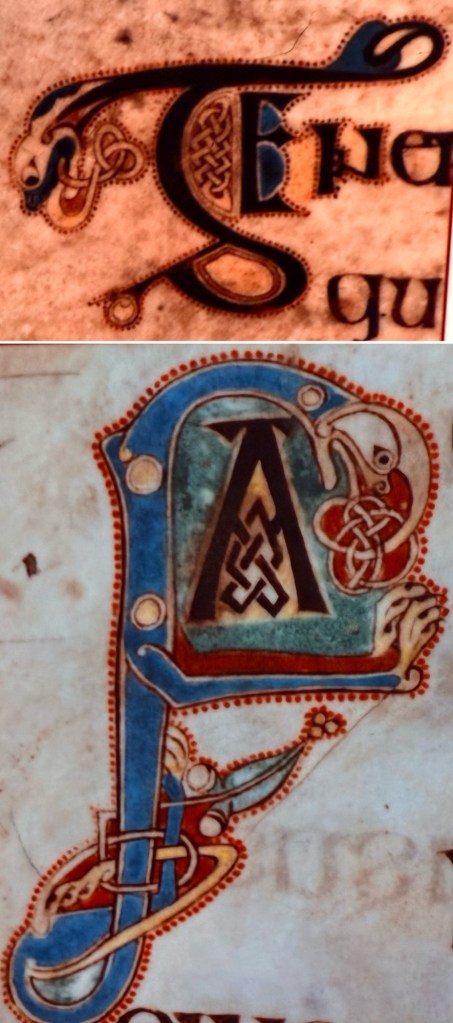
The Ireland in which the Book of Kells was crafted and manufactured, writes renown historian Christopher de Hamel, “was clearly no primitive backwater but a civilization which could now read Latin, although never occupied by the Romans, and which was somehow familiar with texts and artistic designs which have unambiguous parallels in the Coptic and Greek churches. Although the Book of Kells itself is as uniquely Irish as anything imaginable, it is a Mediterranean text and the pigments used in making it include orpiment, a yellow made from arsenic sulphide, exported from Italy, where it is found in volcanoes. There are clearly lines of trade and communication unknown to us.”
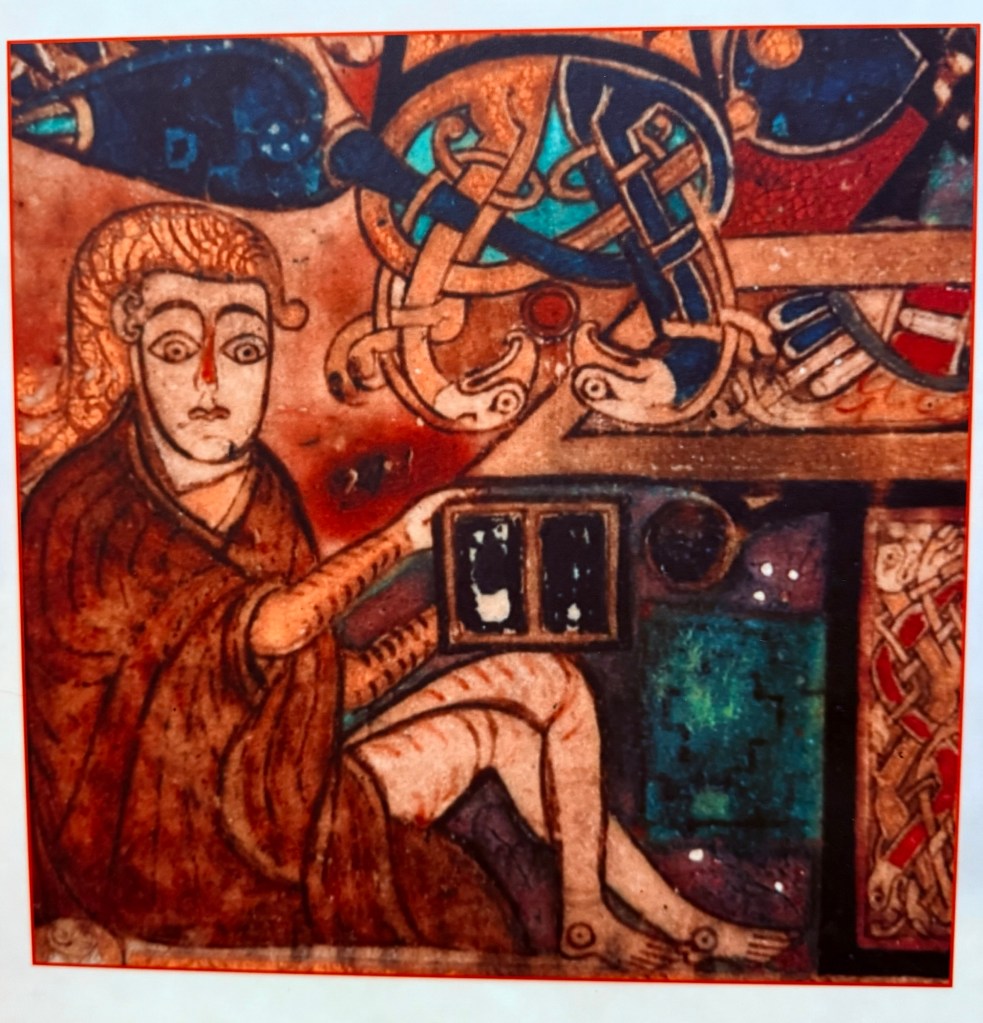
What a privilege it was to tour Trinity College and actually see this part of history.
 deliriouslove1970. The life & times of Gary and Denise Flanders. (Free and worth every penny. If you would like to compliment the editor, send to garytheflan@deliriouslove1970.com. If you would like to complain, call your mother.)
Leave a comment