
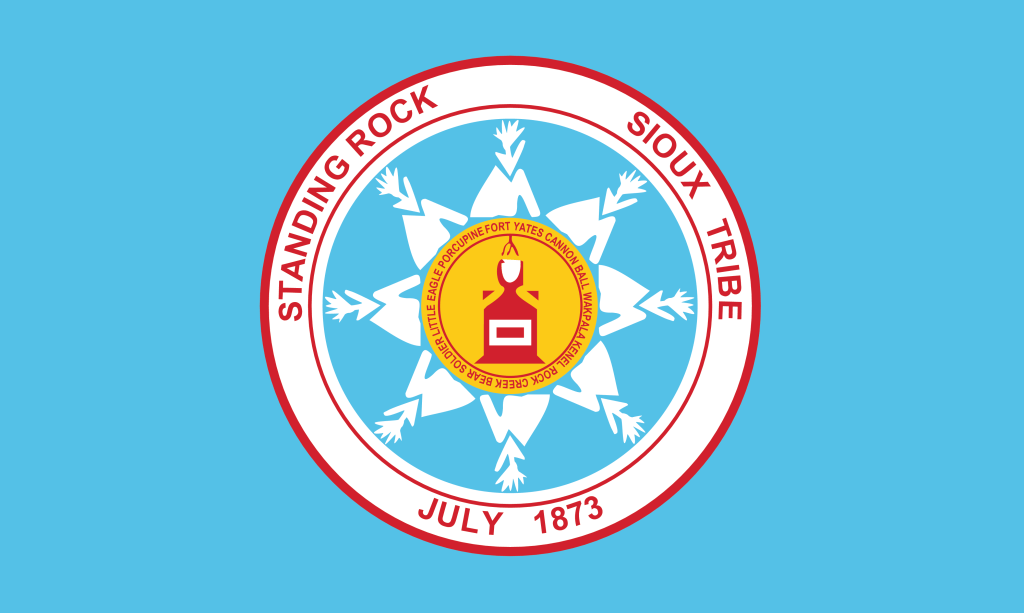
Standing Rock Sioux Tribe of North and South Dakota. One of nine Sioux reservations spreading from northern Nebraska to North Dakota. It was created in 1873 out of land set aside under the treaty of 1868 as the “Great Sioux Reservation”. It is home to the Yanktonai and Hunkpapa Bands of the Teton Sioux.
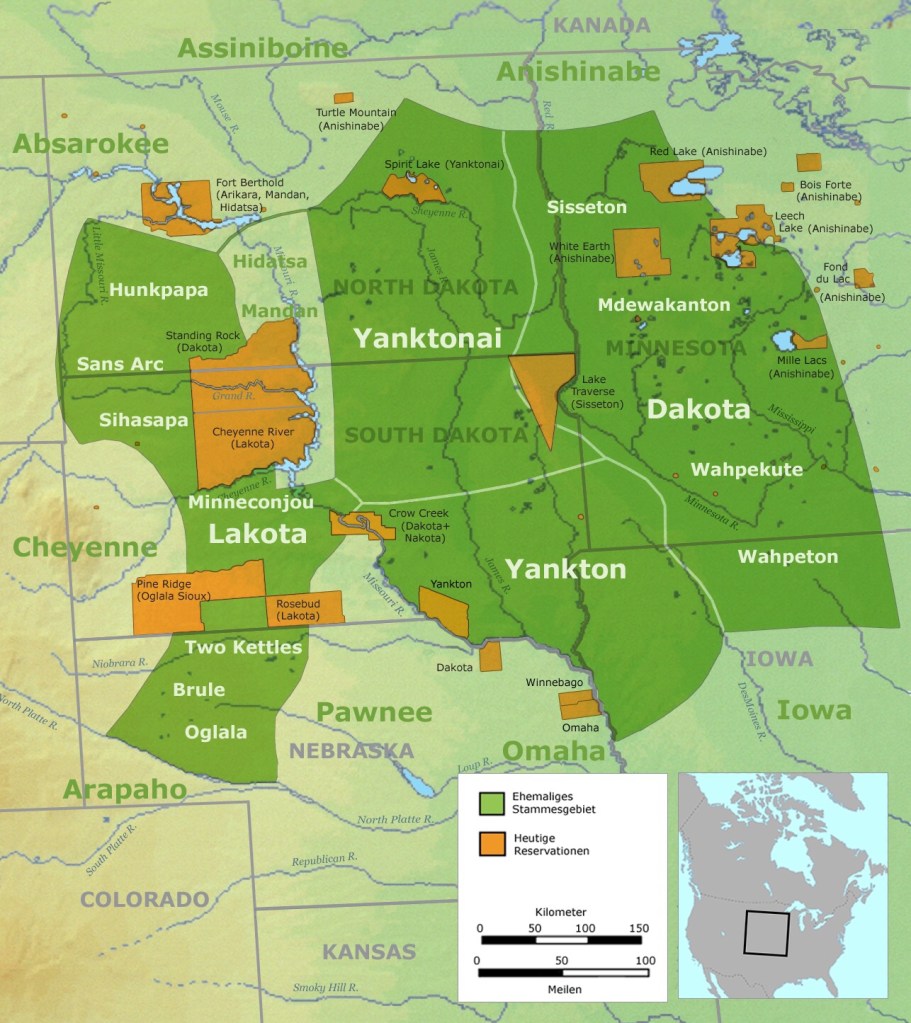
According to legend, the Standing Rock was the Arikara wife of a Dakota warrior and her child who had been turned into stone. The Sioux transported this rock wherever they moved. On a brick pedestal this rock stands today.
In 1868 the US forced upon the Sioux people The Fort Laramie Treaty. In 1874, in direct violation of the treaty the 7th Cavalry came onto reservation land to ‘protect’ white minors who were illegally mining and taking gold from Sioux land. The US Government attempted to force the Sioux to rent or sell their reservation land. The Sioux refused and the Sioux Wars began.
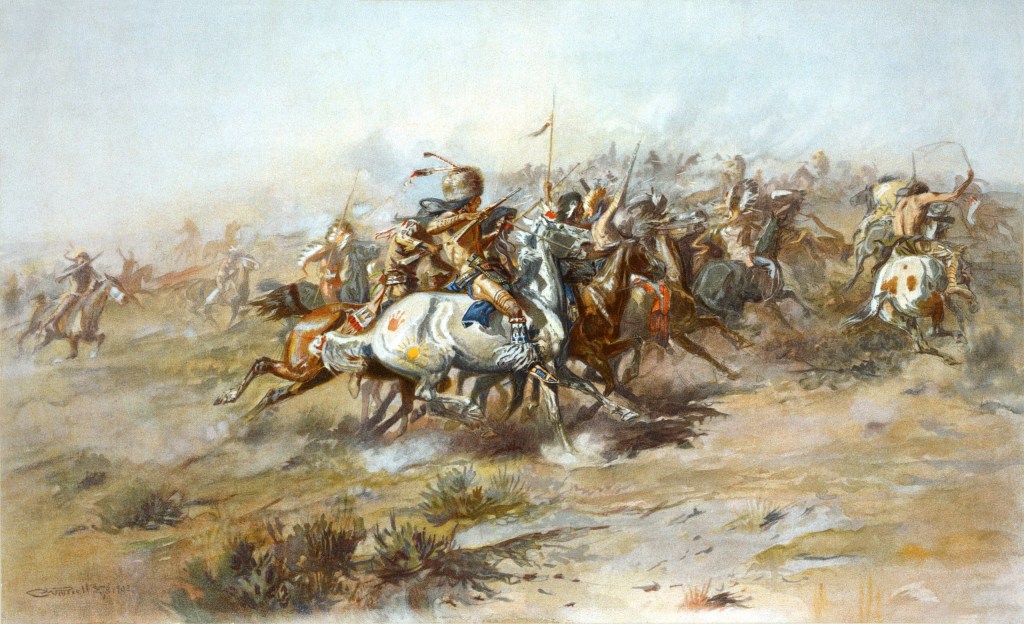
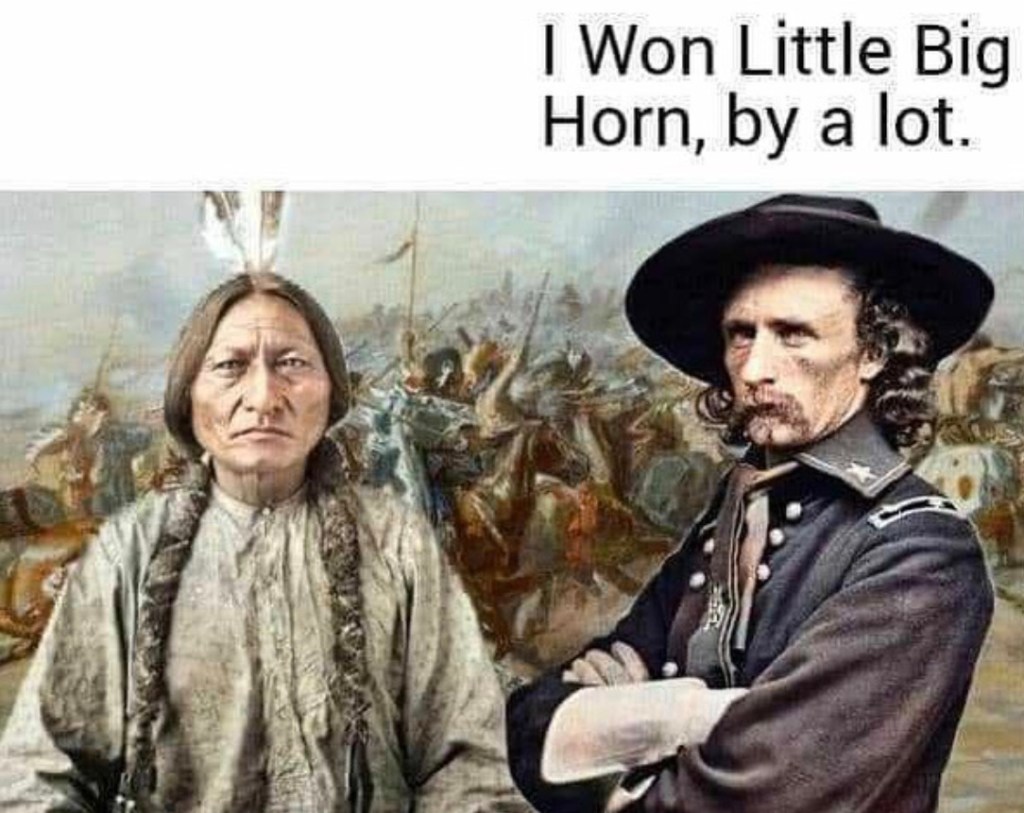
This set the stage for the battle the Sioux call “The Battle of Greasy Grass”. The white settler nation refers to it as “The Battle of The Little Big Horn”. The Sioux Leader Crazy Horse embarrassed a contingent of the 7th and it became ‘Custer’s Last Stand’.
Despite President Grant’s absolute loathing of George Armstrong Custer and his direct order that Custer never be allowed to venture onto the Sioux reservation the Secretary of Defense told Custer he could play a small helping role if he waited for the rest of the 7th Calvary. Custer who was considered an embarrassment to the Army forced his men to march 80 miles double time and in his arrogant fashion he decided he could take on Crazy Horse himself.
President Grant did not attend the memorial service for Custer. He maintained Custer should not be recognized for anything.
U.S. Court of Claims in 1979.
Reviewing the federal government’s dealings with the Sioux, the court said of the Black Hills episode that “a more ripe and rank case of dishonorable dealing will never, in all probability, be found in our history.”
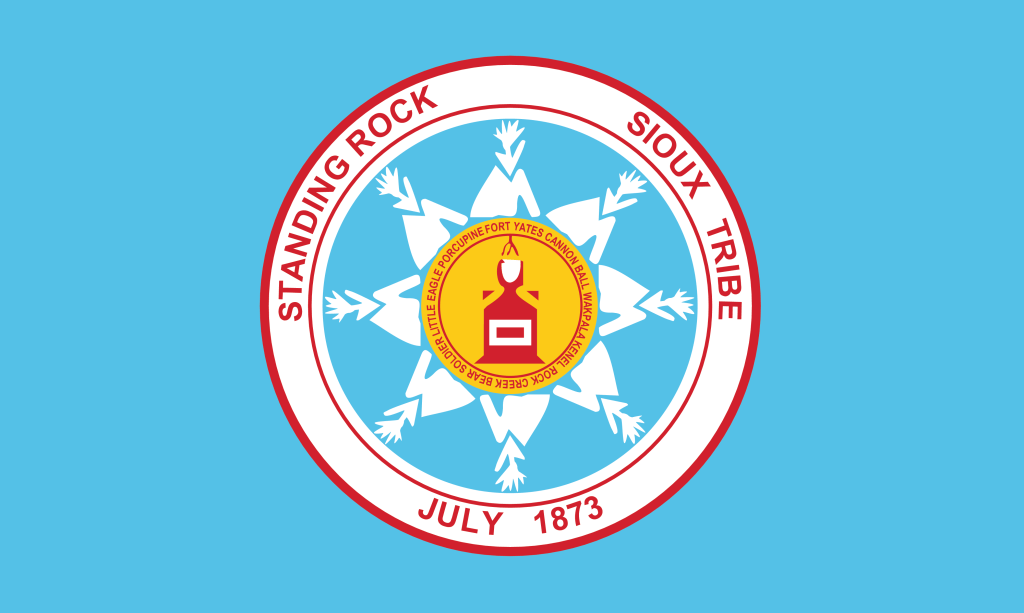
The flag is a medium blue field with the tribal seal in the center. The seal’s outer ring is white edged by two narrow red bands and bears the words “STANDING ROCK SIOUX TRIBE” in red above and JULY 1873 below. The circle of eight tipis represent the eight districts of the reservation on a red background. The ring of the outward-pointing tipis encloses a yellow disk depicting the Standing Rock in white on it’s red pedestal. Around the disk are the names of the eight districts in red: Fort Yates; Cannonball; Wakpala; Kernal; Rockcreek; Bear Soldier; Little Eagle and Porcupine.

 deliriouslove1970. The life & times of Gary and Denise Flanders. (Free and worth every penny. If you would like to compliment the editor, send to garytheflan@deliriouslove1970.com. If you would like to complain, call your mother.)
Leave a comment