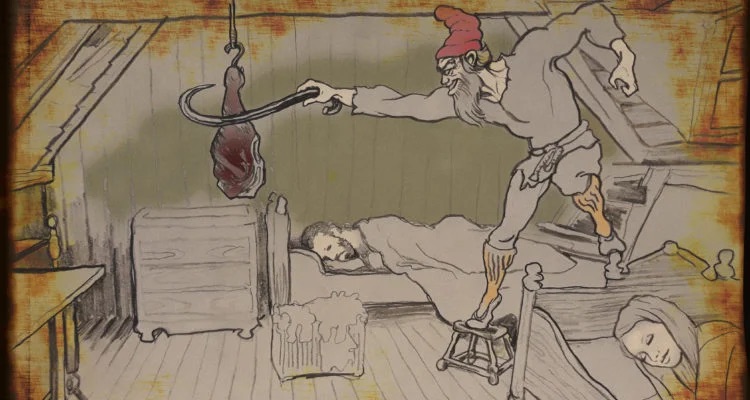
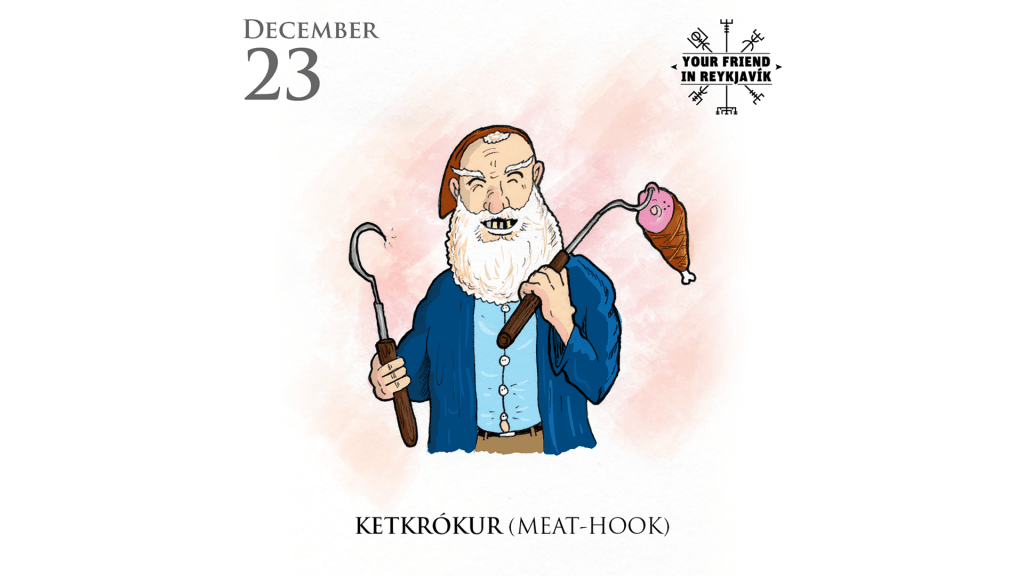
Christmas culinary traditions vary significantly between families, but there is one common central feature to most festive feasts, and that’s the meat. In Icelandic folklore, however, this was the target of thievery from the twelfth and penultimate Yule Lad, Ketkrokur, or “Meat-Hook.”
Lurking wherever he had access to a kitchen (behind doors, under tables, in cupboards, outside open windows), he would lay in wait for the meat of any dish to be slapped onto the counter. As soon as he could avoid capture, he’d pull out his long hook and snag himself the centerpiece of a family meal.
Unlike his brother, Bjugnakraekir, who only sought smoked sausages, Ketkrokur was indiscriminate in his tastes and would wait until the whole family fell asleep before swooping in and stealing whatever meat was hanging around.

December 23 is a major celebratory day in Iceland. It is known as St Thorlak’s Day. St Thorlak, or Þorlákur helgi as he’s called in Iceland, is Iceland’s patron saint. He was the bishop of Skálholt from 1178 to his death on December 23, 1193. His relics were translated o the cathedral of Skálholt in 1198, and it was announced at Alþingi that he would be made a saint. It wasn’t until 1984 that Þorlákur was canonized when Jon Paul II visited Iceland.
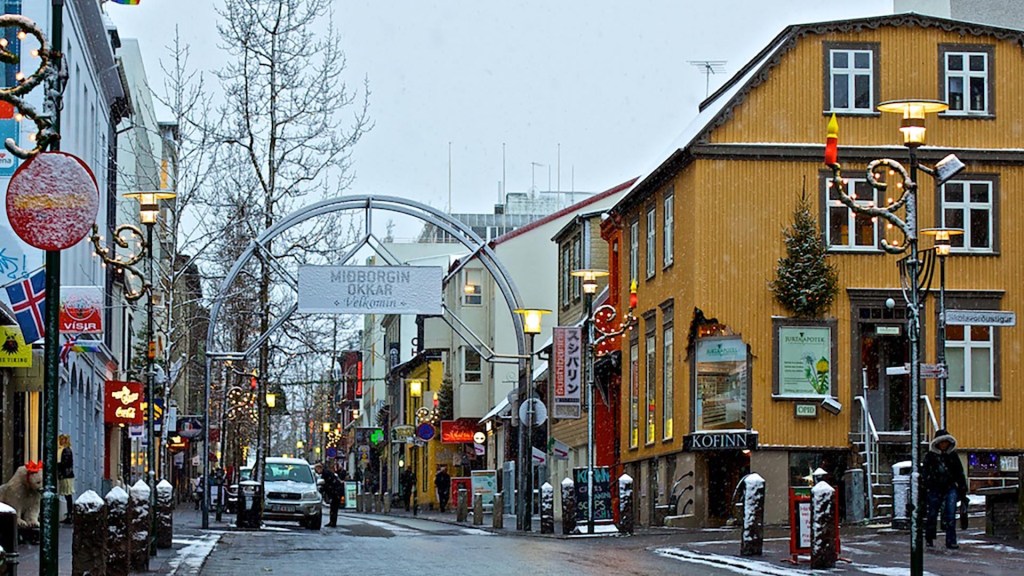
As is true in many traditions church and modernity blend. In the middle of the 20th century, Þorláksmessa became the year’s biggest shopping day. Shops in Reykjavík and other larger markets were open until midnight. Many people save their Christmas gift purchases until this day. For many, this custom is an integral part of the Christmas season, to wander through the crowds of people on Christmas Eve Eve and complete the Christmas shopping. And where else to shop but Laugavegur street in Reykjavik.

Accompanying the practice of the big shopping day came the ancient tradition of preparing the main meat dish for St Thorlak’s day: fermented lamb, called ‘Skate’
It was customary to boil the Christmas hangikjöt (smoked lamb) at Þorláksmessa. In some places, people were allowed to taste it or the meat fat floating on top of the water. This whole situation caused people to look forward to the Þorláks fair as much as to Christmas itself. For that reason, the day before, Þorláksmessa was sometimes called “looking forward day.”
 deliriouslove1970. The life & times of Gary and Denise Flanders. (Free and worth every penny. If you would like to compliment the editor, send to garytheflan@deliriouslove1970.com. If you would like to complain, call your mother.)
Leave a comment